
For hunting enthusiasts, equipment is as crucial as skill and knowledge of the environment. Among all the elements that make up a hunter’s arsenal, the skinning knife stands out not only as a tool but as a fundamental and irreplaceable companion. Often underestimated or confused with more general-purpose knives, skinning knives are pieces of specialized engineering, designed with a very specific purpose: the efficient, hygienic, and ethical skinning and processing of game. Their meticulous design and unique features clearly distinguish them from other types of knives, making them the preferred choice for this vital field task.
A Journey Through Time: The History of the Skinning Knife
Contents
- A Journey Through Time: The History of the Skinning Knife
- What Is a Skinning Knife and Why Is It So Special?
- Technical Features That Define Effectiveness
- Practical Applications and Social Aspects of Skinning
- Advantages and Disadvantages of Hunting Knives (Including Skinning Knives)
- Proper Maintenance: Key to Longevity and Performance
- Prestigious Brands in Skinning Knives
The need to process game is as old as humanity itself, a practice that has shaped our evolution and survival. Since the Paleolithic era, millions of years ago, our ancestors, such as Homo Habilis, already used primitive tools to skin and butcher animals. These first “cutting tools” were often sharp stone spear or javelin tips, not primarily conceived as defensive weapons, but for food purposes, to access meat and essential nutrients. Archaeological evidence suggests that these rudimentary tools were crucial for the survival of early human communities.
Skinning knives have existed since the dawn of humanity; there is evidence that even in the Paleolithic, hominids (ancestors of humans) used stone knives for various activities, including skinning meat. In those early times, it is thought that materials such as bone and wood were also used, but as these are perishable materials, no evidence has been found to support these theories.
Over time, the design of these primitive tools evolved significantly, progressively adapting to usage needs and improving in ergonomics and efficiency. This improvement process was slow but steady, driven by the search for more effective methods for processing food and other resources.
It was with the discovery of metallurgy, around 5,000 years ago, that a fundamental leap occurred in this field. The use of materials such as copper, bronze, and iron, and by the 17th century, steel, allowed for the creation of much more refined, durable knives with superior cutting capabilities. During the Metal Ages, knives became more resistant and versatile. In Ancient Rome, the ancestors of folding knives appeared, with iron, copper, or bronze blades that rotated on an axis to be stored in the handle, marking a milestone in the portability and safety of these tools.
The knife, beyond its practical function, became an icon of power and strength, present in religious rituals and used for embalming in Egypt or as protection for the deceased. Its importance transcended mere utility to acquire deep cultural and symbolic meaning in various civilizations.
The 19th century, known as the “golden age” or “age of steel” for knives, marked the massive incorporation of this material into their manufacture and a modernization that allowed the creation of tools for specific, concrete purposes, including skinning knives. This technological advance, combined with a rich artisanal tradition (especially in Spain, with cities like Albacete standing out for their mastery from the 14th century to today), has shaped the modern skinning knives we know. Interestingly, the use of knives to tear and cut meat led to an evolution in our own dental morphology, making our teeth and jaws smaller over time—a fascinating example of how technology can influence human biology.
What Is a Skinning Knife and Why Is It So Special?
Within the vast range of knives available on the market, there are those for general use, designed for multiple purposes, such as bushcraft or survival knives. However, there are also highly specialized knives, designed for a specific function in which their effectiveness is unmatched. The skinning knife belongs to this second category, being the ideal and most efficient tool for skinning game. Its unique design and optimized features ensure that no other knife achieves better results in this particular function.
Its main purpose is twofold: on one hand, it facilitates evisceration or removal of the viscera, a critical step to make the meat suitable for human consumption and prevent contamination. On the other, it allows for clean and easy separation of the skin from game animals, from small ones like rabbits and hares to larger ones like deer or wild boar. The precision and control offered by a skinning knife are fundamental to performing this task without damaging the meat or the skin, if the latter is to be preserved. Unlike conventional knives, skinning knives are designed to maintain their edge longer under the specific conditions of this task, are easier to handle in tight spaces, and their cutting ability is superior in the context of skinning, minimizing effort and the risk of mistakes.
They are a professional tool for the skinner, usually wide but not long, with a strong edge. The skinning knife is not a hunting weapon but a tool, perfectly designed to fulfill its mission, which is to remove the skin from the prey.
Technical Features That Define Effectiveness
To achieve its great effectiveness and superior performance, a skinning knife must meet a series of specific conditions in its design and construction. Its morphology, including the ergonomics of the handle, the shape and length of the blade, its thickness and weight, is fully adapted and optimized for the task of skinning, ensuring optimal performance and a safe and efficient user experience.
Blade Design: Precision and Safety
Generally, skinning knives have the following distinctive features in their blades:
- Wide and short blade: This morphology is fundamental. A wide blade provides a greater contact surface with the skin, allowing the knife to glide smoothly and with control, while its short length facilitates optimal and precise handling in repetitive and detailed movements. This combination minimizes the risk of accidental cuts in the meat.
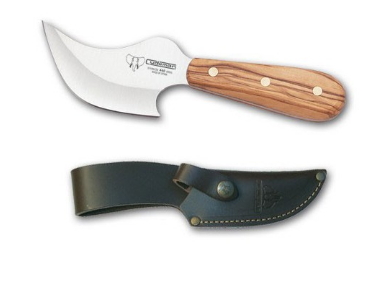
- Blunt or rounded tip: Unlike sharp-tipped knives, the blunt or rounded tip of a skinning knife is a key safety and functional feature. It allows you to reach all corners of the animal without piercing the meat or internal organs, which is crucial to avoid contaminating the meat. The skinner shape, with its pronounced curve and rounded tip, is ideal for butchering thanks to its ability to slide between the skin and muscle without snagging or cutting where it shouldn’t.
- Blade thickness: Although light weight is desirable, the blade must have adequate thickness to provide the necessary rigidity and avoid excessive flexing during cutting, which could compromise precision and safety.
Balance and Handling: Weight and Ergonomics
- Lightweight: A lightweight skinning knife is essential to reduce fatigue during prolonged use and to facilitate agile handling and precise cutting. This allows the hunter to maintain full control over the tool, even in situations that require delicate and repetitive movements.
- Comfortable to use: The ergonomics of the handle are key for precise cutting and to avoid fatigue during prolonged use. A well-designed handle fits comfortably in the hand, providing a secure grip and reducing strain on the wrist and fingers.
Functional Innovations: The Gut Hook
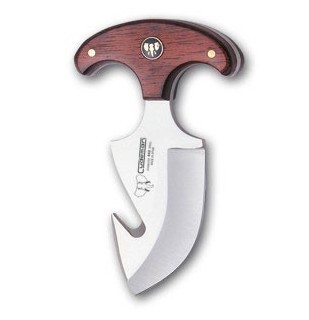
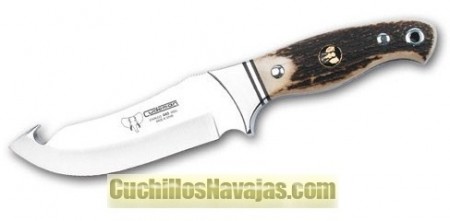
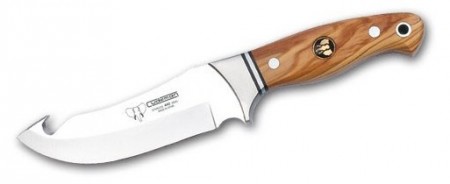
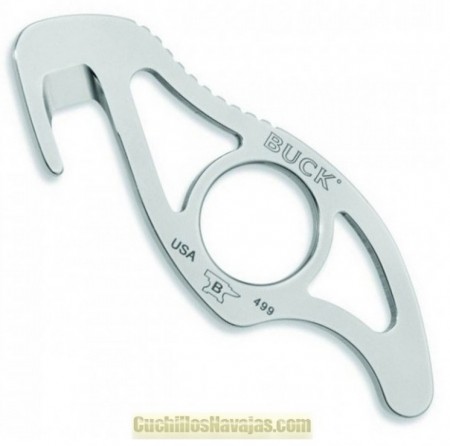
- Gut hook: This is an optional feature, but highly valued by many hunters. Located on the opposite side of the main edge, this small sharp protrusion makes it easier to make the initial opening of the animal’s abdomen without piercing internal organs. This is crucial to avoid contaminating the meat with gastrointestinal contents, a key factor in the quality and food safety of the game.
Manufacturing Materials: Blade and Handle
When it comes to materials, the choice of blade and handle is fundamental for the durability, performance, and maintenance of the knife:
- Blade:
- Stainless Steel: This is the most common option due to its excellent corrosion resistance and ease of maintenance. Although it may not hold an edge as aggressively as carbon steel, it is more forgiving with moisture and adverse field conditions.
- Carbon Steel: Offers excellent edge retention and greater toughness, making it ideal for demanding cuts. However, it requires more care to avoid oxidation and corrosion, which means more rigorous cleaning and lubrication after each use.
- Titanium: This is a high-end option, valued for its exceptional lightness and superior corrosion resistance. Titanium knives are ideal for those seeking maximum performance with minimum weight, although they are usually more expensive.
- Handle: The handle is as important as the blade for ergonomics, safety, and comfort during use. A good handle material should provide a secure grip even in adverse conditions.
- Wood: Provides a classic look and warmth to the touch, as well as a good dry grip. However, it is more sensitive to moisture and may require regular maintenance to prevent cracking or warping.
- Stag Antler or Bone: Offers notable strength and a unique, natural look, highly appreciated by hunters. Like wood, they can be sensitive to moisture and require proper care.
- Synthetic Materials (Micarta, G10, Polymers): These are modern options that stand out for their resistance to moisture, impacts, chemicals, and extreme temperatures. They are low-maintenance and provide a secure, non-slip grip even in adverse conditions such as moisture or the presence of blood. Their durability and reliability make them very popular among professionals.
A good ergonomic handle design, with non-slip textures or shapes that fit the hand, is crucial to avoid fatigue and prevent accidents, especially when hands may be wet or slippery.
Practical Applications and Social Aspects of Skinning
The skinning knife is a fundamental tool in making the most of game meat, and its use goes far beyond simply removing the skin. It is part of a broader and more complex process that begins even before the hunt, involving not only technical skills but also a deep respect for nature and the harvested animal. Proper game processing is a pillar of responsible hunting activity.
Key Stages of Game Processing Where the Skinning Knife Is Used:
- Evisceration: This is a critical phase that should be carried out as quickly as possible, preferably where the animal falls. The goal is to preserve the quality of the meat, cool it quickly, and comply with health regulations. The process involves bleeding, sealing the anus and esophagus to avoid contamination with gastrointestinal contents, and careful removal of the viscera. For this task, a skinning knife with a gut hook can be used, which makes the initial opening easier without piercing organs, or an evisceration knife with a thin, pointed blade, designed for precision in this delicate operation. Speed and cleanliness in this phase are crucial for the meat’s safety.
- Skinning: Once eviscerated, the skin is removed. The skin acts as a natural protection for the meat during transport, keeping it clean and helping it cool gradually. Skinning is done by pulling the skin and using the knife to separate the skin from the meat with slicing, not deep cutting, movements. The wide blade and blunt tip of the skinning knife are ideal for sliding between connective tissues without damaging the meat. For small animals, a lighter, smaller skinning knife can be used, adapted to the prey’s anatomy.
- Butchering and Meat Cutting: Although the skinning knife is not the main knife for final butchering, its role in preparing the animal is undeniable. Once skinned, different types of knives, including robust and sharp blades, are used to separate the various cuts of meat. Decapitating knives, often made of hard steel and very robust, are used to cut bones and obtain trophies, while filleting or boning knives are used for finer, more precise cuts.
Ethical and Social Aspects: Beyond the Tool
It is important to highlight the ethical and social aspect of game processing. An animal stressed before dying will release adrenaline that negatively affects the taste of the meat, making it tougher and less desirable. Therefore, well-placed shots should be sought to ensure a quick and humane death, minimizing the animal’s suffering. In addition, the “preparation” of the animal, which includes skinning and evisceration, is the final phase of the hunt and a skill every hunter should master. This is an inherent responsibility of hunting.
Practical experience, often learned from experienced companions or mentors, is indispensable for mastering these tasks. Observing and practicing under the guidance of those who already possess the skill is the best way to acquire the technique needed for efficient and clean skinning. Also, the smell during the process can be unpleasant for the uninitiated, something to be prepared for, as it is a natural part of making the most of the animal.
Advantages and Disadvantages of Hunting Knives (Including Skinning Knives)
Like any specialized tool, skinning knives, within the broader context of hunting knives, have their pros and cons. Understanding these features is crucial to choosing the right tool for each situation and to maximize its potential while minimizing risks.
Advantages:
- Versatility in specific tasks: Although skinning knives are specialized for removing skin, many hunting knives in general are multi-purpose tools that can eviscerate, cut ropes, prepare camps, or perform other essential fieldwork on an expedition. Their robust design allows them to handle various situations.
- Exceptional durability: Made with high-quality steels and advanced tempering processes, these knives are inherently resistant to corrosion and wear. This ensures a long lifespan, even under intensive use and challenging environmental conditions, making them a lasting investment.
- Highly sharp and durable edges: Hunting and skinning knives are designed to maintain an extremely sharp edge for extended periods, which is crucial for making precise, clean cuts with minimal effort. They are also relatively easy to resharpen in the field with the right tools, ensuring the hunter always has a blade ready for action.
- Secure and ergonomic grip: Handles are designed with safety and comfort in mind. With non-slip materials and ergonomic shapes, they ensure a firm and reliable grip even in wet, cold, or bloody conditions, significantly improving user safety and efficiency.
- Compact and practical design: Many models, especially smaller skinning knives or compact fixed-blade knives, are lightweight and easy to carry in a sheath, ideal for long expeditions where every gram counts.
Disadvantages:
- Maintenance required: Especially knives with carbon steel blades require regular cleaning and constant sharpening to avoid loss of effectiveness or corrosion. If not properly cared for, their performance can quickly deteriorate.
- Limited specialization: A knife designed exclusively for skinning, although excellent in its main function, may not be ideal for other survival tasks, such as cutting wood, digging, or performing general-use jobs that require a more robust blade or a different tip.
- High cost: High-quality models, made with premium materials and artisanal processes, can represent a significant investment. Although their durability justifies the price in the long term, the initial outlay can be considerable.
- Risk of injury: Their extremely sharp edges and, in some cases, pronounced tips increase the risk of accidental cuts, especially for inexperienced users or those who do not handle the knife with due caution and knowledge of cutting techniques.
- Additional weight: Although some models are lightweight, more robust or larger-bladed hunting knives can add considerable weight to the hunter’s gear, which should be considered on long expeditions or difficult terrain.
Proper Maintenance: Key to Longevity and Performance
For a skinning knife to be a reliable and durable ally during years of hunting, regular and proper maintenance is absolutely essential. A well-cared-for knife not only prolongs its useful life but also ensures optimal performance and, most importantly, user safety. Neglecting maintenance can lead to corrosion, loss of edge, and ultimately, an ineffective and dangerous knife.
- Regular and thorough cleaning: After each use, especially after processing game, it is imperative to thoroughly clean the knife to remove any organic residue, blood, or dirt. Use warm water and mild soap, avoiding harsh chemicals that may damage the blade or handle material. A small brush can be useful for cleaning grooves or handle textures. In the field, a simple rinse and wipe with a damp cloth can be a temporary solution, but a deep cleaning should be done as soon as possible.
- Complete drying: This step is as crucial as cleaning. It is vital to dry the knife completely after washing to prevent oxidation and corrosion, especially if the blade is carbon steel. Pay special attention to the joints between the blade and handle, as moisture can accumulate in these areas and cause hidden damage. Use a clean, dry cloth and ensure no residual moisture remains before storing.
- Protective lubrication: Once clean and dry, apply a light layer of protective oil to the blade, especially if it is carbon steel or if the knife will be stored for an extended period. Mineral oils or oils specific for knives are ideal, as they create a barrier against moisture and oxygen, preventing corrosion. Wooden handles can also benefit from specific wood oils to maintain their integrity and prevent drying or cracking.
- Regular and proper sharpening: Keeping the edge sharp is crucial not only for precise and efficient cuts but also for safety. A dull knife requires more force to cut, increasing the risk of slips and accidents. Use sharpening stones, diamond sharpeners, or specialized tools, always maintaining a constant angle (generally between 15 and 25 degrees for hunting knives, with 20 degrees being a good starting point for skinning knives). Learning the correct sharpening technique is a valuable skill for any hunter.
- Proper storage: Store the knife in a dry, safe place, away from moisture and extreme temperature fluctuations. Preferably, use a clean sheath made of treated leather (which should be dry before storing the knife) or synthetic material. Avoid storing the knife in its sheath for very long periods if the sheath does not allow good ventilation, as it can accumulate moisture and promote oxidation. A humidity-controlled cabinet or a specific knife storage box are excellent options.
- Avoid improper use: A skinning knife is a specialized tool. Never use it as a lever, to cut extremely hard materials (such as wires or metals), as a screwdriver, or for pounding, as this can seriously damage the edge, blade, or handle, compromising its integrity and safety.
Prestigious Brands in Skinning Knives
Choosing a trusted brand is fundamental to ensuring the quality, reliability, and performance of a skinning knife. Spain, with its rich history and tradition in cutlery, has forged a worldwide reputation, especially in Albacete, a city that has been an epicenter of high-quality knife and folding knife production since the 15th century. Artisan mastery and technological innovation combine in these brands to offer exceptional tools.
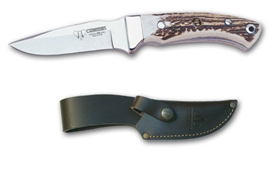
These Muela skinning knives can delight all those who love the world of hunting, as they combine in a single product the toughness and functionality needed in this type of knife with a refined design and perfect finishes.
This model has a 440 stainless steel blade, 7.5 cm long, and comes with a stag antler sheath, giving it a sophisticated touch. It was made in Albacete (Spain), possibly the Spanish town with the greatest tradition in the production of top-quality folding knives. It includes a high-quality leather sheath with a refined finish.
Some leading brands in the field of skinning and hunting knives include:
- Cudeman: With over forty years of history, this brand from La Mancha is a worthy heir to the cutlery tradition of Albacete. Cudeman stands out for offering a wide variety of skinning knives made with top-quality materials and meticulous finishes. They use high-performance stainless steels, exotic woods, and quality rubbers for their handles, resulting in knives that combine functionality, durability, and attractive aesthetics. Their designs are usually robust and intended for intensive field use.
- Joker: Another great cutlery company from Albacete, specialized in sporting and hunting knives. Joker produces entirely handmade knives and folding knives that are internationally recognized for their fine blades and exceptional craftsmanship. Their skinning models often stand out for handles made from natural materials such as olive wood and stag antler, which not only provide beauty but also a comfortable and secure grip. The quality of their blades is impeccable, ensuring long-lasting sharpness and superior performance.
- Muela: A Spanish cutlery brand of international prestige, active since the 1950s. Muela is a benchmark that combines Manchegan artisanal know-how with cutting-edge technology to produce elite hunting and skinning knives. Their skinning knives excel for their design focused on comfort and easy handling, even in the toughest and most demanding conditions. Gut hooks are common on their blades, a highly valued feature, and the handles are made in a wide variety of materials, from stag antler and olive wood or pressed coral, to high-resistance synthetic materials such as phenolcraft, with many handcrafted models reflecting a dedication to quality and tradition.
Other brands recognized for their quality in hunting knives in general, which may offer high-performance skinning or multi-purpose models, include:
- National: Aitor, Albainox, Arcos, Celaya, Don Benito, Martínez, Vergara. These brands represent the excellence of Spanish cutlery, offering a wide range of products to suit various needs and preferences.
- International: Benchmade, Buck Knives, Gerber, Ka-Bar, ESEE, Fox Outdoor, MilTec, and Helle. These brands are world leaders in the manufacture of hunting and survival knives, known for their innovation, the quality of their materials, and the reliability of their products in the most extreme conditions.
The choice between these brands and models of high-quality skinning knives will often depend on several factors, such as the type of game to be hunted, personal preferences regarding design and materials, the available budget, and ultimately, the user’s taste and comfort. It is advisable to research the specifications of each model and, if possible, try the grip and balance before making a purchase.
The skinning knife is much more than a simple blade; it is a specialized tool, forged by history and human need, designed with exceptional technical precision and of vital practical and social importance in hunting. The correct choice, based on a deep knowledge of its features and applications, together with diligent maintenance, ensures a more efficient, safe, and satisfying hunting experience. Investing in a good skinning knife is investing in the quality and ethics of hunting, ensuring that each animal is processed with the utmost respect and care.