The folding knives, due to their intrinsic usefulness and astonishing versatility, have always been fundamental tools in human life. Perhaps this is why, nowadays, they are classified beyond their original function, considering them authentic “utensils” for daily use. However, the history of the Spanish artisan folding knife transcends mere functionality. It is an emblem rooted in the identity and history of Spain, a piece that has evolved from its humble origins to become a palpable reflection of artisanal skill, popular ingenuity, and the customs of each era. In this article, we will embark on a fascinating journey through time to unravel the deep connection between the folding knife and the rich Spanish culture, exploring its evolution, its art, and its legacy, including prominent brands such as Albainox, Third, and Joker, and highlighting materials such as stainless steel bolsters, stamina, and micarta, as well as the importance of sheaths for their protection.
A Historical Journey: From Antiquity to Modern Renaissance
Contents
The First Traces: From Antiquity to Arab Influence
The origins of cutlery in the Iberian Peninsula are as ancient as civilization itself. The first indications date back to the Bronze Age, with the discovery of rudimentary metal tools and weapons that attest to man’s primordial need to cut and defend himself. The arrival of the Romans in the peninsula brought a significant qualitative leap. With them, advanced forging and tempering techniques were introduced, considerably raising the quality and durability of cutting instruments. However, the true turning point, the crucible where the identity of Spanish cutlery was forged, was the Arab domination. The technical advances and deep metallurgical knowledge that the Arabs introduced completely revolutionized knife manufacturing. Cities like Toledo, already with a metallurgical tradition, were transformed into world-renowned cutlery centers, merging Roman mastery with Arab sophistication to create pieces of unprecedented quality and beauty.
Albacete: Cradle of the Spanish Folding Knife
The Spanish folding knife, as we know it today, with its distinctive folding design, finds its deepest roots in Albacete, a city in Castilla-La Mancha that has become synonymous with cutlery excellence. Documented since the 16th century, its origin is largely attributed to the influence of Moorish artisans, who were consummate masters in the art of forging and contributed invaluable knowledge to the region. In its beginnings, the folding knife emerged as an ingenious and eminently practical solution for personal defense. In an era where insecurity was a constant and the use of swords and sabers was reserved exclusively for the nobility and the military, the inhabitants of the towns, especially the peasants, needed an effective instrument, but one that was more economical and easier to carry and conceal. The pocket knife thus became a small weapon that, when opened, doubled its size, offering a crucial advantage in terms of portability and discretion. Its lightness, sharp edge, and pointed tip ensured its effectiveness, which catapulted it to enormous popularity among the general population. During the 17th century, the Albacete folding knife began to acquire its distinctive current form, laying the foundations for its iconic design.

Between Prohibitions and Splendor: A Path of Adaptation
The 18th century marked a period of authentic splendor for Albacete cutlery. Its folding knives not only gained considerable fame in Spain, but their reputation transcended borders, achieving worldwide recognition. The arrival of the railway in Albacete in 1855 was a catalyst for its commercialization, further boosting its dissemination and giving rise to the picturesque figure of the “navajero”, an itinerant vendor who, with his peculiar hawking, offered his merchandise to travelers at the stations. The attack-defense folding knives of the 19th century, often of large dimensions and imposing designs, generated great interest and were highly valued for their functionality and aesthetics. However, the evolution of the folding knife was not without challenges and periods of crisis. Royal prohibitions, such as that dictated by Philip V in 1723, which prohibited “the use of daggers or knives, folding knives or other bladed weapons”, condemning “by the mere fact of apprehension with these weapons”, with the penalty of six years in prison if noble or galley if commoner, forced a drastic adaptation in their blade size and design. These strict regulations had a devastating impact on the industry. Only the artisans of Albacete and Barcelona managed to overcome this crisis, demonstrating extraordinary resilience and adaptability, while other cutlery regions suffered a severe blow, from which many would not recover. This situation also accelerated the disintegration of artisanal guilds, structures that had regulated production for centuries, leading artisans to seek survival individually. The folding knife, in this context of prohibitions and adaptations, progressively transformed from being primarily a weapon to becoming a daily use tool, an indispensable utensil for various tasks, or even a luxury item and a symbol of power or social status, reflecting the skill and wealth of its owner. Thus, many of the classic Spanish folding knives we know today were born.


Despite the prohibitions, the Spanish people continued to carry and use folding knives, which led to the need to import them from abroad, as narrated in the Book of Commerce of Spain from 1850 to 1869. This constant demand, despite the restrictions, underscores the deep-rooted need and cultural value that the folding knife held for the population.
The Industrial Era and Modern Renaissance
The Industrial Revolution, with its technological innovations and the emergence of new manufacturing techniques, brought about drastic changes in the production of folding knives. The possibility of mass and standardized production led to a decline in large-scale artisanal production, as factories could offer products at a much lower cost. However, the tradition and art of artisanal cutlery never completely disappeared. In the 20th century, although the industry faced new challenges, such as the strict arms regulations of 1981 and the growing competition from Asian products, Albacete cutlery once again demonstrated its resilience and resurfaced with strength. Organizations such as APRECU (Association of Cutlery and Related Industries) played a crucial role in this renaissance, creating the “AB-Cuchillería” quality mark. This distinctive seal guarantees that the product has been entirely manufactured in Albacete, from the transformation of raw materials to the assembly and final finishing, helping to differentiate authentic craftsmanship from imitations and to protect the region’s legacy. Currently, Albacete, along with other towns with a rich cutlery tradition such as Taramundi in Asturias and Santa Cruz de Mudela in Ciudad Real, continues to be an undisputed benchmark in the production of Albacete knives and high-quality folding knives, where innovation and tradition coexist in perfect harmony, ensuring the future of this ancient art and offering authentic Spanish folding knives.
The Art of Craftsmanship: Characteristics and Manufacturing Process
Distinctive Design and Materials: The Essence of the Spanish Folding Knife
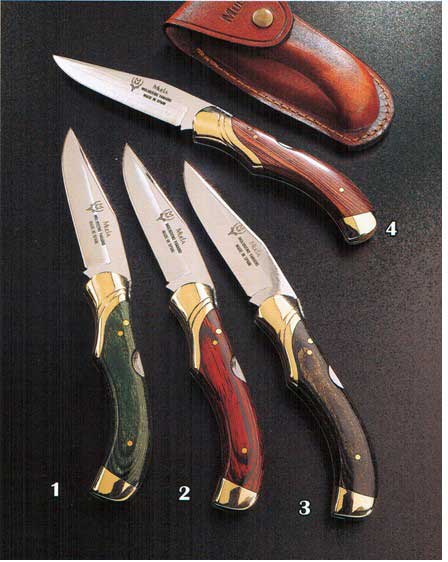
The classic Spanish folding knife is distinguished by its functional design and unique aesthetics, which reflect centuries of evolution and artisanal mastery. The blades, the heart of the folding knife, are generally made with high-quality stainless steel, valued for its exceptional durability, corrosion resistance, and ability to maintain a precise and long-lasting edge. Some collector’s pieces even incorporate Damascus steel for its beauty and strength. However, the true personality of each piece often lies in its handles, also known as scales. These are made from a variety of natural materials, each contributing a distinctive texture, color, and character. Among the most common are bone, fine woods such as ebony or olive wood, and, very characteristically, deer antler or buffalo horn. The choice of handle material not only influences the ergonomics and balance of the folding knife but also adds a distinctive touch and its own story to each piece, making it a truly unique object. Materials such as stamina and micarta are also highly valued for their durability and aesthetics in wooden handles.
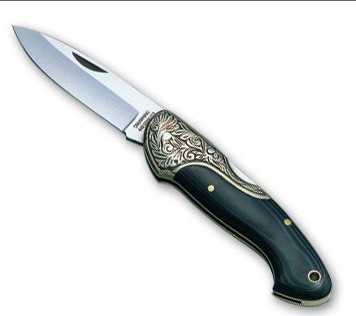
A key feature that defines the safety and functionality of the Spanish folding knife is its secure locking system. This ingeniously designed mechanism keeps the steel blade fixed and stable when open, preventing accidental closures during use and ensuring user safety. In addition to their functionality, many folding knives feature intricate engraved designs, both on the blade and the handle. These engravings, which often depict traditional motifs, coats of arms, or scenes of rural life, elevate the folding knife from a simple tool to the category of authentic works of art, collector’s items, and pieces of great aesthetic value.
The Meticulous Artisanal Process: A Legacy of Generations
The manufacture of a classic Spanish artisan folding knife, especially in Albacete, is a true art that has been passed down from generation to generation, a process that embodies the patience, precision, and deep dedication of the artisan. Far from being an industrial process, it is a totally artisanal work that involves more than 40 meticulous operations, each performed with exceptional care and attention to detail. The process begins with the selection of the horn or the appropriate material for the handle (cabo). This material is carefully worked to give it the desired shape, and the “virolas” are adjusted, metallic ornaments placed at the ends of the handle, not only for their aesthetic function but also to reinforce the structure. The elaboration of the blade is a critical step that requires great mastery. It involves the forging of the steel, a process in which the metal is heated and repeatedly struck to give it shape and strengthen its structure. Next, tempering is performed, a sudden change in temperature that hardens the blade, giving it the necessary resistance and edge. Finally, the blade is subjected to precise sharpening on the grinding wheel, where its final shape is defined and it is given the cutting edge that characterizes it. The use of MOVA steel or stainless steel is common to guarantee quality. In addition, a distinctive detail of many Spanish folding knives is the engraving of the “piñones” on the heel of the blade. These small teeth, when rubbing against the spring entrance during opening, produce the characteristic “carraca” sound, a sound that is music to the ears of enthusiasts and adds a unique sensory element to the experience of using a bandolera carraca folding knife. The spring, a key piece for the lever closing system, is also forged and shaped to fit perfectly into the handle and secure the blade firmly and safely. Finally, the folding knife is assembled with precision, and subjected to an exhaustive cleaning and polishing process, leaving each piece unique, shiny, and of the highest quality, ready to be used or admired.
A Seal of Quality: AB-Cutlery
To ensure the authenticity, quality, and legacy of Albacete cutlery, many artisan folding knives bear the prestigious AB-Cuchillería quality mark. This seal is not just a distinguishing feature; it is a guarantee. It certifies that all raw materials used in the manufacture of the folding knife have been transformed, and that the folding knife has been assembled and finished entirely within the geographical limits of the province of Albacete. This seal is fundamental to differentiate authentic artisan pieces from Albacete from imitations, thus protecting the reputation of an art that has endured for centuries.
A Diverse Typology: Models That Tell Stories and Uses
Throughout its evolution, the Spanish folding knife has given rise to a rich and fascinating variety of models, each with its own distinctive characteristics, specific uses, and a story to tell. These designs have adapted to the changing needs of society and the particularities of different regions, creating a mosaic of shapes and functions:
- Navaja de Fieles (Loyalists’ Folding Knife): Represents the oldest and simplest model of folding knife. Its main characteristic is the absence of a complex locking mechanism; the blade is held to the handle in a rudimentary way by means of a pin called a “fiel”. It was a basic but functional folding knife for simple daily tasks.
- Navaja de Ventana y Anilla (Window and Ring Folding Knife): These models mark a significant evolution in locking systems, introducing a steel spring that offered greater security. The “ventana” (window) folding knife allowed the blade to be released with the fingers through an opening in the handle, while the “anilla” (ring) incorporated a ring at the end of the spring, facilitating the closing of the blade with one hand. They were ideal for those who needed a folding knife with a more robust lock.
- Navaja Pastora (Shepherd’s Folding Knife): Specifically designed as a field tool for shepherds, this folding knife is characterized by a wider and more robust blade, ideal for agricultural and livestock tasks. It incorporates a lever lock system, a simple but effective mechanism that still endures in many current designs due to its reliability.
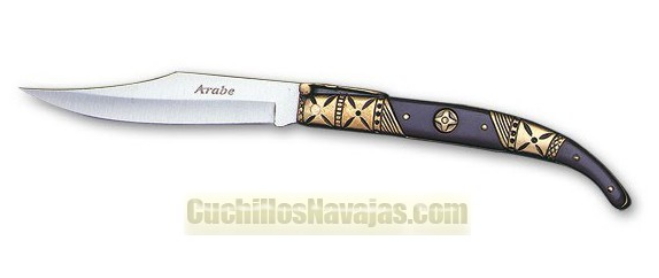
- Navaja Clásica Albaceteña (Classic Albacete Folding Knife): It is, without a doubt, the most emblematic and recognized model from Albacete. It is distinguished by its stylized blade, often with a slight curve, and its elegantly adorned handles with metallic “virolas” (bolsters) at the ends, which not only beautify the piece but also reinforce its structure. It is a versatile folding knife, suitable for both daily use and collection.
- Navaja Punta de Espada y Machete (Sword Point and Machete Folding Knife): These models are characterized by their straighter and longer blades. The “punta de espada” (sword point) folding knife resembles a small sword in its shape, with a sharp and penetrating English point, ideal for tasks requiring precision. The “machete” folding knife, for its part, has a symmetrical handle and a completely straight blade, designed for more forceful cutting tasks and general use.
- Navaja Punta Cortada y Tranchete (Cut Point and Tranchete Folding Knife): Arose from practical needs and, on occasion, from adaptations to prohibitions. The “punta cortada” (cut point) folding knife lacks a sharp point, often due to a 19th-century prohibition that sought to reduce its potential as a weapon. However, this characteristic made it an ideal tool for grafting trees, as it avoided damaging the plant. The “tranchete” folding knife, with its blade in the shape of a small sickle or crescent, was perfect for grape harvesting and other agricultural tasks that required a curved cut.
- Navaja Capaora or Lengua de Vaca (Castrating or Cow Tongue Folding Knife): A very specific and specialized tool, with a wide and short blade, designed primarily for the castration of animals in the livestock field. Its particular shape made it very efficient for this delicate task. It is also known as a cabritera folding knife.
- Navaja Estilete (Stiletto Folding Knife): Fine and stylized, similar in its elegance to the sword point, though generally thinner. It was ideal for opening envelopes, as a collector’s item, or as an accessory of distinction, rather than as a heavy-duty tool.
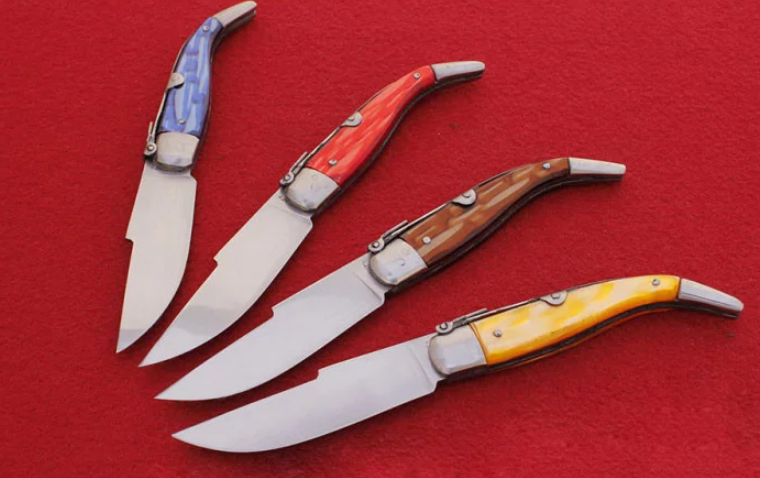
- Navaja Sevillana and Jerezana/Bandolera (Sevillian and Jerezana/Bandolera Folding Knife): Similar in their elegance to the Albacete folding knife but often more stylized in their lines. The Jerezana folding knife, also popularly known as “navaja bandolera” (bandolier folding knife), is famous for its curved and pointed blade, and for the characteristic “bandolera de carraca” (rattling bandolier) sound it produced when opened, a sound that in the past was used to intimidate. These Sevillian folding knives were popular in southern Spain and reflected the culture and temperament of the region.
In addition to the prolific production of Albacete, other regions of Spain have developed their own traditional typologies, further enriching the panorama of national cutlery. In the Basque Country, the robust and functional Aitor folding knives stand out; in Catalonia, the elegant and practical Palles folding knives, including the classic Catalan shepherd’s knife, known for its simplicity and effectiveness; from Mallorca, the Mallorcan or shepherd’s knife, with a design adapted to the needs of the island; in Andalusia, the fine Calero de Córdoba and the historic Malaga folding knives, with their own particularities; from Asturias, the famous Taramundi folding knives, recognized for their traditional craftsmanship and their carbon steel blade; and from Extremadura, the Flores Cortés and Teodomiro folding knives, which keep the cutlery tradition of the area alive. Each of these folding knives is not just a tool, but a piece of the history and culture of its region of origin, representing the classic Spanish knives of the century.
The Folding Knife in Spanish Culture: A Living Symbol
Symbol and Icon: Beyond the Tool
The Spanish folding knife has transcended its practical functionality to become deeply rooted in the country’s culture, becoming much more than a simple tool. It is a palpable testament to the skill and creativity of Spanish artisans, and an unmistakable symbol of Spanish identity. At one time, it was even a powerful symbol of honor and bravery, an object carried by those who considered themselves good men and who were willing to defend their dignity. Its omnipresence in daily life and its symbolic value have elevated it to the category of a cultural icon, an object that evokes the history, traditions, and character of the Spanish people. Classic folding knives are a clear example of this.
From Literature to Cinema: The Folding Knife as a Protagonist
The strong presence of the folding knife in Spanish daily life naturally led it to become part of literature, cinema, and music, where it has been immortalized in various artistic expressions. Foreign authors who visited Spain in the 18th and 19th centuries, such as the French Théophile Gautier, Jean Charles Davillier, and Gustave Doré, mentioned it in their writings, often highlighting its “Arab and barbaric” character or its omnipresence among street vendors, reflecting the fascination this tool exerted on travelers. However, it was Federico García Lorca who, with his poetic genius, dedicated immortal verses to it in his “Romancero Gitano”, alluding to the “Albacete folding knives, beautiful with opposing blood, gleaming like fish”, endowing it with a tragic and poetic symbolism. In cinema, the folding knife was a common and recurring accessory in popular “spaghetti westerns”, where it often served as a dramatic element that underscored tension and danger. In music, it is mentioned in numerous popular and flamenco songs, where its sound or presence evoke rural life, customs, and the passions of the Spanish people.
Traditions and Customs: The Legacy of the Folding Knife
The deep connection of the folding knife with Albacete is manifested in various ways, the most visible being the imposing large-scale sculpture of a classic folding knife that stands in the Plaza de la Concordia. This monument is a perennial tribute to the city’s cutlery, a reminder of the central role this industry has played in local identity and economy. There is also a deep-rooted popular tradition that dictates that “the folding knife should not be given as a gift even to a friend, but rather sold to them, in exchange for a symbolic price, because if not, the friendship would be cut.” This custom, passed down from generation to generation, underscores the intrinsic value of the folding knife and the importance of an exchange, however minimal, to preserve the relationship. The Spanish folding knife, beyond its material value, has been declared an Asset of Cultural Interest with the category of intangible asset, an official recognition of its incalculable specific cultural value and its role as a living heritage of Spain.
The Legacy of Engraving: From Local Pride to Modern Branding
The custom of engraving folding knives has a rich and significant history, dating back centuries. In the 18th and 19th centuries, cities with a strong cutlery tradition such as Tolóx, Guadix, and Málaga, marked their knives and folding knives with the city’s name on the sheath or directly on the blade. This act was not just a simple identification; it was a palpable manifestation of pride and cultural rootedness. By engraving the name of their place of origin, artisans not only recognized the quality of local craftsmanship but also affirmed the uniqueness and mastery of each region, turning the knives into authentic “cultural ambassadors” that traveled with their owners and bore witness to their provenance. Today, this tradition has evolved and adapted to the needs of the modern era. The practice of engraving names on folding knives has remained, but its purpose has expanded to include the needs of businesses and the growing demand for personalization. What was once a symbol of belonging and origin, is now an effective branding strategy. Engraving a brand name or logo on a folding knife has become a way to leave a lasting impression on customers’ minds, reflecting product quality and creating an emotional connection with the brand. These personalized folding knives are highly valued as promotional gifts due to their functionality, durability, and their ability to highlight a brand in an increasingly competitive market, offering a perceived value superior to other advertising items. Folding knife sheaths are also a key element for protection and presentation.
Current Considerations: The Folding Knife in the 21st Century
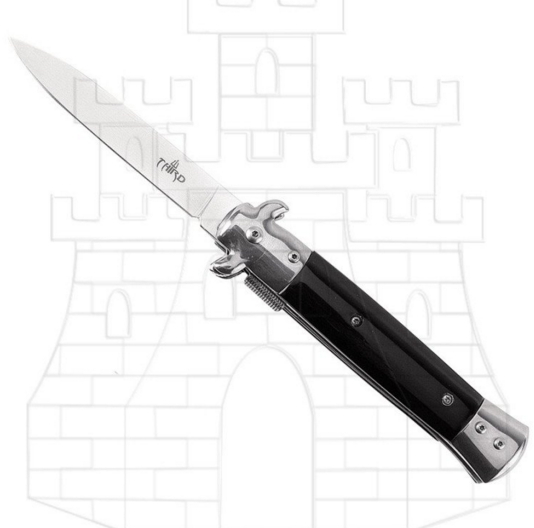
In current-day Spain, the legality of folding knives and knives is subject to specific and strict conditions, based on the White Weapons Regulation. It is essential to know these regulations to avoid legal problems. Single-edged folding knives and knives that are not automatic (i.e., that do not open with a spring or gravity mechanism automatically) and whose blade has a length of less than 11 centimeters are considered legal. If the blade exceeds 11 centimeters, its transport is severely restricted: they can only be carried from the store to the home or storage location during the 72 hours following purchase, and must always be properly packaged and accompanied by the purchase receipt accrediting their recent acquisition. Automatic or assisted-opening folding knives are generally prohibited for carrying in public, unless they are kept at home for purely decorative or collection purposes, with no possibility of being transported or used outside this scope. It is crucial to understand that, even if a folding knife or knife meets the length and type requirements, the competent authorities (police, civil guard) have the discretionary power to confiscate it if they consider, in a particular situation, that carrying such an object may pose a threat to public safety or disturb public order. This “potential dangerousness” clause is an important factor to consider.
The conditions for transporting folding knives and knives vary significantly depending on the means of transport used:
- In a car or backpack: Folding knives and knives with blades less than 11 cm can be carried for sports, hunting, or recreational activities, provided their use is justified by the activity. However, it is highly recommended to return these tools to your home once the activity is concluded to avoid misinterpretations by the authorities.
- On a train: Regulations are stricter. Folding knives or knives with a blade longer than 6 centimeters are not allowed in hand luggage or for personal carry, unless they have been purchased within the last 72 hours, keeping the purchase receipt and in their original packaging, as mentioned above for blades over 11 cm.
- On an airplane: The prohibition is absolute in hand luggage; under no circumstances are folding knives or knives allowed in the airplane cabin. However, it is possible to transport a folding knife or knife in checked baggage, provided the blade length does not exceed 6 centimeters. It is vital to always check the specific regulations of the airline before traveling, as they may vary.


The “History and Evolution of Cutlery in Spain” is a vibrant testament to a skill and creativity that have endured through generations, adapting to the times and overcoming challenges. From the primitive tools of the Bronze Age to the iconic Albacete folding knives and the diverse regional typologies that have emerged over the centuries, each stage of this history reflects a deep dedication to art, functionality, and innovation. Today, the Spanish folding knife continues to be a valuable piece, an object that perfectly fuses ancestral tradition with modern innovation, maintaining its global prestige and occupying a special place in the heart of Spain’s culture and identity. It is a living legacy that continues to cut its own path in the 21st century.
Discover the authentic tradition and quality in our selection of Spanish folding knives Find the perfect piece for you and its matching sheaths!