We are already in the autumn season, a magical time that marks the beginning of the eagerly awaited mushroom picking. For lovers of mycological tourism, this is a much-anticipated time to fully enjoy nature and the spectacular landscapes it offers us, especially the forests, where mushrooms that are so varied and abundant in Spain reproduce. Mushroom hunting has become an increasingly popular outdoor activity, combining a passion for nature with the enjoyment of gastronomy. Whether you are an experienced enthusiast or a curious beginner venturing into this fascinating world for the first time, having the right tool makes a big difference in this culinary adventure. And when we talk about foraging tools, the mushroom knife is, without a doubt, the undisputed protagonist.

The clean air and the entire ecosystem of mushrooms are an invaluable treasure that we must care for with the utmost responsibility. Since we are in the forest, it is essential not to throw any kind of waste, nor to make bonfires that could endanger the natural environment. Sustainability in harvesting is key to ensuring that future generations can also enjoy this wonderful hobby.
Why is a Specific Mushroom Knife Indispensable?
Contents
It might seem trivial or a minor detail, but mycological knives are not just general-purpose knives; they are specialized utensils meticulously designed for efficient, safe, and, above all, responsible mushroom harvesting. Their particular design seeks to minimize damage to both the mushroom being harvested and the surrounding environment, facilitating the task and ensuring a mycological practice that respects the delicate balance of the forest.
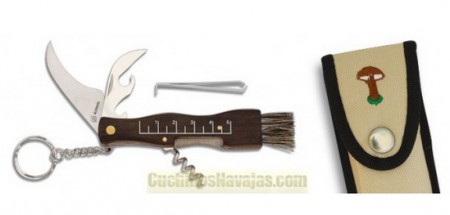
A fundamental principle in mushroom harvesting is that they should never be pulled out by the root. Instead, they should be carefully cut at the stem with a small knife or special mushroom cutting knife, leaving the bulb part and, more importantly, the mycelium (the underground network of fungal filaments) intact in the soil. This practice is vital to ensure that the mushroom can grow back in the future and that the fungal ecosystem is not harmed. Mushroom knives and cutters come in special designs precisely to facilitate this task of proper cutting and preservation.
Key Features of Mycological Knives: Beyond the Edge
Although at first glance a mushroom knife may seem like a simple instrument, it integrates several features specifically designed to optimize the collector’s experience, making each day in the mountains more productive and respectful of the environment.
The Curved Blade: Precision and Mycelium Care
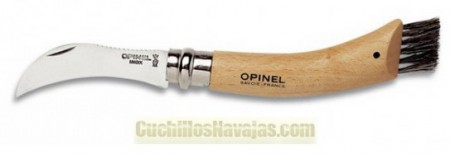
One of the most distinctive and functional features of a mycological knife is its curved blade. This particular shape is no coincidence; it allows for surgical precision when cutting mushroom stems, without tearing the base or, crucially, damaging the delicate underground mycelium. By making a clean and precise cut, the continuity of the fungus’s life cycle is guaranteed, allowing the mushroom to sprout again in future seasons. In addition to its primary cutting function, this curvature is ideal for cleaning the dirty tip of the stem, brushing off pine needles, leaves, or large pieces of debris that adhere to the mushroom at the time of collection. In the culinary field, this curvature, similar to that of a “bird’s beak” or “tourné” knife, is even used to peel the skin of the mushroom cap, especially in species where this layer is undesirable for consumption.
It is crucial that the blade is made of high-quality stainless steel to ensure its durability, corrosion resistance (given the humidity of the forest environment), and ease of cleaning. Some knives, such as those produced by the renowned brand Opinel, use Sandvik stainless steel for its ease of maintenance, excellent edge retention, and optimal cutting ability. However, not all collectors prefer them for all types of mushrooms; some find that for tougher specimens, with harder or fibrous stems, a folding knife with a straight edge and good steel can offer better performance, allowing for a more forceful cut. The choice of steel type also influences the need for sharpening and the overall resistance of the blade to abrasion.
The Integrated Brush: Cleaning at the Right Time
Most mycological knives include a soft-bristled brush, an extremely useful feature that makes a big difference in the quality of the collection. This brush allows you to clean most of the dirt, leaves, pine needles, and other debris directly at the collection site, right after cutting the mushroom. This not only makes the mushroom “prettier” and easier to inspect for damage, slugs, or insects, but also greatly simplifies subsequent cleaning at home, reducing the need for extensive washing that could affect the texture and flavor of the mushroom. By cleaning mushrooms in the forest, we also contribute to the dispersal of spores, favoring the reproduction of fungi.
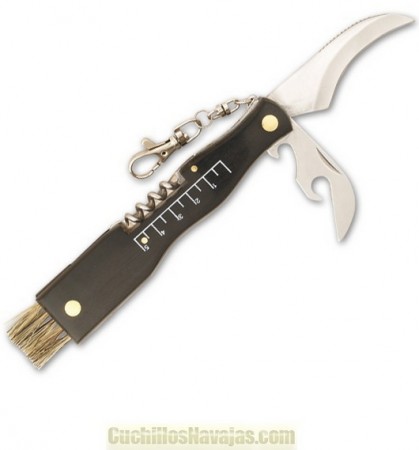
The bristles of the brush can be made of various materials, such as badger hair (known for its softness), boar bristles (firmer and more durable), or horsehair. Some models even feature retractable brushes for greater convenience and to protect the bristles when the knife is not in use. Despite its undeniable usefulness, some collectors prefer to carry a small brush separately, or even do without it if the knife will be used for other tasks such as collecting ferns or weeds for compost, where instant cleaning is not a priority. However, for collecting edible mushrooms, the integrated brush is a considerable added value.
Ergonomic Design and Portability: Comfort in the Field
A mushroom knife must first and foremost be comfortable to use, especially during long days of walking and searching in the forest. Therefore, the design of the handle is fundamental, always seeking a secure, firm, and ergonomic grip that prevents hand fatigue and the risk of accidents. Handle materials vary widely, including noble woods such as olive or oak (which can be varnished or treated to protect them from moisture and enhance their natural beauty) or high-resistance non-slip plastics, which offer durability and a secure grip even with wet hands.
Portability is a key feature for any field tool. Many mushroom knives are foldable, making them safe to carry in a pocket, backpack, or hung from a belt. It is vitally important that the blade locking mechanism is reliable and robust to prevent accidental closures during use, which could cause injuries. Common locking systems include the “liner lock,” the “back lock,” or the “virobloc” (characteristic of Opinel), all designed to keep the blade firmly open during cutting. Their compact size and light weight make them effortless to handle and do not add unnecessary burden during long walks.
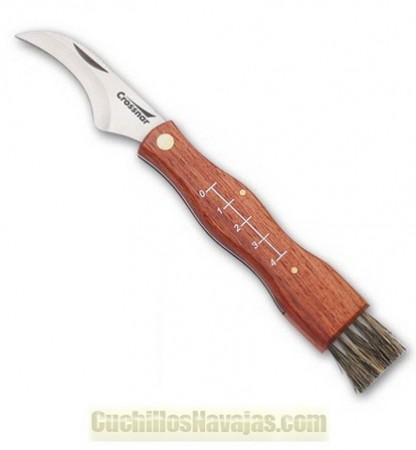
In addition to these essential features, some models of mycological knives include additional accessories that increase their functionality and practicality. These can be carabiners for easily hanging them from a backpack or belt, small measuring rules integrated into the handle (useful for knowing if a specimen is too small to be sustainably collected, respecting local regulations), or even integrated tweezers, perfect for removing small insects or debris difficult to reach with the brush.
Types of Knives for Every Mushroom Hunter: Find Your Ideal Tool
There is a wide variety of mushroom knives on the market, adapted to different preferences, collection styles, and types of fungi sought. Choosing the right one will depend on your experience, the type of terrain, and the species you usually collect.
The Classics or Traditionals: Robustness and Efficiency
These are the “classic” knives, often with a distinctive wooden handle and a short, sturdy pointed blade. They are designed to pull out mushrooms with strong stems or to pry by sticking the blade into the ground to extract more deeply rooted specimens, especially useful for mushrooms with robust and deep stems. Their simple and proven design makes them a reliable choice for many collectors. They are usually very durable and withstand the test of time and intensive use in the field.
The Tranchete Style: Flat and Precise Cuts
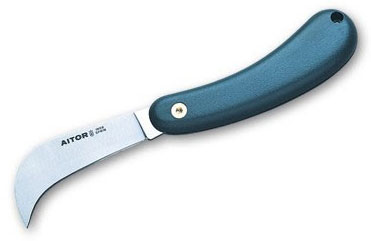
These knives are characterized by their half-moon or “parrot’s beak” shape, which allows for a flat and very clean cut. They are ideal for flat-growing mushrooms or those that grow close to the ground, such as saffron milk caps or king oyster mushrooms (Pleurotus eryngii). Their curved and sharp blade glides easily, minimizing damage to the fungus. Some versions come in mini size, perfect for the little ones who are starting out in the hobby, or to carry as an auxiliary knife. The precision of their cut makes them highly valued for delicate species.
Modern and Ergonomic Design: Innovation and Practicality
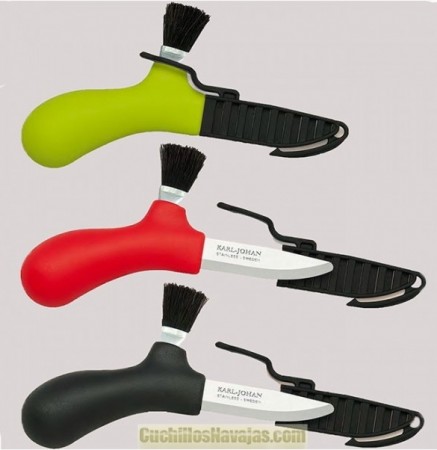
Designed for the collector seeking originality, maximum practicality, and a touch of contemporary design, these knives usually feature a highly ergonomic design, often with resistant plastic handles, non-slip rubber, or composite materials. Their blades are usually sharp and, at times, smaller for even greater control. Some brands are known for combining traditional designs with premium materials and innovative features, offering a balance between aesthetics and functionality. These knives are usually lightweight and very comfortable to carry during long days.
Alternatives and Other Tools: Versatility in the Forest
Not all mushroom enthusiasts exclusively use a specific knife for this purpose. Some prefer to carry a general-purpose folding knife with good steel, which serves multiple purposes in the mountains. Others opt for multi-tools that integrate various functions. Collectors have been seen using everything from a robust Mora knife (known for its durability and edge), to a Klein wire stripping knife, or even a Milwaukee “hawkbill” type knife, more oriented towards gardening or DIY tasks, although the latter could be considered “brute” or excessively large for the delicacy required for mushroom collection. Even for some large mushrooms or those that detach easily, one’s own hands are the best collection tool, as long as it is done carefully so as not to damage the mycelium. The key is responsibility and care for the environment.
The Habit of Foraging: A Legacy, a Passion, and a Responsibility
Mushroom hunting is much more than a simple activity; it is a deeply relaxing and rewarding pastime that can be enjoyed in nature, almost anywhere in the world and at any age. It is a way to connect with the environment, observe biodiversity, and enjoy the tranquility of the forest. Many learn about mycology from their grandparents, transmitting a tradition and ancestral knowledge. Others immerse themselves in this world through videos, specialized books, courses, or through the exchange of experiences with other enthusiasts. This oral tradition and the exchange of knowledge form an essential and attractive part of the mycological hobby.
It is of vital importance to remember prudence in the field. Collectors, absorbed in the exciting search for specimens, can easily become disoriented. Therefore, it is advisable to carry a map, a compass, or a GPS, and always inform someone of the route to be followed. And, of course, species identification is absolutely vital, as eating the wrong mushroom can have very serious, even fatal, consequences. It is always recommended to collect only those species of which you are 100% certain of their edibility. When in doubt, it is best to leave it in the forest. In addition, it is always recommended to cook mushrooms before consuming them, although some species can be eaten raw with specific preparation and expert knowledge. The main interest is usually to find edible and highly valued species in gastronomy, such as the delicious Boletus edulis, the aromatic Cantharellus cibarius (chanterelles), or the prized Lactarius deliciosus (saffron milk caps). However, many also enjoy simply observing, photographing, and learning about fascinating non-edible species, which often present spectacular shapes and colors.
In addition to the knife, the wicker basket is another indispensable element. Mushrooms should be collected in a wicker basket or similar container that allows spores to fall back to the ground as we move, thus contributing to the dispersal and fertilization of the forest. Only those that are going to be collected should be cut and, as already mentioned, it is important to know how to differentiate between mushrooms suitable for human consumption and poisonous ones. Never ingest those you do not know. We must avoid uncontrolled, unsustainable, and massive collection to prevent the danger of mushroom populations disappearing. Prudence and respect for the environment are the pillars of responsible collection. It is best to consume mushrooms as soon as possible after collection to savor them while preserving all their organoleptic properties and freshness.
Choosing the Perfect Knife for Your Mycological Adventures
Choosing the right knife is a fundamental step in preparing for a successful and rewarding mycological day. By considering key factors such as the blade type (curved or straight, steel material), the ergonomic design of the handle (material, grip), the folding and locking mechanism (safety), the quality and material of the integrated brush, the size and weight of the knife, as well as its overall durability, you will be able to select the perfect tool to faithfully accompany you on your next mycological adventures. A good knife not only facilitates the collection task but also enhances your experience in nature, allowing you to fully enjoy this wonderful pastime with the safety and respect that the environment deserves.
If you are looking for the ideal companion for your outings to the mountains and want to ensure you have a quality tool that meets all the requirements for efficient and responsible collection, we invite you to explore a wide selection of models. From the classics to the most modern, you will find the mushroom knife that best suits your style and needs.