The folding knives, ancestral tools and faithful companions of humanity, have evolved over the centuries to adapt to countless purposes. From wilderness survival to precision in everyday tasks, the key to maximizing their usefulness lies in understanding the specific characteristics of their blades and edges. Each design, each curve, and each angle has a reason for being, optimized for a type of cut, a particular resistance, or a specific function.
Choosing the right folding knife is not just a matter of aesthetics or brand; it is an informed decision that directly impacts the efficiency, safety, and durability of the tool. A well-chosen folding knife becomes an extension of your hand, capable of performing tasks with astonishing ease and precision. Conversely, a wrong choice can frustrate you and, in the worst case, prove ineffective or even dangerous.
In this comprehensive guide, we will delve into the fascinating world of folding knives, breaking down the most common types of folding knives according to their blade shape and edge design. We will explore their distinctive features, their ideal applications, their advantages and disadvantages, and offer recommendations so that, whether you are a beginner, an expert, or an occasional adventurer, you can identify the perfect folding knife that suits your needs and lifestyle. Get ready to sharpen your knowledge and make the best decision in your next acquisition.
Types of Folding Knife Blades by Shape: A World of Possibilities
Contents
- Types of Folding Knife Blades by Shape: A World of Possibilities
- Drop Point Blade
- Clip Point Blade
- Spear Point Blade
- Dagger (Dagger Blade)
- Tanto Blade
- Reverse Tanto Blade
- Wharncliffe Blade
- Sheepsfoot Blade
- Straight Back Blade / Standard, Straight or Straight Profile Blade
- Trailing Point Blade
- Hawksbill Blade / Karambit or Hawk Blade
- Cleaver Blade
- Harpoon Blade
- Kukri Blade
- Kris Blade
- Assist Blade or Blunt Tip
- Leaf Blade (leaf-shaped or laurel-shaped)
- Inverted “S” Blade
- Upswept Point Blade
- Gut Hook Blade
- Lambsfoot Blade
- Multi-tool Knife or Penknife
- Barber’s Razor
- Cabritera Knife
- Sailor’s Knife
- Types of Folding Knife Edges: The Key to a Good Cut
- How to Choose the Perfect Folding Knife for You: A Personalized Approach
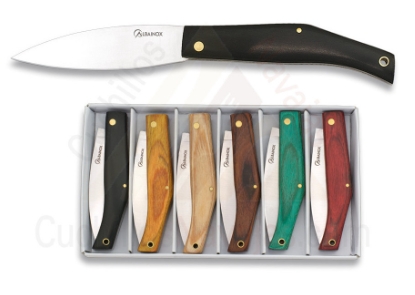
The blade shape is, without a doubt, one of the most determining factors in a folding knife’s functionality. Each design is intended to optimize certain types of cutting, resistance, or piercing capability. Knowing these differences is fundamental to selecting the right tool for each task.

Drop Point Blade
The Drop Point blade is, perhaps, the most widespread and versatile in the world of folding knives, especially those intended for everyday carry (EDC). Its design is characterized by a soft convex curve on the spine that gradually descends towards the tip. This controlled inclination not only facilitates exceptional control and millimeter precision in cutting but also confers remarkable robustness to the tip, making it less prone to breaking than other finer tips.
- Key features: Strong and resistant tip, spine curved towards the tip, excellent control.
- Practical differences: Unlike other blades, its tip is not excessively sharp for piercing, but its strength makes it ideal for general tasks without risk of fracture.
- Ideal use scenarios: It is the preferred choice for hunting knives, general-purpose folding knives, and any situation where a balance between strength, control, and versatility is required. Perfect for cutting various materials, preparing food in the field, or performing DIY tasks.
- Advantages: Extremely resistant, very versatile, easy to sharpen, provides great control for long and precise cuts. Its durability makes it a reliable option for daily use.
- Disadvantages: Its piercing capability is lower compared to sharper pointed blades.
Clip Point Blade
Also known as the Bowie style, the Clip Point blade is iconic and easily recognizable by its concave “clip” on the upper part of the tip. This design not only gives it an aggressive and classic aesthetic but also provides it with an extremely fine and sharp tip. This sharpness is its main strength, optimizing the piercing motion and allowing superior precision and control in detailed cuts.
- Key features: Fine and sharp tip, concave “clip” on the spine near the tip.
- Practical differences: Its tip is more vulnerable to breakage than a Drop Point due to its thinness, but its piercing capability is unmatched for tasks that require it.
- Ideal use scenarios: Ideal for piercing, detailed work, skinning animals (thanks to the edge’s curve), and in situations where precision is paramount. Very popular in hunting and tactical knives.
- Advantages: Excellent for piercing, great precision in detailed cuts, versatile for various tasks.
- Disadvantages: The tip is more fragile and susceptible to damage if subjected to prying or lateral impacts.
Spear Point Blade
The Spear Point blade is distinguished by its perfect symmetry, where the spine and edge curve identically to meet at a point that aligns with the center of the blade. This configuration gives it an exceptional ability to perform thrusts and deep penetrations with minimal effort. Although often associated with daggers and double-edged knives, it is also found in single-edged folding knives that seek a good balance and piercing capability.
- Key features: Symmetrical and centered tip, often double-edged.
- Practical differences: Its symmetry makes it very balanced for handling and piercing, unlike asymmetrical designs.
- Ideal use scenarios: Common in daggers and tactical knives, it is popular for self-defense and situations requiring precise piercing. It is also suitable for survival and rescue tasks where the ability to pierce materials is crucial.
- Advantages: Great piercing capability, excellent balance, suitable for cutting and stabbing.
- Disadvantages: If it has a double edge, it is not ideal for resting the thumb on the spine for greater pressure, and may be less versatile for broad slicing cuts.
Dagger (Dagger Blade)
A dagger is a specific type of blade characterized by having two sharp edges and an extremely acute point. Its design is optimized almost exclusively for piercing and cutting in combat or self-defense. Although often presented as a fixed blade knife, there are folding knives with dagger-type blades that replicate this functionality in a folding format.
- Key features: Two sharp edges, very acute point, symmetrical design.
- Practical differences: Unlike single-edged blades, a dagger allows cutting in both directions and piercing with great ease.
- Ideal use scenarios: Primarily for self-defense, tactical situations, and combat. It is not practical for daily use or utilitarian tasks due to the lack of a secure spine for the thumb and its design focused on piercing.
- Advantages: Maximum piercing and cutting capability in two directions, very effective in self-defense situations.
- Disadvantages: Not versatile for everyday tasks, its use is restricted in many jurisdictions due to its nature.
Tanto Blade
Inspired by traditional Japanese samurai swords, the modern Tanto blade is characterized by its distinctive angular design, with a straight main edge that meets a shorter, angular second edge at the tip, forming a “chisel” or “chisel point.” This geometry confers exceptional strength to the tip, making it ideal for piercing hard materials and withstanding high-impact work.
- Key features: Very strong and angular tip, geometric design.
- Practical differences: Its tip is one of the strongest, surpassing Drop Point and Clip Point in resistance to impact breakage. However, its geometry can make sharpening difficult at the junction of the two angles.
- Ideal use scenarios: A favorite in tactical and military pocket knives. It is ideal for penetrating hard materials such as sheet metal, thick leather, or plastics, and for push cuts. Its robustness makes it suitable for intensive work and survival situations.
- Advantages: Extremely strong and resistant tip, excellent for piercing, ideal for high-impact work.
- Disadvantages: Can be more difficult to sharpen due to the angles, and the edge curve is limited for slicing cuts.
Reverse Tanto Blade
The Reverse Tanto blade is a less common variant of the traditional Tanto. Unlike the latter, the distinctive angle is not found at the bottom of the tip, but at the top, creating a kind of inverted “ramp” on the spine. This gives it a unique appearance and slightly modifies its functionality.
- Key features: Angle on the upper part of the spine, less aggressive than the traditional Tanto.
- Practical differences: It is less effective for piercing extremely hard materials than the classic Tanto, but its design may allow for more precise and controlled cuts in certain applications.
- Ideal use scenarios: Popular in some tactical and specific-use knives where a balance between aesthetics and functionality is sought, without the need for maximum tip strength. It can be useful for detailed work that requires a specific cutting angle.
- Advantages: Distinctive aesthetic, allows certain types of precise cuts.
- Disadvantages: Lower piercing capability and tip strength compared to the traditional Tanto.
Wharncliffe Blade
The Wharncliffe blade is a design that prioritizes precision and control in cutting. It is characterized by a spine that descends in a smooth and continuous curve towards the edge, which is completely straight. The resulting tip is very strong and robust, but it is not designed for piercing, but rather to concentrate all the cutting force on the straight edge.
- Key features: Curved spine that descends, straight edge, robust but not sharp tip for piercing.
- Practical differences: Its straight edge is ideal for push and slicing work, and the absence of a sharp tip minimizes the risk of accidental punctures.
- Ideal use scenarios: Ideal for detailed work, cutting ropes, fishing lines, nets, or opening packages with precision without damaging the contents. Highly valued by artisans and for tasks that require absolute cutting control.
- Advantages: Excellent for precise cuts and detailed work, thick and very resistant blade, minimizes the risk of accidental punctures.
- Disadvantages: Zero piercing capability.
Sheepsfoot Blade
Similar to the Wharncliffe in its focus on safety, the Sheepsfoot blade is distinguished by its curved spine that descends to a completely rounded tip, while the edge is straight. The total absence of a sharp tip makes it one of the safest blades, ideal for preventing accidental punctures.
- Key features: Curved spine, straight edge, rounded and blunt tip.
- Practical differences: The rounded tip is its most distinctive feature, differentiating it from the Wharncliffe which, although it does not pierce, has a more defined tip.
- Ideal use scenarios: Common in rescue tools, emergency knives, and for personnel working in environments where the risk of perforation must be zero (e.g., paramedics, electricians). It is excellent for cutting ropes, seat belts, or nets efficiently and safely. It is also a great option for EDC pocket knives for people who prioritize safety.
- Advantages: Maximum safety, prevents accidental punctures, excellent for slicing and cutting fibrous materials. Widely used by sailors for its safety on deck.
- Disadvantages: No piercing capability.
Straight Back Blade / Standard, Straight or Straight Profile Blade
The Straight Back blade is a classic and fundamental design, characterized by a completely straight and unsharpened spine that extends from the handle to the tip. The edge, for its part, can be straight or have a slight curve. This simplicity makes it extremely versatile and robust.
- Key features: Straight and unsharpened spine, straight or slightly curved edge.
- Practical differences: Its straight and thick spine makes it very resistant for heavy tasks and allows applying pressure with the thumb for greater control.
- Ideal use scenarios: It is a general-purpose folding knife par excellence, ideal for those seeking a versatile tool without specific functions. It works well for cutting, slicing, chopping, and tasks that require a strong spine to apply force.
- Advantages: Simple and effective design, very resistant and durable, versatile for multiple tasks, easy to sharpen.
- Disadvantages: Not specialized in piercing or very fine cuts.
Trailing Point Blade
The Trailing Point blade is distinguished by a tip that curves upwards, above the spine of the knife. This upward curve lengthens the cutting surface of the edge, making it exceptionally efficient for slicing and skinning tasks.
- Key features: High tip curved upwards, large cutting surface.
- Practical differences: The raised tip is ideal for separating skin without piercing the meat, unlike lower tips.
- Ideal use scenarios: Extremely popular among hunters and fishermen for skinning animals and filleting fish. Its design allows for long, fluid cuts with great precision. It is also useful for field cooking.
- Advantages: Excellent for skinning and filleting, large cutting surface for slicing, very sharp tip.
- Disadvantages: The tip is more fragile and vulnerable to breakage if used for prying or impact. Its piercing capability is limited.
Hawksbill Blade / Karambit or Hawk Blade
The Hawksbill blade, or “hawk’s beak,” is easily recognizable by its claw or hook shape, with the edge curved downwards and a sharp tip. This design is commonly found in Karambit-type knives, originating from Southeast Asia, known for their safety ring on the handle.
- Key features: Hook or claw shape, tip curved downwards.
- Practical differences: Its unique shape makes it ideal for cutting resistant materials with a pulling motion, unlike straight blades that require a pushing motion.
- Ideal use scenarios: Effective for cutting resistant materials such as ropes, wires, seat belts, or nets. Its design also makes it popular in agricultural work (such as pruning) and in self-defense, where its hook shape can be very effective.
- Advantages: High cutting performance with precision on fibrous materials, excellent for stripping cables or cutting branches, very secure grip if it includes a ring.
- Disadvantages: Not versatile for slicing or piercing tasks, its use is very specific.
Cleaver Blade
Inspired by large butcher knives, the Cleaver blade on a folding knife is thick, robust, and has a rectangular or trapezoidal shape. It is designed to withstand high-impact tasks and heavy cuts.
- Key features: Thick and resistant blade, rectangular or trapezoidal shape, straight and robust spine.
- Practical differences: Its weight and robustness make it superior for chopping and cutting hard materials, unlike thinner blades.
- Ideal use scenarios: Ideal for heavy tasks such as cutting meat, small bones, large vegetables, or even for camping work where a blunt tool is needed. It is an outstanding option for rough work.
- Advantages: Extremely resistant, excellent for chopping and cutting hard materials, very durable.
- Disadvantages: Not suitable for precision work, nor for piercing. Its size may make it less practical for daily carry.
Harpoon Blade
The Harpoon blade is a variant of the Drop Point, but with a distinctive feature: a ramp or “hook” on the spine, near the tip. This ramp adds an additional thumb rest, which provides even greater control during cutting.
- Key features: Similar to the Drop Point but with a ramp on the spine.
- Practical differences: The harpoon ramp offers superior control for jobs that require precision and force applied directly to the tip or edge.
- Ideal use scenarios: Ideal for those who require a precise and firm cutting tool, where control is paramount. It can be useful for carving, detailed work, or tasks that need controlled pressure.
- Advantages: Greater control in cutting, good tip resistance, versatile.
- Disadvantages: Not as common as the standard Drop Point.
Kukri Blade
Originating from Nepal, the Kukri blade is characterized by its distinctive forward curve, with a wider and heavier section at the front of the blade. This design allows it to function as a combination of a knife and a light axe.
- Key features: Pronounced forward curve, heavier front part.
- Différences pratiques: Its weight and curve concentrate the force at the point of impact, making it excellent for cutting and chopping, similar to an axe or machete.
- Ideal use scenarios: A blunt blade, ideal for heavy impact tasks such as cutting branches, clearing vegetation, or even for camping work that requires machete use.
- Advantages: Great cutting and chopping power, very versatile in the field, robust.
- Disadvantages: Not suitable for fine or precision work, its size and weight may be excessive for an everyday folding knife.
Kris Blade
The Kris blade is a highly ornamental and ceremonial design, originating from Indonesia, Malaysia, and other Southeast Asian regions. Its most distinctive feature is its wavy or “flamed” shape, which can vary in complexity and number of undulations.
- Key features: Wavy and ornamental design, often double-edged.
- Practical differences: Unlike most functional blades, the Kris is designed more for its symbolic and aesthetic value than for its practical utility in cutting.
- Ideal use scenarios: Primarily ceremonial, decorative, or collectible. Although historically it was a weapon, its wavy design does not make it efficient for most everyday cutting tasks.
- Advantages: Great aesthetic and cultural value, unique collector’s item.
- Disadvantages: Very limited practical functionality for cutting, not a utility knife.
Assist Blade or Blunt Tip
The Assist blade, also known as a blunt tip or “sheepnose,” is designed with safety as its top priority. Its tip is completely rounded and unsharpened, similar to the Sheepsfoot, but often with a thicker and more robust profile.
- Key features: Completely blunt and unsharpened tip, robust design.
- Practical differences: Its design completely eliminates the risk of punctures, making it indispensable in emergency situations.
- Ideal use scenarios: Very common in rescue knives and folding knives, for firefighters, paramedics, and emergency personnel. It allows cutting materials such as ropes, seat belts, or clothing without risk of injuring the victim.
- Advantages: Maximum safety to prevent accidental punctures, ideal for rescue situations.
- Disadvantages: No piercing capability, limited for precision cuts.
Leaf Blade (leaf-shaped or laurel-shaped)
Developed and popularized by the Spyderco brand, the Leaf blade (laurel leaf or leaf-shaped) is a design that seeks an optimal balance between cutting capacity, tip strength, and versatility for everyday use. It is similar to the spear point blade, but it is not completely symmetrical and usually has a slightly sharper tip and a more pronounced cutting belly.
- Key features: Laurel leaf shape, sharp but robust tip, pronounced cutting belly.
- Practical differences: Offers an excellent combination of slicing and piercing capability, being more versatile than a pure Spear Point for general use.
- Ideal use scenarios: Perfect for EDC (Everyday Carry) activities, as it handles a wide range of tasks well, from opening packages to preparing food or performing light work.
- Advantages: Very versatile for daily use, good balance between cutting and piercing, ergonomic.
- Disadvantages: Not as specialized in a single type of task as other blades.
Inverted “S” Blade
The inverted “S” blade is a less conventional design characterized by a distinctive curve along the edge, resembling an inverted “S.” The tip is usually curved downwards, and the widest part of the blade forms a convex arc. This geometry can offer specific benefits for certain types of cutting.
- Key features: Edge with an inverted “S” shape, tip curved downwards.
- Practical differences: The curvature of the edge creates multiple contact points for cutting, which can improve efficiency in certain slicing movements.
- Ideal use scenarios: Can be useful for tasks that benefit from an edge with different cutting angles, such as butchering animals or specific carving jobs. Its use is more niche and depends on user preference.
- Advantages: Unique aesthetic, can offer efficient cutting action at certain angles.
- Disadvantages: More difficult to sharpen due to complex curves, less versatile for straight cuts.
Upswept Point Blade
The Upswept Point blade is characterized by an edge that curves sharply upwards, ending in a tip that is significantly above the spine of the knife. This upward curve maximizes the length of the curved edge, making it excellent for skinning and slicing tasks.
- Key features: Edge curved upwards, raised tip.
- Practical differences: Similar to the Trailing Point, but the curve can be even more pronounced, offering an even larger cutting surface for slicing.
- Ideal use scenarios: Appears in some skinning knives and is primarily used for tasks related to hunting, where the ability to separate skin from meat with a fluid motion is crucial.
- Advantages: Excellent for skinning and slicing, large cutting surface.
- Disadvantages: The tip is very thin and fragile, not suitable for piercing or prying tasks.
Gut Hook Blade
The Gut Hook blade is a specialized feature found on the spine of some folding knives, especially hunting or rescue knives. It consists of a very pronounced concave edge that forms a hook, designed to cut materials safely and efficiently without damaging what is underneath.
- Key features: Sharp hook on the spine, concave edge.
- Practical differences: Its hook design allows cutting fibrous materials with a pulling motion, without the need for a sharp tip that could damage internal organs or a victim’s skin.
- Ideal use scenarios: Used in hunting knives to open the abdominal cavity of animals without piercing the intestines, and in rescue knives to free accident victims by cutting seat belts or clothing.
- Advantages: Safe and efficient cutting of fibrous materials, prevents accidental punctures, ideal for specific hunting and rescue tasks.
- Disadvantages: Not a primary cutting blade, but an auxiliary feature.
Lambsfoot Blade
The Lambsfoot blade is very similar to the Sheepsfoot, but with a subtle difference in the spine. While the Sheepsfoot has a spine that descends in a more pronounced curve to the rounded tip, the Lambsfoot features a spine with a smoother drop and a less energetic curve, which gives it a slightly more defined tip, although it is still blunt.
- Key features: Similar to Sheepsfoot, spine with a smoother drop, slightly more pronounced but blunt tip.
- Practical differences: Offers the safety of a Sheepsfoot, but with a slightly better ability to perform push cuts with the tip if minimal precision is needed.
- Ideal use scenarios: Excellent for cutting and slicing, and is valid for push cuts with the tip if precision is needed without the risk of a sharp tip. Popular in traditional folding knives and for jobs that require safety and good control.
- Advantages: Very safe, good for slicing and cutting, versatile for everyday tasks.
- Disadvantages: Limited piercing capability.
Multi-tool Knife or Penknife
More than a type of blade, the multi-tool knife is a category of folding knives that integrate multiple tools in addition to the main blade. The Swiss Army knife is the most iconic example of this category, offering everything from corkscrews and scissors to screwdrivers and saws.
- Key features: Various folding tools, main blade is usually Drop Point or Spear Point.
- Practical differences: Its main advantage is portability and the versatility of having multiple functions in a single object.
- Ideal use scenarios: Ideal for daily use, outdoor activities, camping, light DIY, or as an emergency tool. A Swiss Army knife is indispensable in any kit.
- Advantages: Extremely versatile, compact, offers solutions for a wide range of problems.
- Disadvantages: Individual tools are usually smaller and less robust than their full-sized equivalents.
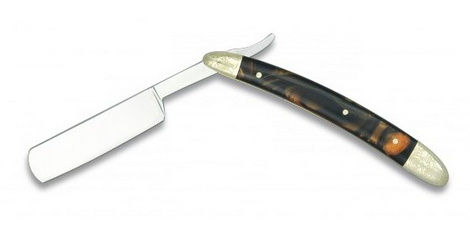
Barber’s Razor
The barber’s razor is a traditional shaving tool, characterized by its extremely sharp edge and its highly tempered steel construction. Its design is optimized to provide a close and precise shave.
- Key features: Extremely sharp edge, straight or slightly curved blade, folding handle.
- Practical differences: Unlike utility knives, its edge is so fine that it is not suitable for cutting hard materials, but rather for gliding smoothly over the skin.
- Ideal use scenarios: Exclusively for shaving. Requires skill and care in its handling and maintenance.
- Advantages: Extremely close and smooth shave, traditional shaving experience.
- Disadvantages: Requires constant edge maintenance, not a general-purpose folding knife.
Cabritera Knife
The Cabritera knife is a traditional Spanish folding knife, specially designed for tasks related to butchering animals, particularly goats and sheep. Its blade is usually robust and has a specific curve to facilitate skinning.
- Key features: Robust blade, often with a curve for skinning.
- Practical differences: Its design is optimized for field and livestock tasks, unlike general-purpose folding knives.
- Ideal use scenarios: Used for skinning livestock and other field tasks related to animal husbandry and hunting.
- Advantages: Specialized in skinning, robust and durable.
- Disadvantages: Less versatile for other tasks.
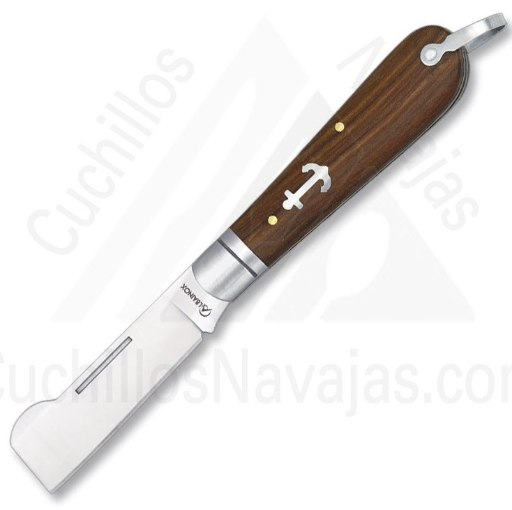
Sailor’s Knife
As its name suggests, the sailor’s knife is an essential tool for those who work or sail at sea. Its design prioritizes functionality and corrosion resistance, often including specific tools for nautical tasks.
- Key features: Corrosion-resistant blade, often with a Sheepsfoot or Wharncliffe blade for safety, may include a marlinspike or shackle key.
- Practical differences: It is built to withstand wet and salty environments, and its tools are designed for knots, ropes, and rigging.
- Ideal use scenarios: Commonly used by sailors, fishermen, and water sports enthusiasts. Ideal for cutting ropes, untying knots, or maintenance tasks on boats.
- Advantages: Corrosion resistant, specific tools for the sea, safe to use while moving.
- Disadvantages: May have fewer tools than a Swiss Army knife, its use is more specific.
Types of Folding Knife Edges: The Key to a Good Cut
In addition to the blade shape, the type of edge is crucial in determining how the folding knife interacts with the material to be cut. Each edge has its own strengths and weaknesses, optimized for different situations.
Plain Edge
The plain edge is the most common and traditional type of knife edge. It is characterized by a continuous and uninterrupted cutting surface, making it ideal for a wide variety of tasks that require precision and a clean cut.
- Key features: Flat and continuous cutting surface.
- Practical differences: Offers more control and precision due to its uniform cutting surface. Unlike serrated edges, it does not “tear” the material, but cuts it cleanly.
- Ideal use scenarios: Produces push cuts, ideal for peeling an apple, slicing food, carving wood, opening packages with precision, or any task where a clean and controlled cut is desired.
- Advantages: Cleaner and more precise cut, easier to sharpen (even by yourself), greater control over the cut.
- Disadvantages: Cannot be used as a saw or for pulling motions on very resistant materials. May slip on smooth or fibrous surfaces.
Serrated Edge
The serrated edge consists of a series of “teeth” or saws along the cutting edge. This design is intended to cut fibrous or resistant materials more easily, acting like a small saw.
- Key features: Cutting edge with teeth or saws.
- Practical differences: The pressure per cutting section is higher at the points of the teeth, which facilitates the cutting of materials that a plain edge might have difficulty penetrating.
- Ideal use scenarios: Allows easy cutting of resistant materials such as ropes, nets, seat belts, bread, or fibrous materials. Ideal for outdoor situations, rescue, or tasks that require a “sawing” action.
- Advantages: Excellent for cutting fibrous and resistant materials, can be used as a saw, maintains its cutting ability even when the main edge dulls.
- Disadvantages: It is less precise and the cut is more “messy.” More difficult to sharpen, often requires specialized tools.
Partially Serrated Edge
The partially serrated blade, or combination blade, seeks to offer the best of both worlds, combining a plain edge section with a serrated section. Generally, the serrated part is located near the handle, and the plain part towards the tip.
- Key features: Combines a plain edge section and a serrated section.
- Practical differences: Allows both precise push cuts with the plain part and pulling cuts on resistant materials with the serrated part.
- Ideal use scenarios: Very versatile for everyday use and situations where both types of cutting are needed. The plain part allows precise cuts (e.g., peeling fruit), and the serrated part is useful for demanding tasks (e.g., cutting ropes).
- Advantages: Exceptional versatility, combines the advantages of both edges, useful in a wide range of situations.
- Disadvantages: It is more difficult to sharpen than a completely plain edge, as it requires sharpening two different types of edges.
Double-Edged Blade
A double-edged blade has two sharp edges, one on the main edge and one on the spine. This design is symmetrical and is commonly found in daggers or tactical knives, where the ability to cut in both directions is an advantage.
- Key features: Two sharp edges, symmetrical design.
- Practical differences: Unlike single-edged blades, a double-edged blade allows cutting or piercing with equal effectiveness from either side.
- Ideal use scenarios: Primarily for self-defense and tactical situations. Its design allows for great versatility in combat.
- Advantages: Maximum cutting and piercing capability in two directions, very effective in certain applications.
- Disadvantages: Not practical for most utilitarian tasks, as it does not allow resting the thumb on the spine. Its legality is restricted in many places.
How to Choose the Perfect Folding Knife for You: A Personalized Approach
With the vast diversity of folding knife types and edges available, choosing the perfect tool can seem overwhelming. However, by considering some key factors, you can significantly narrow down your options and find the folding knife that best suits your needs and lifestyle. The key is introspection: what will you use it for? How often? What is your experience level?
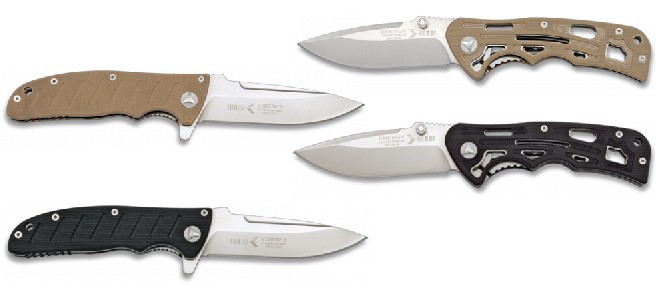
Consider the Main Use
This is, without a doubt, the most important factor. A hunting knife will not be ideal for an electrician, nor a rescue knife for a collector. Think about the most common tasks you will perform:
- Everyday Carry (EDC): If you are looking for a folding knife to carry with you daily and perform everyday tasks such as opening packages, cutting thin ropes, peeling fruit, or making small repairs, a Drop Point or Leaf blade with a plain or partially serrated edge is an excellent option. Prioritize compactness, light weight, and ease of opening.
- Hunting and Fishing: For skinning animals or filleting fish, Trailing Point or Upswept Point blades are unsurpassed due to their large curved cutting surface. A plain edge is preferable for precision, although a Gut Hook can be a valuable addition.
- Survival and Bushcraft: In demanding environments, you will need a robust and versatile folding knife. Drop Point, Straight Back, or even a Kukri (if you are looking for something more blunt) with a plain edge are solid options. Strength and durability are paramount.
- Rescue and Emergencies: Safety comes first. Sheepsfoot or Assist (blunt tip) blades with a serrated edge are ideal for cutting seat belts or clothing without risk of piercing. One-handed opening ease is crucial.
- Precision Work/Crafts: For carving, detailed cutting, or fine work, a Wharncliffe or a Drop Point blade with a plain edge will provide you with the necessary control.
- Tactical/Self-Defense: Clip Point, Tanto, or Spear Point blades (especially double-edged ones) are designed for piercing and effectiveness in self-defense situations. However, their use is regulated and they are not suitable for daily use.
Your Experience Level
If you are a beginner, simplicity and safety are your best allies. A folding knife with a Drop Point or Sheepsfoot blade and a plain edge will be easier to handle and sharpen. As you gain experience, you can explore more specialized designs and combined edges that require greater knowledge of sharpening and cutting techniques.
Maintenance and Sharpening
Consider how much time and effort you are willing to dedicate to maintaining your folding knife. Plain edges are, by far, the easiest to sharpen at home with a basic stone or sharpener. Serrated or partially serrated edges require specialized tools and more patience. Blades with complex geometries (such as the Tanto) can also present a sharpening challenge.
Blade and Handle Materials
Although not the main focus of this guide, materials directly influence performance and durability. Stainless steels are more corrosion resistant (ideal for wet or marine environments), while carbon steels offer greater edge retention but require more care to prevent oxidation. Handles can be made of G-10, micarta, aluminum, titanium, or polymers, each with its own advantages in terms of grip, weight, and resistance.
Recommendations According to User Profile
For the Beginner and Occasional User:
If you are starting in the world of folding knives or just need a reliable tool for sporadic tasks, look for simplicity and versatility. A folding knife with a Drop Point Blade and Plain Edge is the safest and most practical option. It offers a perfect balance between strength, control, and ease of use. Reputable brands usually have excellent entry-level models that will serve you for everything.
For the Occasional Adventurer and Outdoor Enthusiast:
If you enjoy hiking, camping, or fishing occasionally, you will need a more robust folding knife. A Drop Point or Straight Back Blade with a Partially Serrated Edge will offer you the versatility to cut ropes and prepare food. Also consider a quality multi-tool knife, as it will provide you with several tools in one compact package.
For the Expert and Professional:
If your activity requires a specialized tool or if you are an experienced enthusiast looking for maximum performance, you can explore more specific options. For hunting, a Trailing Point Blade with a Plain Edge and a Gut Hook can be indispensable. For tactical or high-impact work, a Tanto Blade with a Plain Edge will offer unparalleled tip strength. Experts also often invest in high-end steels and advanced locking systems for superior performance.
Ultimately, the ideal folding knife is one that adapts to you, your hands, and your specific needs. There is no “best” universal folding knife, but rather the best folding knife for a particular task and user. By understanding the different types of folding knives and edges, and by reflecting on your own usage profile, you will be in the best position to make an informed decision and acquire a tool that will faithfully accompany you on countless adventures and everyday tasks.
If you are ready to find your perfect companion and explore a wide range of options that fit each of these profiles and needs, we invite you to discover the complete collection of high-quality folding knives and knives in our online store. From versatile models for everyday use to specialized tools for the most demanding adventures, explore our selection and find the ideal folding knife for you.