
Working with poultry in the kitchen, whether deboning a chicken or carving a turkey, requires precision and, above all, the right tools. A dull or inadequate knife can make the task frustrating and even dangerous. This guide will help you understand the different types of knives designed for poultry, how to use them correctly, and the essential care to keep them always in optimal condition, whether you are a food industry professional or a culinary enthusiast at home.
To begin, it would be ideal to consider some basic rules that will help us successfully carry out our task. First, remember that poultry meat is highly recommended for being healthier, less greasy, and very tasty. Poultry is deboned to be consumed either cooked, stewed, poached, or roasted.
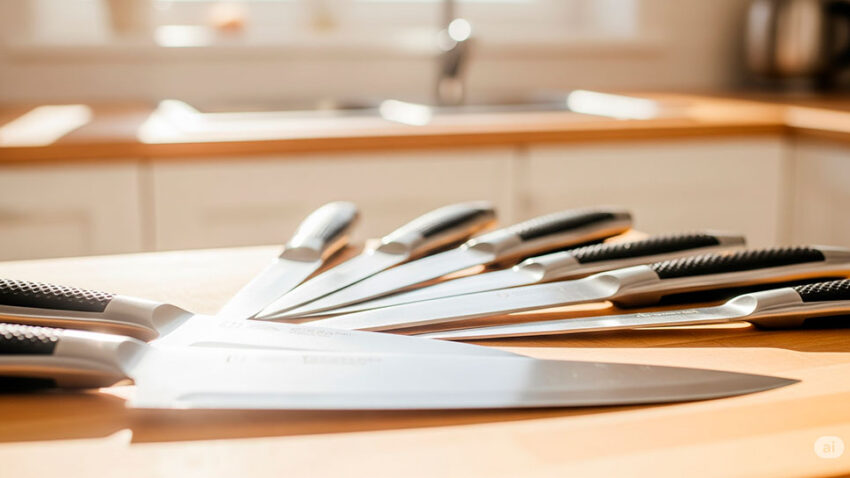
One of the most important rules is to know that if we are going to work on a table, we must ensure that it does not move and, above all, that it is at the appropriate height to allow a correct body posture; secondly, we will cut on a wooden board and, most importantly, the knife we are going to use and to which we must pay close attention since our success largely depends on it.

Mastering Poultry Cutting: The Right Tool is Key
Contents
Mastering poultry cutting is a skill greatly enhanced by choosing the right tool and knowing how to keep it sharp and safe. Our recommendation is for knives from Victorinox, knives that are easy to handle and allow for a clean cut, making the most of the meat. As a general rule, poultry usually has tender meat, but even so, a well-sharpened knife made with quality materials will always make the task easier.

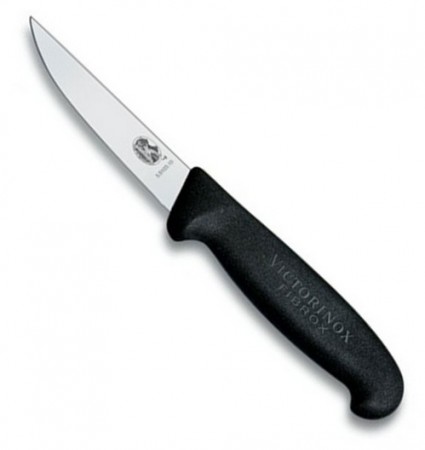
The straight edge, flexible blade, and non-slip Fibrox handle offer safety, thus ensuring the best results. Furthermore, it requires no maintenance, except sharpening, although some rules must always be followed, such as not using the knife for purposes it is not intended for, i.e., not using a kitchen knife to open a can. On the other hand, by using the appropriate knife, we can cut and prepare meat in different ways.
Types of Specific Knives for Poultry
For each cutting task with poultry, there is an ideal knife that will facilitate the process and ensure clean and efficient results. Knowing the characteristics of each one will allow you to choose the best option for your needs.
Boning Knives: Precision and Flexibility
They are essential for separating meat from bone. Varieties can be found with blades of different lengths, such as 13 or 15 cm, and injected polypropylene (PP) handles in straight or curved designs. Their design allows working around bones with agility. For deboning chicken thighs, many professionals opt for flexible models that facilitate access to difficult corners and crevices. A good boning knife is essential for obtaining clean cuts and making the most of the meat.
Butcher Knives: Versatility and Power
Butcher knives are versatile and robust tools for general meat cutting tasks. German-style models with injected PP handles, often in black, are available in blade lengths ranging from 17.8 cm to 31 cm. There are also professional lines with colored handles, such as yellow. They are perfect for the initial breakdown of larger pieces like turkey.
Professional Scissors: The Indispensable Tool
Robust and specific poultry or fish scissors are an indispensable tool. They allow cutting small bones, skin, and joints where a knife might have difficulties, ensuring clean and precise cuts. Scissors with screws can be found in sizes like 20 cm or 24 cm, and there are also spring-loaded options, made of stainless steel, with sizes of 26 cm. They are perfect for easily separating chicken joints.
Other Useful Knives and Tools
- Fillet Knives: Their thin and flexible blade is ideal for obtaining thin poultry fillets, in addition to their common use in fish.
- Ham Knives: Although their main use is for ham, their long and extra-flexible blade (approximately 28.5 cm) makes them suitable for fine cuts, which could be useful for large poultry like turkey.
- Chef’s Knives: Although they are multi-purpose, they are not always the best option for specific poultry deboning. For these tasks, specialized knives usually offer greater efficiency and safety.
Complementary Tools for Poultry Cutting
Beyond the knife, some accessories are vital for safe and effective work in poultry preparation.
- Honing Steels and Sharpeners: Maintaining the edge of your poultry knives is crucial. Round honing steels, for example, help to set and maintain the edge. It is easier to maintain a knife with a reasonable edge than to sharpen a completely dull one.
- Protective Gloves and Aprons: Safety is paramount when handling sharp objects. Textile protective gloves offer high resistance (such as level A9) and are usually ambidextrous. Stainless mesh aprons provide additional protection.
- Polyethylene or Wooden Boards: An adequate cutting surface protects the edge of your knives. Plastic or, preferably, wooden boards are more recommended than hard surfaces like marble or glass.
Techniques and Tips for Using Knives on Poultry
Using the right knife is as important as knowing how to use it to ensure efficiency and safety. Here are some key points:
- Selection for the Task: Always use the knife designed for the specific task. For example, a boning knife to separate bones or a carving knife to slice cooked meat.
- Clean Movements: Avoid making lateral movements with the knife, as they can damage the edge. Movements should be primarily up and down.
- Avoid Hard Surfaces and Objects: Bones, frozen foods, and hard seeds can dull or even chip your knife blade.
- Adequate Pressure: A well-sharpened knife does not require much pressure. If you need to apply excessive force, it is a clear sign that the edge is dull and needs attention.
Carving Turkey: Step by Step
For large poultry like turkey, it is advisable to use a well-sharpened large knife and a two-pronged carving fork to firmly hold the piece. Start by cutting the string that ties the turkey. Then, remove the thigh down to the hip, cutting through the tendon and avoiding touching the bone. Next, separate the thighs from the drumsticks at the joint. For the wings, the procedure is similar. The breasts are separated by finding the central bone. To serve, you can divide the thighs and wings following the tendon, and the breasts can be sliced against the grain to obtain smaller strips.
Maintenance and Care of Your Poultry Knives
Good maintenance ensures the longevity and optimal performance of your cutting tools.
- Hand Washing: It is essential to always wash knives by hand, even if the manufacturer states they are dishwasher safe. Excessive heat and aggressive detergents can cause irreparable damage to the edge and handle.
- Regular Sharpening: Do not wait until the knife is completely dull to sharpen it. Maintaining a reasonable edge constantly is much simpler and safer than trying to restore a very dull knife. A sharp knife is safer and more efficient.
- Safe Storage: Never store poultry knives loosely in a drawer. Use knife guards, magnetic strips, or knife blocks for safe and proper storage that protects the blade.


Investing in the right poultry knives and dedicating time to their proper use and maintenance will transform your kitchen experience. By understanding the particularities of each type of knife and following these care guidelines, you will ensure precise cuts, safety, and greater durability of your culinary tools. A sharp and well-maintained knife is not just a tool, but an extension of your skill in the kitchen.