
Damascus steel evokes images of mythical swords and hypnotic patterns, a true fusion of art and functionality. Appreciated for over a thousand years, this material, also known as Damascene steel, is distinguished by its striking beauty as well as its exceptional strength and ability to hold an edge. Its unique veins, which evoke swirling water or the texture of marble, are not just a visual delight, but the result of a complex artisanal process that has fascinated warriors, collectors, and chefs alike.
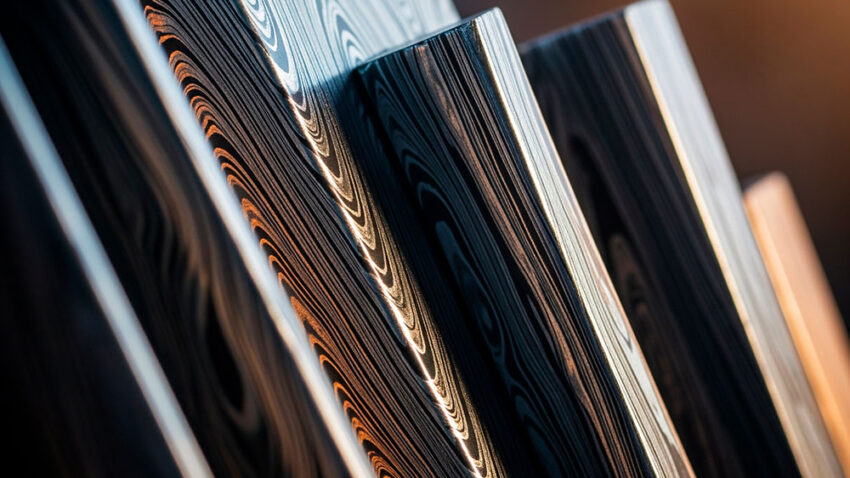
In this article, we will unravel the mystery behind Damascus steel blades, exploring their ancient origin, how they are made today, their diverse applications, and the keys to distinguishing an authentic piece from an imitation.
What is Damascus Steel and Why is it So Special?
Contents
- What is Damascus Steel and Why is it So Special?
- A History Forged in Fire and Legend
- Types of Damascus Steel: Beyond the Visual Pattern
- The Artisanal Process: How is a Modern Damascus Steel Blade Made?
- How to Recognize Authentic Damascus Steel?
- Uses and Applications of Damascus Steel
- Advantages and Disadvantages of Damascus Steel Blades
- Care and Maintenance of your Damascus Steel Blade
In essence, Damascus steel is a high-quality alloy recognized for its distinctive wavy or patterned patterns. These patterns emerge from the combination of two or more types of steel with different carbon levels, which are repeatedly heated, welded, and folded to form a solid blade with multiple layers. Damascus steel blades are, therefore, a type of crucible steel used and crafted in the Middle East for the manufacture of swords and knives of high range from 1100 to 1700, legendary for their hardness and their “almost eternal” edge.
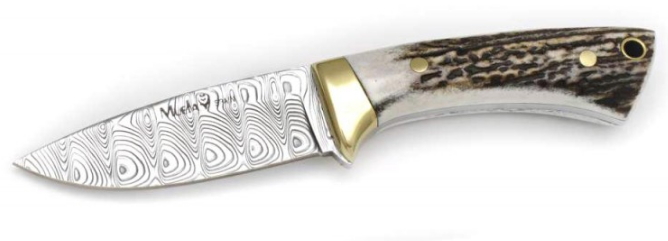
The beauty of this steel goes beyond the superficial. The layering of steels with diverse properties — for example, one hard that holds the edge and another more ductile that provides flexibility — creates a synergy that a homogeneous steel could not match. This results in a blade that can withstand extreme stresses without breaking or easily losing its cutting ability. Damascus steel was a kind of alloy that had both hardness and flexibility, a combination that made it a special material for building good swords.
The name “Damascus” does not refer to a type of steel itself, but to the decorative patterns that resemble damask fabric or the swords that were traded in the ancient city of Damascus, an important trade center in the Middle Ages. Today, this type of steel can be manufactured anywhere in the world, as long as its layered forging method is respected.
Key Properties of Damascus Steel:
- Unique combination of hardness and flexibility: Ideal for demanding cutting tools, offering resistance without brittleness.
- Superior edge retention: Thanks to high-carbon steels and the laminated structure, the blade maintains its cutting ability for longer.
- Irrepeatable aesthetics: Each blade features a unique pattern, like a fingerprint, making it an exclusive and artistic piece.
- Wear and corrosion resistance: Especially in modern versions that incorporate stainless steels.
A History Forged in Fire and Legend
The journey of Damascus steel begins in antiquity, with wootz steel, originating from India and Sri Lanka in the 3rd century BC. Indian blacksmiths developed a technique to melt high-carbon iron, producing ingots that were exported along the Silk Road. The original Damascus steel swords and knives were crafted in the vicinity of Damascus, Syria, in the period from 900 to 1750.
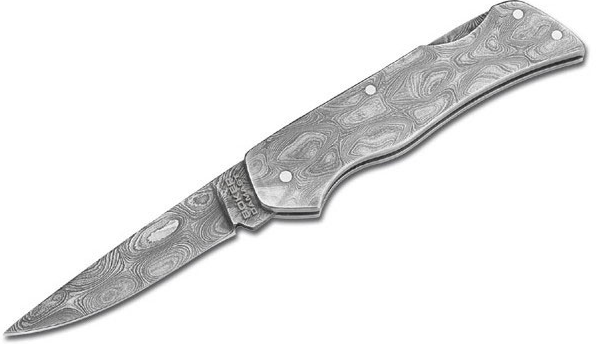
It is said that the first damascened swords were found by Europeans during the Crusades; at this time they earned their reputation for being able to cut a piece of silk in the air, and to cut a rock without losing their edge. Their patterns, called “mohareb”, looked like liquid landscapes and were a symbol of status.
However, between the 17th and 18th centuries, the technique for consistently manufacturing wootz steel was lost. For a time, it was thought that Damascus steel was just a legend. Fortunately, the technique has been rediscovered thanks to research from several universities, such as the Complutense University of Madrid and centers in the United States. Professors A.J. Criado and J.A. Martínez, in several years of research, found the secret of the famous Damascus steel swords, managing to manufacture several specimens.
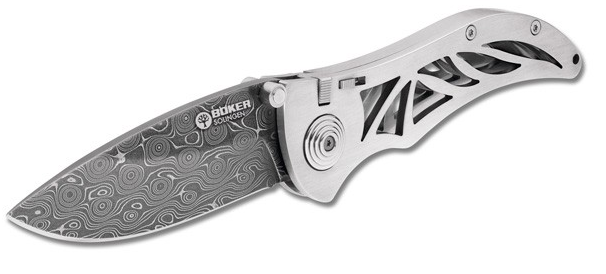
By the end of the 20th century, modern metallurgy and artisans achieved this rediscovery. They understood that wootz patterns were the result of iron carbide dispersion and developed a new layered forging technique (“pattern welded steel”), which simulates the visual effects of original Damascus and offers excellent mechanical properties. Thus, “modern Damascus steel” was born, keeping the legend alive.
Types of Damascus Steel: Beyond the Visual Pattern
The term “Damascus steel” encompasses different techniques that share a similar visual result. Knowing their differences is crucial to appreciate their authenticity, performance, and value.
True Damascus Steel or Wootz (Historical)
It is the original Damascus. Its pattern is natural and arises from the internal microstructure of high-carbon steel during slow cooling, not from layer folding. It is extremely rare and is found mainly in antique pieces.
Modern Damascus Steel (Layered Forged or “Pattern Welded”)
The most common type in current cutlery. It is manufactured by repeatedly welding and forging multiple layers of different steels. The patterns are customized by the blacksmith and the mechanical properties are controllable.
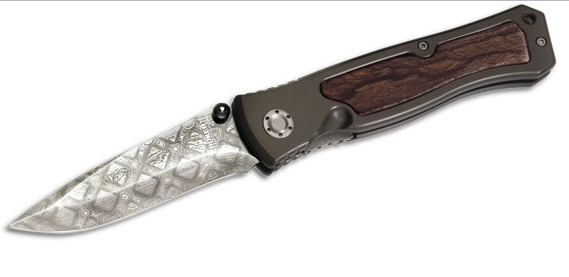
Core Damascus Steel with Coating (San Mai Damascened)
Combines a hard steel core with Damascus steel coatings. It offers a durable edge and striking aesthetics, very popular in high-end Japanese cutlery.
Stainless Damascus Steel
A modern advance that allows Damascus to be forged with stainless steels, improving corrosion resistance without sacrificing design or edge quality. Ideal for kitchen knives due to their low maintenance.
Fakes or Decorative Damascus
Some products have a pattern superficially engraved or stamped on a common steel blade. Although they may look attractive, they do not offer the functional properties of real Damascus and the pattern disappears with use or sharpening.
The Artisanal Process: How is a Modern Damascus Steel Blade Made?
The creation of modern Damascus steel is a dance between science and art. In the process of forging Damascus steel, once the wootz (or the initial billet) was obtained, the blacksmith used color as a guide for temperature control, relying on intuition rather than logic. The color of the steel, the flame, the force, and the frequency of the hammer blows, all were dictated by a long apprenticeship.
The fundamental steps are as follows:
- Material Selection: Steels with contrasting properties are chosen (e.g., 1095 and 15N20).
- “Billet” Preparation: Sheets of these steels are stacked to form a block or “billet”.
- Forge Welding: The billet is heated to over 1200 °C and hammered to fuse the layers.
- Folding and Repetition: The block is cut, folded, and re-welded numerous times to multiply the layers.
- Pattern Manipulation: The blacksmith twists, cuts, or hammers the block to create specific designs (Twist, Ladder, Mosaic).
- Blade Forging: The final shape is given to the blade, taking care of the pattern.
- Heat Treatment: The blade is quenched and tempered to obtain the perfect combination of hardness and toughness.
- Polishing and Acid Etching: After fine polishing, the blade is immersed in acid to reveal the contrast between the steel layers.
- Final Finish: The blade is cleaned and protected, leaving it ready for use.
How to Recognize Authentic Damascus Steel?
Distinguishing genuine Damascus from an imitation can seem challenging, but there are key indicators:
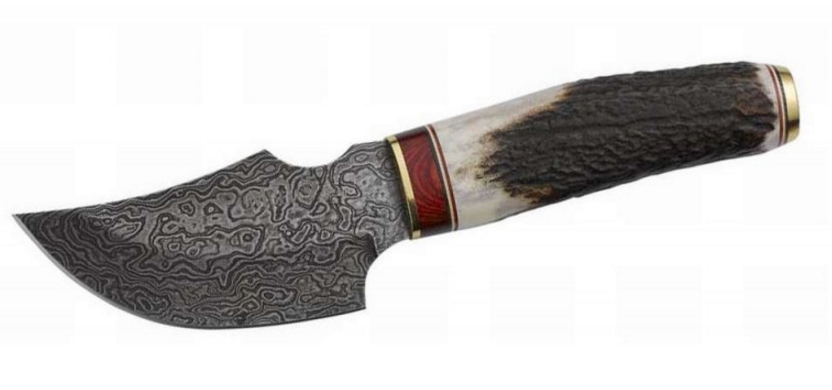
- Pattern Depth: In a real Damascus steel blade, the pattern runs through the entire metal. If sharpened, the design will remain.
- Design Continuity: The pattern should be visible on the sides, spine, and tang of the knife.
- Natural Contrast: The play of light and dark should be subtle and harmonious, not excessively bright or artificial.
- Artisanal Finish: Authentic pieces show meticulous attention to detail.
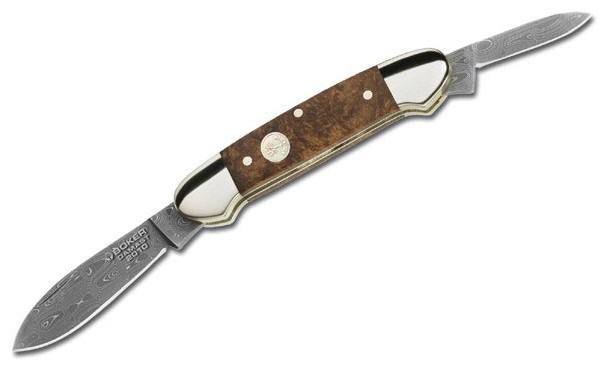
Signs of Counterfeiting: identical patterns on several pieces, a design that wears off with the first sharpening, excessively low prices, or a lack of technical information about the steels used.
Uses and Applications of Damascus Steel
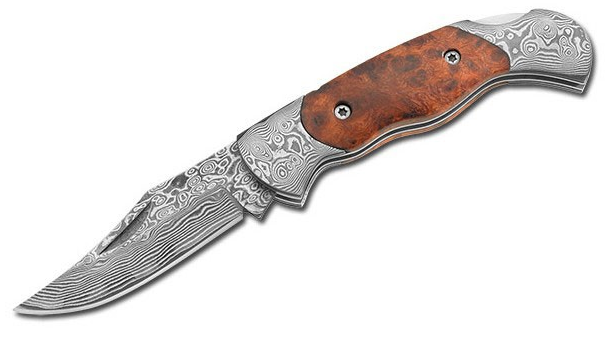
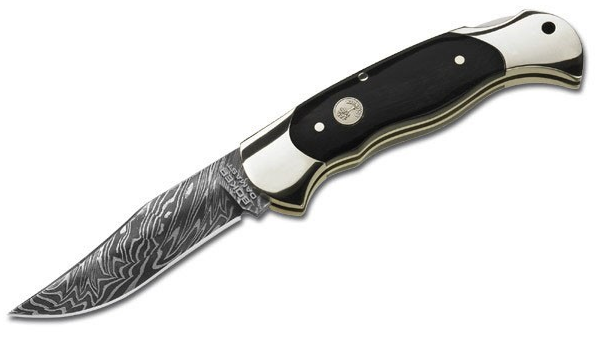
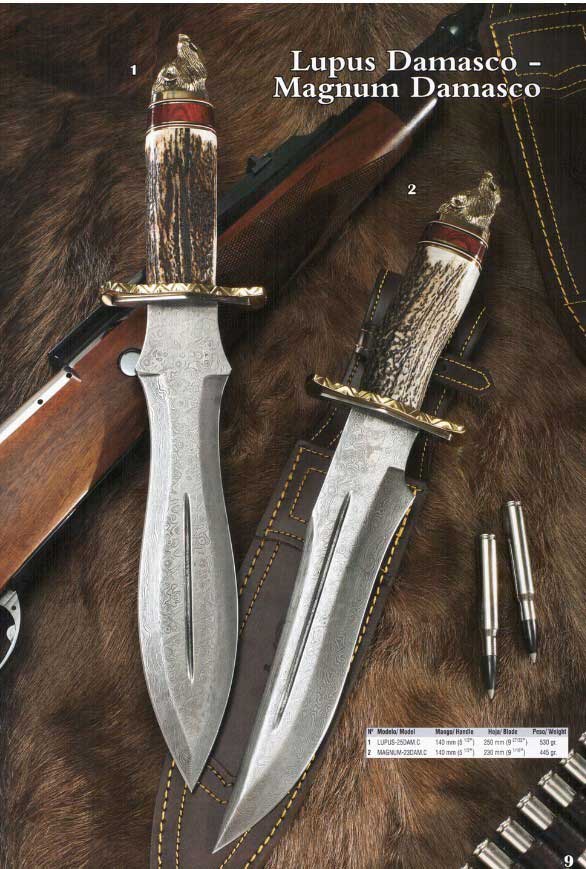
Damascus steel is not only a visual jewel, but also an extremely versatile material that combines functionality with aesthetics. There are precious collection pieces of swords, knives and folding knives in Damascus steel.
- Professional Kitchen Knives: Popular for their durable edge, precision, and beauty (chef knives, Santoku).
- Collector’s Knives and Folding Knives: Their unique beauty makes each piece an unrepeatable work.
- Swords and Historical Weapons: Used in recreations and collecting for their fidelity and balance.
- Jewelry and Costume Jewelry: Used in rings and bracelets for their hypnotic metallic aesthetic.
- Field and Outdoor Tools: Present in survival and bushcraft knives for their resistance.
Advantages and Disadvantages of Damascus Steel Blades
Like all materials, Damascus steel has its strengths and limitations:
Advantages
- Unique and unrepeatable aesthetics.
- Excellent edge retention.
- Great mechanical resistance and flexibility.
- High artisanal and collectible value.
- High cutting capacity.
Disadvantages
- High price due to its complex manufacturing.
- Specific maintenance, especially in carbon steel versions.
- Risk of finding fakes on the market.
- The final quality depends enormously on the artisan’s skill.
Care and Maintenance of your Damascus Steel Blade
For your Damascus steel knife or sword to retain its beauty and functionality, proper maintenance is essential, especially if it is carbon steel:
- Immediate Cleaning and Drying: Clean the blade with a soft cloth after each use and dry it completely. Never put it in the dishwasher!
- Antioxidant Protection: Apply a thin layer of mineral or camellia oil to protect the blade from moisture.
- Correct Storage: Avoid leather sheaths for prolonged storage, as they retain moisture. Opt for ventilated cases.
- Careful Sharpening: Use fine-grit sharpening stones. Avoid low-quality electric sharpeners that can overheat the steel.
- Handle Care: If it is made of natural materials such as wood or deer antler, apply specific oils to nourish them.
Damascus steel is much more than a simple metal; it represents the union between art, history, and superior functionality. Whether for its hypnotic beauty, its exceptional cutting properties, or its deep symbolic value, it continues to captivate new generations. Each forged blade is an instrument and, at the same time, a unique piece that encapsulates centuries of metallurgical evolution. Understanding its authenticity, creation process, and the care it requires is key for any cutlery lover or collector who wishes to own one of these steel jewels.