The sweep of the blade cuts through the humid air of the plantation; one strike and the cane falls clean, cut flush. That sound — the dry snap of the stalk separating — is the signature of a well-chosen, precisely sharpened cane machete. From the sugarcane fields of the Caribbean to plantations in Latin America, this tool has been the farmer’s silent companion, designed to face fibrous stalks, dense weeds and grueling days under the sun. But what makes a machete truly effective for cutting cane? How do you choose the right model among so many options?
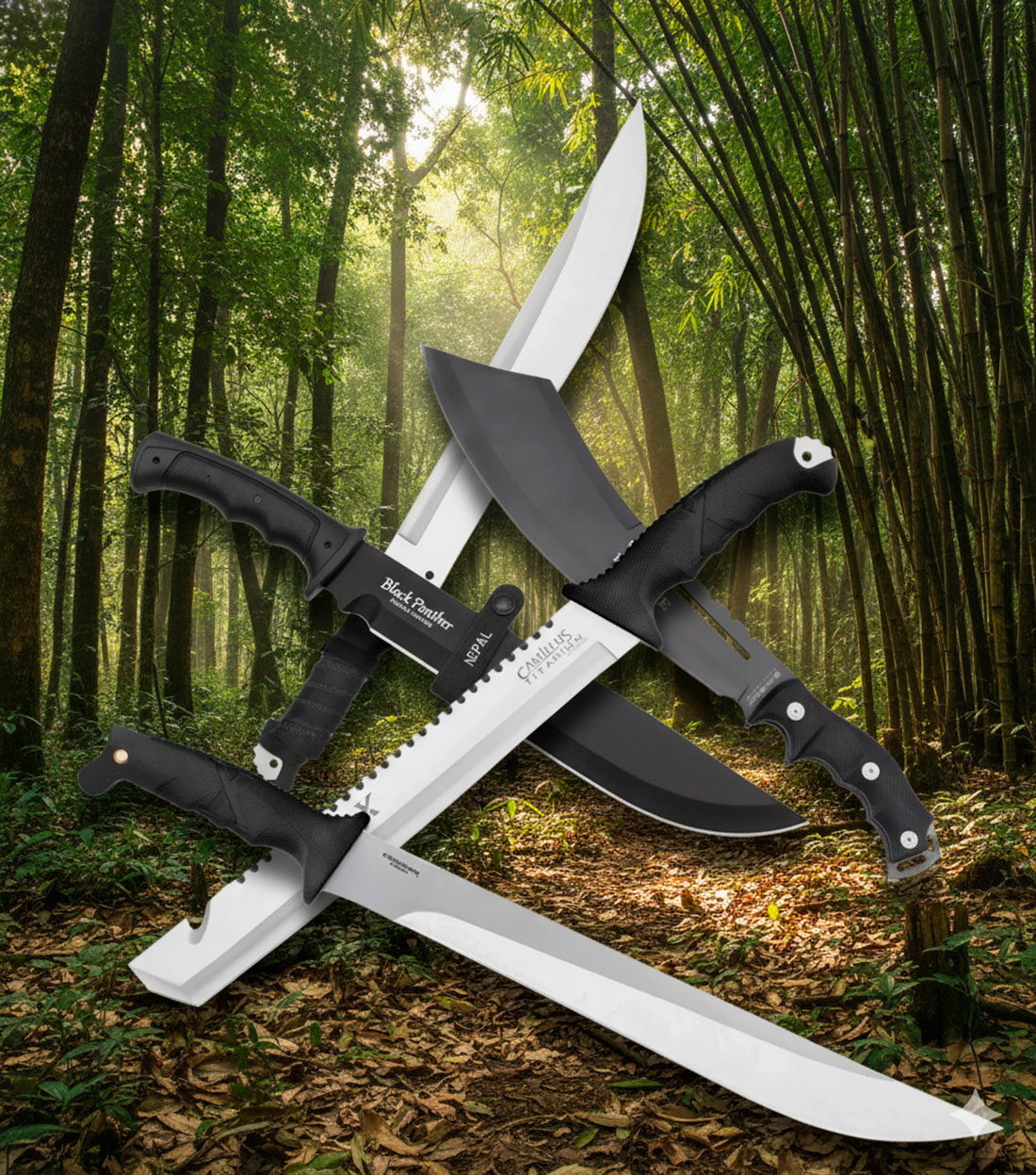
In this article you will discover everything you need to know about cane machetes: from their historical evolution and technical characteristics to cutting techniques, maintenance and the best brands on the market. If you work in the field, practice bushcraft or are simply looking for a versatile and durable tool, here you will find the information you need to make the right decision.
The machete: historical evolution and cultural significance
Contents
- The machete: historical evolution and cultural significance
- What is a cane machete and why it is different
- Technical anatomy: key components of a cane machete
- Blade materials: carbon steel vs stainless steel
- The Espartano machete: a practical example of cane design
- Practical applications: beyond the cane field
- Types of machetes and when to choose a cane machete
- The best cane machete brands on the market
- Effective cutting techniques for cane and dense undergrowth
- Professional maintenance: sharpening, cleaning and protection
- Safety in use: protocols and protective equipment
- Comparison: cane machete vs other cutting tools
For millennia the machete has been an agricultural tool and occasionally an improvised weapon; its design and functions have evolved according to the needs of work, war and survival, from ancient precursors to contemporary specialized variants.
| Period | Event |
|---|---|
| Ancient origins and precursors | |
| Thousands of years ago | Early communities developed long cutting tools for cultivation and land work; precursors of the machete emerged as multipurpose instruments. |
| Stone Age / Cavemen | Rudimentary utensils and weapons used for hunting and defense, preceding more advanced bladed tools. |
| Bronze Age → Iron Age | Technological transition favored production of more efficient blades; possibilities to manufacture long cutting tools increased. |
| Discovery and spread of steel | Steel manufacturing made the concept of long, thin and strong blades practical and widespread, a direct precursor of the modern machete. |
| Cultural influences and ancient forms | |
| Classical antiquity and Asia | Tools and weapons such as the falcata, the kopis, the dao and the katana show shape and edge solutions that influence regional designs of cutting tools. |
| Germanic tribes — Seax | The seax (Sax, Scramasax) appears as a single-edged blade, multi-use, from knife to long weapon; a precursor of the tool-weapon concept. |
| Viking Age (c. 793–1066) | The seax gains prominence among the Vikings as a tool and secondary weapon. |
| Early agricultural and military use (Early Modern Age – 17th–19th centuries) | |
| 17th–19th centuries | In uprisings and agrarian revolts, farming tools were reused as hand-to-hand weapons; the machete appears with this dual use. |
| Colonization of Latin America | European cutting tools adapted to work in the colonies; the machete integrated as an essential tool in tropical crops. |
| Expansion of plantations | The machete became key on sugarcane, tobacco and other dense-crop plantations for its effectiveness cutting fibrous material. |
| Symbolism of resistance and conflict (19th–20th centuries) | |
| Wars of independence (19th century) | The machete was used by guerrillas and peasants (for example, mambises in Cuba and fighters in the Haitian Revolution), becoming a symbol of popular resistance. |
| Guerrilla wars and colonial rebellions | In Africa and other regions the machete was valuable for its low cost and easy access, used both in combat and in everyday survival. |
| Vietnam War (1955–1975) | The so-called “jungle machete” or Latin machete became popular among troops for its usefulness in jungle and clearing tasks. |
| Rwandan genocide (1994) | The machete gained notoriety for its widespread use as a weapon in the conflict, showing the lethal potential of an agricultural tool in violent contexts. |
| Contemporary use and modernization | |
| Late 20th century — Present | The machete remains an essential tool in agriculture (e.g., cane harvest in Peru, Brazil, Colombia, Costa Rica), clearing, pruning and trail maintenance. |
| Bushcraft, survival and outdoor activities | The machete is incorporated into bushcraft and survival gear for its versatility in opening paths, preparing firewood and building shelters. |
| Popular culture and media | The machete becomes an icon in film, video games and literature (e.g., the “Machete” franchise), reinforcing its image as an intimidating and effective tool. |
| Modern design and materials | Stronger steels and ergonomic handles are used; specialized variants (Bolo, Kukri, Parang, Latino, etc.) adapted to specific tasks and environments appear. |
| Legacy and outlook | |
| 21st century | The machete continues to be a symbol of adaptability: a tool with ancient roots that persists due to its utility, diverse designs and cultural meaning. |
- Ancient origins and precursors
-
- Thousands of years ago: Early communities developed long cutting tools for cultivation and land work; precursors of the machete emerged as multipurpose instruments.
- Stone Age / Cavemen: Rudimentary utensils and weapons used for hunting and defense, preceding more advanced bladed tools.
- Bronze Age → Iron Age: Technological transition favored production of more efficient blades; possibilities to manufacture long cutting tools increased.
- Discovery and spread of steel: Steel manufacturing made the concept of long, thin and strong blades practical and widespread, a direct precursor of the modern machete.
- Cultural influences and ancient forms
-
- Classical antiquity and Asia: Tools and weapons such as the falcata, the kopis, the dao and the katana show shape and edge solutions that influence regional designs of cutting tools.
- Germanic tribes — Seax: The seax (Sax, Scramasax) appears as a single-edged blade, multi-use, from knife to long weapon; a precursor of the tool-weapon concept.
- Viking Age (c. 793–1066): The seax gains prominence among the Vikings as a tool and secondary weapon.
- Early agricultural and military use (Early Modern Age – 17th–19th centuries)
-
- 17th–19th centuries: In uprisings and agrarian revolts, farming tools were reused as hand-to-hand weapons; the machete appears with this dual use.
- Colonization of Latin America: European cutting tools adapted to work in the colonies; the machete integrated as an essential tool in tropical crops.
- Expansion of plantations: The machete became key on sugarcane, tobacco and other dense-crop plantations for its effectiveness cutting fibrous material.
- Symbolism of resistance and conflict (19th–20th centuries)
-
- Wars of independence (19th century): The machete was used by guerrillas and peasants (for example, mambises in Cuba and fighters in the Haitian Revolution), becoming a symbol of popular resistance.
- Guerrilla wars and colonial rebellions: In Africa and other regions the machete was valuable for its low cost and easy access, used both in combat and in everyday survival.
- Vietnam War (1955–1975): The so-called “jungle machete” or Latin machete became popular among troops for its usefulness in jungle and clearing tasks.
- Rwandan genocide (1994): The machete gained notoriety for its widespread use as a weapon in the conflict, showing the lethal potential of an agricultural tool in violent contexts.
- Contemporary use and modernization
-
- Late 20th century — Present: The machete remains an essential tool in agriculture (e.g., cane harvest in Peru, Brazil, Colombia, Costa Rica), clearing, pruning and trail maintenance.
- Bushcraft, survival and outdoor activities: The machete is incorporated into bushcraft and survival gear for its versatility in opening paths, preparing firewood and building shelters.
- Popular culture and media: The machete becomes an icon in film, video games and literature (e.g., the “Machete” franchise), reinforcing its image as an intimidating and effective tool.
- Modern design and materials: Stronger steels and ergonomic handles are used; specialized variants (Bolo, Kukri, Parang, Latino, etc.) adapted to specific tasks and environments appear.
- Legacy and outlook
-
- 21st century: The machete continues to be a symbol of adaptability: a tool with ancient roots that persists due to its utility, diverse designs and cultural meaning.
What is a cane machete and why it is different
A cane machete is not simply a large machete; it is a specialized tool designed to face the specific challenges of cutting sugarcane and other crops with fibrous, dense stalks. Its design answers concrete needs: blades long enough to reach the base of the cane without bending over too much, a thickness calculated to prevent the blade from getting stuck in fibrous material, and a balance that allows wide sweeps without exhausting the user during long shifts.
The typical blade length ranges between 40 and 70 cm, although the most popular models sit in the 45 to 51 cm range. This measure is no coincidence: it allows long, effective sweeps to cut several canes in a single movement while maintaining the manageability necessary to work in tight spaces between cultivation furrows.
Distinctive characteristics of cane design
Blade thickness is a determining factor. While some general-purpose machetes have thicker blades (3-5 mm), cane machetes tend to be thinner — between 1 and 3.2 mm — to facilitate precise cuts without getting stuck in stalks. This thinness is offset by high-quality steels that keep the necessary rigidity without compromising durability.
The gentle curvature of many cane models is not decorative: it helps the blade slide along the stalk instead of snagging, reducing the effort required for each cut. Some designs incorporate a hook at the tip to gather the cut cane, a feature especially valued in the sugar industry of the Caribbean and Central America.
Technical anatomy: key components of a cane machete
Knowing the components of a cane machete helps you evaluate the quality of the tool and understand how each element contributes to its performance.
The blade: the heart of the machete
The blade is where the functionality resides. The edge must be very sharp in the third closest to the tip, where most of the cutting work is concentrated. The spine provides structural rigidity and can be used for light strikes in tasks that do not require the edge.
The bevel design — the sharpening angle — is usually between 20° and 30°, a compromise between cutting ability and edge durability. A smaller angle offers cleaner cuts but dulls faster; a larger angle resists wear better but requires more force.
The handle: control and comfort
A well-designed handle becomes an extension of the forearm. The most common materials are:
- Wood: Traditional look, durable and with good vibration damping. Can become slippery with moisture and requires occasional maintenance.
- Rubber or rubberized materials: Excellent non-slip grip, ideal for wet conditions or when wearing gloves. Reduces fatigue in prolonged use by absorbing part of the impact of each strike.
- Fiberglass or synthetic polymers: Lightweight, weather-resistant and economical, though they may be less comfortable during long shifts.
Handle ergonomics are fundamental: it must allow a firm grip without pressure points that create blisters. Some designs include guards to prevent the hand from slipping toward the edge in case of a miscalculated strike.
Blade materials: carbon steel vs stainless steel
Choosing the blade material determines performance, durability and the level of maintenance required. There is no universally superior option; each material has advantages depending on use and working conditions.
| Type of steel | Advantages | Disadvantages | Ideal for |
|---|---|---|---|
| Carbon steel | Excellent edge retention, easy to sharpen, high impact resistance, economical | Prone to rust, requires regular oil maintenance | Intensive agricultural use, users who can maintain the tool, dry environments or with regular care |
| Stainless steel | Corrosion resistant, less maintenance, suitable for humid or saline environments | Loses edge faster, harder to sharpen, generally more expensive | Occasional use, humid or coastal environments, users who prioritize low maintenance |
| Special alloys (with coatings) | Combines edge retention with corrosion resistance, greater durability | High price, limited availability | Professionals, intensive use in extreme conditions |
- Carbon steel
-
- Advantages: Excellent edge retention, easy to sharpen, high impact resistance, economical
- Disadvantages: Prone to rust, requires regular oil maintenance
- Ideal for: Intensive agricultural use, users who can maintain the tool, dry environments or with regular care
- Stainless steel
-
- Advantages: Corrosion resistant, less maintenance, suitable for humid or saline environments
- Disadvantages: Loses edge faster, harder to sharpen, generally more expensive
- Ideal for: Occasional use, humid or coastal environments, users who prioritize low maintenance
- Special alloys (with coatings)
-
- Advantages: Combines edge retention with corrosion resistance, greater durability
- Disadvantages: High price, limited availability
- Ideal for: Professionals, intensive use in extreme conditions
Carbon steel remains the preferred option in professional agricultural environments because of its combination of performance and economy. A well-cared-for carbon steel machete can last decades while keeping its cutting ability. The black finish — common in many models — helps reduce glare and offers some surface protection against initial rust, although it does not replace regular maintenance.
The Espartano machete: a practical example of cane design
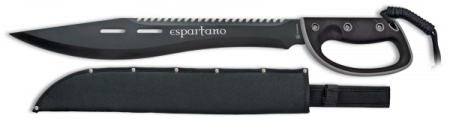 To understand how these principles apply to a real product, we analyze the Espartano machete, a model that has gained recognition for its value-for-money and functional design inspired by the silhouette of classical Greek swords, but fully adapted for modern practical uses.
Technical specifications of the Espartano
This machete sits at the optimal point of length and manageability for cane tasks:
- Blade length: 45 cm, ideal for balanced reach and control
- Total length: 61.5 cm, providing enough leverage without becoming uncomfortable
- Blade material: Black carbon steel, favoring durability and edge retention
- Handle: Ergonomic rubber with safety cord, designed for prolonged use and a firm grip even in wet conditions
- Presentation: Includes a durable nylon sheath for safe transport and storage
Design and applied ergonomics
The slight curve of the Espartano’s blade is not just aesthetic; it facilitates the sweeping cut typical of working with cane. The balance is designed so the center of gravity sits slightly forward of the handle, allowing the weight of the blade to do part of the work and reducing muscle fatigue during long days.
The rubber handle plays a crucial role: it dampens vibrations transmitted with each strike, preventing hand numbness and reducing the risk of repetitive strain injuries. The integrated cord allows the machete to be secured to the wrist, a safety feature that prevents the tool from slipping away on a poorly executed strike or uneven terrain.
Practical applications: beyond the cane field
Although cane machetes are optimized for cutting sugarcane, their versatility makes them valuable tools in multiple contexts. Understanding these uses helps you evaluate whether a cane model suits your needs or if you should consider a different design.
Agriculture and crop management
In its natural element, the cane machete is unmatched for:
- Sugarcane harvesting: Clean cuts at the base of the stalk, avoiding damage to the root for future harvests
- Edge cleaning: Maintaining borders between plots and removing invasive vegetation
- Light pruning: Thin branches and small bushes that interfere with main crops
- Land clearing: Preparing areas for planting by removing weeds and accumulated brush
Bushcraft and outdoor activities
The bushcraft and survival community values cane machetes for their manageable length and versatility:
- Trail opening: Clearing paths in forests and jungles with dense vegetation
- Firewood preparation: Cutting thin and medium branches for campfires and shelter building
- Processing natural materials: Bamboo, palms and other plants useful for improvised construction
- Basic butchery: Preparing small game and fish, although it does not replace a specialized hunting knife
Estate and garden maintenance
For owners of rural land or large gardens:
- Control of perennial weeds: Brambles, invasive shrubs and fast-growing vegetation
- Ditch cleaning: Maintenance of drainage systems and irrigation channels
- Light forest management: Clearing the understory and maintaining recreational areas
It is important to recognize limitations: a cane machete is not appropriate for cutting thick logs (for that you need an axe or chainsaw), precision work (a bushcraft knife is a better option) or tasks requiring penetration (its usually rounded tip makes it a tool, not a weapon).
Types of machetes and when to choose a cane machete


The machete universe is vast, with specialized designs that respond to geographic and functional needs. Understanding the differences helps you choose the right model for your tasks.
| Type of machete | Blade length (approx.) | Characteristic design | Main use |
|---|---|---|---|
| Latino / Standard | 45-60 cm | Straight, thin and light blade. Relies on cutting speed | General clearing, pruning, agriculture. Most versatile for beginners |
| Cane machete (Cane Machete) | 40-70 cm (optimal 45-51 cm) | Thin blade (1-3 mm), sometimes with a hooked tip, gentle curvature | Sugarcane, fibrous stalks, specialized agricultural harvesting |
| Filipino Bolo | 40-50 cm | Wide blade that widens towards the tip, weight concentrated at the front | Dense vegetation, demanding agriculture, deep cuts. Generates momentum by weight |
| African Panga | 45-55 cm | Wide, curved and robust blade | Jungle, tough shrubs, thick cane, dense vegetation |
| Malayan Parang | 35-50 cm | Thick, sturdy, slightly curved blade | Bushcraft, survival, dense vegetation, hardwoods |
| Nepalese Kukri | 30-45 cm | Distinctive curved blade that tapers in the middle | General work, bushcraft, survival. Concentrates strike force |
| Indonesian Golok | 25-40 cm | Short, sturdy and heavy blade, well balanced | Bamboo, precise pruning, rural jungle work. Greater control |
| Heavy Machete | 45-60 cm | Thick (4-6 mm) and heavy blade | Thick branches, hardwood, extreme survival. Greater effort required |
- Latino / Standard
-
- Blade length: 45-60 cm (approx.)
- Characteristic design: Straight, thin and light blade. Relies on cutting speed
- Main use: General clearing, pruning, agriculture. Most versatile for beginners
- Cane machete (Cane Machete)
-
- Blade length: 40-70 cm (optimal 45-51 cm)
- Characteristic design: Thin blade (1-3 mm), sometimes with a hooked tip, gentle curvature
- Main use: Sugarcane, fibrous stalks, specialized agricultural harvesting
- Filipino Bolo
-
- Blade length: 40-50 cm
- Characteristic design: Wide blade that widens towards the tip, weight concentrated at the front
- Main use: Dense vegetation, demanding agriculture, deep cuts. Generates momentum by weight
- African Panga
-
- Blade length: 45-55 cm
- Characteristic design: Wide, curved and robust blade
- Main use: Jungle, tough shrubs, thick cane, dense vegetation
- Malayan Parang
-
- Blade length: 35-50 cm
- Characteristic design: Thick, sturdy, slightly curved blade
- Main use: Bushcraft, survival, dense vegetation, hardwoods
- Nepalese Kukri
-
- Blade length: 30-45 cm
- Characteristic design: Distinctive curved blade that tapers in the middle
- Main use: General work, bushcraft, survival. Concentrates strike force
- Indonesian Golok
-
- Blade length: 25-40 cm
- Characteristic design: Short, sturdy and heavy blade, well balanced
- Main use: Bamboo, precise pruning, rural jungle work. Greater control
- Heavy Machete
-
- Blade length: 45-60 cm
- Characteristic design: Thick (4-6 mm) and heavy blade
- Main use: Thick branches, hardwood, extreme survival. Greater effort required
When to choose specifically a cane machete
Opt for a cane machete if your main work involves:
- Cutting sugarcane or other crops with similar stalks (bamboo, sorghum, tall corn)
- The need to make many repetitive cuts with the least fatigue possible
- Work close to the ground or in spaces between furrows where moderate length is an advantage
- A preference for a tool that combines reach and precision without excessive weight
Consider alternatives if you need:
- Greater robustness for woody vegetation: Choose a Panga or Heavy Machete
- Maximum control in tight spaces: A Golok or Kukri is a better option
- Absolute versatility without specialization: The standard Latino machete covers more ground
The best cane machete brands on the market
The manufacturer’s quality determines the durability, performance and safety of your tool. Based on the experience of professional and amateur users, these are the brands that consistently offer reliable cane machetes.
Premium brands with proven track records
Albainox leads the value-for-money category, standing out especially with models like the Espartano. Their machetes combine reliable steels with ergonomic designs and accessible prices, ideal for professional farmers and users who need daily work tools.
Bellota is the benchmark in professional agricultural tools. Their cane machetes are valued for exceptional balance and durability in intensive use. The price is higher, but the investment pays off with years of reliable service.
Cold Steel offers high-resistance machetes with superior steels and robust construction. Although less specialized in pure cane models, their designs like the Kukri offer extreme versatility for users who need an all-terrain tool.
Budget options with proven quality
Truper and Collins dominate the Latin American market with economical but functional machetes. They are the usual choice in rural areas where accessibility is key. Quality is adequate for occasional use or as a secondary tool.
Gavilán enjoys an excellent reputation in Colombia and neighboring countries. Their machetes feature well-calibrated hardness and careful finishes at competitive prices.
Specialized and niche brands
Explorer and Mad Zombie offer models specific for cutting cane with innovations in ergonomics and materials. They are interesting options for users seeking specific features or distinctive designs.
Condor Tool & Knife and Machete King focus on the bushcraft and outdoor market, with cane machetes that prioritize versatility and extreme durability. Higher prices are justified by solid warranties and premium materials.
Brand choice depends on your budget and frequency of use: for daily professional work, invest in Bellota or Albainox; for occasional use or learning, Truper or Collins are sufficient; for bushcraft and outdoor, explore Condor or Cold Steel.
Effective cutting techniques for cane and dense undergrowth
Mastering cutting techniques not only improves your efficiency, it drastically reduces the risk of injury and fatigue. A well-used cane machete is a natural extension of the arm; a poorly handled one is a constant danger.
Posture and preparation of the work area
Before the first strike, establish your position:
- Feet shoulder-width apart: Provides stability and allows fluid torso movement
- Knees slightly bent: Absorb impacts and facilitate quick position adjustments
- Look at the contact point: Never cut without looking exactly where the blade will strike
- Clear the work area: Make sure you have free space for the full machete movement without obstacles that can deflect the blade
Cutting techniques according to the objective
Side strike for individual cane stalks: Use the edge of the machete in a controlled horizontal motion, aiming at the base of the cane. This cut is precise and avoids snagging additional vegetation. Ideal when working near plants you want to preserve.
Angled sweep for multiple stalks: Tilt the blade between 30° and 45° relative to the ground and perform a wide sweeping motion. This technique uses the arm’s momentum and the blade’s weight to cut several thin canes in a single movement. It is the most efficient for general clearing, though it requires free space.
Lever cut for thick cane: For larger diameter stalks, combine an initial strike with the middle part of the blade followed by a lever motion outward, using your body’s weight. Do not try to cut a thick cane in a single blow; two or three controlled strikes are safer and more effective.
Efficient clearing sequence: In a dense area, first clean the sides of the path working from the outside in, then attack the central base. This sequence prevents cut debris from blocking your progress and allows you to maintain a steady rhythm without pauses to clear.
Common mistakes to avoid
- Never cut towards your body or legs: All movements should direct the blade away from you
- Do not use vertical top-down movements: They increase the risk of the blade bouncing or embedding in the ground
- Avoid using the tip to cut: The tip is the weakest part; reserve its use for puncturing or piercing when absolutely necessary
- Do not handle vegetation directly with your hands: Use a hook or stick to prepare the vegetation before cutting
Professional maintenance: sharpening, cleaning and protection
A well-maintained cane machete not only works better, it is significantly safer. A dull blade requires more force, increases fatigue and is more likely to slip or bounce.
Correct sharpening: technique and frequency
Sharpening is the most important skill for any machete user. A cane machete should be sharpened after each intensive workday or at least monthly if usage is occasional.
Sharpening tools:
- Medium-grit sharpening stone (400-800): To restore very worn edges
- Fine-grit stone (1000-3000): For regular maintenance and finishing
- Triangular file with handle: Practical option in the field, especially for agricultural machetes
- Electric sharpener: Fast but requires practice not to remove too much material
Sharpening technique with stone:
- Secure the machete on a stable surface with the blade facing up
- Wet the stone (if water type) or apply light oil (if oil type)
- Maintain a constant angle of 20-30° between the stone and the blade
- Make long, even strokes from the base toward the tip, always in the same direction
- Work both sides of the blade until you obtain a fine burr along the edge
- Remove the burr with gentle alternating passes on both sides
- Finish with a fine stone or leather to polish the edge
Sharpening technique with file:
- Hold the machete firmly (use leather gloves for protection)
- Place the file at the original bevel angle
- Make strokes away from your body (from inside out)
- Apply uniform and constant pressure
- Count the passes in each section to maintain uniformity
A properly sharpened machete should cleanly cut paper with its own weight, without additional pressure.
Cleaning and protection against corrosion
Cleaning after each use is especially critical for carbon steel machetes:
- Immediate cleaning: Remove all sap, organic residue and dirt with a dry or slightly damp cloth
- Thorough drying: Ensure no moisture remains on any part of the blade, paying special attention to the junction with the handle
- Application of protection: Apply a thin coat of protective oil on the entire blade surface
Oils recommended for protection:
| Type | Main characteristics | Recommended use |
|---|---|---|
| Mineral oil | High penetration, does not degrade or attract dirt | Regular protection and maintenance |
| Camelia oil | Natural, acid-free, non-volatile | Antioxidant protection, lubrication |
| Lithium grease | Thick, durable, does not evaporate | Long-term storage, protection |
| WD-40 or other moisture displacers | Removes moisture, temporary protection | Field use when no other options are available |
- Mineral oil
-
- Characteristics: High penetration, does not degrade or attract dirt
- Recommended use: Regular protection and maintenance
- Camelia oil
-
- Characteristics: Natural, acid-free, non-volatile
- Recommended use: Antioxidant protection, lubrication
- Lithium grease
-
- Characteristics: Thick, durable, does not evaporate
- Recommended use: Long-term storage, protection
- WD-40 or other moisture displacers
-
- Characteristics: Removes moisture, temporary protection
- Recommended use: Field use when no other options are available
Proper storage
Storage determines the condition of the machete when you need it again:
- Always keep in a sheath: Protects both the blade and people. Never store the machete without its protective sheath
- Dry and ventilated environment: Avoid damp basements, unventilated sheds or any place where condensation accumulates
- Vertical or elevated horizontal position: Do not leave the machete in direct contact with the ground
- Separate from metal tools: Metal-to-metal contact can damage the edge
- Periodic inspection: Check the machete every month even if you don’t use it; apply fresh oil if necessary
Never store files, sharpening stones or other hard tools inside the sheath along with the machete; they can damage the edge during transport.
Safety in use: protocols and protective equipment
A cane machete is a powerful tool that deserves absolute respect. Safety protocols are not suggestions; they are rules that prevent serious injuries.
Basic safety rules
- Safety distance: Keep at least 3 meters of separation from other people when using the machete. There is no exception to this rule.
- Never as a toy: The machete is a work tool, not an object for demonstration or play. Do not wave it, throw it or handle it recreationally.
- Dry hands and gloves: Make sure your hands and gloves are dry before gripping the machete. Moisture drastically reduces grip.
- Always transport sheathed: When moving over uneven terrain, crossing obstacles or walking distances, the machete must be in its sheath. Never jump logs, rocks or streams with the machete in hand.
- Do not handle vegetation with your hands: Use a pole or hook to prepare the brush before cutting. Many plants have hidden thorns, insects or sharp edges.
- Cut away from the body: All movements should direct the edge away from you, in a horizontal fan. Never use vertical top-down movements.
- Do not use the machete as a lever: The blade is not designed to withstand lateral forces. Using it as a lever or support can break it.
- Regular breaks: Take breaks every 30-45 minutes of intense work. Fatigue is the number one factor in machete accidents.
Recommended Personal Protective Equipment (PPE)
Adequate PPE drastically reduces the risk of serious injuries:
- Specialized gloves: Knit gloves with PVC or rubber-neoprene dots for the dominant hand (better grip in wet conditions). Leather or cowhide gloves for the non-dominant hand (greater cut protection).
- Safety boots: High-cut boots that cover the ankles, with a protective toe (preferably steel or composite). Rubber boots are ideal in wet environments.
- Shin guards or greaves: Rigid PVC or fiberglass leg protectors. They are especially important in intensive work where fatigue increases the risk of mistakes.
- Leather vest or apron: Additional protection for torso and thighs in particularly demanding work or when learning to use the tool.
- Safety glasses: Protect from splinters, sap and small fragments that can be propelled while cutting.
Specific hazards to recognize
- Slippery surfaces: Wet ground, mud or fallen vegetation multiply the risk of falls while holding the machete
- Vegetation under tension: Bent branches or compressed stalks can release violently when cut, striking the user or deflecting the blade
- Hidden objects: Stones, wire or metal buried in the brush can damage the blade or cause dangerous rebounds
- Muscular fatigue: Tiredness reduces precision and dramatically increases the risk of accidents. Do not ignore signs of exhaustion
Comparison: cane machete vs other cutting tools
 Understanding how a cane machete compares to other options helps you decide whether it is the right tool for your specific situation, or whether you need to complement it with other solutions.
Cane machete vs forest (general) machete
I must output final JSON using tool. I have already prepared translated content and updated URLs: Need to ensure I have replaced https://www.cuchillosnavajas.com/es/… or https://www.cuchillosnavajas.com/… to /en/ for links. I changed some image src to https://blog.cuchillosnavajas.com/wp-content/uploads/… already. I must ensure the remaining links at bottom such as https://www.cuchillosnavajas.com/es/5-machetes changed to /en/. In the translated content I included