The pocket knife, that adventure companion, indispensable tool, and family legacy, deserves adequate protection to prolong its useful life and keep it always ready for action. A knife sheath is not just an accessory; it is an essential investment for any knife owner, whether for daily use, work, or outdoor excursions. Did you know that a suitable sheath can prevent accidents, protect the blade, and preserve the aesthetics of your knife for much longer?
In this article, we will thoroughly explore the world of knife sheaths, from their fundamental importance to the different types of materials, designs, and features that make them unique. You will learn how to choose the perfect sheath that suits your needs, the type of knife you own, and the use you give it. We will also reveal the secrets for proper maintenance and show you how a quality sheath can make a difference in the durability and functionality of your knife. Prepare your knife, because you are about to discover the ideal protective companion for it.
Why is it Essential to Use Knife Sheaths?
Contents
- Why is it Essential to Use Knife Sheaths?
- Types of Materials in Knife Sheaths: Resistance and Style
- Design and Styles of Knife Sheaths: Functionality and Aesthetics
- Pocket Sheaths or Slip Cases: Discretion and Simplicity
- Belt Sheaths: Comfort and Quick Access
- Tactical or Modular (MOLLE) Sheaths: Versatility and Resistance
- Horizontal or Cross-Draw Sheaths: Discretion and Side Access
- Sheaths with Pocket Clip: Functionality and External Attachment
- “Sock” Type or Bag Sheaths: Simple Protection and Storage
- Additional Features to Consider When Choosing a Sheath
- Maintenance of Knife Sheaths: Prolong Their Useful Life
- How to Choose the Perfect Sheath for Your Knife
- Beyond Protection: Sheaths as an Expression of Personal Style
A sheath is much more than a simple wrapping; it is a cover or bag specifically designed to protect and preserve valuable objects. In the case of knives, its function takes on vital importance. Imagine a knife without a sheath: the exposed blade, the possibility of scratches on the handle, or even worse, the risk of an accidental cut when handling or transporting it without adequate protection. A knife is a valuable piece, both for its utility and for its possible sentimental or collection value, and as such, it must be cared for and guarded with a specific sheath.
The protection offered by a sheath extends to several aspects:
- Safety: Prevents accidental cuts and punctures, both for the user and for other people, by keeping the blade covered. This is crucial when carrying the knife in a pocket, backpack, or belt.
- Blade Preservation: Constant contact with other objects or surfaces can dull or blunt the knife blade. A sheath protects it from these impacts, keeping its edge intact for longer and reducing the frequency of sharpening.
- Material Protection: Guards the handle and other parts of the knife from scratches, bumps, dirt, moisture, and other elements that could deteriorate its appearance or functionality. This is especially relevant for knives with handles made of delicate materials such as wood, antler, or ivory.
- Durability: By protecting the knife from external elements and daily wear and tear, a sheath significantly contributes to prolonging its useful life, ensuring that it accompanies you for many years.
- Order and Organization: Facilitates the safe and accessible storage and transport of the knife, preventing it from getting lost among other objects.
It is crucial to understand that, although we are talking about pocket knives, the sheath is essential for any type of tool with a blade or point that can be carried, from multi-tools to Swiss Army knives. Investing in a good sheath is as important as investing in a good knife.
Types of Materials in Knife Sheaths: Resistance and Style
The choice of material is one of the most important factors to consider when selecting a sheath for your knife, as it directly influences durability, resistance, aesthetics, and functionality. Each material offers unique properties that adapt to different needs and preferences. The most common materials used in the manufacture of knife sheaths are: leather, Cordura, and advanced synthetic materials.
Leather Sheaths: Elegance and Tradition
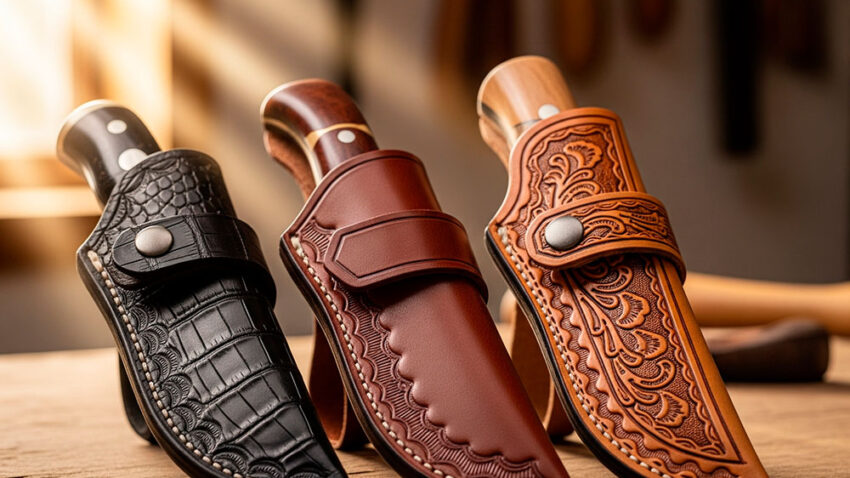
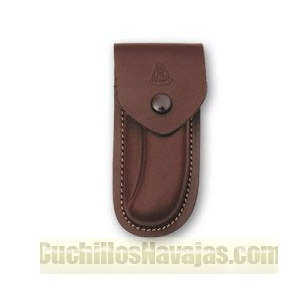
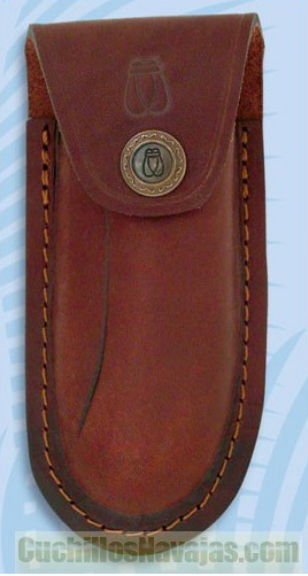
Leather is, perhaps, the most classic and traditional material for knife sheaths. Appreciated for its durability, abrasion resistance, and its ability to develop a unique patina over time, leather offers a timeless aesthetic and a feeling of superior quality. Leather sheaths can vary in thickness, type of leather (cowhide, buffalo, etc.), and finish (smooth, embossed, aged).
- Advantages: Very durable, aesthetic, adapts to the shape of the knife with use, premium feel, excellent protection against bumps and scratches.
- Disadvantages: Can be heavier and bulkier than other materials, requires some maintenance (hydration to prevent drying and cracking), can be susceptible to moisture if not treated.
- Common Uses: Hunting knives, classic knives, collection knives, everyday use knives with an elegant touch.
Cordura Sheaths: Lightness and Extreme Resistance
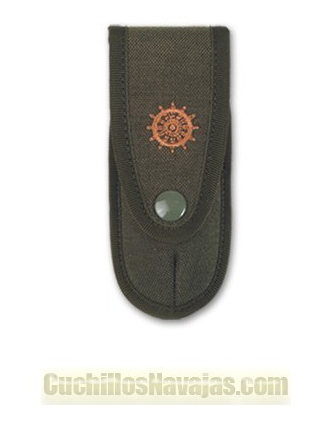
Cordura is a high-tenacity nylon fabric, known for its exceptional resistance to abrasion, tears, and punctures. It is a very popular synthetic material in military equipment, backpacks, and outdoor clothing, making it ideal for sheaths that require maximum durability and lightness.
- Advantages: Extremely wear-resistant, lightweight, water-resistant (especially if coated), easy to clean, available in a wide range of colors.
- Disadvantages: Less aesthetic than leather for some tastes, may be less rigid and offer less protection against strong impacts if it does not have internal reinforcements.
- Common Uses: Tactical knives, survival knives, work knives, rescue knives, military and police use.
Advanced Synthetic Material Sheaths (Kydex, Ballistic Nylon, etc.): Innovation and Functionality
Beyond leather and Cordura, there are other synthetic materials that offer very specific characteristics, adapted to more technical or extreme needs:
- Kydex: An acrylic/PVC thermoplastic that is heat-molded to create rigid, custom sheaths. It offers excellent retention and quick deployment. It is waterproof and very resistant to chemicals. Ideal for knives that require a precise fit and quick access.
- Ballistic Nylon: An even stronger version of nylon, originally designed for bulletproof vests. It is extremely durable and abrasion-resistant, although it can be less flexible than Cordura.
- Rubber or Silicone: Used in basic protective sheaths or to line sheaths made of other materials, they offer grip and cushioning.
| Material | Advantages | Disadvantages | Recommended Uses |
|---|---|---|---|
| Leather | Durability, classic aesthetics, patina over time, excellent scratch protection. | Can be heavy, requires maintenance, susceptible to moisture without treatment. | Classic knives, hunting knives, collection knives, elegant daily use. |
| Cordura | Lightweight, high resistance to abrasion and tears, water-resistant, easy to clean. | Less rigid, may not offer the same impact protection as harder materials. | Tactical knives, survival knives, work knives, for outdoor activities. |
| Kydex | Precise retention, quick deployment, waterproof, high chemical resistance, very durable. | Can be noisy when drawing the knife, less aesthetic for some, very specific fit. | Tactical knives, EDC (Every Day Carry), knives with Clip. |
| Ballistic Nylon | Extreme abrasion resistance and superior durability. | Less flexible, can be stiffer than Cordura. | Military, security applications, very intensive use. |
| Rubber/Silicone | Basic protection against bumps, additional grip, cushioning. | Low cut resistance, less durable as a main material. | Light protective sheaths, internal linings. |
The choice between these materials will depend on your priorities: are you looking for elegance, maximum resistance, lightness, or an ultra-precise fit? Consider the environment in which you will use your knife and the protection you truly need.
Design and Styles of Knife Sheaths: Functionality and Aesthetics
Just as a knife comes in countless shapes and sizes, so do its sheaths. Designs and styles not only affect appearance but also how you carry, access, and protect your knife. From discreet pocket sheaths to robust belt systems, the variety is immense. You will be able to find as many types of sheaths as there are for each type of knife.
Pocket Sheaths or Slip Cases: Discretion and Simplicity
These sheaths are compact and designed to carry the knife discreetly inside the pocket. They are usually made of leather or thin synthetic materials, and their main function is to protect the knife from scratches from keys or coins and keep it separate from other objects.
- Features: Simple design, no clips or loops, fitted to the size of the knife.
- Advantages: Very discreet, lightweight, protect the knife in the pocket, prevent the knife from moving freely.
- Disadvantages: Do not offer external support, only internal protection.
- Ideal for: Classic pocket knives, EDC (Everyday Carry) knives that are carried loosely in pants or jackets.
Belt Sheaths: Comfort and Quick Access
Belt sheaths are extremely popular for their comfort and the easy access they provide to the knife. They are attached to the belt by loops, straps, or clips, and can carry the knife in a vertical or horizontal position.
- Features: Belt loops or straps, flap with snap or magnet, some with extra compartments.
- Advantages: Quick and easy access, frees up pocket space, secure and stable transport.
- Disadvantages: May be less discreet depending on size and style.
- Ideal for: Work knives, hunting knives, multi-tool knives, daily use for those who need constant access.
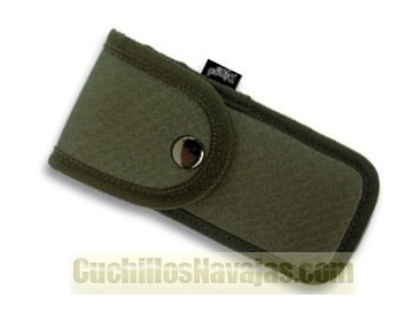
Tactical or Modular (MOLLE) Sheaths: Versatility and Resistance
Designed for demanding environments, these sheaths are usually made of Cordura or Kydex and are equipped with modular attachment systems (such as MOLLE) that allow them to be attached to backpacks, tactical vests, duty belts, or any compatible equipment. They offer great versatility in how the knife is carried.
- Features: MOLLE system, additional retention straps, secure retention closures, often with drainage.
- Advantages: Maximum security and retention, high resistance to extreme conditions, adaptability to different equipment.
- Disadvantages: Very specific for a type of use, can be bulky.
- Ideal for: Tactical knives, survival knives, military, rescue, extreme outdoor activities.
Horizontal or Cross-Draw Sheaths: Discretion and Side Access
These sheaths are worn on the belt, but the knife is positioned horizontally, which can be more discreet under a jacket and facilitate side access. They are less common but offer an interesting alternative to vertical sheaths.
- Features: Horizontal orientation on the belt, flat design.
- Advantages: Greater discretion, comfortable side access for some people.
- Disadvantages: Requires more horizontal space on the belt, may be less intuitive for initial extraction.
- Ideal for: Medium-sized knives, discreet use under clothing.
Sheaths with Pocket Clip: Functionality and External Attachment
Although many knives already include a clip, some sheaths are designed with their own clip, allowing a knife without a clip to be carried or adding an extra layer of security. These clips allow the sheath to be attached to the edge of the pocket, to the belt, or even to a backpack strap.
- Features: Incorporate a metal or durable plastic clip.
- Advantages: Keeps the knife accessible at the edge of the pocket or belt, prevents it from falling out or mixing with other objects.
- Disadvantages: Not as discreet as an internal pocket sheath.
- Ideal for: Any knife that needs an external attachment point, people who prefer to carry their knife on the edge of the pocket.
“Sock” Type or Bag Sheaths: Simple Protection and Storage
These are very basic sheaths, often made of soft fabric (neoprene, felt, microfiber) that slide over the knife. Their main function is to protect the knife’s surface from scratches and dust when stored or transported inside a larger bag.
- Features: Bag-type design, without external closures or attachment systems.
- Advantages: Very lightweight, economical, protect the knife’s surface.
- Disadvantages: Do not offer secure retention, little protection against bumps or drops.
- Ideal for: Storing collection knives, occasional transport inside a backpack.


Additional Features to Consider When Choosing a Sheath
Beyond the basic material and design, many sheaths incorporate additional features that can significantly improve their functionality and convenience. Paying attention to these details will help you find the sheath that perfectly fits your lifestyle and the use you give your knife.
- Closure Type: The closure mechanism is fundamental for security and access. The most common are:
- Snap fasteners: Secure and durable, ideal for leather sheaths.
- Velcro: Quick and easy to use, common in Cordura and tactical sheaths. Can be noisy.
- Zippers: Offer a complete closure, often present in case-type sheaths.
- Magnets: Practical and silent, although less secure for high-value knives.
- Passive retention systems (Kydex): Based on friction for a snug fit that keeps the knife in place.
- Attachment Systems: How the sheath is anchored to your body or equipment.
- Fixed belt loops: Sewn directly to the sheath, very secure.
- Metal or plastic clips: Allow the sheath to be easily put on and taken off the belt or pocket.
- MOLLE systems: For modular attachment to tactical equipment.
- Carabiners or rings: For hanging the sheath from a loop or backpack.
- Drainage: Holes in the bottom of the sheath (especially in Kydex or Cordura) to allow water or dirt to exit, preventing knife corrosion. Essential for sheaths that will be used in wet environments.
- Additional Compartments: Some sheaths include small pockets or slots for carrying other accessories, such as small sharpeners, flashlights, lighters, or even a second smaller knife.
- Reinforcements and Padding: For greater protection against impacts or to maintain the shape of the sheath. It is common in tactical sheaths or for large knives.
- Breathable Material: In sheaths that completely enclose the knife, a breathable material can help prevent moisture buildup and oxidation.
- Style and Color: Although functionality is key, aesthetics also play a role. You can find sheaths in a wide range of colors, from natural leather tones to camouflages or vibrant colors in synthetic materials.
The options are very varied, and the key is to carefully consider how and where you will use your knife to select a sheath that complements and enhances its use, rather than being an obstacle.
Maintenance of Knife Sheaths: Prolong Their Useful Life
Just as you care for your knife to maintain its edge and functionality, it is essential to pay attention to the maintenance of its sheath. Proper care will not only prolong the life of the sheath but also ensure that it continues to protect your knife effectively. Maintenance will vary slightly depending on the sheath material.
Leather Sheath Maintenance: Nourishment and Protection
Leather sheaths require specific care to maintain their flexibility, prevent cracking, and protect them from moisture. A leather sheath, like the one seen in the Laguiole image, is an investment that is well worth this care.
- Regular Cleaning: Clean dust and dirt with a soft, slightly damp cloth. For ingrained dirt, you can use a specific leather soap.
- Hydration: Apply leather balms or conditioners every few months (or more often if the sheath is used in dry or humid environments). This prevents the leather from drying out and cracking.
- Moisture Protection: If the sheath gets wet, air dry it, away from direct heat sources that could deform or damage the leather. Once dry, you can apply a leather waterproofing agent.
- Storage: Store leather sheaths in a cool, dry place, away from direct sunlight.
Cordura and Synthetic Material Sheath Maintenance: Resistance and Cleaning
Cordura, ballistic nylon, or Kydex sheaths are generally easier to maintain due to their inherent resistance to elements and abrasion.
- Cleaning: To remove dirt or mud, you can simply rinse the sheath with warm water and a little mild soap. A soft-bristled brush can help with ingrained dirt in the Cordura textures. In the case of Kydex, a damp cloth is sufficient.
- Drying: Make sure the sheath is completely dry before storing the knife to prevent rust formation. Air dry it, never under direct sunlight (which could weaken some synthetic fabrics or deform Kydex if it gets too hot).
- Inspection: Periodically check seams, snaps, and attachment systems for any signs of wear or damage, especially if the sheath is used intensively.
Regardless of the material, a good habit is to remove the knife from the sheath regularly to clean both elements. If the knife is going to be stored for a long time, it is advisable to take it out of the sheath to allow both the knife and the sheath to “breathe”, preventing moisture accumulation. Proactive maintenance will ensure that your sheath is always in optimal condition, ready to protect your valuable knife.
How to Choose the Perfect Sheath for Your Knife
Choosing the perfect sheath is not a trivial decision. It depends on a combination of factors that include the type of knife you own, the primary use you will give it, your personal carrying preferences, and, of course, the level of protection you need. Here is a step-by-step guide to help you make the best decision:
-
- Identify the Type and Size of Your Knife:
- Folding vs. fixed blade knives: Although this article focuses on folding knives, it is important to differentiate that sheaths for fixed blade knives have different requirements (greater rigidity and retention).
- Dimensions: Measure the knife when closed (length, width, and thickness). The sheath should fit comfortably without being too loose or excessively tight. A sheath that is too large will cause the knife to move, and one that is too small will make it difficult to extract and could damage the sheath or the knife.
- Handle design and clip: Some handles are bulkier, and if your knife has a pocket clip, consider whether the sheath allows it or obstructs it.
- Consider the Primary Use:
- Everyday Carry (EDC): If you carry it daily in your pocket, a discreet leather or nylon sheath that protects against scratches can be ideal. For quick access, a compact belt sheath or one with a clip might be preferable.
- Outdoor activities (hunting, camping, hiking): You will need something robust and water-resistant, such as Cordura or Kydex. Belt or tactical sheaths are ideal for their security and ease of access.
- Work or industrial use: Extreme durability is key. Cordura or ballistic nylon, with reinforcements or secure retention systems.
- Collection or display: Custom leather sheaths or cases that offer protection against dust and moisture, while allowing the knife to be admired.
- Define Your Carrying Preferences:
- Pocket: Slip case for internal protection.
- Belt: Vertical or horizontal, with snap or Velcro for quick access.
- Backpack or Tactical Gear: With MOLLE systems or secure attachments.
- Discretion: Some sheaths are bulkier than others. If discretion is key, opt for thinner, more compact designs.
- Choose the Right Material:
- Leather: For durability, classic aesthetics, and a premium feel. Requires some maintenance.
- Cordura/Nylon: For lightness, abrasion and water resistance, and ease of cleaning. Perfect for rough use.
- Kydex: For a custom fit, superior retention, and extreme resistance to elements. Ideal for tactical use.
- Consider Additional Features:
- Closure type: Snap, Velcro, magnet, friction. Choose the one that offers the balance between security and speed.
- Drainage: If you will use it in wet environments.
- Extra compartments: If you need to carry other small items alongside the knife.
- Water resistance: A key factor if the knife will be exposed to moisture.
- Budget: Sheaths vary widely in price. While there are good quality economical options, a high-end sheath (especially custom leather or custom Kydex) can be a worthwhile investment for the long-term protection it offers your valuable knife.
- Identify the Type and Size of Your Knife:
It is always advisable to try the knife in the sheath (if possible) before buying it to ensure a perfect fit. In any case, many of the sheath suppliers you will find in our online store specify the type of knife and the dimensions for which each sheath is designed, facilitating your choice.
Beyond Protection: Sheaths as an Expression of Personal Style
While the primary function of a knife sheath is protection, we cannot ignore its role as an element of personal style. In a world where every detail counts, your knife sheath can be an extension of your personality, a reflection of your tastes, and an aesthetic complement to your daily gear.
-
-
- Classic Elegance: Leather sheaths, with their rich texture and the patina they develop over time, evoke a sense of tradition and sophistication. They are perfect for those who appreciate timelessness and artisanal design. Elegantly aged leather speaks of a well-cared-for object with a history.
- Modern Functionality: Cordura and other synthetic material sheaths, with their clean lines and variety of colors (from black and olive green to more vibrant tones or camouflage patterns), align with a more practical, modern, and tactical style. They are ideal for those seeking a functional and discreet appearance, or for those who need their equipment to withstand the toughest conditions without sacrificing performance.
- Personalization: Some sheaths can be personalized with engravings, specific dyes, or unique hardware. This allows your sheath not only to protect your knife but also to tell a story or represent something meaningful to you. It is a way to make your knife and its sheath truly unique.
- Combination with Other Accessories: The sheath can complement other elements of your EDC gear, such as your wallet, belt, watch, or even your clothing. Harmonizing materials and colors can create a cohesive set that reflects your attention to detail.
-
The choice of a sheath, therefore, goes beyond mere practicality. It is a decision that balances the need to protect a valuable tool with the desire to express a style and identity. Whether you prefer the robustness of a Kydex tactical sheath or the elegance of a handmade leather one, your knife sheath is a small canvas where functionality meets personal expression.
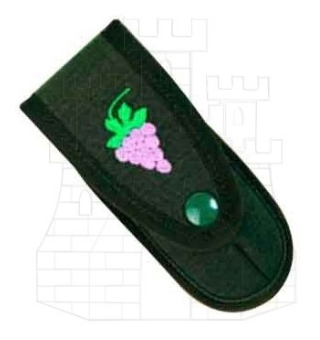
In short, knife sheaths are indispensable elements that go far beyond being a simple accessory. They are the first line of defense for your valuable tool, ensuring its durability, keeping its edge intact, and, most importantly, guaranteeing user safety. From traditional leather sheaths that age elegantly to modern and robust Cordura or Kydex options, there is a perfect sheath for every type of knife and for every need.
The correct choice of a sheath not only prolongs the useful life of your knife but also enhances your experience when carrying and using it, providing comfort, accessibility, and peace of mind. Carefully consider the material, design, attachment systems, and additional features to ensure that your knife is always protected and ready for any challenge. Invest in a quality sheath and you will be investing in the longevity and optimal performance of your edged companion. Explore the wide range of options available in our online store and find the ideal protection for your knife today.