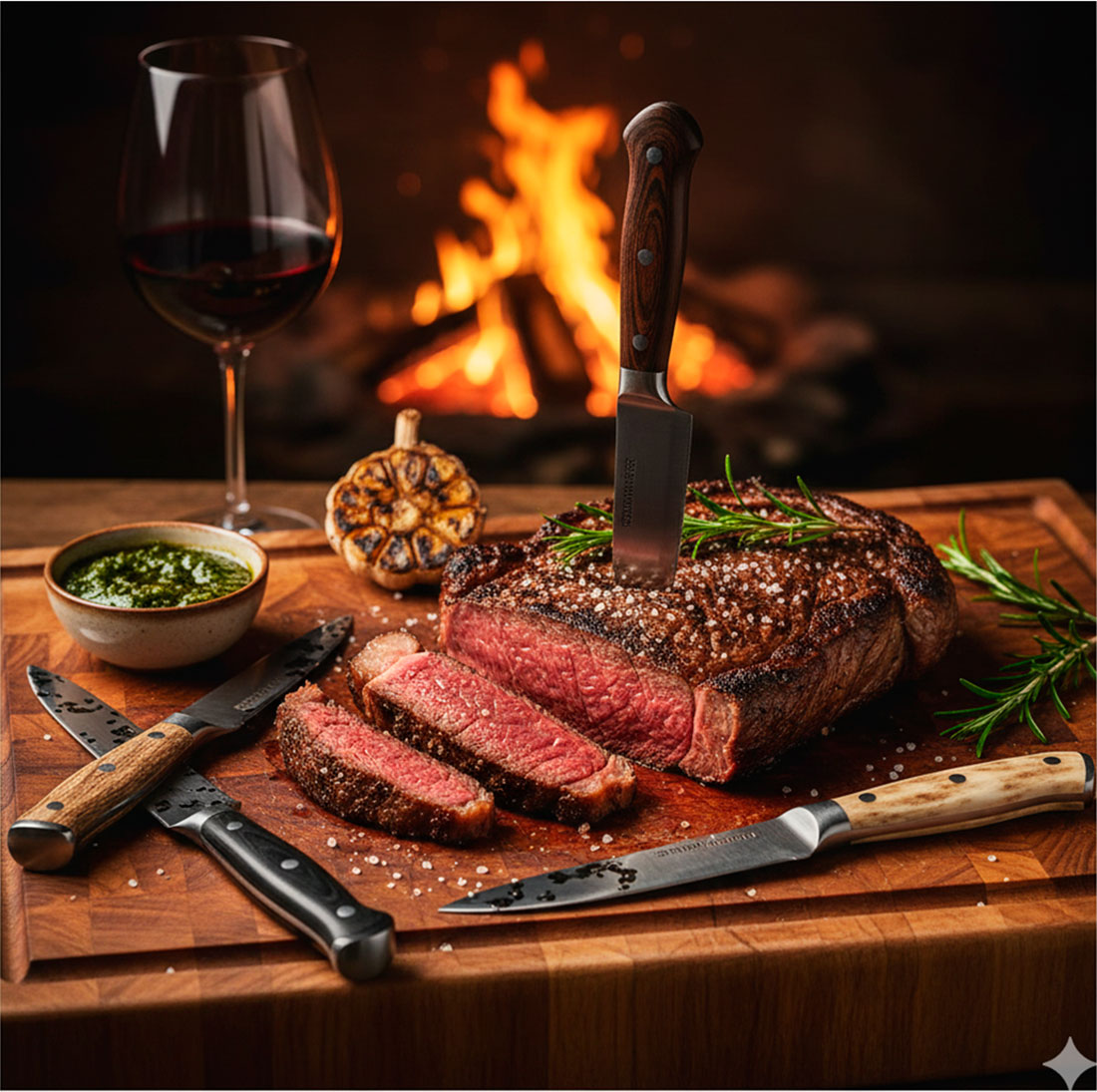
Smoke slowly rises from the grill. The meat rests on the cutting board, browned and perfectly seared. But between the master griller and the perfect presentation, there is one tool that makes all the difference: the right carving knife. A clean cut preserves natural juices, respects muscle fibers, and elevates the dining experience from ordinary to extraordinary. Choosing the perfect knife is not just a matter of purchase; it is a decision that defines your mastery of the roasting technique.
In this technical and practical guide, you will discover how to select the ideal knife according to the type of cut, the materials that guarantee durability, and the characteristics that separate a mediocre tool from a masterpiece of culinary engineering.
Essential Knife Types for the Perfect Roast
Contents
There isn’t one universal knife for meat. Each piece, each cut, and each technique requires a specifically designed blade. Knowing the differences between each type allows you to build a complete arsenal or choose the exact tool for your needs.
The Carving Knife: The Art of a Clean Cut
The carving knife is the star tool when it comes to serving cooked meat with elegance and precision. Its specific design makes it indispensable for any serious griller looking for impeccable presentations.
This knife stands out for its long, thin, and exceptionally sharp blade, which ranges between 15 and 25 centimeters. Unlike the robust chef’s knife, the carving knife is notably lighter and narrower, allowing for long, continuous cuts in a single pass, preserving the natural juices of the meat.
The carving knife’s firm, narrow tip guides you with millimeter precision, allowing you to maneuver around bones and joints with total control. Its rigid blade minimizes friction against muscle fibers, resulting in thin slices that maintain the original texture and juiciness.
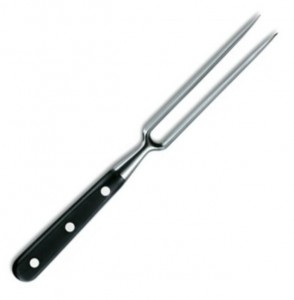
Ideal for carving large roasts of beef, pork, lamb, turkey, or filleting cooked meats, this knife becomes an extension of your skill. It is frequently used alongside the carving fork, whose long, sharp tines hold the meat firmly without excessively puncturing the surface.
Robust Knives: When Force is Necessary
For cuts that encounter bones, cartilage, and large pieces, you need tools designed to withstand the punishment of hard work without compromising the edge.
Butcher Knife
The butcher knife is robust, heavy, and built for battle. With blades ranging from 15 to 30 centimeters, this knife handles large and difficult cuts with authority. Its wide and thick blade withstands the pressure of cutting through hard parts, cartilage, and dense tissues without flexing or losing stability.
It is the preferred tool of professional butchers and grillers who process whole pieces, ensuring firm cuts where other knives would fail.
Meat Cleaver
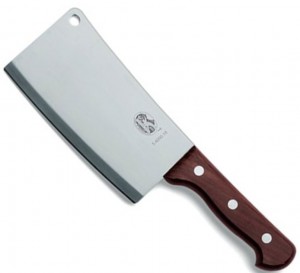
When facing large bones, the meat cleaver or hatchet is your undisputed ally. With a large, rectangular, and extremely sturdy blade of 15 to 20 centimeters, this knife can weigh over 500 grams. Its thick edge is designed specifically to cut through bones and cartilage with precise and forceful blows.
It is not a subtle tool, but when you need to divide ribs or separate large pieces, nothing surpasses it in effectiveness.
Precision Knives: Filleting and Boning
Surgical precision and flexibility define this category of knives, designed for delicate tasks that require absolute control.
Boning Knife
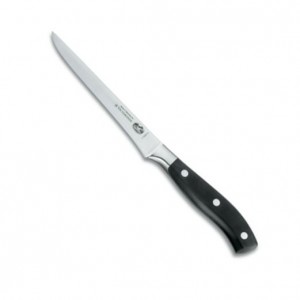
The boning knife is essential for extracting bones from meat, poultry, and fish with minimal waste. Its thin, flexible, and extremely sharp blade allows you to maneuver easily around complex bone structures and remove tendons effortlessly.
The Japanese version, Honesuki, features a rigid, triangular blade, specifically designed for boning poultry with mathematical precision.
Fillet Knife
With a long, thin, and flexible blade of 15 to 25 centimeters, the fillet knife allows you to separate meat from the bone and create fillets of different thicknesses with smooth and controlled cuts. Its flexibility facilitates curved movements to follow the natural contour of the piece, preserving every usable gram of meat.
Versatile and Table Knives
Chef Knife and Gyuto
The chef’s knife is the all-rounder of the kitchen. With its wide, curved, and robust blade of 20 to 25 centimeters, it masterfully handles chopping and mincing meat. The Japanese version, Gyuto, perfects this design, offering exceptional balance and an edge that sings upon contact with the cutting board.
Steak Knife
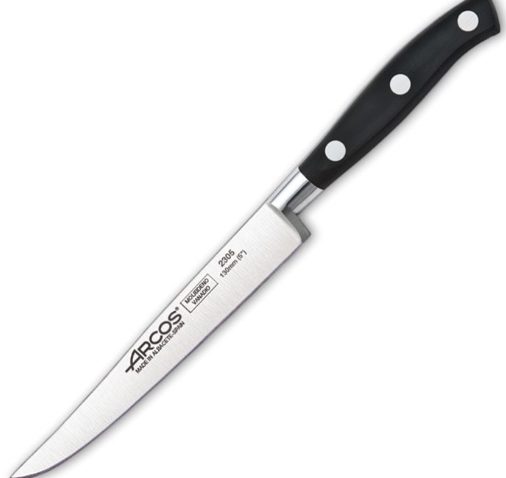
The steak knife brings the roasting experience to the table. Smaller than preparation knives, this personal knife is designed for each diner to cut their portion with elegance. Its blade can be smooth-edged or serrated: the smooth edge offers clean cuts on rare meats, while the serrated edge (micro-saw) maintains its sharpness longer and cuts through crispy crusts effortlessly.
Materials that Define Excellence
Steel is the heart of the knife. The choice of material determines how long it retains its edge, how it resists corrosion, and what level of maintenance it requires. Choosing the right steel means choosing the performance you will get for years.
High-Carbon Stainless Steel: The Perfect Balance
High-carbon stainless steel combines the best of two worlds: the hardness and edge retention of carbon with the corrosion resistance of stainless steel. This alloy of chromium, nickel, iron, carbon, and molybdenum is the most recommended material for roasting knives and professional carving knives.
It resists rust, requires minimal maintenance, and can last a lifetime with proper care. It is the smart choice for those seeking durability without sacrificing performance.
Carbon Steel: The Supreme Edge
For professionals and enthusiasts who prioritize absolute performance, carbon steel offers superior edge retention and can achieve an extremely sharp edge. However, it is prone to oxidation and requires regular maintenance: immediate cleaning, thorough drying, and application of protective oils.
If you are willing to invest time in care, carbon steel will reward you with an edge that feels like a natural extension of your hand.
Titanium: Lightness and Resistance
Titanium is lightweight, strong, and exceptionally durable. Although more expensive, it offers advantages in situations where knife weight is a critical factor. Its corrosion resistance is outstanding, although its edge retention capacity does not reach that of carbon steel.
Full Tang Construction: Structural Strength
Professional quality knives feature full tang construction, where the blade extends throughout the handle. This construction ensures greater strength, durability, and balance, crucial elements when facing demanding cuts on large pieces of meat.
| Material | Main Advantages | Disadvantages | Recommended for |
|---|---|---|---|
| High-Carbon Stainless Steel | Hardness, edge retention, corrosion resistance, low maintenance | Can be more difficult to sharpen than pure carbon | General use, grillers of all levels |
| Carbon Steel | Superior edge retention, extreme sharpness, easy to sharpen | Prone to oxidation, requires constant maintenance | Professionals and dedicated enthusiasts |
| Titanium | Lightweight, strong, excellent corrosion resistance | Higher cost, lower edge retention | Situations where weight is critical |
- High-Carbon Stainless Steel
-
- Advantages: Hardness, edge retention, corrosion resistance, low maintenance
- Disadvantages: Can be more difficult to sharpen than pure carbon
- Recommended for: General use, grillers of all levels
- Carbon Steel
-
- Advantages: Superior edge retention, extreme sharpness, easy to sharpen
- Disadvantages: Prone to oxidation, requires constant maintenance
- Recommended for: Professionals and dedicated enthusiasts
- Titanium
-
- Advantages: Lightweight, strong, excellent corrosion resistance
- Disadvantages: Higher cost, lower edge retention
- Recommended for: Situations where weight is critical
Key Features: Size, Weight, and Design
Beyond the material, the dimensions and functional design of the knife determine its effectiveness in specific tasks. A perfectly balanced knife feels like a natural extension of your arm.
Blade Length: The Ideal Range
For general roasting cuts, the ideal blade length ranges between 20 and 25 centimeters. This measurement allows for cutting large pieces in a single pass, maintaining control and precision. Longer blades (up to 30 cm) are useful for very large roasts, while shorter blades (15 cm) offer greater maneuverability in confined spaces.
Weight and Balance: Control without Fatigue
A well-balanced knife distributes weight evenly between the blade and the handle, allowing for prolonged cutting without fatigue. Moderate weight provides enough mass for easy cutting, but not so much as to strain the wrist. The perfect balance is felt when holding the knife by the handle: the blade should not fall forward or backward.
Edge Type: Smooth vs. Serrated
The smooth edge provides smooth and clean cuts, ideal for rare meats and delicate presentations. It requires regular sharpening to maintain optimal performance.
The serrated edge maintains its cutting ability much longer without frequent sharpening. It is especially effective on meats with a hard crust, sausages, or pieces with crispy skin, allowing you to cut without crushing the texture.
For red or pink meat, many professionals prefer a serrated or mixed edge that combines the best of both worlds.
The Handle: Where Control and Comfort Meet
An ergonomic and secure handle is fundamental for absolute knife control, especially during prolonged preparation sessions or when your hands are wet or greasy.
Recommended Handle Materials
The most effective materials for roasting knife handles combine strength, good grip, and lasting comfort.
- Hardwood (walnut, maple, rosewood): Provides warmth, tactile comfort, and traditional aesthetics. Durable if treated properly, it offers a natural and secure grip for long cuts.
- Micarta: A highly valued resin composite material for its wear resistance, non-slip properties, and lightness. Ideal for long roasting sessions where comfort is a priority.
- G-10: A high-strength synthetic material with low moisture absorption and a rough texture that provides a firm grip even in wet or greasy conditions.
- Polyoxymethylene and synthetic polymers: Modern options that offer durability, easy cleaning, and resistance to adverse conditions.
- Cow horn and artisanal materials: For those who value tradition and unique aesthetics, these materials offer distinct character and connection to ancient craftsmanship.
Ergonomic and Non-Slip Design
The handle should fit comfortably in your hand, without excessive pressure points. A non-slip design is crucial for safety: even with grease or moisture, the handle must remain firmly in your grip. Look for textures that increase friction without being abrasive.
Maintenance: Preserve the Edge and Durability
A quality roasting knife can last generations if you give it the care it deserves. Proper maintenance is not optional; it is part of the commitment to excellence.
Sharpening: The Key to Consistent Performance
Meat knives require regular sharpening to keep their edge in optimal condition. The frequency depends on use:
- Daily use: Sharpen once a week
- Frequent use: Every two or three weeks
- Occasional weekend use: Once a month
In addition to periodic sharpening, use a honing steel or sharpener regularly to realign the microscopic edge and keep it sharper between full sharpenings. The correct technique involves holding the honing steel vertically without moving your arm, sliding the knife’s edge at an angle of approximately 20 degrees.
Take your knives for professional sharpening at least once a year to fully restore the edge profile.
Cleaning: Immediate Protection
 Always wash your knives by hand immediately after each use with warm water and mild detergent. Dry them immediately with a soft, clean cloth to prevent water stains and corrosion.
Never use the dishwasher. Extreme heat, harsh detergents, and banging against other utensils irreparably damage the edge, corrode the steel, and deteriorate the handle.
Storage: Safety and Protection
Store your knives in a safe place that protects the edge and prevents accidents. The best options include:
- Knife blocks: Keep knives organized and accessible
- Magnetic strips: Display and protect the edge without contact
- Cases, rolls, or protective sheaths: Ideal for transport or drawer storage
Never store knives loosely in drawers where they can hit against other utensils.
Safety: Master the Tool, Master the Cut
A sharp knife in expert hands is safe. A dull knife is dangerous because it requires excessive force, increasing the risk of slips and accidents.
Fundamental Safety Principles
- Stable base: Always use a firm, non-slip cutting board
- Firm grip: Hold the knife firmly by the handle, never by the blade
- Safe direction: Always point the blade away from your body
- Claw technique: Keep the fingers of the hand holding the meat bent inward, forming a “claw” to protect them from the blade
- Optimal edge: Keep the knife sharp; paradoxically, a sharp knife is safer than a dull one
- Mindfulness: Never cut in a hurry or with distractions
Resolve your doubts about roasting and meat knives
What is the difference between a chef’s knife and a carving knife?
The main difference between a chef’s knife and a carving knife (or slicing/meat knife) lies in their design and function:
- The chef’s knife is more versatile, with a wide, curved, and robust blade that allows for chopping, dicing, and cutting a variety of foods such as vegetables, meats, and fish with precision and control. It is relatively heavy and generally has a double-bevel edge to facilitate varied cuts with rocking motions.
- The carving knife or slicing knife has a thinner, longer, and straighter blade, explicitly designed for cutting roasted meats into thin, clean slices. It is lighter and more flexible for handling delicate cuts without shredding the meat, but less suitable for chopping or cutting soft foods or heavy tasks.
What handle materials are most recommended for roasting knives?
The most recommended handle materials for roasting knives are those that combine strength, good grip, and lasting comfort, such as hardwood (walnut, maple, rosewood), micarta, and G-10.
- Hardwood provides a warm, comfortable, and aesthetically pleasing grip, and is also durable if properly treated. Woods like walnut, maple, or rosewood offer durability and good ergonomics for prolonged cuts.
- Micarta is a resin-composite material, highly valued for its wear resistance, non-slip properties, lightness, and comfort for long roasting sessions.
- G-10 is a high-strength synthetic material with low moisture absorption and a rough texture that provides a firm and secure grip, ideal in situations where the handle might get wet or dirty.
Other materials such as carbon fiber or treated wood (like Polywood) are also modern and durable options; however, traditional hardwood and composite materials like micarta and G-10 are generally preferred for a good balance of comfort, strength, and handling in roasting knives.
How does the type of blade affect the cutting of different types of meat?
The type of blade affects the cutting of different meats primarily in the precision, cleanliness, and ease of the cut, depending on the texture and hardness of the meat.
- Thin and very sharp blades are ideal for delicate cuts or tender meat such as sirloin or loin, as they allow for a clean cut without tearing muscle fibers, preserving texture and juiciness.
- Stronger and thicker blades are more suitable for bone-in meats or tougher and fibrous cuts, as they withstand greater resistance and allow for cutting without damaging the blade.
- Additionally, the blade type also impacts the speed and control of the cut, influencing the final presentation of the product.
Furthermore, using a sharp blade that is appropriate for the cut’s texture (thin for soft meats and strong for hard or bone-in meats) improves the quality and finish of the meat cut.
What characteristics should a good roasting knife have?
 A good roasting knife should have a sharp blade made of stainless steel or carbon steel, allowing for precise cuts without tearing the meat. The blade should be long (ideally between 20 and 25 cm), robust, and resistant to wear and corrosion. Additionally, the knife should have an ergonomic and non-slip handle for a comfortable and secure grip, even during prolonged use or with wet hands. It is important that the knife is well-balanced to facilitate handling and that the edge is durable, which can be smooth or serrated depending on the type of meat to be cut. It is also recommended that the knife be strong and durable, with a design intended for roasts that allows for firm cuts on raw or cooked meats.
These key characteristics are:
- Stainless steel or carbon steel blade, well-sharpened and resistant.
- Appropriate blade length (20-25 cm).
- Ergonomic, comfortable, secure, and non-slip handle.
- Good balance and robustness for handling firm cuts.
- Durable edge, smooth or serrated as needed.
These characteristics enable clean cuts, facilitate handling, and preserve the juiciness and texture of the meat in the roast.
Is it better to use stainless steel or carbon steel for meat knives?
The choice between stainless steel and carbon steel for meat knives depends on several factors, including maintenance, durability, sharpness, and cost.
Stainless Steel:
- Advantages: Offers low maintenance, high resistance to corrosion, and durability, making it ideal for humid environments and settings with high hygiene demands.
- Disadvantages: Tends to be less sharp and retain its edge less than carbon steel. It is less hard and can be more difficult to sharpen.
Carbon Steel:
- Advantages: Provides a sharper edge and retains it better, making it preferred by professionals. It is harder and easier to sharpen.
- Disadvantages: Is more prone to rust and requires regular maintenance to prevent corrosion.
In summary, if you are looking for a knife with low maintenance and high durability, stainless steel is a better option. If you prefer a sharper knife and are willing to perform regular maintenance, carbon steel is better.
| Type of Oil | Main Characteristics | Recommended Use |
|---|---|---|
| Mineral oil | High penetration, does not degrade or attract dirt | Regular protection and maintenance |
| Camellia oil | Natural, acid-free, non-volatile | Antioxidant protection, lubrication |
| Lithium grease | Dense, durable, does not evaporate | Long-term storage, protection |
- Mineral oil
-
- Type of oil: Mineral oil
- Characteristics: High penetration, does not degrade or attract dirt
- Recommended Use: Regular protection and maintenance
- Camellia oil
-
- Type of oil: Camellia oil
- Characteristics: Natural, acid-free, non-volatile
- Recommended Use: Antioxidant protection, lubrication
- Lithium grease
-
- Type of oil: Lithium grease
- Characteristics: Dense, durable, does not evaporate
- Recommended Use: Long-term storage, protection
Choosing the perfect knife for roasting is not simply a purchase; it is an investment in your technique, in the quality of your cuts, and in the experience you offer to those who share your table. From the carving knife that preserves every drop of juice to the cleaver that dominates the most challenging bones, each tool has its precise purpose. The steel you choose, the handle you hold, and the maintenance you provide define whether your knife will be merely a utensil or an extension of your mastery. Master the technique, respect the tool, and every cut will be a declaration of excellence. The perfect roast begins with the right knife in your hands.
Do you want to see the best knives for MEATS? | Do you want to see the best carving knives? | See all steak knives | The best ham knives