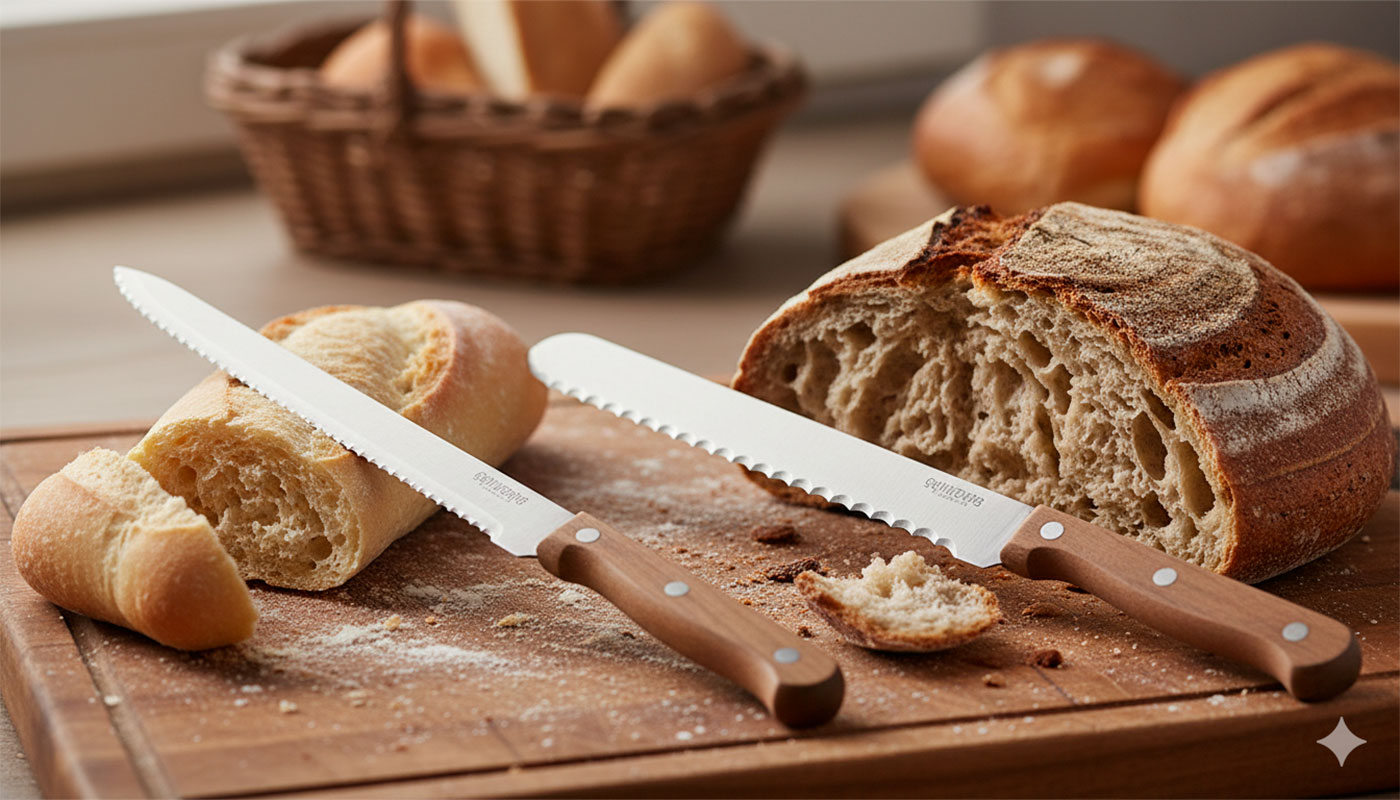
Cutting fresh bread is a common frustration. Irregular slices, scattered crumbs, or squashed pieces ruin the moment. The key lies in the differences between fine-serrated vs. coarse-serrated bread knives. Selecting the correct serration turns cutting into a clean and satisfying experience.
These serrated knives replicate a saw to overcome resistant crust without damaging the soft crumb. Two main variants define the market: fine serration with tight micro-serrated teeth and coarse serration with wide, separated teeth.
Why does the difference between fine and coarse serrations matter in bread knives?
Contents
- Why does the difference between fine and coarse serrations matter in bread knives?
- Fine-serrated bread knife: Features and advantages for delicate breads
- Coarse-serrated bread knife: Power for hard crusts and rustic breads
- Much more than a saw: Discover the range of baking knives
- Direct comparison: Which to choose? Common mistakes and practical tips
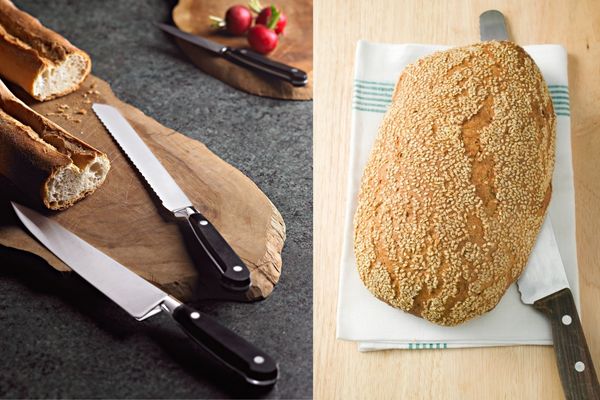 The fine serration excels on soft breads with thin crusts. It slides with precision, producing minimal crumbs and neat cuts, perfect for light baguettes or sandwich loaves. On the other hand, the coarse serration conquers thick, rough crusts, as seen in rustic breads or sourdough. Its deep teeth ensure a firm grip, preventing slips.
The choice depends on your usual breads. If you prepare crispy rustic breads, the coarse serration delivers unstoppable power. For varied delicate options, the fine serration offers refined control. These differences between fine-serrated vs. coarse-serrated bread knives affect the texture of slices, kitchen cleanliness, and the ease of the process.
This blog details unique features, an exhaustive bread knife comparison, and recommendations for finding the best knife for crispy bread. Understand how fine vs. coarse teeth bread knives shape your daily cutting routine, helping you decide with confidence according to your culinary style.
Fine-serrated bread knife: Features and advantages for delicate breads
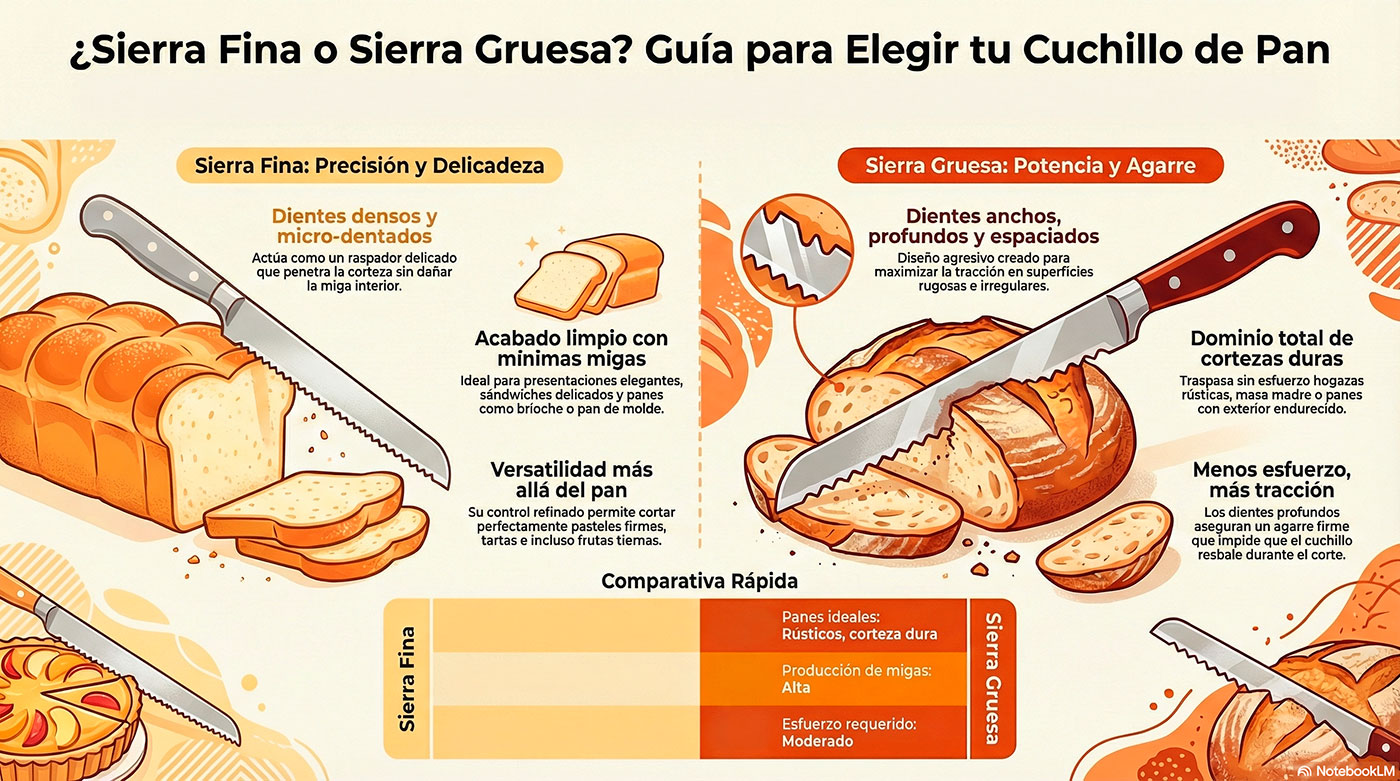
The fine-serrated bread knife is characterized by fine, densely spaced micro-serrated teeth. This micro-serrated bread knife acts as a delicate scraper, gently penetrating the crust without disturbing the inner crumb. Its design prioritizes precision over brute force.
Benefits include exceptionally clean cuts with minimal crumbs. Compared to the coarse serration, it reduces particle shedding, facilitating subsequent cleaning. Slices emerge uniform, with smooth edges perfect for elegant presentations or delicate sandwiches.
Ideal for soft breads like sandwich loaves, brioche, or light-crusted baguettes. It doesn’t compress the spongy structure, keeping the airy texture intact. Its versatility extends to firm cakes, pies, or even tender fruits, making it a multifunctional utensil.
In the differences between fine-serrated vs. coarse-serrated bread knives, the fine stands out in control and refinement. While the coarse requires more pressure on hard crusts, this offers stability without vibrations, ideal for less experienced hands.
Fine-toothed knife advantages shine in everyday kitchens. Made with high-quality steel, they retain their edge longer due to the reduced size of the teeth. Ergonomic handles ensure comfort during prolonged sessions.
This option balances functionality and aesthetics in the bread knife comparison. For those who prioritize cleanliness over power, it represents the superior choice in bread knife serration types for varied uses.
Coarse-serrated bread knife: Power for hard crusts and rustic breads
The coarse-serrated bread knife features wide, deep, and widely spaced teeth. This aggressive configuration grips and tears thick crusts without problems, ideal for breads with exteriors hardened by prolonged baking. Its design maximizes traction on textured surfaces.
Perfect for crispy baguettes, rustic loaves, or freshly baked sourdough. The coarse teeth penetrate irregular and rough surfaces, preventing the knife from slipping during cutting. Slices preserve the integrity of the crust, highlighting the crispness against the soft and airy crumb.
Although it produces more crumbs than the fine serration, its superiority on hard crusts largely compensates for this detail. The differences between fine-serrated vs. coarse-serrated bread knives are evident in power: the coarse triumphs where the fine falters, making it the essential hard-crust knife for serious bakers.
In bread knife serration types, coarse-toothed bread knives provide optimal traction on artisanal, frozen, or semi-frozen breads. They cut entire loaves with wide sawing motions, without the need for excessive force or preheating.
Constructed from reinforced stainless steel, they withstand intensive use while maintaining prolonged sharpness. Robust handles with non-slip grips allow precise control during long cutting sessions. For traditional bread enthusiasts, they elevate every cut to a professional level without complications.
The bread knife comparison positions this variant as the best knife for crispy bread with a pronounced crust. Its fine vs. coarse teeth bread knives define the choice for unmatched power in daily rustic breads, transforming a simple task into a pleasant ritual.
Much more than a saw: Discover the range of baking knives
Not all breads are the same, and therefore, they should not be cut in the same way. From the most rustic and hard crusts to the tenderest brioches, we explore the variety of serrated edges designed to respect the crumb and elevate your kitchen experience.


A clean cut is key to presenting an impeccable table and preserving the freshness of each loaf. We analyze the different types of bread knives, their materials, and the necessary ergonomics to achieve the perfect slice effortlessly.
Direct comparison: Which to choose? Common mistakes and practical tips
The differences between fine-serrated vs. coarse-serrated bread knives emerge clearly in this side-by-side comparison:
| Feature | Fine Serration | Coarse Serration |
|---|---|---|
| Ideal Breads | Tender, thin crust | Rustic, thick crust |
| Crumb Production | Low | High |
| Cutting Precision | High, smooth edges | Good, but rougher |
| Versatility | High in soft and pastries | Specialized in hard |
| Effort Required | Minimum | Moderate |
- Fine Serration
-
- Ideal Breads: Tender, thin crust
- Crumb Production: Low
- Cutting Precision: High, smooth edges
- Coarse Serration
-
- Ideal Breads: Rustic, thick crust
- Crumb Production: High
- Cutting Precision: Good, but rougher
Direct recommendations: fine serration for daily sandwich loaves, soft baguettes, or rolls. Choose coarse serration if loaves, sourdough, or chapatis with hardened crusts dominate. For extreme variety, look for hybrid models combining both styles.
Frequent mistakes: forcing a fine serration on hard crusts causes slips and irregular cuts. Using a coarse serration on spongy breads flattens the crumb and generates unnecessary crumbs. Another common mistake: sharpening like a plain knife, which ruins the serrated teeth.
Practical maintenance tips: hand wash with mild soap and dry immediately to prevent oxidation. Sharpen using a specific sharpener for serrations or a fine stone with a low angle. Store in a protector or magnetic block, protecting the teeth.
Worry solved: can one knife do it all? Rarely; adapt to the main bread. How long does the edge last? Months with proper care. These guidelines in the bread knife comparison ensure informed choice and optimal performance according to your daily needs.