Hello, lovers of good blades and history! Have you ever stopped to think of a folding knife as more than just a simple tool? If so, you’re in the right place. Since time immemorial, the pocket knife has been an inseparable companion of humans. In fact, it is a derivation of the knife, an essential tool since the Stone Age for activities such as hunting and fishing. Nowadays, although sometimes attempts are made to marginalize them, the reasons for carrying a knife are multiple and varied, from small repairs to life-saving rescue situations.

In this article, we will delve into the fascinating world of different types of knives, exploring their origins, characteristics, uses, and the cultural legacy that has turned them into true jewels of craftsmanship and functionality. Get ready for a journey to the heart of the blade!
The functionality and practical value of a quality folding knife is that it is safe, robust, or thin, but always effective, to which its design and practically unalterable materials must be added.
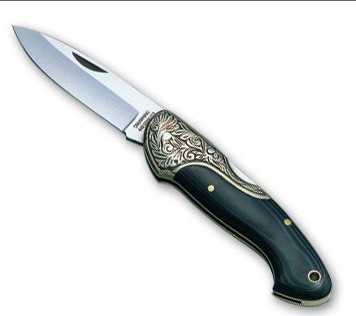
There are also those that, in addition to essential characteristics, add exclusive features of distinction, such as Damascus steels and exotic woods or natural antlers, creating a series of models in which exclusivity, finish, and beauty demonstrate the degree of quality and craftsmanship put into their making.
—
The Classic Spanish Folding Knife and its Centuries-Old Roots
Contents
- The Classic Spanish Folding Knife and its Centuries-Old Roots
- Origins and Evolution of an Ancient Craft
- Typology of the Classic Albacete Folding Knife
- Knives of Tradition and Character: Symbols with History
- Knives for Specific Uses: Tools Designed for Every Purpose
- Other Essential Knives for Every Purpose
- General Maintenance of Your Knife: A Lasting Edge
The Spanish folding knife is an emblem of identity and tradition. Its appearance, particularly at the end of the 16th century during the reign of Charles I, was a practical response to the prohibition of civilians carrying swords, allowing only militias and nobles to do so. Thus, the folding knife became a portable and discreet alternative, often carried under the sash.
Spain, with its rich cutlery tradition, has been a benchmark in knife manufacturing for centuries.
Whether combined with deer or bull antlers, with valuable woods, alpaca, brass, or even with the most advanced synthetic compounds, among our knives you will find designs of absolute topicality, although they also exist in the most classic forms in which Spanish artisans created them centuries ago, and which confirm our tradition.
—
Origins and Evolution of an Ancient Craft
The city of Albacete, in Castilla-La Mancha, is globally known as the heart of Spanish cutlery and has played a fundamental role in the history of the folding knife. Since the 15th century, Albacete already stood out for its communities of blacksmiths and cutlers. By the 17th century, the city already had a solid cutlery manufacturing industry, and in 1971, approximately one hundred workshops.
Although Albacete is the epicenter, other towns such as Santa Cruz de Mudela, Jerez de la Frontera, and Seville are also intrinsically related to the history of the Spanish folding knife. In addition, master artisans from Toledo, Ripoll, Olot, Mora, Peñíscola, Valencia, Pamplona, Tolosa, and Ronda also made knives, daggers, folding knives, and scissors.
The handmade manufacturing of these knives involved about forty operations. Common materials for the handles included various woods, bull or deer antler, brass, bone, mother-of-pearl, and tortoiseshell. The more elaborate knives could feature ivory, brass, or silver inlays, and circular decorations with small mirrors.
The price of a knife depends on the quality of its materials, especially the steel it is made of.
—
Typology of the Classic Albacete Folding Knife
The Albacete folding knife has twelve recognized models. Some of the most representative are:
- Classic Albaceteña Knife: This model solidified the roots of the Albacete knife. Its blade is more stylized than that of the Pastora. It is distinguished by its “virolas” at the upper end of the handle and the “rebajo” at the lower end, which could be made of metals such as stainless steel, brass, alpaca, silver, or gold. The spring, which remained constant in the typology, could be a tile or nipple type. The Classic Albacete Luxury Knife was also developed with decorations on the bolsters and handle, designed for collecting. It is considered the “queen of Spanish knives”.
- Fieles Knife: It is one of the oldest models, standing out for its effective cut and the simplicity of its parts.
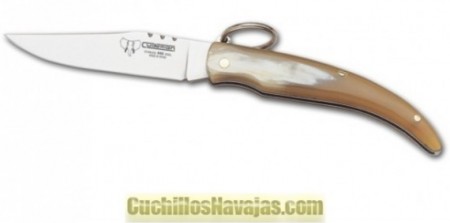
- Anilla Knife (Ring Knife): Its name comes from a spring with a ring, which makes it a more solid model.
- Pastora Knife (Shepherd’s Knife): Used for shepherding tasks.
- Punta de Espada Knife (Sword Tip Knife): Characterized by a straighter blade that resembles a small sword, unlike the classic knife that curves at 75% of its length. The handle is slightly more stylized to adapt to the blade.
- Machete Knife: Its blade is the same as the Punta de Espada knife, but it differs in that the bolster and the recess of the handle are identical, giving it symmetry in the upper and lower parts.
- Punta Cortada Knife (Cut Tip Knife) or Grafting Knife: This model was born from a legal prohibition imposed by D. Práxedes Mateo Sagasta (president of the Council of Ministers between 1870 and 1902), which prevented knives and daggers from ending in a point. Cutlers cut the tip of the blade to continue manufacturing, giving rise to a new tool. Farmers adopted it for grafting trees, allowing them to carry a comfortable and foldable tool for working in the field.
- Capora Knife: Also known as “Cow’s Tongue”, it is characterized by a short, wide blade, used for castration.
—
Knives of Tradition and Character: Symbols with History
Beyond Albacete, the diversity of knives in Spain and the world offers us models with unique histories and purposes.
The ratchet knife is an icon of Spanish heritage, especially in Andalusia, Castilla-La Mancha, and Levante. It emerged in the 18th and 19th centuries as an alternative to the use of swords, which were forbidden for civilians. Its name comes from the distinctive “crac-crac” sound it produces when opened, thanks to its serrated system, a mechanism valued both for its effectiveness and its intimidating capacity. It became a symbol of local identity and a practical tool for shepherds, farmers, merchants, travelers, and, on occasion, a weapon for personal defense.
Among the types of ratchet knives, we find:
- Albaceteña Ratchet Knife: Recognized for its curved blade and handle decorated with antler, bone, or noble woods. It was valued for its artisanal quality and served for both rural tasks and defense.
- Sevillana Knife: Long and stylized, with a brass or tortoiseshell handle. It was traditionally associated with bullfighters, gypsies, and Andalusian bandits, being a symbol of status and a useful tool.
- Lever Spring Knife: Stands out for its robustness and ease of use, with a spring system that secured the blade for safe use in field work.
- Fan Knife (or double ratchet): With a more complex design, it produced a prolonged sound when opened, which gave it fame for its psychological effect in the 19th century.
- Castrator Knife: Smaller, traditionally used by rural veterinarians for specific tasks, its short and precise blade made it ideal for meticulous work.
The bandit’s knife is an iconic symbol of Spanish popular culture, evoking an era of adventure and legends. This folding knife, typical of the 19th century, was used by bandits and travelers for defense and daily tasks. Beyond being a tool, it became a symbol of resistance and bravery.
An emblematic example is the “brass bolster”, with its classic design, stainless steel blade, and red wooden handle, which evokes stories of old. The famous Curro Jiménez Knife, known as the Ratchet Bandit’s Knife, stands out for its distinctive design and its lever lock mechanism, a true homage to Spanish culture and tradition. Although sometimes associated with crime, the bandit’s knife also reflects the identity and the struggle for freedom of those who, like Curro Jiménez, challenged established norms.
Taramundi Knives: The Artisanal Tradition of Asturias and Galicia
In the regions of Galicia and Asturias, the history of Taramundi knives dates back centuries, born from the need for tools for daily life. The tradition of forging knives was passed down from fathers to sons, perfecting over time. The abundance of iron and coal deposits, along with numerous rivers and forests for charcoal, fostered a strong metallurgical industry.
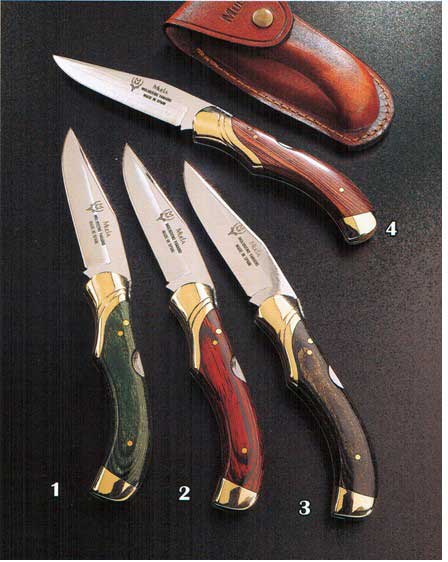
Today, master artisans like José Rodil continue this noble tradition in A Pontenova, inheriting the craft from his father and grandfather. The manufacturing of these knives involves manual forging techniques and the use of high-quality materials such as steel and wood, making each knife unique and customizable. José Rodil remains faithful to ancestral techniques, creating pieces of craftsmanship where “we put our soul and effort”, without being influenced by mass production.
—
Knives for Specific Uses: Tools Designed for Every Purpose
The evolution of the folding knife has led to the creation of highly specialized models, each with characteristics designed to meet very specific needs.
The seaman’s knife is a historical and practical tool, born from maritime trade in Europe during the 18th and 19th centuries. Its design was adapted to face the challenges on board: cutting ropes, undoing knots, working with sails, or performing small repairs. Unlike other knives, the seaman’s knife incorporated a key piece: the fid or marlinspike, essential for manipulating tight knots or wet ropes. Its rust resistance, ease of opening with one hand, and compact size made it indispensable in both the merchant and military navies.
There are several types according to their design and functions:
- Classic Seaman’s Knife: With a stainless steel or carbon blade and a curved fid. Simple, robust, and resistant to moisture, used for tasks with ropes and sails.
- Multipurpose Seaman’s Knife: Equipped with additional tools such as a screwdriver, awl, or can opener. Very popular in the second half of the 20th century.
- White Handle Knife: With a durable white bone or plastic handle, common in the Spanish Navy, its color allowed it to be easily located on deck.
- Rescue Hook Knife: A modern model with a curved blade or seatbelt cutter hook, used today in maritime safety, common among port firefighters and rescuers.
- English Sailor’s Knife: Popular among British sailors since the 19th century. Compact, with a blunt-tipped blade and a solid fid, ideal for quick maneuvers.
Mushroom Knife (Mycological Knife): The Forest’s Ally
For mushroom foraging enthusiasts, a mushroom knife is an essential utensil. Its specific design includes a curved blade that allows for precise cutting of stems, without damaging the surrounding ground. Most models incorporate a soft-bristled brush for cleaning mushrooms and, often, a small ruler for measuring specimens. Its compact size makes the task effortless.
Some prominent examples are:
- Maserin mushroom knife with tweezers and brush: Non-slip and ergonomic plastic handle, retractable cleaning brush, integrated tweezers, and carabiner. Curved blade made of 420 stainless steel.
- Maserin olive wood handle mushroom knife: High quality, with a beautiful natural olive wood handle, badger hair cleaning brush, tweezers, carabiner, and measuring ruler. Curved blade made of 420 stainless steel.
- Opinel billhook-style mushroom knife: With a French oak wooden handle, varnished to protect it, and a Sandvik stainless steel blade for optimal cutting. It includes the Virobloc locking system and a boar bristle brush. These gathering or gardening knives are also known as “billhook”.
Butterfly Knife (Balisong): Dexterity and Controversy
The balisong, also known as a fan knife, butterfly knife or Batangas knife, is a foldable pocket knife of Filipino origin. It is characterized by its two handles that rotate in opposite directions around the tang, concealing the blade when closed. In the hands of a trained user, the blade deploys quickly with one hand through maneuvers called “flips”, practiced as an art or for recreation. There are blunt versions for safe practice.
The exact meaning of “balisong” is unclear, but it is believed to come from the Tagalog words baling sungay (“broken/folding horn”) or from the name of a barangay in Batangas famous for its manufacture. It is also called “twenty-nine” due to its 29 cm open length, or “click clack” for the sound it produces. It gained popularity after World War II when Batangas artisans sold them to American soldiers.
There are two main types of construction:
- Sandwich construction: The layers are fixed or screwed, and the blade rests between them when closed.
- Channel construction: The main part of each handle is formed from a single piece, with a groove where the blade rests when closed, this style being considered more robust.
Regarding its legal status, the balisong is illegal or restricted in many countries (such as Germany, Australia, Canada, Hawaii, Norway, New Zealand, the Netherlands, the United Kingdom, and Switzerland) due to its potential use in crimes or its classification as a concealed weapon. In the Philippines, its carrying in urban areas without permission or justification is illegal. In Spain, the manufacture, import, circulation, purchase and sale, possession, and use of a balisong without a double edge and whose blade does not exceed 11 centimeters is legal; if it exceeds 11 cm, it is only legal for ornamentation or collection at home. In Italy, its possession is legal if it is not double-edged, but its carrying without justification is illegal.
Swiss Army Knife: The Ultimate Pocket Toolbox
The Swiss Army knife (or Schweizer Offiziersmesser in German) is a multi-functional hand tool that includes a knife and multiple accessories such as screwdrivers, scissors, files, and bottle openers, all stored in the handle by a pivot mechanism. The term is often used synonymously with pocket knife.
Its history began in 1891, when Karl Elsener, a manufacturer of knives and surgical equipment, discovered that the Swiss Army’s knives were made in Germany. Annoyed, he founded the Swiss Cutlers Association with the purpose of manufacturing Swiss knives for the Swiss army. He created the “soldier’s knife”, with a wooden handle, blade, rifle screwdriver, can opener, and awl. In 1897, after perfecting his design to allow the blades to be inserted on both sides of the handle using the same spring, he added a second blade and a corkscrew, calling his invention “The Original Swiss Officer’s and Sports Knife”.
The two main historical manufacturers have been Victorinox (founded by Elsener) and Wenger (formerly Paul Boechat & Cía). Although Victorinox acquired Wenger in 2005, both brands have been maintained. Today, SWIZA is a current competitor. The Swiss Army knife is world-famous, being characteristic of the television series MacGyver, where the protagonist uses it to improvise solutions to complex problems.
—
Other Essential Knives for Every Purpose
Specialization doesn’t end here. Necessity has driven the creation of knives for almost any imaginable activity:
- Hunting Knives: Usually large, with a very fine point and a wide, sharp blade, ideal for butchering game. They must be robust and reliable.
- Fishing Knives: Characterized by lacking a point to avoid accidents on board. They must be water-resistant, durable, and sharp enough to cut lines, nets, or prepare fish. They can incorporate tools for extracting hooks or mending nets.
- Gathering or Gardening Knives: Strong and with a curved blade to adapt to plant shapes, widely used in the countryside.
- Military or Tactical Knives: Designed for harsh conditions, they are robust, functional, and reliable. They have a greater blade thickness while maintaining flexibility and can include different types of edges (plain, serrated).
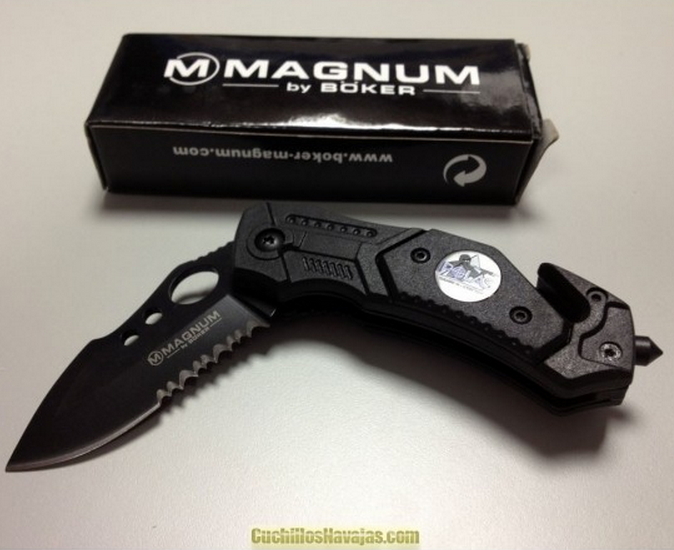
- Rescue Knives: Incorporate a seatbelt cutter and a special blade (often curved with a slight serrated edge) to cut these elements without harming the person in case of an accident.
- Survival Knives: Robust and reliable, equipped for extreme situations, with long blades (up to 15 cm) and, sometimes, glass breakers or seatbelt cutters.
- Sports Knives: Adapted to sports such as cycling or golf, they incorporate tools for equipment repairs.
- Diving Knives: Made with corrosion-resistant materials, they allow cutting tangled elements underwater. They usually have a serrated area and synthetic handles, and can be attached to the leg.
- Country Knives: Robust and with fine wooden handles (such as satin olive wood), used for country tasks. Some include a corkscrew.
- Shaving Razors: Have a very characteristic shape, without a sheath, with a rectangular and very sharp cutting surface.
- Truffle Knives: Special for truffle harvesting and cleaning. Their shape, often like a small shovel, requires high resistance to extract the fungus from the ground.
- Multipurpose or Multi-tool Knives: True “toolboxes” that integrate many functions, from magnifying glasses and compasses to different screwdrivers and scissors.
- Professional Knives: Incorporate specific tools for a profession, such as screwdrivers or wire strippers for electricians.
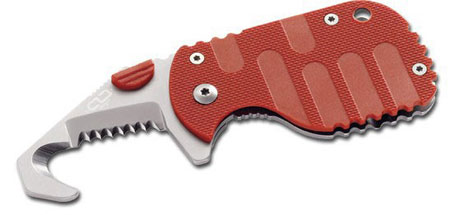
There are knives for all types of uses such as, for example, shaving razors, hunting knives, rescue knives, seaman’s knives, multi-tool knives, knives for sports such as cycling, rollerblading, mountain biking or golf, gardening and bushcraft knives, keychain knives, etc.
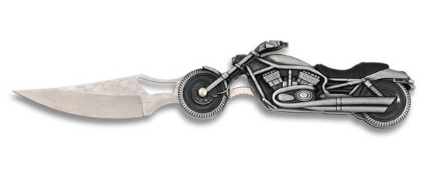
There are also stiletto knives, Damascus knives, ring knives, pocket knives, Swiss-tools knives, and tactical knives. Collectors and those who acquire them for different uses hold great affection for each of them, because they turn out to be a treasure of great utility.
Since ancient times, the use of the knife has been popular and practical in many professions and activities such as, for example, farmers (for pruning vines or harvesting grapes), shepherds (for cutting cheese and bread or carving wood), fishermen (for removing hooks), hunters (for portioning food), carvers (on cork, soap, or wood), basket weavers (for leveling rushes or wicker), scribes (for sharpening old quills or pencils), plumbers (for cutting pipes or rubber), electricians (for stripping wires), etc.
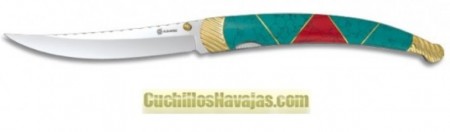
We can appreciate how the use of the knife is one of the noblest and most productive things in the hands of working people or collectors; sometimes it seems as if some people try to marginalize them as an instrument of misuse or danger.
—
General Maintenance of Your Knife: A Lasting Edge
For your knife, whatever its type, to last a lifetime, good maintenance is crucial.
- Cleaning after use: Salt water is corrosive, for example, for marine knives, it is recommended to rinse with fresh water and dry thoroughly after each use. In general, clean the blade with a dry cloth to prevent oxidation.
- Lubrication of the mechanism: A few drops of lubricating oil (mineral oil or marine lubricant for marine knives) keep the mechanism smooth and functional.
- Regular sharpening: The blade must be kept well-sharpened to ensure its effectiveness; it is recommended to use a fine-grit stone.
- Storage: Storing it in a dry and ventilated place, preferably in a protective sheath, will prolong its useful life and preserve its value.
As you have seen, the folding knife is much more than a simple cutting tool. It is a historical and cultural symbol that has evolved alongside humans, adapting to their needs and leaving an indelible mark on various cultures and professions. From the robust Albacete knives and the legendary bandit knives, to the versatile Swiss Army knives and the specialized mushroom knives, each type tells a story of ingenuity, resilience, and artisanal mastery. Valuing a knife is appreciating a legacy that endures and remains relevant in our daily lives.
Do you want to see the best types of knives and find yours?