
Hello, lovers of tradition and craftsmanship! Today, we delve into the fascinating world of an authentic Spanish icon: the Albacete Ratchet Knives. Get ready to discover the history, the unmistakable sound, and the cultural legacy of these pieces that are much more than a simple tool. Ready to unveil their secrets?
What are Ratchet Knives? The Sound That Makes the Difference
Contents
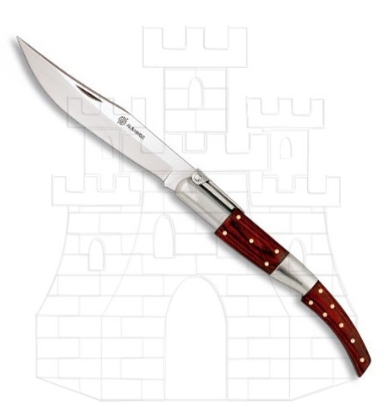
The first thing that comes to mind when you hear “ratchet knife” is, without a doubt, its characteristic sound: an unmistakable “clack-clack-clack.” But what causes this particular sonic effect? Well, this sound is produced when the blade is opened, thanks to some notches located at the end of it, where the safety mechanism bounces.
Popularly known as “spring knives” or “bandit knives,” these folding knives stand out for their mechanism. Some versions feature automatic opening, where the blade quickly deploys via an internal spring activated by a button or a lever on the handle.
But beyond the sound, each “clack” of the ratchet has a vital function: it’s a kind of lock. This security system is crucial, as it keeps the blade fixed and prevents it from accidentally closing during use, for example, in combat. In the 19th century, the “fan knife” or “double ratchet knife” was even developed, which produced an even more prolonged sound. This was not only effective but also had a notable psychological and deterrent effect on an opponent.
Albacete: The Cradle of Cutlery with History
The history of ratchet knives is intimately linked to the city of Albacete, in Spain, considered the cutlery capital of the world. It is said that Albacete cutlery was inherited from the Muslims, and several documentary pieces of evidence suggest this.
The classic Spanish folding knife emerged at the end of the 16th century. The 17th and 18th centuries were a period of great flourishing for Albacete cutlers, with the manufacture of knives primarily in the hands of skilled Moorish artisans. This activity was one of the fundamental drivers of the local economy, despite tough competition from countries like France, England, or Germany.
The curious thing is that the Albacete knife developed in a purely artisanal way. For a long time, modern energy sources such as steam or hydraulics were not introduced, which made its production more expensive and hindered competition with foreign industry. It was not until well into the 20th century, with the arrival of electricity, that this was partially compensated.
The quality and beauty of Albacete cutlery are recognized throughout Spain and Europe. Throughout its history, the locking mechanisms also evolved:
- In the 18th century, the “golpetillo” lock was used, with a strong spring that locked the blade when opened.
- In the 19th century, along with the “golpetillo,” ratchet knives were developed, which, with their several teeth on the blade, made the spring jump repeatedly, producing the characteristic sound.
- By the 20th century, it was perfected with the “palanquilla” lock, which facilitated the unlocking of the blade.
Albacete not only produced folding knives; it also manufactured scissors, daggers, dirks, and even scalpels for medicine. In fact, the 16th-century “penknives” are considered the first Albacete knives and the predecessors of the old Spanish folding knife.
In recognition of its cultural importance, the classic Albacete knife was declared a “Good of Cultural Interest” in 2017, in the category of “intangible asset.”

A Folding Knife for Every Purpose: Types and Uses
Albacete knives come in a wide variety of shapes and names, adapted to their specific uses and geographical origins. Among the best-known types we find:
- Albaceteña: Originating from Albacete, recognized for its curved blade and decorated handle, used for rural tasks and defense.
- Sevillana: Long and stylized, traditionally associated with bullfighters, gypsies, and Andalusian bandits.
- Capaora: Small, used by rural veterinarians for meticulous tasks.
- Jerezana, Pastora, Punta Espada, Stiletto, Punta Cortada (Cut Point), Anilla (Ring), Tranchete (Pruning Knife), Machete, and Lengua de Vaca (Cow’s Tongue).
Historically, the ratchet knife emerged in the 18th and 19th centuries as an alternative to the use of swords, which were prohibited for civilians in many kingdoms. It became a practical tool and a symbol of local identity for shepherds, farmers, merchants, and travelers. On occasion, it was also a weapon for personal defense, and its sound, as we already mentioned, was key to intimidating the opponent. Spanish oral tradition and popular culture have immortalized it in ballads and legends of bandits.
Preserve Your Treasure: Essential Maintenance
For a ratchet knife, whether old or modern, to remain in perfect condition and retain its value, good maintenance is essential. Here are the key aspects:
- Cleaning: After each use, wipe the blade with a dry cloth to prevent oxidation.
- Lubrication: Apply mineral oil to the pivot point to ensure smooth operation and protect the serrated system.
- Sharpening: It is recommended to use a fine-grit stone to maintain the edge without damaging the blade.
- Storage: Store it in a dry and ventilated place, preferably in a leather sheath.
By following these precautions, you will prolong the lifespan of your knife and preserve its historical value.

Albacete Today: A Living Legacy
Today, Albacete remains a vital center for cutlery. Every September, the city celebrates the Albacete Fair, where the best pieces of cutlery are exhibited, consolidating its reputation as the cutlery capital of Spain and one of the three global centers alongside Solingen (Germany) and Sheffield (England).
If you want to delve deeper into this rich history, you can visit the Municipal Cutlery Museum of Albacete (MMCA), where pieces from different eras and origins are exhibited. Even the emblematic figure of the “cuchillero” (itinerant knife seller), though now disappeared, has its own monument in the Plaza del Altozano.
Important Legal Aspects
It is crucial to remember that laws regarding bladed weapons can vary significantly by country or region. Some regulations restrict the portability of automatic opening knives, especially if the blade exceeds certain dimensions. These knives are designed for legitimate activities such as camping, manual work, or collecting, and their misuse could lead to legal penalties. Therefore, it is always essential to review local regulations before acquiring or carrying a ratchet knife.
The Ratchet Knife: An Immortal Icon
The ratchet knife is much more than a cutting tool; it is a living reflection of Spanish artisanal mastery. It combines function, style, and a rich cultural heritage that has adapted to modern needs without losing its historical essence. Contemporary editions merge tradition with technology, making them pieces that are both practical and valuable for collectors.
Whether for its robust design, its secure lock, or the unmistakable sound that evokes stories of yesteryear, a ratchet knife is, without a doubt, a distinguished choice for any lover of traditional cutlery.
We hope this journey through the world of Albacete ratchet knives has been as interesting as their characteristic sound. What do you think? Did you know their fascinating history? Leave us your comment!
Do you want to see the best models of this icon of Spanish cutlery?
Don’t miss the best selection of Ratchet Knives.
See all Folding Knives