Knives are essential tools in our homes and professions since ancient times. Although at first glance they may seem simple, with just a blade and a handle, their structure has evolved thanks to industry and new technologies, giving rise to a wide variety of types designed for specific purposes.
Knowing the different parts of a knife is much more than a curiosity. This information is fundamental for choosing the right tool, understanding its operation, performing correct maintenance, or even when requesting technical service. We invite you to explore the universe of knives, piece by piece.
The Two Main Parts: Blade and Handle
Contents
- The Two Main Parts: Blade and Handle
- Exploring the Knife Blade: The Soul of the Tool
- The Handle: Grip, Comfort, and Balance
- Specific Anatomy According to Knife Type: A Tool for Every Task
- The Specific Anatomy of Japanese Knives: Tradition and Mastery
- Practical and Technical Differences: The Right Knife for Each Task
- Ideal Use Scenarios for Each
- Comparison of Advantages and Disadvantages
- Purchase and Use Recommendations According to User Profile
At its most basic essence, every knife consists of two fundamental elements: the blade and the handle. The blade is responsible for the cutting action, while the handle allows for a secure and comfortable grip. However, the interaction of multiple smaller components is what makes a knife such a versatile and effective tool.
The main part of the knife is the blade, followed by the guard or quillon and in some cases the bolster and, finally, the tang or handle. For a better visual understanding, here is a detailed diagram of the fundamental parts of a knife:

- Tip: The sharpened end of the blade.
- Blade: The main cutting section of the knife.
- Edge: The sharpened edge of the blade.
- Spine or back: The unsharpened top edge of the blade.
- Finger Guard (or Quillon): Provides safety and comfort, preventing the hand from slipping.
- Bolster: An integral part that can provide weight and balance, and protect the joint between the blade and handle.
- Scales: The pieces that form the body of the handle.
- Rivet: Elements that join the scales to the tang.
- Tang or nerve: The extension of the blade that is inserted into the handle.
- Heel or base: The part of the blade closest to the handle, often unsharpened.
Exploring the Knife Blade: The Soul of the Tool
The blade is the soul of the knife, and its quality is a determining factor in the overall performance of the tool. It is the part that performs the main work, and its design, material, and sharpening are crucial for cutting efficiency. The shape of the blade can vary greatly, adapting to the specific needs of each task.
Key Components of the Blade
- Tip: It is the sharpened end of the knife, where the spine and edge converge. Its main function is to pierce, but in smaller knives, it is used for precise tasks such as boning, making holes in fabric or leather, or even peeling small fruits and vegetables with great detail. The shape of the tip varies enormously, from fine and sharp to more robust and rounded, each optimized for a type of action.
- Edge or Cutting Edge: This is the sharpened part of the blade, designed for cutting, chopping, slicing, and dicing. It is formed where the bevels of the blade meet during the sharpening process. A well-maintained edge is synonymous with efficiency and safety. A dull edge requires more force, which increases the risk of accidents. The geometry of the edge (the sharpening angle) is fundamental and is chosen according to the intended use of the knife, seeking a balance between sharpness and durability.
- Spine: Refers to the upper, thick, and unsharpened edge of the blade. It provides stability and balance to the knife and, being unsharpened, allows pressure to be applied with the hand when cutting dense foods, such as pumpkins or tubers, or when removing food from the board. Its thickness varies significantly depending on the purpose of the knife: thin for fine and precise cuts (as in a filleting knife) and thick for heavy-duty and impact tasks (as in a survival knife or a machete).
- Belly: It is the curved part of the blade’s edge. Its radius and shape adapt to the purpose of the knife and the specific cutting techniques it allows. A pronounced belly is ideal for the “rocking motion” in chef’s knives, facilitating quick chopping of herbs. A flatter belly is preferable for push or pull cuts, common in Japanese or butcher knives.
- Bevel: It is the area of the blade that extends from the flat part towards the edge. The bevels are the inclined surfaces that form the edge. The angle of the bevels is crucial for cutting performance; a sharper angle provides a finer and sharper edge, ideal for delicate tasks, while a blunter angle offers greater strength and durability, suitable for more demanding jobs.
- Heel: The area of the blade closest to the handle. Often, this part of the edge is not sharpened to protect the fingers and allow for a safer grip and greater control. It is used for tasks that require greater force or quick and controlled cuts, such as peeling small vegetables, cutting fish bones, or performing precision work where maximum leverage near the handle is needed.
- Ricasso: An unsharpened transition area between the blade and its tang, or simply the opposite part of the knife’s edge. Sometimes, the steel grade, manufacturer’s logo, or relevant model information is marked in this area. It is an important area for the balance and strength of the blade.
- Tang: It is the extension of the blade that is inserted into the handle. A full tang extends along the entire length of the handle, offering a solid construction and affecting the balance of the knife, distributing the weight evenly. Tangs can be partial (extending only part of the handle) or full (full tang), the latter offering greater strength and durability, especially in heavy-duty knives.
Variety in Blade Shapes
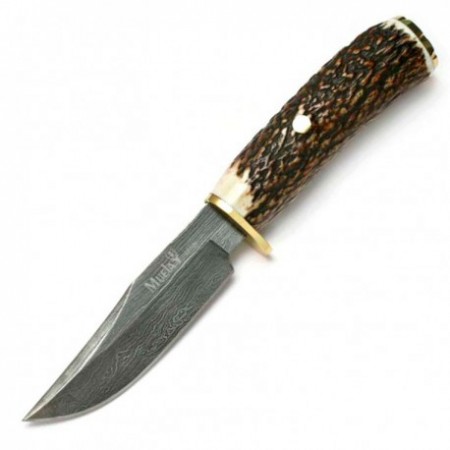
The shape of the blade is a key indicator of a knife’s primary use. We have those with a drop point, which is very popular today, being the best-selling by most manufacturers and artisan knifemakers. This design offers a strong and versatile tip, ideal for a wide range of tasks, from general cutting to controlled piercing. Its popularity lies in its balance between strength and cutting ability.
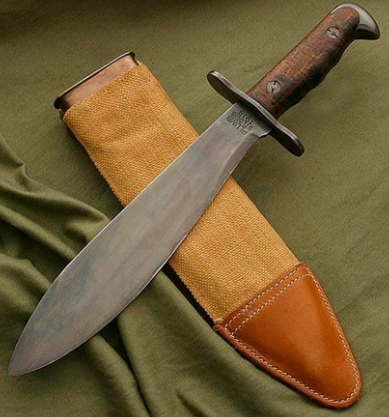
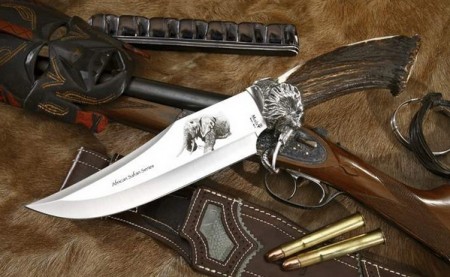
Other tip designs include the skinner, with a more rounded tip and edge, specifically designed for skinning animals, minimizing the risk of piercing the hide. Its gentle curve allows for efficient gliding along the animal’s body curves. And finally, the clip point type, with a finer and elongated tip similar to penknife blades, which offers excellent piercing capability and is common in tactical and general-purpose knives. The “clip” is a cut-out section on the spine that tapers the tip.
The Handle: Grip, Comfort, and Balance
The handle is the part of the knife designed to be held, and its design and materials are fundamental for comfort, control, and safety during use. A good handle reduces fatigue, prevents slips, and allows the necessary force to be applied with precision.
Handle Elements
- Scales or Grips: These are the two pieces of material that form the body of the handle and are attached to the tang. The material and shape are individually chosen to maximize comfort, grip, and aesthetics. Common materials include noble woods, micarta, G10, carbon fiber, bone, antler, and synthetic polymers, each with its own characteristics of durability, moisture resistance, and tactile feel.
- Pins or Rivets: These are metal elements (often brass, stainless steel, or nickel) that firmly secure the scales to the tang. They can also have a decorative function, adding an aesthetic touch to the knife’s design. The quality of the rivets is crucial for the durability of the handle and the structural integrity of the knife.
- Bolster or Guard: It is the point of union and transition between the blade and the handle. Its main function is to protect the fingers from slipping towards the edge, acting as a safety barrier. Often, it helps balance the knife by adding weight to the front of the handle to counterbalance the weight of the blade. Some knives, especially traditional Japanese ones, do not include a bolster covering this area, relying on the handle design for safety. In wooden handles, it also prevents moisture and dirt from entering the joint, prolonging the knife’s lifespan.
- Pommel or End of the Handle: The final part of the handle. It can be made of metal to adjust the knife’s balance, acting as a counterweight to the blade, which is especially useful in long or heavy knives to improve maneuverability. In some tactical or survival knives, it can have additional functions, such as a glass breaker, a striking tool, or be used for crushing food or performing light impact work.
Specific Anatomy According to Knife Type: A Tool for Every Task
The wide variety of knives on the market implies that, although they share basic components, each type has unique characteristics and elements adapted to its function. This specialization is what makes them so effective in their respective fields.
Fixed Blade Knives: Robustness and Purpose
Within this category, we find significant differences between kitchen knives and other general-purpose knives, such as hunting or survival knives.
Kitchen/Chef Knives: Culinary Precision
- Spine: Usually quite thin, with a wedge shape that goes from the handle to the tip, facilitating cutting through food. In chef’s knives, the spine is robust but not excessively thick, allowing a balance between strength and agility.
- Belly: Can have a specific radius and shape depending on the culinary purpose. A pronounced belly is ideal for the “rocking motion” in chef’s knives, while a flatter belly is preferable for push or pull cuts in butcher or filleting knives.
- Pommel: In large knives, such as butcher knives or some European-style chef’s knives, there may be a metal tip at the end of the handle to distribute weight and improve balance, although this is more of an exception than a general rule in most kitchen knives.
Other Fixed Knives (Hunting, Survival, Bushcraft): Strength and Versatility in Nature
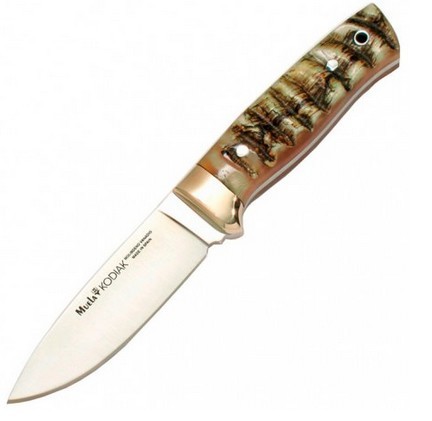
Regarding the guard or quillon, it is very rare for a stalking knife to have it, although it may have the half-guard below. Generally, those with a full quillon are finishing knives, as this prevents the hand from sliding forward during the finishing blow when it is wet from water, blood, or perspiration, with the danger that this entails for the hunter.
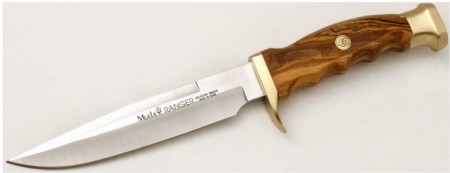
- Tip: Maintains its piercing purpose, but with varied configurations to adapt to specific tasks, such as the spear point for piercing and cutting, or the tanto for greater tip strength.
- Spine: Can be thin for fine cuts (as in a fish filleting knife) or thick for heavy-duty tasks (like batoning in bushcraft), where the spine is struck to split wood. Some spines may have a secondary sharpened edge or serrations for tasks like sawing.
- Sharpening Notch (Choil): A special indentation at the base of the blade, just before the heel or guard, that facilitates more precise sharpening by allowing the sharpening stone to reach the end of the edge. It can also serve as an additional grip point for detailed work.
- Finger Choil: An area designed for a firm and comfortable grip near the blade, ideal for precision work where maximum control is needed, such as carving wood or preparing traps.
- Finger Guard: An extension of the guard that prevents fingers from slipping towards the edge, crucial for safety in high-pressure situations or when hands are wet or slippery.
- Fuller (or “Blood Groove”): A groove or channel in the blade that, contrary to popular belief, is not for “draining blood.” Its main function is to help harden the blade and reduce its weight without compromising structural strength, improving the knife’s balance.
- Flat Grind: The flat surface of the blade from the spine to the bevels, very visible in Scandinavian blades (Scandi grind). This type of blade geometry is excellent for wood carving and precision work.
- Lanyard Hole: A hole in the handle or pommel for attaching a lanyard or cord, which allows the knife to be secured to the wrist or equipment, preventing loss and facilitating its extraction.
Folding Knives or Pocket Knives: Portability and Mechanisms
With technological evolution, various models of pocket knives have emerged, all with mechanical elements and accessories that share similarities, but also present notable differences in their design and functionality.
Manual Folding Knives: Simplicity and Reliability
- Tip: Generally very fine, optimized for precision tasks or light piercing.
- Spine: Usually have a reduced thickness, which makes them light and easy to carry.
- Pivot screw: The central element that holds the blade and allows its folding and unfolding movement. The quality of this screw and its adjustment are crucial for smooth action and blade stability.
- Lanyard hole: Located at the end of the handle, it allows adding a lanyard to facilitate extraction from the pocket or to customize the knife.
One-Hand Opening Knives (Spring-Assisted): Speed and Efficiency
- Often lack longitudinal symmetry, with ergonomic designs that favor grip and quick opening.
- Wedge: A reduction in the thickness of the spine near the tip, which improves piercing capability and facilitates the blade’s entry into the material.
- Thumb Hole/Stud: A perforation or protrusion on the blade that allows it to be opened with one hand, sometimes combined with a flipper for even faster and smoother opening.
- Jimpings: Grooves or notches on the spine of the blade or on the handle that serve as a stop for the fingers, improving grip and control, especially in tasks that require force or precision.
- Flipper: A protrusion at the base of the blade that allows quick opening by pressing it with the index finger. When the flipper is actuated, the blade rotates quickly until it locks into the open position.
- Carry clip: A metal clip on the handle for attaching the knife to a pocket, belt, or equipment, facilitating discreet access and transport.
- Blade lock: Mechanisms that keep the blade securely open, with various designs such as the liner lock, frame lock, back lock, axis lock, among others. These systems are vital for user safety.
Automatic and Semi-Automatic Knives: Assisted Opening
- Release button: The most distinctive detail of this group, which activates the automatic opening of the blade by means of an internal spring. The blade deploys with just a push of a button.
Front Opening Knives (OTF – Out The Front): Retractable Blade
- The blade extends and retracts directly from the front of the handle, activated by a button or slider. They are compact and fast.
- The blade can be double-edged and partially serrated, which increases its versatility for different types of cutting.
- They usually have very narrow bevels, which contributes to their thin profile and cutting ability.
Butterfly Knives (Balisong): Skill and Art
- They are characterized by a distinctive handle that splits into two halves to conceal the blade. Their use requires skill and is popular in “flipping” or artistic manipulation.
- Tang Pins: Stabilize the knife’s structure against the pivot screws, allowing the handle to rotate smoothly around the blade.
- Latch: Keeps the handle closed when the knife is not in use or secures the two halves of the handle when the blade is deployed.
The Specific Anatomy of Japanese Knives: Tradition and Mastery
Japanese kitchen knives have a complex and rich anatomy rooted in tradition, with specific names for each part that reflect centuries of craftsmanship and a deep understanding of metallurgy and ergonomics. Their design is intrinsically linked to very specific cutting techniques and Japanese culinary philosophy.
Anatomy of the Japanese Blade: Names with History
Interestingly, many parts are named after body sections, which underscores the almost organic connection between the cook and their tool.
- Hasaki (Edge/Vanguard): Refers to the intersection of the inclined surfaces that form the edge, determining the cutting ability. It includes the geometry, angles, and processing of the edge. It is the most critical part for the knife’s performance.
- Kireha (Primary Blade Angle): The angle between the edge and the Shinogi line, which determines how the blade tapers towards the edge and affects its sharpness and durability. A well-executed Kireha allows the knife to glide through food with minimal resistance.
- Hagane (Hard Core): The high-carbon steel heart that forms the edge. This steel is extremely hard and allows for very fine sharpening, maintaining the edge longer.
- Jigane (Softer Layer): The softer steel layer that wraps the Hagane core. This layer provides flexibility and resistance to breakage, protecting the more fragile Hagane. This laminated construction is a distinctive feature of many Japanese knives.
- Clad Line: The sinuous line where the Hagane and Jigane converge along the blade. This line is not only functional but also a distinctive aesthetic element, especially in knives with damascus finishes.
- Shinogi (Ridge or Line): The distinctive line where the flat surface of the blade (Hira) meets the primary angle of the edge (Kireha). It is a structural element that adds rigidity to the blade and an important aesthetic element, often polished to highlight its beauty.
- Hira (Flat Surface): The flat surface of the blade that extends from the Shinogi line to the spine. Its texture can influence food adhesion; some surfaces are hammered (Tsuchime) or have a rough finish (Nashiji) to create air pockets that prevent food from sticking.
- Sori (Belly): The working surface of the knife. In traditional Japanese knives, it tends to be flatter than in Western ones, influencing cutting techniques such as the “push cut,” where the blade moves back and forth without rocking.
- Hamoto (Heel): The widest part of the blade, close to the handle. It is used for tasks that require more force, such as cutting bones or peeling vegetables, similar to the heel in Western knives, but often with a more prominent shape for a firmer grip.
- Choil (Curve): The curve that extends from the handle to the tip of the blade’s heel. It is crucial for comfort and control, especially in the knife’s grip. A well-designed Choil allows the index finger to rest comfortably, improving precision.
- Machi (Bottom of the Blade): The bottom part of the blade located in the handle. Its position can vary between regions of Japan and is a subtle detail that influences the balance and feel of the knife in the hand.
- Nakago (Tang): The extension of the blade’s spine that is inserted into the handle. In Japanese knives, it is usually smaller and thinner than in Western ones (often “stick tang” or rod tang), which affects the overall balance of the knife, tending to be lighter in the handle and heavier in the blade.
Anatomy of the Japanese Handle: Wa and Yo
When choosing a Japanese knife, the balance and feel of the handle are as important as the blade. There are two main types of handles in Japanese knives: the ‘wa’ (Japanese) and the ‘yo’ (Western), each with its own distinctive characteristics.
Japanese ‘Wa’ Handles: Tradition in Your Hands
They are a simple assembly of a piece of wood (support) and a collar (bolster or kakumaki), designed for a light grip and a balance more towards the blade, favoring precision.
- Handle support: Surrounds the steel tang and is usually made of natural wood (such as magnolia, ebony, or rosewood) or composite materials. Shapes vary, with oval and octagonal being the most common. High-end handles are usually octagonal, made of natural wood with buffalo horn bolsters, offering exceptional grip and refined aesthetics.
- Kakumaki (Collar/Bolster): A ring at the top of the handle that joins the wood to the blade. It provides structural integrity, moisture resistance, and a comfortable transition for the grip, as well as an aesthetic element that often contrasts with the handle’s wood.
- Shirigi (Butt): The end or bottom part of the handle, which can be reinforced to act as a counterweight on very long blades, although in ‘wa’ handles it is usually lighter to maintain balance towards the blade.
Western ‘Yo’ Handles: Robustness and Western Balance
The blade’s tang is sandwiched between two layers of material (scales) and joined with metal rivets, offering a more robust grip and a more centered balance.
- Scales: Made from abrasion-resistant materials such as plastic, laminated or stabilized wood, or synthetic materials like G10 or Micarta. They are extremely strong and are used in heavy-duty knives for better balance, strength, and resistance, providing a secure grip even in wet conditions.
- Bolster: A thicker piece of steel at the transition point from the blade to the handle, which creates a smooth and comfortable joint for the fingers. Not all ‘yo’ handles have it and it can add weight, contributing to the overall balance of the knife. It also protects the hand from slipping towards the edge.
- Rivets: Metal pins that secure the scales to the tang, which can also have a decorative function. These rivets are essential for the durability and stability of the handle.
- Shirigi (Butt): The end of the handle, generally rounded, which may have a decorative plate or pommel. It can also serve as a counterweight in large and massive blades, helping to balance the weight of the blade.
Practical and Technical Differences: The Right Knife for Each Task
Understanding the parts of a knife allows us to appreciate the practical and technical differences between them. A chef’s knife, with its curved belly and thin spine, is ideal for the “rocking motion” when chopping vegetables, while a Japanese knife like a Yanagiba, with its flatter edge and straight spine, is perfect for precision cuts on raw fish, using a push and pull technique. The full tang of a survival knife gives it superior strength for batoning tasks, something unthinkable with the partial tang of a folding knife. The full guard on a large hunting knife is a vital safety feature that a kitchen knife does not need.
Ideal Use Scenarios for Each
Each type of knife shines in its ideal use scenario:
- Kitchen Knives: Indispensable in any kitchen, from the professional chef to the home cook. A chef’s knife is the workhorse for chopping, slicing, and dicing. A paring knife is perfect for delicate tasks with small fruits and vegetables. Bread knives, with their serrated edge, are unsurpassed for cutting bread without crushing it.
- Hunting and Survival Knives: Designed for demanding environments. A hunting knife is fundamental for skinning and processing game. Survival knives are multifunctional tools capable of cutting wood, preparing shelters, and even starting fires.
- Folding Knives: The ultimate EDC (Every Day Carry) tool. From the multi-purpose pocket knife for everyday tasks to the tactical knife for personal defense or emergency situations. They are ideal for carrying in a pocket to open packages, cut ropes, or perform small repairs.
- Japanese Knives: The pinnacle of culinary precision. A Gyuto (equivalent to the Western chef’s knife) is versatile, but a Santoku is excellent for chopping and slicing with its flatter profile. Specialized knives like the Deba (for fish) or the Nakiri (for vegetables) allow for impeccable cuts and advanced techniques.
Comparison of Advantages and Disadvantages
Each design has its pros and cons:
- Fixed Blade Knives:
- Advantages: Maximum strength and durability, greater cutting stability, easy to clean, no mechanisms that can fail.
- Disadvantages: Less portable, require a sheath for safe transport, can be more intimidating.
- Folding Knives:
- Advantages: Extremely portable, safe to carry in a pocket, versatile for everyday tasks, wide variety of opening and locking mechanisms.
- Disadvantages: Less structural strength than fixed blades (due to pivot and lock), can accumulate dirt in the mechanism, require more mechanism maintenance.
- Japanese Knives (vs. Western):
- Advantages: Extremely sharp edges, cleaner and more precise cuts, often lighter and more agile, artisanal aesthetics.
- Disadvantages: More fragile (especially high-carbon ones), require more specialized care and sharpening, can be more expensive, some are not suitable for heavy-duty tasks.
Purchase and Use Recommendations According to User Profile
Choosing the right knife depends on your experience and how you plan to use it:
- Beginner: For the kitchen, a good stainless steel chef’s knife with an ergonomic handle and a full tang is an excellent investment. Look for reputable brands that offer a good balance between quality and price. For general use or EDC, a manual folding knife with a reliable blade lock and a carry clip will suffice. Prioritize safety and ease of use.
- Expert: If you are an experienced chef or a cooking enthusiast, consider investing in specialized Japanese knives such as a high-end Gyuto or a Santoku, paying attention to the type of steel (VG-10, SG2, Aogami) and the type of handle (Wa or Yo) that best suits your grip style. For outdoor activities, a robust fixed-blade knife with a full tang and a durable handle material (G10, Micarta) will be ideal.
- Occasional Adventurer: For occasional camping or outdoor activities, a multi-tool knife or a robust folding knife with additional functions (bottle opener, screwdriver) can be very useful. Prioritize versatility and durability. A medium-sized hunting knife with a solid guard will suffice for most needs.
The handle of the stalking knife should not exceed 12 cm in length, as it is a sufficiently comfortable size even for a large hand. Regarding the materials for making the handle, there are so many and so variable that we will only quickly discuss some of the most common, such as wood, deer antler, synthetic polymers, or micarta, each offering a distinct feel and durability.
The anatomy of a knife reflects its purpose and design. Knowing the different parts of your knife will allow you to appreciate it better, choose the correct tool for each task, and ensure safer and more effective use. Whether it’s a robust kitchen knife, a multifunctional pocket knife, or an elegant Japanese knife, each component works in harmony to offer you the best cutting experience. To find the perfect tool that suits your needs, we invite you to explore our wide selection of high-quality knives. We have the ideal knife for every culinary challenge, outdoor adventure, or daily task.