Welcome to a world of enchantment and mystery, where tradition merges with modernity, and functionality embraces beauty. Today, we want to take you on a fascinating journey to discover the benefits and wonders offered by Arab knives, authentic jewels of the Middle East. With a history dating back centuries, these knives have conquered hearts with their unique elegance and incomparable versatility. Join us on this journey and delve into the world of Arab knives!
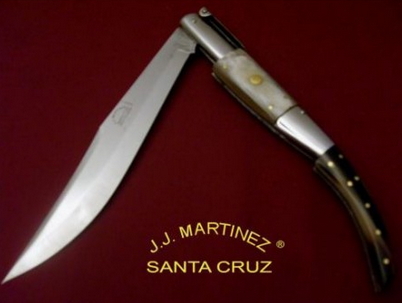
Arab-style knives are manufactured in Spain by many artisans, among whom the brand J.J. Martínez stands out, which artisanally produces the most beautiful pieces with the noblest, top-quality materials.
A Millennial History: The Origin of Arab Knives
Contents
The history of Arab knives is as rich and profound as the culture from which they originate, spanning centuries. These weapons, often known as jambiyas or khanjars, have traditionally been a symbol of status and honor for Arab peoples. Their intricate craftsmanship and exceptional sharpness make them unique and highly valued objects in the world of bladed weapons.
In fact, the history of the curved dagger, the Jambiya, dates back to at least 500 BC, with the discovery of a statue of King Madi Karb of the state of Himyar, who already carried a similar weapon. The influence of the Arabs of the Arabian Peninsula extended the use of these daggers from Morocco to China and through the Balkans. The word “Jambiya” comes from Arabic and means “side,” referring to how the dagger is worn, a name that has endured for over a thousand years.
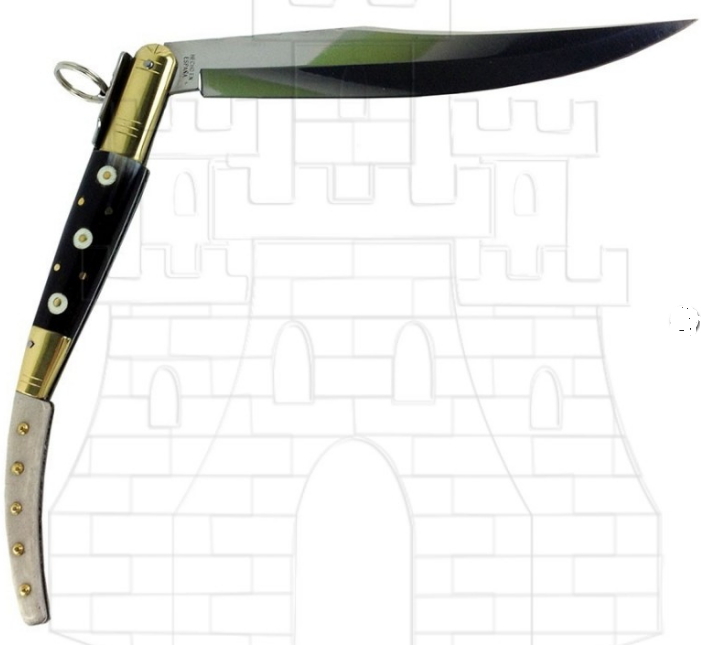
Almost all of them have an internal spring with a lever, a ratchet, handles made of deer antler, bull horn, black zebu horn, and stainless steel blades or damascened blades of different lengths and thicknesses. Some come with brass ferrules or beautifully decorated ferrules.
The Arabs brought bladed weapons such as the scimitar, the shamshir, and the almarada to Europe, but specifically the folding knife does not have an Arab origin, and proof of this is that it has a Latin etymology, not Arabic. The term “navaja” is of Latin origin (“novacula”).
Features and Design: The Fusion of Art and Utility
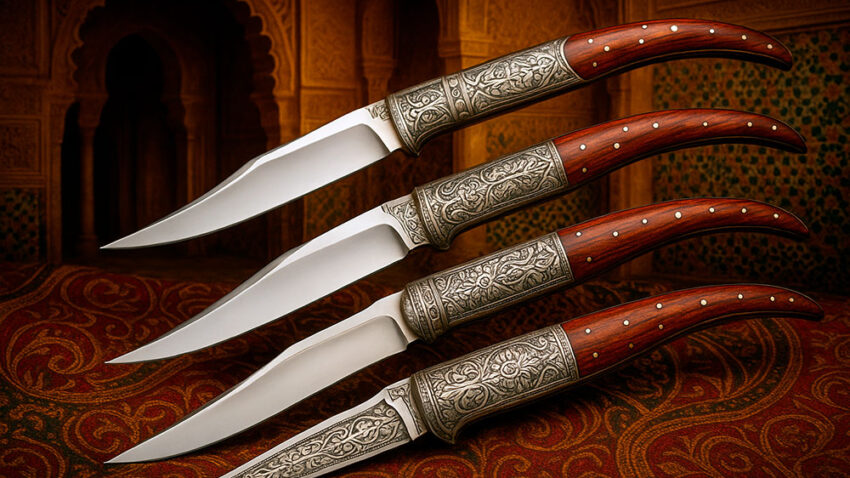
Arab knives are distinguished by several key elements that make them unmistakable. They generally feature a curved and sharp blade, complemented by handles that are often profusely decorated with intricate designs. The materials used for these handles are of high quality, including ivory, noble woods, or even rhinoceros horn, which denote the owner’s status. Some handles, like the Sayfani, can change in tone over time, darkening and acquiring a pearly appearance.
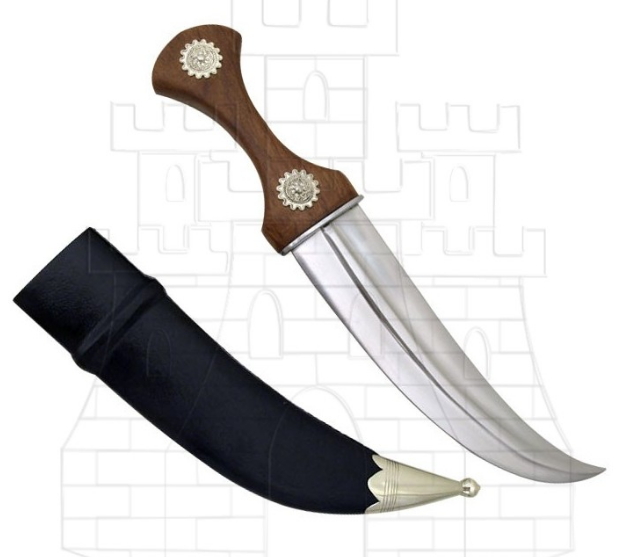
These pieces are both functional and ornamental, serving for traditional ceremonies and also in hand-to-hand combat. The blade, double-edged in many cases, is often made of high-quality steel, including the renowned Damascus steel or Wootz technology. With an average blade length of 25 to 30 centimeters and a total length that rarely exceeds 40 centimeters, their curved design and wide base eliminate the need for a guard, providing a secure grip in battle.
The sheath of a Jambiya is also an essential part of its design, traditionally made of wood or metal and often covered with fabric, leather, or metal, serving not only to protect the blade but also as a canvas for elaborate decorations with silver inlays or semi-precious stones. They are worn on a wide belt, which is also a significant element of traditional attire and a symbol of status and personal style.
Emblematic Types of Arab Knives
The cultural and artisanal diversity of the Arab region is reflected in the different types of knives, each with specific characteristics and uses. Some of the most notable examples include:
- Saudi Jambiya: Originating from the Arabian Peninsula, particularly Yemen, Saudi Arabia, and Oman, it is a distinctive curved, single-edged dagger, with a length of between 30 and 40 cm. It is a symbol of masculinity, social status, and tradition, often inherited through generations.
- Omani Khanjar: Also a curved dagger, often double-edged, associated with the Arabian Peninsula, Persia, and India. Considered a symbol of honor, power, and prestige, it was used by high-ranking individuals and is even part of Oman’s national emblem.
- Moroccan Koumiyya: Another variant that showcases the rich artisanal tradition of the region.
Additionally, there are knives of great importance such as the Shamsheer (a curved Persian sword used in cavalry combat) and others with Arab influence such as the Bichwa (a double-edged dagger from India, used as a hidden weapon) and the Kris (a wavy-bladed weapon from Southeast Asia, but with influence in the Middle East due to trade).
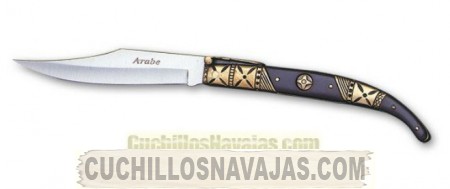
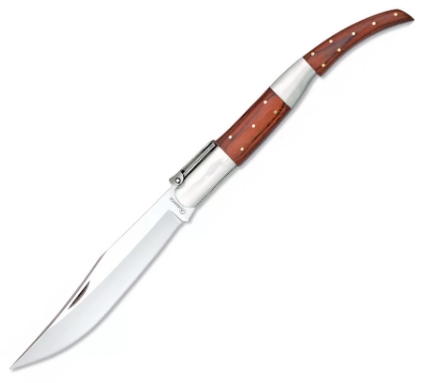
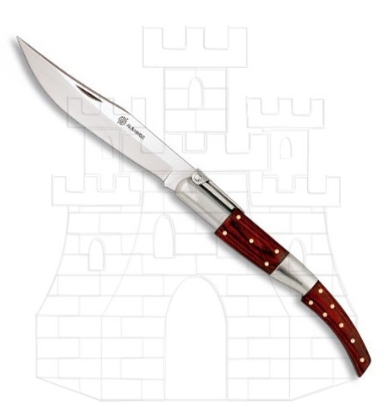
Even in Spain, specifically in Santa Cruz de Mudela and Albacete, a type of folding knife called “Arab knife” was and still is manufactured, characterized by its long, pointed blade, and a slightly curved, arc-shaped handle. These knives, especially those from the 19th century, were large and had an aggressive point, designed for defense and used by bandits or anyone who needed a bladed weapon.
The Craftsmanship Behind the Beauty
The creation of an Arab knife is a meticulous process that merges ancestral experience with artistic mastery. The blade’s manufacture historically used Damascus steel (or Wootz steel), known for its strength and distinctive wavy patterns. This manual process and the blade’s tempering are crucial for controlling its flexibility, hardness, and edge.
The handles are hand-carved from materials such as wood, bone, or horn (like camel or rhinoceros horn). They are often embellished with metalwork (brass, copper, silver) and may include inlays of precious materials such as ivory, mother-of-pearl, or semi-precious stones.
The sharpening of these knives is also an art in itself, traditionally done by hand on natural stones to ensure an extremely sharp edge.
Cultural Significance: Beyond the Fight
The cultural importance of jambiyas (and other Arab knives) goes far beyond their function as weapons. These traditional daggers, deeply rooted in the social and historical fabric of the Arabian Peninsula, especially Yemen, symbolize honor, masculinity, and social status. The act of carrying a jambiya is a fundamental rite of passage for young men as they transition into adulthood, marking their integration into tribal and social structures.
In addition to their symbolism as a rite of passage, these daggers represent the sense of identity and cultural roots of the wearer, often reflecting their lineage and social position through the details of their design. They are not just weapons, but powerful cultural symbols that men proudly wear at important social gatherings, celebrations, and as part of their daily attire, which underscores their deep integration into the identity of their people.
Arab Knives in Airsoft and Modern Replicas
In the context of airsoft, replicas of Arab knives are highly valued for both their aesthetics and their functionality on the playing field. They are a popular option for players looking for an authentic and elegant accessory to complement their equipment. When choosing an Arab knife for airsoft, it is crucial to consider its length and weight to ensure comfortable and efficient handling during games. It is also essential to evaluate the quality of the manufacturing materials to guarantee their durability and resistance in intense gaming conditions.
Unlike conventional knives, airsoft Arab knives are usually made with lighter and less resistant materials, ideal for simulating combat in controlled environments. While conventional ones are designed for heavier and more durable use in real situations. In the field of airsoft, Cyma is a recognized brand for the quality and durability of its Arab knife replicas.
Modern influence has introduced innovations in the materials and design of these pieces. Today, in addition to traditional carbon steel, stainless steel (for its corrosion resistance) and high-tech alloys such as VG-10 or SG2 are used in premium knives, offering greater durability and better edge retention. Modern handles also incorporate ergonomic designs and materials such as micarta or carbon fiber to improve grip and reduce fatigue.
A Lasting Legacy
Ultimately, Arab knives are a testament to the fusion of exquisite design, high-quality materials, and remarkable functionality. Whether as collector’s items that tell ancient stories or as replicas to enhance an airsoft game, their appeal is undeniable. Their beauty and effectiveness endure, making them a distinctive accessory that continues to be admired and valued today. Adding an Arab knife to your collection or airsoft gear means embracing a piece of history, art, and tradition. If you are looking for a unique piece to complement your style, Arab knives will provide a gratifying experience. Do not underestimate the power of these wonderful pieces, as their charm and prestige will accompany you every step of the way.