Did you know there is a knife whose blade can be interchanged as if it were a precision surgical tool, and whose handle embodies centuries of artisanal wisdom passed down from master to apprentice in family workshops? The Canarian knife, also known as naife —a term that curiously derives from the English word knife and which British visitors popularized in the 20th century—, is much more than a simple cutting instrument. It is an emblem of identity, a living testament to the Hispano-Arabic tradition in metalwork, and a functional work of art that has accompanied farmers, shepherds, and artisans in the Canary Islands for over two centuries.
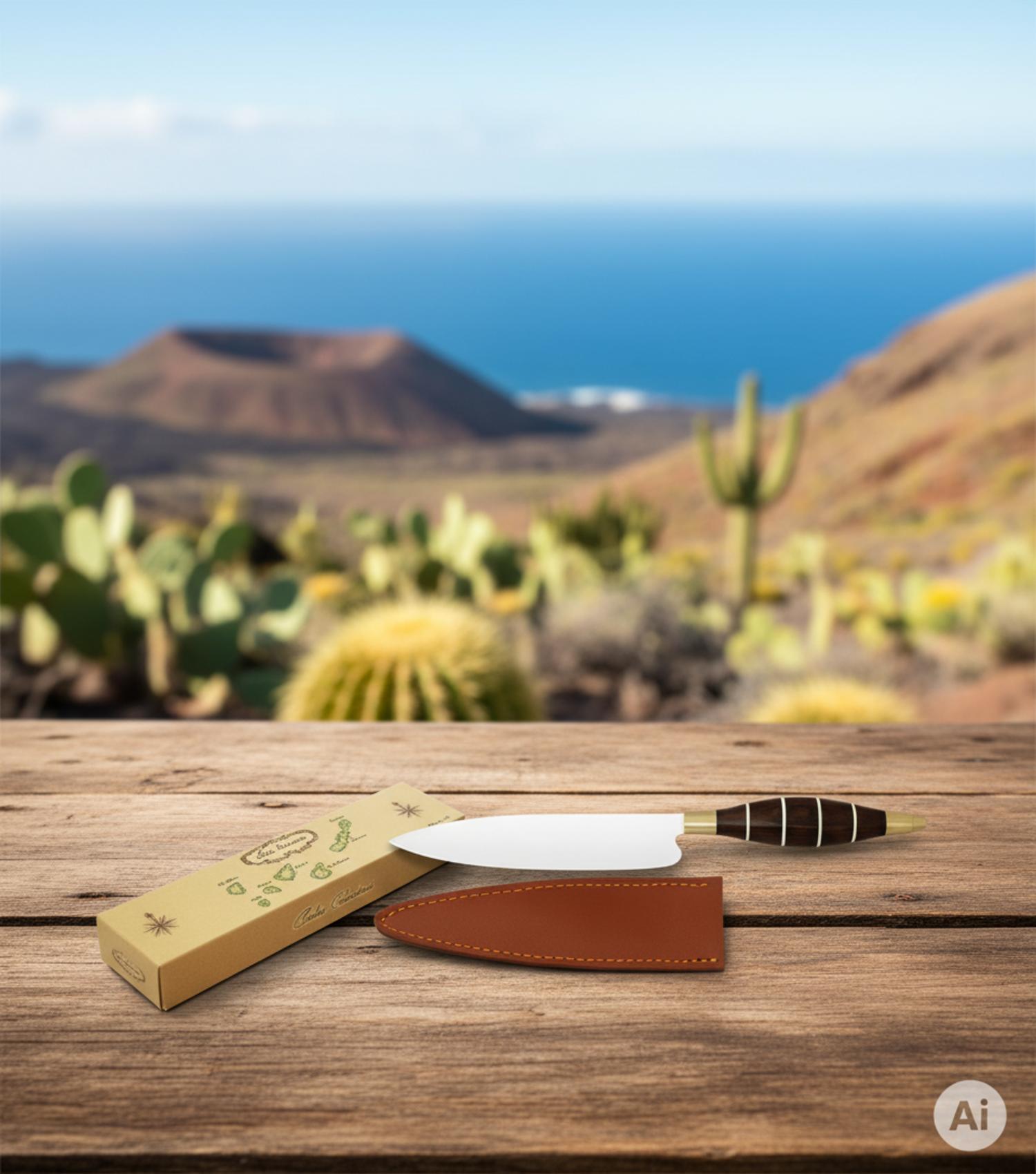
In the Canary Islands, especially in Gran Canaria, this object has forged its own legend. From the forges of Guía and Telde to the workshops of Gáldar and Arucas, each Canarian knife is unique, the result of an artisanal process that combines tempered steel, polished horn, noble metal inlays, and a manual dexterity that only time and experience can perfect. Today, we invite you to discover its history, its technical anatomy, the techniques that make it possible, and why it endures as a cultural symbol and collector’s item.
Historical Roots: From Aboriginal Flint to Toledo Steel
Contents
- Historical Roots: From Aboriginal Flint to Toledo Steel
- The historical trajectory of the Canarian knife (naife)
- Technical Anatomy of a Functional Work of Art
- Materials and Techniques: The Legacy of Fire and Patience
- Typologies of the Canarian Knife: Form and Function
- Masters of Steel and Horn: Artisans Who Forged the Legend
- From Field to Parlor: Historical and Contemporary Uses
- Clarifying doubts about Canarian knives
- Maintenance and Conservation: Protecting the Legacy
- The Canarian Knife in the 21st Century: Living Tradition
The history of the Canarian knife is deeply rooted in the memory of the islands. Before the Castilian conquest, the aboriginal population of Gran Canaria already manufactured cutting tools from obsidian and basalt, even using goat horn to craft the handles of their flint knives. However, the model we know today as the Canarian knife has a clear peninsular origin, linked to the rich Hispano-Arabic knife-making tradition of cities like Toledo and Albacete.
The first documentary references to knives in the Canary Islands date back to the 16th century. In 1571, a will drafted by the scribe Rodríguez de Mesa mentions among the deceased’s possessions “a sheath of knives with two knives.” Nevertheless, the characteristic physiognomy of the Canarian knife —its triangular blade, its fusiform handle decorated with inlay work, its protective chin— consolidated between the late 18th century and mid-19th century, coinciding with the rise of banana cultivation in Gran Canaria.
Dr. Domingo J. Navarro, in his work Recuerdos de un noventón (Memoirs of a Ninety-Year-Old), offers the first written mention of the Canarian knife as part of the traditional attire of the Gran Canarian farmer. Since then, this instrument spread throughout the archipelago, even influencing the design of Argentine Creole and Gaucho knives in Latin America.
The historical trajectory of the Canarian knife (naife)
The evolution of the Canarian knife —or naife— spans from prehistoric uses of cutting tools to its consolidation as an artisanal craft primarily documented in the 19th and 20th centuries.
| Era / Date | Event |
|---|---|
| Origins and early references (16th – late 18th centuries) | |
| Pre-Hispanic | The aboriginal population of Gran Canaria manufactured lithic tools from obsidian and basalt used as knives. Sedeño’s Chronicle mentions the use of goat horn for flint knife handles. |
| 1571 | A will drafted by the scribe Rodríguez de Mesa includes “a sheath of knives with two knives” among the possessions (early documentary evidence of knives on the island). |
| 16th – 19th Century | Moorish (Mudéjar) presence and influence in techniques and materials linked to cutlery; links with Toledo and Albacete traditions. |
| 1772 | The Floridablanca census records a significant contingent of artisans in localities like Guía, Teror, and Las Palmas de Gran Canaria. |
| Late 18th – early 19th Century | Probable period of gestation and appearance of the Canarian knife as a recognizable typology; its historical presence consolidated from the beginning of the 19th century. |
| 19th Century: documentation and artisanal splendor | |
| Early 19th Century | D. Domingo J. Navarro, in Recuerdos de un noventón, first mentions the Canarian knife and its sheath as part of the attire of agricultural workers in Gran Canaria (oldest known written mention). |
| 1862 (Provincial Exhibition) | First Provincial Exhibition of the Canary Islands (Las Palmas). The exhibition’s report (1864) notes the quality of blades of the “knives in the country’s style” and first written references to people and places related to craftsmanship. |
| 1867 (January 19) | Date inscription “Enº 19 de 67” on a studied example (Code OA002XIX). |
| 1868 (December 17) | Inscription “disiembre 17 de 1868” on an example; one of the oldest preserved on the island from its origin. |
| 1869 | The artisan Matías Crocier (Telde) crafts a knife with linear inlays and floral motifs, associated with the “knives in the country’s style” exhibited in 1862. |
| 1871 | Dr. Gregorio Chil y Naranjo mentions a Canarian knife from San Felipe (Guía) on an excursion to the Tilos de Moya. |
| 1875 | An example with a blade engraved “Fábrica de Toledo, año 1875” is documented, indicating the import of high-quality blades. |
| 1892 (Fiesta de las Flores Exhibition) | Gold Medal for Artistic Merit awarded to the silversmith from Guía, José Batista González, and the knifemaker from Arucas, Juan Croisier, for crafting a Canarian knife. Batista’s example featured a Toledo Factory blade and gold and silver inlays. |
| 20th Century and evolution to the present | |
| 1900 – 1906 | Date inscriptions on studied examples from Telde and other localities. |
| 1908 | Brothers Bartolomé and Laureano Marrero advertise themselves as manufacturers of knives and pocketknives in San Andrés. |
| Early 20th Century | Evolution towards longer and thinner handles, ferrules decorated with stripes or knurling; demand from banana cultivation drives faster production of the “wooden handle” versus the “piece handle.” |
| 1939 | Advertisement in Diario Falange for “Country knives” by Rafael Falcón Santana (Telde), indicating continuity of local production. |
| 2009 | The trade of CANARIAN CUTLERY (2571) is registered in the CNAE TRADE, METAL category. |
| Present | Canarian cutlery continues to be made. The trade of Canarian Cutlery is recognized in the Official Gazette of the Canary Islands. Demand is mostly for the knife as a distinguished gift item rather than as a working tool. |
- Origins and early references (16th – late 18th centuries)
-
- Pre-Hispanic: The aboriginal population of Gran Canaria manufactured lithic tools from obsidian and basalt used as knives.
- 1571: A will includes “a sheath of knives with two knives” (early documentary evidence).
- 16th – 19th Century: Moorish presence and influence in techniques and materials linked to cutlery; links with Toledo and Albacete.
- Late 18th – early 19th Century: Probable period of gestation of the Canarian knife as a recognizable typology.
- 19th Century: documentation and artisanal splendor
-
- Early 19th Century: D. Domingo J. Navarro first mentions the Canarian knife and its sheath as part of the attire of agricultural workers in Gran Canaria.
- 1862: First Provincial Exhibition of the Canary Islands (Las Palmas). The report notes the quality of blades of the “knives in the country’s style.”
- 1869: The artisan Matías Crocier (Telde) crafts a knife with linear inlays and floral motifs.
- 1892: Gold Medal for Artistic Merit awarded to José Batista González and Juan Croisier for crafting a Canarian knife with a Toledo blade and gold and silver inlays.
- 20th Century and evolution to the present
-
- Early 20th Century: Evolution towards longer and thinner handles; demand from banana cultivation drives faster production.
- 2009: The trade of CANARIAN CUTLERY is registered in the CNAE TRADE, METAL category.
- Present: Canarian cutlery continues to be made. Demand is mostly for the knife as a distinguished gift item rather than as a working tool.
Technical Anatomy of a Functional Work of Art
The Canarian knife is an instrument composed of three essential parts: the blade, the handle (cabo), and the sheath (vaina). Each of these parts is the result of specific artisan work, traditionally carried out by different specialists: blacksmiths for the blade, jewelers or “caberos” for the handle, and shoemakers-sheath makers for the leather scabbard.
The Blade: Precision, Hardness, and Flexibility
The blade is the technical heart of the Canarian knife. It is made from a single piece of steel, shaped by heating in a forge and striking with a hammer on an anvil. The forging, tempering, and annealing process requires deep knowledge of metallurgy to achieve the ideal combination of hardness, toughness, and edge retention.
The blade’s shape is triangular, thin, and large, with an accentuated tip resembling a small spear. It generally measures between 15 and 30 cm in length, although dimensions vary depending on the typology (small knife, banana knife, oxherding knife). It has a single continuous edge on one side, while on the opposite flank it presents a blunt “false edge” or “back edge” from the middle or the last third to the tip. The upper part, called the “pete”, is linearly straight.
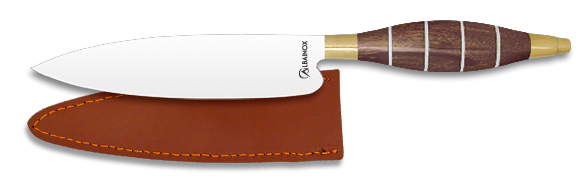
One of the most distinctive features of the blade is the “barbilla” or “barriga” (literally “chin” or “belly”), located at the lower rear part, at the beginning of the edge. This area features two profiles —one concave (the “garganta” or “throat”) and one convex (the “barbilla”)— which initially served a decorative purpose, but over time evolved to protect the index finger, acting as a guard or quillon. This feature was so appreciated that even the Argentine Creole knife copied it.
Another essential part is the tang, the extension of the blade that is inserted into the handle. Quadrangular in shape and tapering towards the distal end, the tang is the central axis for mounting the handle pieces, which are held by pressure (not glue) to prevent them from rotating. Between the tang and the cutting part is the colchón (also called escorchón or corchón, meaning “mattress” or “cushion”), a thickening of the steel that serves as a metallic stop where the handle rests. It is in this area that the artisan usually leaves their personal mark through linear and cruciform notches.
The materials used in the blade include carbon steel (the traditional “black blade” or “Canarian blade”), stainless steel (“white blade”), and Damascus steel. In decorative or historical examples, alpaca, silver, and even gold have also been used. Formerly, many artisans reused steel from vehicle leaf springs, which, after a complex tempering and annealing process, offered exceptional hardness and flexibility.
The Handle: Miniature Jewelery
The handle is, without a doubt, the most characteristic and visually striking part of the Canarian knife. Its shape is cylindrical fusiform or “tapered,” similar to a barrel, with the central part thicker and the ends thinner, presenting a continuous and symmetrical line of inclination. This shape is not only aesthetic: it provides an ergonomic and balanced grip, distributing the cutting force efficiently.
The handle is composed of a succession of washers or pieces that are mounted on the tang, maintaining perfect symmetry in number, size, and design relative to the central axis. The metallic ends are called ferrules or viroles, and at the distal end is the pommel or rivet, a nut that keeps the handle attached to the blade and allows for, in many cases, the interchangeability of blades —a unique feature in the world of cutlery.
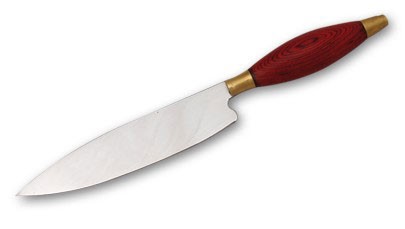
The materials for the handle body are primarily organic: ram, goat, or cow horn (in black, gray, beige, cream, reddish, and white tones), bone (cow tibia), kid hooves (for thinner washers), ivory (in historical pieces), and noble woods such as ebony. In contemporary examples, high-quality synthetic pastes are also used.
The true mastery of the handle lies in its decoration through taracea or inlay work, a technique of embedding thin sheets (0.1-0.3 mm) of non-ferrous metals such as brass, copper, bronze, nickel, alpaca, and silver. In exceptional cases, the use of gold has been documented. The decorative motifs are varied: geometric figures, checkerboards, damiers, jacquards, “partridge eye,” and floral or vegetal designs of clear Hispano-Arabic and Moorish ancestry. This technique, inherited from the traditions of Toledo and Albacete, turns each handle into a unique and unrepeatable piece.
The time required to craft a complex Canarian knife —especially a “Flower Knife” or “Guía Knife”— can span several weeks of intensive work, which justifies its value as a piece of goldsmithery.
The Sheath: Protection and Beauty
The sheath is the cover that protects the blade and, by extension, the person carrying the knife. Traditionally made from a single piece of thick, rigid, and resistant cowhide, the sheath was crafted by specialized shoemakers or sheath makers. The stitching was done on the back (non-visible side), and the general shape was triangular, conforming to the geometry of the blade.
An important functional feature is the presence of an opening at the mouth and a hole at the tip to drain moisture and dirt, which is vital to prevent corrosion of the carbon steel blade. The most elegant sheaths featured embossed, stamped, incised decorations, and metallic eyelets, especially those associated with more artistically elaborate handles.
In the 19th century, the sheath covered the blade and approximately one-third of the handle. The knife was carried sheathed at the belt or sash, either at the front or back, depending on whether the bearer was working or attending a fiesta.
Materials and Techniques: The Legacy of Fire and Patience
The making of the Canarian knife is an artisanal process that combines three traditional crafts: blacksmithing (for the blade), goldsmithing (for the handle), and shoemaking (for the sheath). This specialization allowed for an exceptional level of quality and refinement, turning an agricultural tool into a true functional work of art.
| Component | Main Materials | Techniques Used |
|---|---|---|
| Blade | Carbon steel (black blade), stainless steel (white blade), Damascus steel, alpaca, silver, gold | Manual forging, heating in forge, hammering, tempering, annealing, sharpening (15-25º angle) |
| Handle (body) | Cow/ram/goat horn, bone, ivory, ebony, kid hooves, synthetic pastes | Cutting, molding, pressure assembly onto tang, inlay (metal inlays), polishing and buffing |
| Handle (decoration) | Sheets of brass, copper, bronze, nickel, alpaca, silver, gold (exceptional) | Inlay: incisions and grooves for inserting metallic sheets with geometric, checkered, floral motifs; fixation by pressure and resins |
| Handle (ends) | Alpaca, silver, brass, nickel, gold (exceptional) | Knurling, cording, sawing, engraving, and combinations |
| Sheath | Thick and rigid cowhide leather | Single-piece cutting, back stitching, embossing, punching, incisions, metallic eyelets |
- Blade
-
- Materials: Carbon steel (black blade), stainless steel (white blade), Damascus steel, alpaca, silver, gold
- Techniques: Manual forging, heating in forge, hammering, tempering, annealing, sharpening (15-25º angle)
- Handle (body)
-
- Materials: Cow/ram/goat horn, bone, ivory, ebony, kid hooves, synthetic pastes
- Techniques: Cutting, molding, pressure assembly onto tang, inlay (metal inlays), polishing and buffing
- Handle (decoration)
-
- Materials: Sheets of brass, copper, bronze, nickel, alpaca, silver, gold (exceptional)
- Techniques: Inlay: incisions and grooves for inserting metallic sheets with geometric, checkered, floral motifs; fixation by pressure and resins
- Sheath
-
- Materials: Thick and rigid cowhide leather
- Techniques: Single-piece cutting, back stitching, embossing, punching, incisions, metallic eyelets
The Art of Taracea: Hispano-Arabic Heritage
Taracea (inlay work) is the most characteristic decorative technique of the Canarian knife. It consists of making incisions or grooves in the horn or bone pieces of the handle, where thin sheets of precious metals or nickel are inserted with geometric patterns of Mudejar influence or local motifs (floral, geometric, crossed). These sheets are fixed by pressure, light hammer blows, or natural adhesives such as resins.
The most common motifs include checkerboards, damiers, jacquards, “partridge eye,” geometric figures (rhombuses, parallel lines, zig-zag), and floral or vegetal designs of clear Hispano-Arabic and Moorish ancestry. This decoration is not only aesthetic: it reflects the artisan’s level of mastery, their school of origin (Guía, Telde, Arucas), and, in many cases, the owner’s social standing.
The taracea process is entirely manual and requires exceptional patience and precision. Each piece of the handle must maintain perfect symmetry with respect to the central axis (the tang), and the ensemble must present a visual harmony that combines functionality and beauty.
Blade Forging: From Raw Steel to the Perfect Edge
Blade forging is a process that requires deep knowledge of metallurgy and experience acquired over years of practice. The steel is heated in the forge until it reaches the appropriate temperature (between 800 and 1200 °C, depending on the type of steel), at which point it acquires a bright red-orange color. It is then shaped by repeated hammering on an anvil, forming the characteristic triangular blade.
Once shaped, the blade must undergo the tempering process: it is heated again until it reaches the critical temperature and then rapidly cooled in water or oil. This process increases the hardness of the steel but also makes it brittle. Therefore, it is necessary to perform annealing, which consists of reheating the blade to a lower temperature (between 150 and 300 °C) to reduce brittleness without losing too much hardness.
Finally, the blade is sharpened by hand on a grinding stone, maintaining an angle of 15-25º relative to the stone’s surface. The result is an edge of great sharpness and wear resistance, capable of maintaining its cutting ability after years of intensive use.
Typologies of the Canarian Knife: Form and Function
The Canarian knife is not a single object, but a family of tools and pieces of goldsmithery that are classified according to various criteria: blade length, handle decoration type, and materials used. This diversity reflects the knife’s adaptation to the specific needs of each user and social context.
| Classification Criterion | Types | Characteristics |
|---|---|---|
| By blade length | Small knife (Cuchillete) | Less than 15 cm. Used for precision tasks. |
| Pocket knife (Cuchillo de Faltriquera) | 15 cm. Pocket-sized, light everyday use. | |
| Shepherd’s knife (Cuchillo de Pastor) | 18 cm. Herdsman’s tool for cutting grass, agaves. | |
| Farm knife or Banana knife (Cuchillo de Labranza o Platanero) | 21 cm. The most common, used in banana cultivation. |
| Classification Criterion | Types | Characteristics |
|---|---|---|
| By blade length (cont.) | Oxherding knife or Agave knife (Cuchillo Boyero o Pitero) | More than 23 cm. Robust, for heavy tasks (cutting agave leaves, working with cattle). |
| By handle craftsmanship | Wooden handle knife (Cuchillo de Palo) | Simple handle, used by farmers. Functional, little decoration. |
| Fair knife (or Summit/Field knife) (Cuchillo de Feria) | Considered the oldest. Intermediate decoration. | |
| Coastal knife (Cuchillo de Costa) | Manufactured in Costa de San Felipe. Characteristic style of the area. | |
| Flower knife or Guía knife (Cuchillo de Flores o de Guía) | The most complex and expensive. Traditionally made in Guía de Gran Canaria. Profuse floral and geometric decoration. Goldsmithing piece. | |
| By materials | Work knife (Cuchillo de Trabajo) | Functional tool. Resistant and economical materials (horn, bone, carbon steel). |
| Jewel-knife (Cuchillo-Joya) | Made with noble materials (ivory, silver, gold, ebony). Collector’s item, institutional gift. | |
| By decoration (19th-20th C.) | Linear | Probably the oldest with inlays. Parallel or crossed lines. |
| Checkerboard (Dameros) | Checkerboard pattern. Very characteristic of the Canarian style. | |
| Floral | Vegetal and floral motifs. Associated with the “Flower Knife.” |
- By blade length
-
- Small knife (Cuchillete): Less than 15 cm. Used for precision tasks.
- Pocket knife (Cuchillo de Faltriquera): 15 cm. Pocket-sized, light everyday use.
- Shepherd’s knife (Cuchillo de Pastor): 18 cm. Herdsman’s tool.
- Farm knife or Banana knife (Cuchillo de Labranza o Platanero): 21 cm. The most common, used in banana cultivation.
- Oxherding knife or Agave knife (Cuchillo Boyero o Pitero): More than 23 cm. Robust, for heavy tasks.
- By handle craftsmanship
-
- Wooden handle knife (Cuchillo de Palo): Simple handle, used by farmers. Functional, little decoration.
- Fair knife (or Summit/Field knife) (Cuchillo de Feria): Considered the oldest. Intermediate decoration.
- Coastal knife (Cuchillo de Costa): Manufactured in Costa de San Felipe. Characteristic style of the area.
- Flower knife or Guía knife (Cuchillo de Flores o de Guía): The most complex and expensive. Traditionally made in Guía de Gran Canaria. Profuse floral and geometric decoration. Goldsmithing piece.
- By materials
-
- Work knife (Cuchillo de Trabajo): Functional tool. Resistant and economical materials.
- Jewel-knife (Cuchillo-Joya): Made with noble materials. Collector’s item, institutional gift.
- By decoration (19th-20th C.)
-
- Linear: Probably the oldest with inlays. Parallel or crossed lines.
- Checkerboard (Dameros): Checkerboard pattern. Very characteristic of the Canarian style.
- Floral: Vegetal and floral motifs. Associated with the “Flower Knife.”
Masters of Steel and Horn: Artisans Who Forged the Legend
Canarian cutlery is a traditionally male craft passed down paternally, from fathers to sons, from grandparents to grandchildren, in family workshops where the only school is tradition and accumulated experience over generations. Throughout the 19th and 20th centuries, several master artisans elevated this craft to the category of art, leaving a legacy that endures to this day.
José Batista y González (late 19th century)
Silversmith and jeweler from Guía, José Batista is considered the creator of the famous Flower Knife or Guía Knife in 1880. His mastery was recognized with the Gold Medal for Artistic Merit at the Fiesta de las Flores Exhibition in 1892, for an exceptional knife that featured a Toledo Factory blade and gold and silver inlays. This piece marked a before and after in Canarian cutlery, setting a standard of quality and refinement that few have been able to match.
Vicente Batista y León (“Master Vicente Batista”) and Vicente Batista López
Descendants of José Batista, these two artisans enriched and perfected the work begun by their predecessor. Vicente Batista y León is considered by many to be the best knifemaker the islands have ever seen. To him and his son Vicente Batista López are attributed the pioneering use of floral and checkerboard motifs on the handles, techniques that became the distinctive hallmark of the Flower Knife.
Bartolomé and Laureano Marrero Rodríguez
These brothers, master knifemakers from Costa de San Felipe, are the creators of the Coastal Knife around 1873. Their style, differentiated from that of Guía, incorporated decorative elements characteristic of the area and was distinguished by a functional sobriety that made it especially appreciated by farmers and cattle ranchers.
Juan del Toro Ossorio
From the hands of this master blacksmith came some of the best Canarian knife blades ever made. His mastery of tempering and annealing carbon steel allowed him to create blades of exceptional hardness, flexibility, and edge retention, highly valued by the artisans who later mounted the handles.
Matías Crocier (Telde)
A knifemaker from Telde who received an honorary mention at the Provincial Exhibition of 1862. One of his knives from 1869 is exceptional for bearing his name and place of manufacture engraved, making it a historical piece of great documentary value. Crocier was one of the first artisans to incorporate linear inlays and floral motifs into the handles, anticipating the style that José Batista would later develop.
Rafael Torres Ossorio and Francisco Torres Rodríguez
Rafael Torres Ossorio was honored with the Gold Medal for Artistic Merit in 1969, recognizing his contribution to the continuity and development of Canarian cutlery in the 20th century. His son, Francisco Torres Rodríguez, is one of the few active artisans specializing in the Flower Knife. He continues the family tradition in the same workshop as his father, using the same techniques and tools passed down through generations. His work ensures the continuity of this artisanal legacy in the 21st century.
Juan Croissier Calderín
Artisan from Arucas who shared the Gold Medal with José Batista González in 1892. The Croissier and Calderín families are fundamental to the history of cutlery in Telde in the 19th century, and their influence extended throughout the island.
From Field to Parlor: Historical and Contemporary Uses
The Canarian knife has had, throughout its history, a remarkable functional versatility. From an indispensable agricultural tool to an object of distinction and institutional gift, its role has evolved, adapting to the social and economic changes of the archipelago.
Agricultural and Livestock Tool
Historically, the Canarian knife was an indispensable instrument in rural life in Gran Canaria. Farmers used it to cut weeds, branches, graft trees, and especially in all tasks related to banana cultivation: removing leaves, cutting bunches and stems, chopping plant material for animal feed.
For shepherds, it was useful for chopping grass or the tough agave leaves for livestock. Muleteers used it to cut straps or halters and to untangle animals. Its large size, flexibility, and edge retention made it a versatile tool, capable of replacing several specialized tools.
Everyday and Domestic Use
In the domestic sphere, the Canarian knife was the quintessential tool for cutting the family cheese portion, preparing a sandwich, chopping tobacco, or softening corn husks (preparing the corn cob leaf for use). Its presence in the kitchen and at the table was as common as bread.
Weapon of Defense and Symbol of Courage
Although its primary function was utilitarian, the Canarian knife was also carried as a personal defense weapon. Many men claimed that “to go without the Canarian knife hanging from one’s trousers is like going naked.” This phrase reflects not only the functional dependence on the tool but also its symbolic value as a symbol of courage and virility. Unfortunately, it sometimes became a weapon for crimes, which led to various restrictive legislations throughout the 18th, 19th, and 20th centuries.
Object of Distinction, Collection, and Gift
Over time, the Canarian knife has transcended its purely utilitarian function to become a true piece of goldsmithery. Nowadays, although it remains a functional tool in some agricultural works, it is especially valued as an object of prestige and adornment. It is used as a paperknife, letter opener, and is given as a valuable gift to illustrious visitors and prominent personalities.
It has also become a coveted collector’s item, a source of pride and a reminder of family tradition passed down from generation to generation. Even miniatures for lapels and pendants are made, allowing this symbol of Canarian identity to be worn discreetly and elegantly.
Clarifying doubts about Canarian knives
What are the most used materials to make Canarian knives?
The most used materials to make Canarian knives depend on the part of the knife:
For the blade:
Steels predominate, especially carbon steel (black blade), stainless steel (white blade), Damascus steel, and, in more decorative examples, alpaca, silver, or gold.
For the handle:
Mainly natural materials such as cow, goat or ram horn (in various colors), bone and noble woods like ebony are used; high-quality synthetic pastes are also employed, and, in more luxurious pieces, precious metals such as silver, gold, alpaca, nickel, and brass.
For the sheath:
Traditionally, leather is used, although some sheaths may feature metal ornaments.
How has the design of the Canarian knife evolved over the years?
The design of the Canarian knife has evolved since the late 18th century when it was primarily created as an agricultural tool in the smithies of Guía and Telde in Gran Canaria. Originally based on Peninsular Spanish knives with a triangular blade and a single edge, it adapted by incorporating influences such as Arab-Moorish decorations and decorative elements of horn and precious metals on the handle, which became more ornamental with geometric and floral shapes. Furthermore, its blade became interchangeable, a unique characteristic in the world. Over time, it transitioned from being a working tool to a collectible item and cultural symbol, maintaining the artisanal manufacturing process with materials such as steel for the blade and horn or bone for the handle. Its functional use diminished, becoming more of a decorative and artisanal object from the early 20th century to today.
What artisanal techniques are used in the manufacturing of Canarian knives?
The artisanal techniques used in the manufacturing of Canarian knives include:
- Manual forging of the steel blade through traditional blacksmithing techniques, which include heating, shaping, tempering, and sharpening, maintaining the metal’s hardness and flexibility.
- Preparation and carving of the handle, which is made with natural materials such as horn, bone, and precious metals (gold, silver, nickel), carefully cut, molded, and assembled to create solid and decorative pieces.
- Decoration by metallic inlays and marquetry, which consists of making incisions or grooves in the handle where sheets of precious metals or nickel are inserted with geometric patterns of Mudejar influence or local motifs (floral, geometric, crossed), fixed by pressure, light blows, or natural adhesives such as resins.
- Final assembly, which involves joining the blade with the handle and the manual manufacturing of the leather sheath, completing an integral piece that combines functionality and aesthetics.
These techniques are entirely manual and passed down from generation to generation, giving rise to unique knives that reflect the identity and tradition of the Canary Islands.
What differences exist between Canarian knives from different islands of the archipelago?
The differences between Canarian knives from the different islands of the archipelago lie mainly in their design, materials, and function, although they share a common origin and basic characteristics.
Origin and artisanal tradition
The traditional Canarian knife originated in Gran Canaria, especially in municipalities like Guía and Telde, and from there it spread to the rest of the islands. Initially, it was an agricultural tool linked to work in banana plantations, but over time it became an artisan object valued for its aesthetics and identity symbolism.
Key differences between islands
- Regional development and variety: Although the core of the Canarian knife’s artisanal tradition is found in Gran Canaria, each island has developed its own variants, adapting materials, decorations, and uses according to its local resources and customs. For example, Fuerteventura has incorporated pieces with North African influences, highlighting the alternation of horn rings of different tones and metallic washers.
- Materials and decoration: While all Canarian knives typically feature handles made from horn, bone, noble wood, or metals such as nickel, silver, and brass, the proportion and combination of these materials can vary between islands. Geometric and floral decorations of Moorish inspiration are common, but each artisan and each island introduce their own motifs and styles, making each piece unique.
- Name and use: In some islands, the knife receives local names such as “naife” (derived from English “knife”), although in Gran Canaria it is traditionally known as “cuchillo de labranza” (farm knife), “cuchillo canario” (Canarian knife), “cuchillo cabo pieza” (piece-handle knife) or “cuchillo cabo hueso” (bone-handle knife). The original use as an agricultural tool is more evident in islands where agriculture was central, while in others its function has been more symbolic or decorative.
- Size and shape: All share a triangular, large steel blade, but the length (between 15 and 30 cm) and flexibility can vary depending on the island and the specific use.
- Personalization and style: Canarian knives are handmade, so each piece is unique and reflects the taste of both the artisan and the owner. This personalization allows for the identification of subtle stylistic variations between islands, although a recognizable basic pattern is maintained.
The differences between Canarian knives from the different islands are not radical, but subtle and related to the local adaptation of materials, decoration, name, and function, always maintaining a clear link with the originating tradition of Gran Canaria.
What does the Canarian knife symbolize in the traditional culture of the Canary Islands?
The Canarian knife symbolizes the identity and cultural tradition of the Canary Islands, reflecting the agricultural and rural work of the islands, especially in farming and horticulture, such as banana cultivation. More than a simple tool, it represents an artisan object that evokes Canarian pride and cultural heritage, blending functionality with decoration that alludes to Arab influences and local handmade craftsmanship. Likewise, it has evolved from a utilitarian instrument to a decorative and collectible emblem that symbolizes island history and culture. Originally, it was carried by farmers and ranchers as an essential part of their attire and daily tasks, which reinforces its relationship with the popular rural identity of the Canary Islands. Its design and manual elaboration make it a tangible symbol of Canarian tradition and artisanal skill.
Maintenance and Conservation: Protecting the Legacy
A Canarian knife, especially those with a carbon steel blade and organic material handle, requires proper maintenance to preserve its functionality and beauty across generations. The choice of protective product is crucial.
| Type of Oil | Main Characteristics | Recommended Use |
|---|---|---|
| Mineral oil | High penetration, does not degrade or attract dirt | Regular protection and maintenance |
| Camellia oil | Natural, acid-free, non-volatile | Antioxidant protection, lubrication |
| Lithium grease | Dense, durable, does not evaporate | Prolonged storage, protection |
- Mineral oil
-
- Characteristics: High penetration, does not degrade or attract dirt
- Use: Regular protection and maintenance
- Camellia oil
-
- Characteristics: Natural, acid-free, non-volatile
- Use: Antioxidant protection, lubrication
- Lithium grease
-
- Characteristics: Dense, durable, does not evaporate
- Use: Prolonged storage, protection
In addition to oiling the blade, it is important to keep the sheath dry to prevent the accumulation of moisture that can corrode the steel. The horn or bone handle benefits from occasional polishing with natural wax to preserve its shine and prevent cracking. Sharpening should be done with appropriate stones and maintaining the original angle (15-25º), preferably by expert hands who understand the specific geometry of the Canarian edge.
The Canarian Knife in the 21st Century: Living Tradition
Since 1986, with the creation of the Institute for the Study and Development of Canarian Crafts (now the Foundation for Ethnography and the Development of Canarian Crafts, FEDAC), the Canarian knife has experienced a remarkable resurgence. This institutional support has allowed artisans like Francisco Torres Rodríguez to continue their work in the same workshops as their parents and grandparents, ensuring the transmission of centuries-old techniques.
The official recognition of the trade of Canarian Cutlery in the Official Gazette of the Canary Islands (2009) has consolidated its status as intangible cultural heritage. Today, the Canarian knife is much more than a tool: it is a living testimony to the creativity and care of Canarian artisans, a functional work of art that combines Hispano-Arabic tradition, metallurgical skill, and aesthetic sensibility.
In forums, fairs, and collector gatherings, enthusiasts share the beauty of these knives, appreciating the “enormous effort” and “tiny filigrees” that make them so special. Each piece is unique, unrepeatable, the result of weeks of work and the creator’s imagination. The interchangeable blade, an exclusive characteristic of the Canarian knife, continues to amaze experts worldwide, demonstrating that technical innovation can coexist with the most deeply rooted tradition.
The Canarian knife today is a miracle of island craftsmanship that continues to gain followers, a symbol of identity that unites past generations with present ones, an object that encapsulates in its tempered steel and polished horn the memory of a people, their work, their ingenuity, and their pride. Whoever possesses an authentic Canarian knife not only has a tool or a decorative piece: they possess a tangible fragment of the history and culture of the Canary Islands.