Here is the content with the image code added immediately after the first paragraph and then the rest of the article as it was:
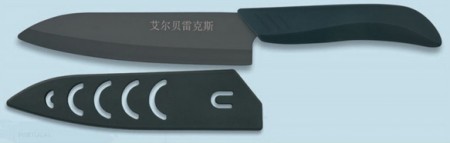
Why are more and more chefs and home cooks choosing ceramic knives? If you’re looking for a long-lasting edge, precise cuts and lightweight tools, this complete guide explains everything you need to know to choose, use and care for a ceramic knife.
Introduction: what do ceramic knives bring to your kitchen?
Contents
- Introduction: what do ceramic knives bring to your kitchen?
- What they are and what they’re made of
- How they are made: step by step
- Key technical properties
- Sharpening ceramic knives
- Practical advantages and limitations
- Usage and care recommendations
- Quick practical checklist: do’s and don’ts
- Comparison: ceramic knife vs steel knife
- Table: comparison of models and recommended uses
- How to sharpen step by step
- Tips for buying a good ceramic knife
- Myths and realities
- Common problems and how to solve them
- When to choose ceramic and when to choose steel
- Practical resources: daily maintenance
- Final recommendations and call to action
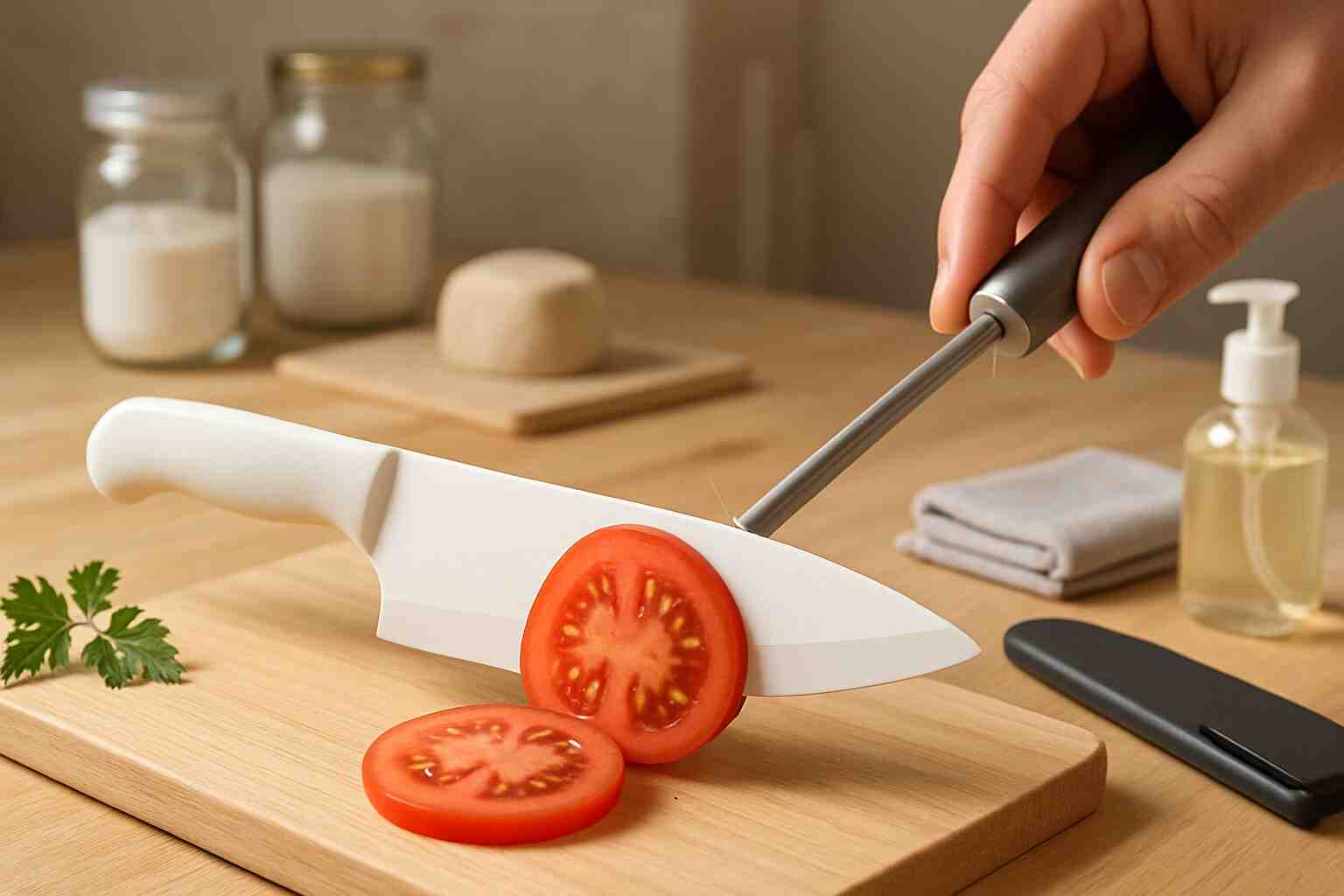
Ceramic knives have established themselves as a modern alternative to steel knives: they offer excellent cutting quality, an edge that stays sharp for a long time, and they don’t transfer flavors or odors to food. If you value precision when slicing vegetables, fruit or delicate pieces, this technology deserves a close look.
What they are and what they’re made of
The blades of ceramic knives are made from ultra-pure zirconium oxide powder. This material, subjected to specific industrial processes, produces extremely hard blades that are very wear-resistant. The ceramic used in cutlery is not the same as that of a plate: it is a technical material with very demanding mechanical properties.
How they are made: step by step
The manufacturing process makes the difference in the final quality. In general terms:
- They start from ultra-pure zirconium oxide powder.
- That powder is pressed into molds at very high pressures (around 1500 bar) to compact the piece.
- After molding, the pieces are sintered in special kilns at very high temperatures (approx. 1500 °C), which gives them their final hardness and structure.
- Finally, the cutting edge is ground and the edge quality is inspected.
Thanks to this process, an extremely hard blade is obtained: technical ceramic is almost as hard as diamond in relative surface hardness terms. The practical result is a very lightweight knife (approximately half the weight of a steel knife of the same size) with edge durability that is hard to match.
Victorinox ceramic knives and other brands
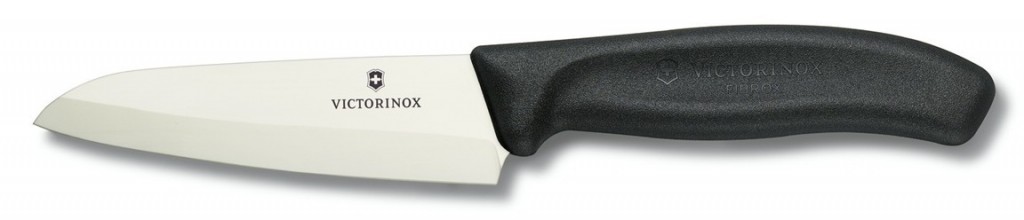
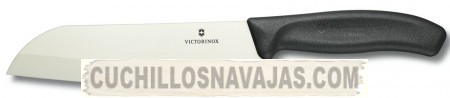
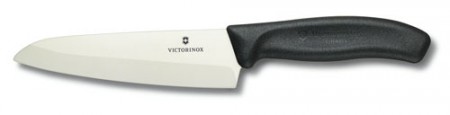
Some well-known brands, such as Victorinox, make ceramic knives that combine thoughtful ergonomics with the advantages of this material: lightness, corrosion resistance and very simple maintenance thanks to their smooth, compact surface.
Key technical properties
- Hardness and wear resistance: Zirconium oxide provides great hardness that keeps the edge for a long time.
- Chemical inertness: They do not rust, do not react with acids and do not transfer flavors.
- Compact surface: Makes cleaning easier and reduces food adhesion.
- Reduced weight: Helps maneuverability and reduces fatigue during prolonged use.
Sharpening ceramic knives
Sharpening ceramic differs from steel. Due to the sintering process, the blades are flat and the cutting edge is the critical part. For that reason:
- Only the edge needs to be sharpened, not the entire blade.
- Use of diamond sharpeners or machines specifically designed for ceramic is recommended.
- Avoid inappropriate abrasive methods that could create microcracks.
In practice, a well-executed sharpening will keep the blade functional for years. When the blade loses its edge beyond what a household sharpener can repair, there are professional sharpening services or even blade replacements available for certain models.
Practical advantages and limitations
Advantages
- Long-lasting edge: They keep the blade sharp much longer than many steels.
- Do not rust or transfer flavors: Perfect for fruit and vegetables.
- Lightweight: Better maneuverability and less effort.
- Easy to clean: Smooth, compact surface.
Limitations
- Low toughness against impacts: Not suitable for hitting, twisting or levering.
- Relative fragility: May break if dropped or used to cut hard foods like bones or frozen blocks.
- Specific sharpening: Require diamond sharpeners or specialized machinery.
Usage and care recommendations
To get the most out of a ceramic knife and extend its useful life, follow these practical rules:
- Always handle the knife with care: the blade is extremely sharp.
- Use ceramic knives only for cutting food; do not use them as chisels, levers or for striking.
- Do not use the blade to cut frozen foods, bones, metal or other hard materials.
- Avoid dropping the knife on the floor or onto hard surfaces; ceramic blades can chip.
- Cut on a wooden or plastic board to preserve the edge longer.
- Do not clean with metal scouring pads that could damage the edge.
- Wash with mild detergent, dry and store in the protective sheath provided for best preservation.
- Dishwasher use is not recommended unless you can guarantee the knife will not hit or rub against other objects.
Quick practical checklist: do’s and don’ts
- What they are for: cutting fruit, vegetables, filleting delicate fish, preparing sauces and presenting delicate pieces.
- What they are not for: opening cans, striking bones, cutting frozen ingredients or performing levering tasks.
Comparison: ceramic knife vs steel knife
To better understand what to expect, here is a clear, direct comparison table:
| Characteristic | Ceramic knife | Steel knife |
|---|---|---|
| Material hardness | Very high (zirconium oxide) | Medium-high (varies by steel) |
| Edge maintenance | Excellent, keeps the edge a long time | Requires more frequent sharpening |
| Impact resistance | Low (can chip) | High (more tough) |
| Weight | Lightweight | Heavier |
| Corrosion resistance | Total (does not rust) | Depends on the steel (stainless vs carbon) |
| Price | Variable, good value for money | Wide range depending on quality |
| Recommended use | Cutting fruit, vegetables, thin fillets | General use, cutting bones depending on type |
Table: comparison of models and recommended uses
Below is an indicative table with types of ceramic knives and their most common uses:
| Type | Typical length | Recommended use |
|---|---|---|
| Santoku knife (ceramic) | 16–18 cm | Versatile cuts for vegetables and small pieces |
| Kitchen/Chef’s knife | 15–20 cm | General precision cutting (avoid bones) |
| Vegetable knife / Paring knife | 8–12 cm | Peeling and fine cutting of fruit and vegetables |
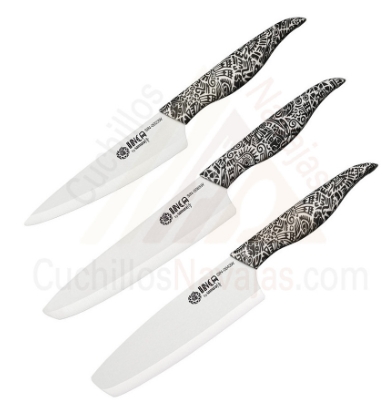
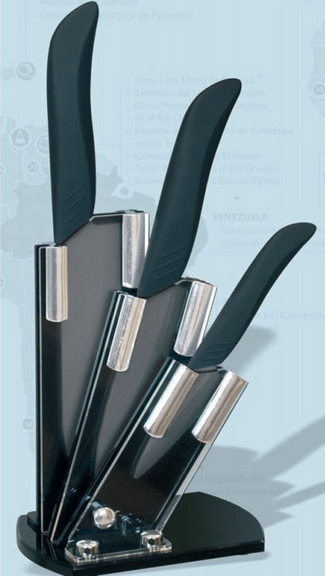
| 2–3 piece ceramic set | Varied | Ideal for light cooking and preparing starters |
How to sharpen step by step
If you want to sharpen a ceramic knife at home, follow these steps carefully:
- Obtain a diamond sharpener specific for ceramic or a fine diamond stone.
- Hold the knife firmly and maintain the sharpening angle recommended by the manufacturer (if none is given, 15–20° is a guideline).
- Slide the edge along the abrasive surface in even motions without pressing excessively.
- Check the edge carefully and repeat until cutting ability is restored.
- If you notice microcracks or structural loss, seek a professional service.
Tips for buying a good ceramic knife
- Buy reputable brands or retailers that offer a guarantee.
- Consider the type of handle and ergonomics: being lightweight, the handle greatly affects balance.
- Check if the manufacturer offers sharpening service or blade replacement.
- Choose lengths according to your use: 15 cm is versatile; 8–12 cm for peeling; 18 cm for larger preparations.
Myths and realities
There are myths about ceramic knives that should be cleared up:
- Myth: They break easily on first use. Reality: If used for their intended purpose and handled with care, their durability is high.
- Myth: They are not suitable for professional kitchens. Reality: In fine-prep kitchens and plating services they are very useful tools.
Common problems and how to solve them
- The blade loses its edge: try sharpening with a diamond sharpener. If it does not improve, contact a service technician.
- Chips or small fractures: if they are superficial and small they can be polished; larger fractures require replacement.
- Accidental knocks: avoid using on hard surfaces and storing without a sheath to prevent damage.
When to choose ceramic and when to choose steel
Choose ceramic knives if you mainly work with vegetables, fruit, thin fillets and want a lightweight, low-maintenance tool. Opt for steel knives when you need toughness to work with bones, cut frozen foods or require a multifunctional tool for heavy tasks.
Practical resources: daily maintenance
- Clean with warm water and mild detergent.
- Dry immediately and store in its sheath.
- Avoid stacking it with other utensils without protection.
- Schedule an edge check depending on frequency of use (every 6–12 months for intensive domestic use).
Final recommendations and call to action
Ceramic knives are an excellent investment if you seek precision, lightness and lower edge maintenance. Choose the type and length that best suit your kitchen, learn to sharpen with appropriate tools and follow usage rules to avoid damage. With basic care, a ceramic knife will give you years of clean cuts and agile handling.