
What knife will accompany you when night falls and the forest whispers? At the crossroads of tradition and technique, choosing a Cudeman means deciding who will be your faithful companion in hunting, survival, and outdoor life.
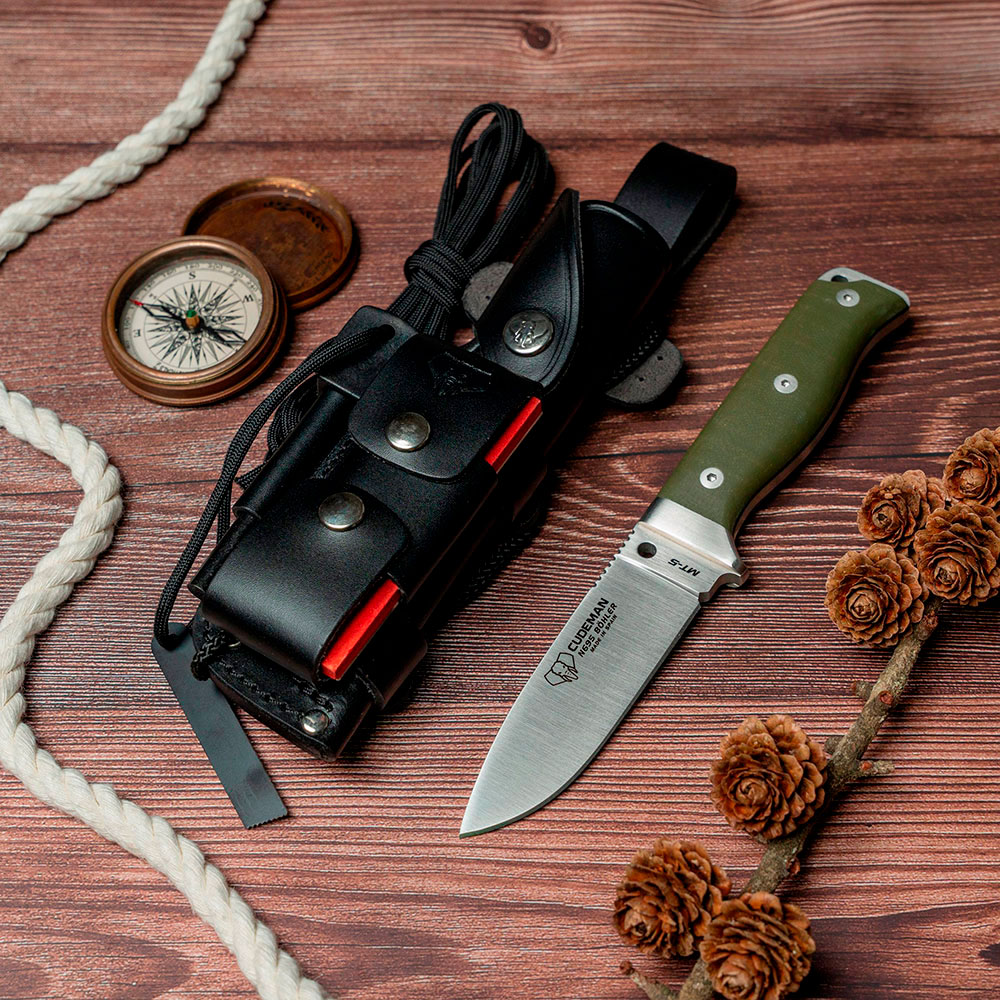
This detailed guide will teach you to differentiate between hunting, bushcraft, and survival knives, to understand steels and geometries, and to evaluate handle materials and sheaths so that your choice is practical, safe, and durable. You will find comparisons, real examples, and an evocative chronology that places these tools in the legendary imagery of the forged weapon.
The Heritage of Albacete: Why Cudeman Deserves Your Attention
Contents
- The Heritage of Albacete: Why Cudeman Deserves Your Attention
- Understanding the Typology: Bushcraft, Survival, and Hunting Knives
- Steel Matters: Comparison of Steels Used by Cudeman
- Geometries and Blade Profiles: What Each User Seeks
- Model Comparison by Use: Practical Examples
- Recommended Models and Common Uses
- Maintenance: How to Care for Your Cudeman So It Lasts Generations
- Ergonomics and Safety: Avoiding Injuries in the Field
- Sheaths: Do Not Underestimate Their Importance
- Legality and Common Sense
- Quick Table: What to Choose Based on User Profile
- Real Cases: How Users Chose Their Cudeman
- How to Test a Knife Before Committing
- Useful Accessories and Complements
- Questions to Ask Yourself Before Choosing
- A Final Thought for the Road
Cudeman emerges from the Spanish knife-making tradition with over three decades of craftsmanship. Their pieces are born with a blend of artistry and current industrial processes: controlled tempering, precise heat treatments, and finishes designed for real-world field use.
What defines a good Cudeman knife? In a few words: high-performance steels, useful geometries, full tang, ergonomic handles, and functional sheaths. These keys will help you evaluate each model according to real needs, not just aesthetics.
Understanding the Typology: Bushcraft, Survival, and Hunting Knives
Before choosing, define your priority. That decision will turn a good knife into a perfect tool for you.
Bushcraft: The Art of Making with a Knife
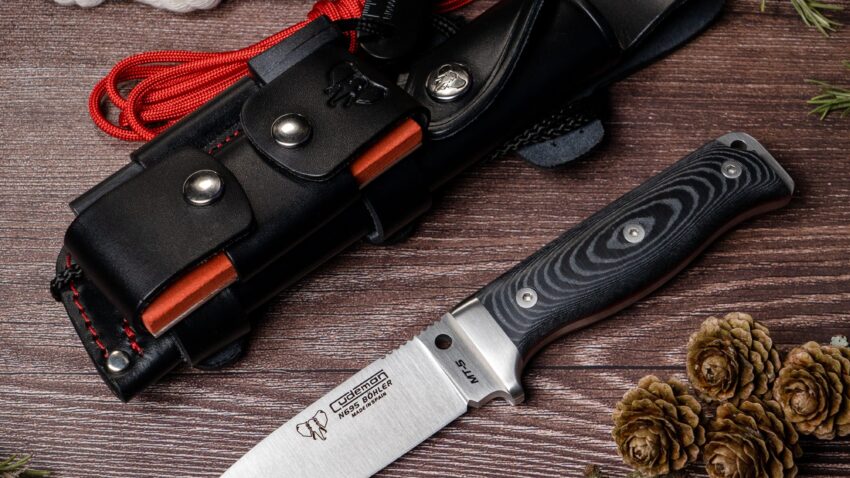
Bushcraft demands precision. It involves working with wood, carving utensils, and preparing the environment for living. Therefore, bushcraft knives are usually compact, with a Scandinavian or convex grind and a blade of about 8–12 cm, ideal for carving and maintaining a field-repairable edge.
Survival: Resilience Above All
If your priority is survival, you are looking for robustness. Blades of 12–18 cm, a spine prepared for batoning, full tang, and geometry that supports extreme prying and twisting. The sharpening is usually flat or with a more aggressive bevel for specific tasks.
Hunting: Design for Butchering and Game Processing
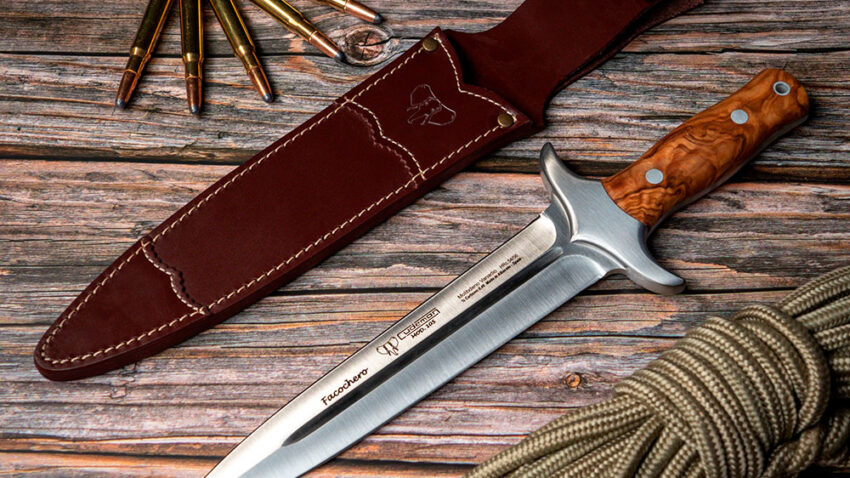
Hunting knives focus on butchering, dispatching, and ergonomics for long, controlled cuts. They often feature a clip-point or drop-point and sharp blades that minimize damage to the meat and facilitate field work.
Steel Matters: Comparison of Steels Used by Cudeman
Choosing steel means understanding a balance between edge retention, ease of sharpening, and corrosion resistance. Below is a comparative table of common steels in Cudeman knives.
| Steels | Advantages | Disadvantages | Recommended Use |
|---|---|---|---|
| Böhler N690Co | Excellent edge retention, good corrosion resistance, good temper | Can be more expensive; requires technical sharpening for extreme edge | Big game hunting, general outdoor use |
| Böhler N695 | High hardness, great wear resistance | Less easy to sharpen for beginners | Survival and tactical |
| VG10 | Balance between sharpenability and retention | Sensitivity to corrosion in saline environments | Hunting, general outdoor |
| 14C28N (Sandvik) | Easy to sharpen, good corrosion resistance | Lower retention than premium steels | Bushcraft and everyday carry knives |
| 12C27 | Very good polishing and sharpening, reliable | Moderate edge retention | Good choice for carving and precision |
| Böhler K720 / K110 (carbon steel) | Maximum ease of sharpening, very smooth edge | Requires anti-rust maintenance | Intensive use where the knife can be maintained |
Geometries and Blade Profiles: What Each User Seeks
The shape of the blade defines its function. Here are the most relevant:
- Scandi/Scandinavian: ideal for carving and bushcraft; facilitates field repairs.
- Clip-point: sharp and versatile tip, widely used in hunting.
- Spear-point: symmetrical, good for penetration and tactical tasks.
- Flat grind: good balance between cutting and strength.
- Convex edge: great durability in rough work and batoning.
Model Comparison by Use: Practical Examples
To choose wisely, compare key features: blade length, spine thickness, steel type, handle material, and sheath type. The following table shows an indicative comparison between representative models (illustrative names based on the Cudeman range).
| Model | Blade Length | Steels | Handle | Ideal Use |
|---|---|---|---|---|
| Cudeman Ranger | 14 cm | N690Co | Micarta | Survival, batoning, and camping |
| Cudeman Hunter | 12 cm | VG10 | Deer antler | Big game hunting and butchering |
| Cudeman Bush | 10 cm | 14C28N | Olive wood | Bushcraft and carving |
| Cudeman Tactical | 11 cm | N695 | G10 | Tactical use and defense |
Recommended Models and Common Uses
The choice of model depends on the task and your experience. Below is a practical guide to pairing model and mission:
- For long days in cold climates: prefer wooden or Micarta handles that do not transmit the sensation of cold and a sheath that protects from moisture.
- For expeditions with high risk of humidity: stainless steels like N690Co or 14C28N and Kydex or sealed nylon sheaths.
- For pure survival: robust knives with a thick spine, full tang, and the possibility of batoning.
- For big game hunting: blade with a controlled point and geometry for dispatching and fine butchering.
Maintenance: How to Care for Your Cudeman So It Lasts Generations
Good steel requires little care, but carbon steels demand attention. Here are maintenance practices that work in the field and at home.
Cleaning and Drying
- After use, clean the blade with warm water and neutral soap; dry immediately.
- For carbon steels, apply a light coat of protective oil before storing.
Field Sharpening
- Use a medium-grit stone to restore the edge and a fine-grit one to polish it.
- Scandinavian grind and convex edge tolerate rustic sharpening better.
Repairs and Adjustments
- If the handle loosens, check rivets and pins; many handles can be reinforced with specific epoxy adhesive.
- For small nicks, a quick touch-up with a file and stone will restore functionality in minutes.
Ergonomics and Safety: Avoiding Injuries in the Field
An inadequate handle multiplies the risk of cutting due to fatigue. Look for adequate handle depth, a subtle guard, and a texture that offers grip even with wet hands.
Practice controlled cuts and safe gripping techniques: always cut away from your free hand and use support when possible.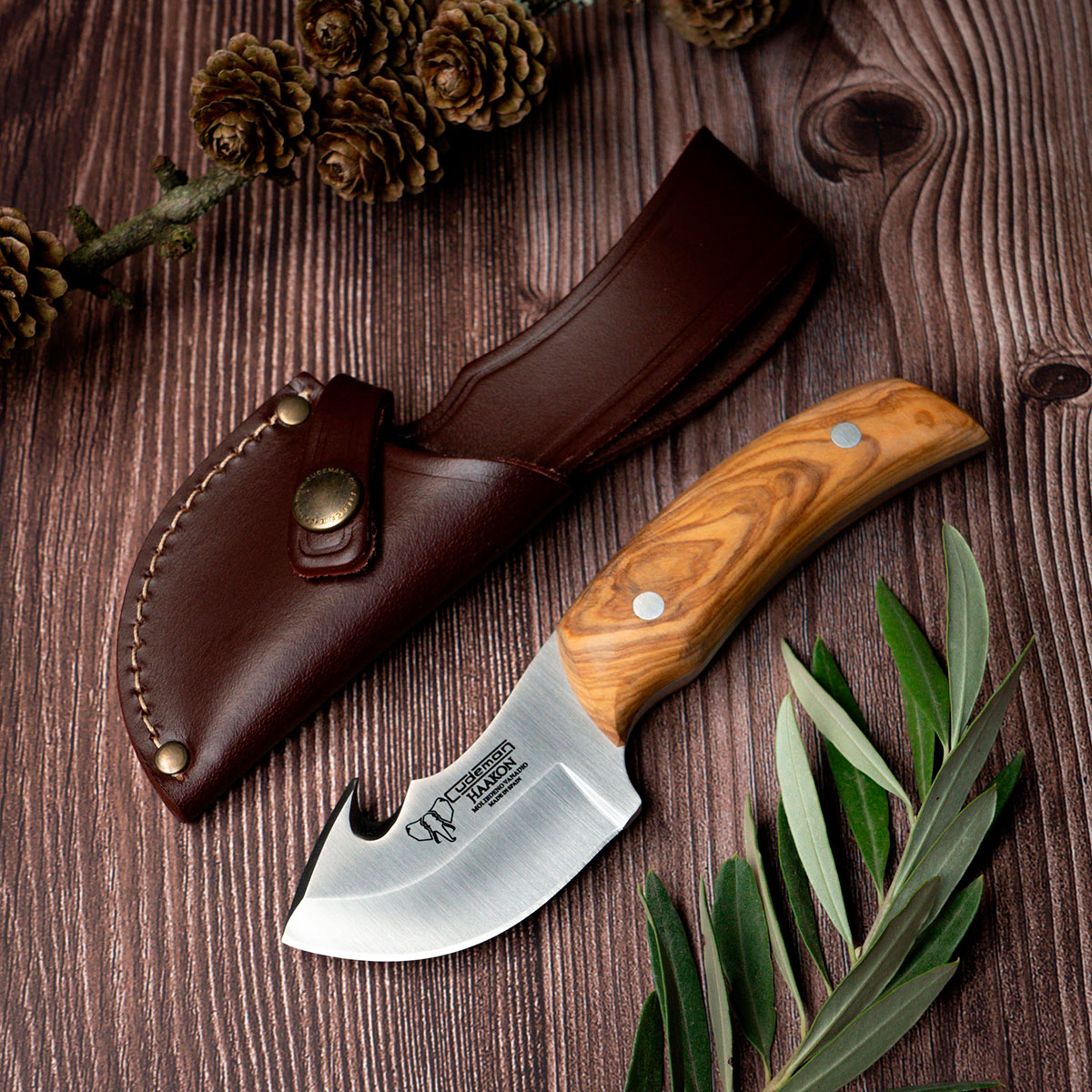
Sheaths: Do Not Underestimate Their Importance
The sheath is part of the system: it protects the blade, prevents loss, and facilitates quick access. Leather sheaths are fine for everyday, dry use; for extreme conditions, prefer Kydex or reinforced nylon.
Legality and Common Sense
Before carrying a knife in public, review local regulations and apply common sense: safe transport, appropriate sheath, and avoid unnecessary display. A well-chosen knife should not become a legal problem.
Quick Table: What to Choose Based on User Profile
| Profile | Blade Length | Sharpening Type | Handle Material |
|---|---|---|---|
| Recreational/Bushcraft | 8–11 cm | Scandinavian/Convex | Wood, Micarta |
| Survival/Expedition | 12–18 cm | Flat/Convex | G10, Micarta |
| Hunting | 10–14 cm | Clip-point/Flat | Antler, noble wood |
| Tactical/Defense | 10–12 cm | Flat/Clip | G10, rubber |
Real Cases: How Users Chose Their Cudeman
- A forest ranger who needed a tool to clear camps and prepare firewood opted for a Cudeman Ranger with N690Co for its balance of endurance and moisture resistance.
- A bushcraft enthusiast who prioritized carving and comfort in cold hands chose a model with a 10 cm blade in 14C28N and an olive wood handle.
- A tactical activities operator selected a Cudeman Tactical with N695 and G10 for a compact and reliable piece in demanding environments.
How to Test a Knife Before Committing
- Test the balance: hold the knife in your hand as if you were going to cut; the piece should feel natural and centered.
- Evaluate the grip dry and wet, with and without gloves.
- Simulate basic cuts: slicing, light piercing, and pressing to see the feel of the spine and robustness.
Useful Accessories and Complements
- Ferro rod for lighting fires with a 90° spine.
- Portable sharpening kit (compact stones or ceramic rollers).
- Cord or paracord to adapt the handle or improvise a spear.
- Modular sheaths for mounting on a belt or backpack.
Questions to Ask Yourself Before Choosing
- Where will I use it most frequently?
- Do I prefer ease of sharpening or prolonged edge retention?
- Do I need a piece for heavy-duty work or for precision and carving?
- What weather conditions are common on my outings?
A Final Thought for the Road
Choosing a Cudeman is not just choosing a tool; it is taking on a companion that will respond when you need it. Value the steel, geometry, ergonomics, and sheath. Think about real use and frequency, practice safety and maintenance techniques, and your knife will become a reliable extension of your hands.
VIEW CUDEMAN MODELS | VIEW SURVIVAL KNIVES | VIEW HUNTING KNIVES