Have you ever tried to bone a chicken with an inadequate knife and ended up wasting valuable meat? The difference between a meat knife and a boning knife is not just about design: it’s the line that separates efficient work from unnecessary effort. In the universe of professional blades, each tool has a purpose as precise as the edge that defines it.
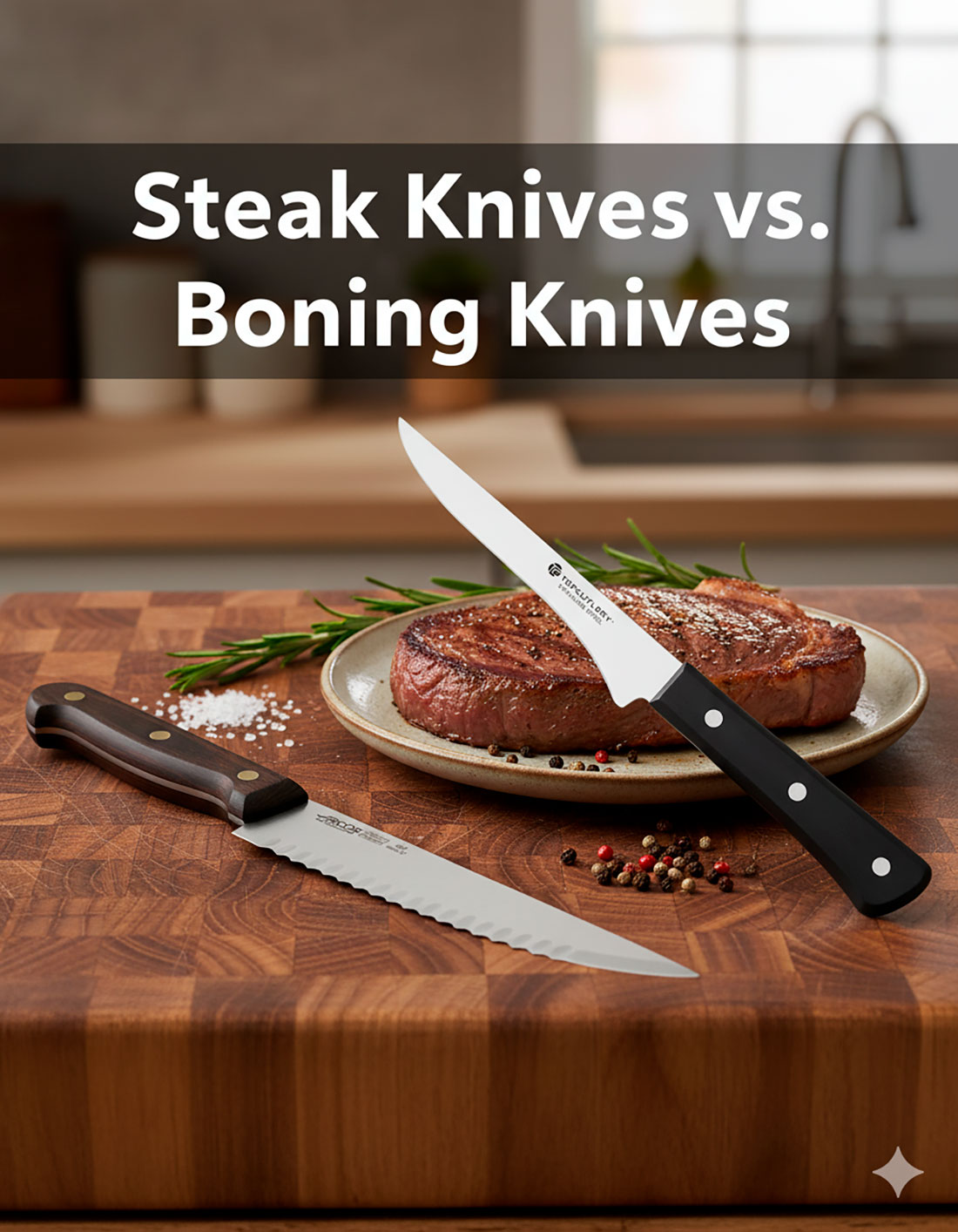
In the professional kitchen and in the expert butcher’s workshop, choosing the right knife transforms a complex task into an act of surgical precision. While the meat knife stands as the versatile tool for slicing, cutting, and dicing, the boning knife is the specialist in extracting every gram of meat from the bone without sacrificing a single millimeter of product.
This article will guide you through the technical, functional, and design differences between both types of knives. You’ll discover when you need the robustness of a wide blade and when the precision of a thin, flexible blade makes all the difference. Get ready to learn about the steel, geometry, and purpose that define each of these essential tools.
The Meat Knife: Versatility and Power in Every Cut
Contents
- The Meat Knife: Versatility and Power in Every Cut
- The Boning Knife: Surgical Precision for Separating Meat and Bone
- Technical Comparison: Design, Function, and Performance
- Which Do You Need? Selection Criteria According to Your Profile
- Materials and Construction: The Steel That Defines the Tool
- Maintenance and Care: Preserving the Edge of Precision
- Complementarity in the Professional Kitchen
- Clarifying Doubts About Boning and Fillet Knives
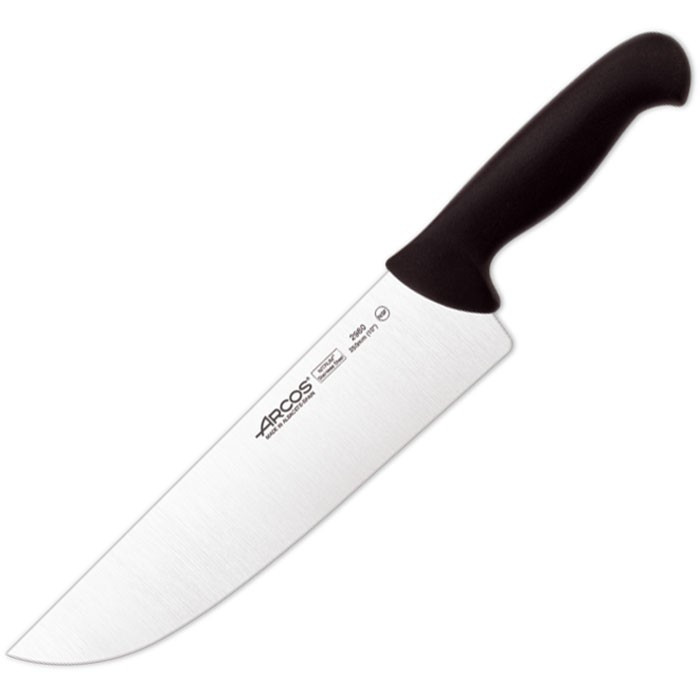
The meat knife is the workhorse in any kitchen where proteins are handled. Its robust and versatile design makes it the tool of choice for slicing, carving, and preparing large portions of meat, whether beef, pork, lamb, or poultry.
Its blade, which usually ranges between 18 and 26 cm in length, is forged to offer a perfect balance between weight, control, and cutting ability. Unlike other specialized knives, the meat knife features a wider and thicker blade, designed to withstand intensive use and cuts that require controlled force.
Technical Characteristics of the Meat Knife
The blade geometry of a meat knife is designed to maximize efficiency in repetitive and prolonged cuts. Its wide profile provides stability during cutting, while its thickness ensures durability even in demanding working conditions.
- Robust and rigid blade: Built to withstand firm and direct cuts without flexing.
- Durable edge: Made with high-quality steel that maintains sharpness during long work sessions.
- Strong tip: Wider than a boning knife’s, ideal for piercing and separating large portions.
- Ergonomic balance: The balance between blade and handle allows precise control without excessive fatigue.
Within the meat knife category, we find variants such as the carving knife, specialized in slicing already cooked pieces into thin, uniform cuts, and the butcher knife, designed for heavy butchering and capable of cutting through cartilage and more resistant structures.
Main Uses of the Meat Knife
Versatility defines this type of knife. From initial preparation to final plating, the meat knife adapts to multiple scenarios in professional and domestic kitchens:
- Cutting steaks and chops with uniform precision
- Slicing large pieces of raw or cooked meat
- Preparing diced cuts for stews and casseroles
- Separating large portions into individual cuts
- Trimming and cleaning superficial fat from large pieces
The meat knife is, in essence, the extension of the cook’s arm when it comes to handling proteins. Its design does not seek extreme specialization but rather the ability to efficiently respond to most tasks related to meat cutting.
The Boning Knife: Surgical Precision for Separating Meat and Bone
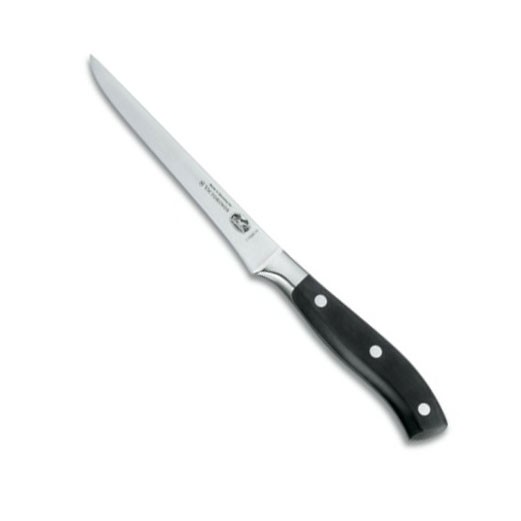
If the meat knife is the generalist, the boning knife is the elite specialist. Forged specifically to navigate the contours of the bone, this tool represents the maximum expression of precision in meat work.
With a blade typically measuring between 12 and 20 cm, the boning knife sacrifices width for maneuverability. Its thin and sharp design allows it to glide between bone and meat with precision, minimizing waste and maximizing the use of each piece.
Anatomy of a Specialized Tool
The boning knife is instantly recognizable by its distinctive profile. The thin, often curved blade, and the extremely sharp tip are features designed with a single purpose: to separate meat from bone with the least possible loss.
The flexibility of the blade is a decisive factor in the boning knife’s performance. While some models feature flexible blades that adapt to the irregular contours of the bone, others opt for rigid blades that offer greater control over dense meats.
- Thin and sharp blade: Allows penetration into narrow spaces between bone and meat.
- Fine and pointed tip: Designed to reach joints and hard-to-access areas.
- Variable flexibility: From completely flexible blades to rigid versions like the Japanese Honesuki.
- Lightweight design: Facilitates precise and prolonged movements without excessive fatigue.
The Art of Boning: Specific Applications
The boning knife is indispensable when working with pieces that require meticulous separation of meat and bone. Its specialization makes it the preferred tool for professional butchers and chefs who value efficiency and maximum product utilization.
- Boning whole poultry (chicken, duck, turkey) while preserving the integrity of the meat
- Separating meat from beef, pork, or lamb ribs
- Cleaning tendons and membranes in premium cuts
- Preparing fish by removing bones without damaging the fillet
- Working around complex joints with millimeter precision
The boning knife is not a multi-purpose tool. Its specific design means it can hardly replace other knives for general cutting tasks. However, in its specialty, it has no rival.
Technical Comparison: Design, Function, and Performance
The choice between a meat knife and a boning knife should not be based on personal preferences, but on a technical understanding of each tool’s capabilities and limitations. Both knives share the universe of meat preparation, but their paths diverge radically in design and application.
Fundamental Differences in Blade Design
Blade geometry is the most distinctive factor between both types of knives. While the meat knife prioritizes robustness and direct cutting ability, the boning knife optimizes maneuverability and precision in confined spaces.
| Characteristic | Meat Knife | Boning Knife |
|---|---|---|
| Blade length | 18-26 cm | 12-20 cm |
| Blade width | Wide and robust | Thin and narrow |
| Blade thickness | Thicker and more resistant | Thinner and lighter |
| Flexibility | Generally rigid | Flexible or rigid (depending on type) |
| Tip type | Wider and stronger | Fine and extremely pointed |
| Blade profile | Straight or slightly curved | Often curved to follow contours |
- Blade length
-
- Meat Knife: 18-26 cm
- Boning Knife: 12-20 cm
- Blade width
-
- Meat Knife: Wide and robust
- Boning Knife: Thin and narrow
- Blade thickness
-
- Meat Knife: Thicker and more resistant
- Boning Knife: Thinner and lighter
- Flexibility
-
- Meat Knife: Generally rigid
- Boning Knife: Flexible or rigid (depending on type)
- Tip type
-
- Meat Knife: Wider and stronger
- Boning Knife: Fine and extremely pointed
- Blade profile
-
- Meat Knife: Straight or slightly curved
- Boning Knife: Often curved to follow contours
Function and Purpose: Two Cutting Philosophies
Function defines form. In the case of these two types of knives, functional differences have shaped radically distinct designs over generations of evolution in professional cutlery.
| Aspect | Meat Knife | Boning Knife |
|---|---|---|
| Main function | Slicing, carving, and dicing meat into portions | Separating meat from bones, removing tendons |
| Cut type | Direct cuts, uniform slices | Precision cuts around bone structures |
| Required precision | Good for general cuts and presentation | Very high to minimize waste |
| Applied force | Medium to high, depending on the cut | Low to medium, emphasis on technique |
| Versatility | High: multiple tasks in meat preparation | Low: highly specialized |
| Typical users | General cooks, professionals, and enthusiasts | Butchers, specialized chefs, meat processors |
- Main function
-
- Meat Knife: Slicing, carving, and dicing meat into portions
- Boning Knife: Separating meat from bones, removing tendons
- Cut type
-
- Meat Knife: Direct cuts, uniform slices
- Boning Knife: Precision cuts around bone structures
- Required precision
-
- Meat Knife: Good for general cuts and presentation
- Boning Knife: Very high to minimize waste
- Applied force
-
- Meat Knife: Medium to high, depending on the cut
- Boning Knife: Low to medium, emphasis on technique
- Versatility
-
- Meat Knife: High: multiple tasks in meat preparation
- Boning Knife: Low: highly specialized
- Typical users
-
- Meat Knife: General cooks, professionals, and enthusiasts
- Boning Knife: Butchers, specialized chefs, meat processors
Blade Flexibility: A Determining Factor in Performance
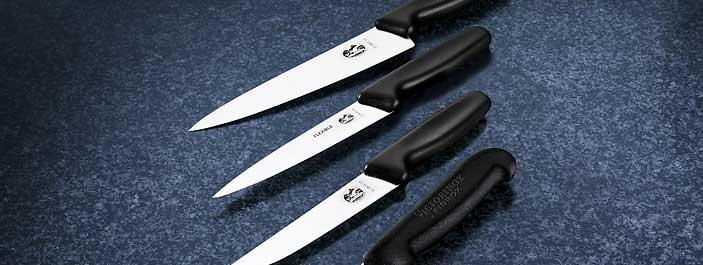
One of the most critical aspects of a boning knife is the flexibility of its blade. This characteristic, practically irrelevant in a meat knife, completely defines the boning knife’s performance in different types of work.
A flexible blade allows the boning knife to adapt to the irregular contours of the bone, facilitating lateral and enveloping movements that separate the meat without damaging it. This type of blade is ideal for working with poultry, fish, and cuts that require extreme delicacy.
Conversely, a rigid blade provides greater control and strength, being preferred for boning dense meats like beef or pork. The Japanese Honesuki, with its rigid and triangular blade, represents the maximum expression of this approach, offering surgical precision in poultry boning.
The meat knife, for its part, always maintains a rigid blade. Flexibility would be a disadvantage in cuts that require firmness and linear control, essential characteristics when slicing large portions or performing presentation cuts.
Which Do You Need? Selection Criteria According to Your Profile
The question is not which knife is better, but which one best suits your specific needs. A professional butcher does not work with the same tools as a domestic cook who occasionally prepares a piece of meat with bone.
For the Amateur Cook
If your kitchen is primarily domestic and you work with meat occasionally, the meat knife will be your best initial investment. Its versatility will allow you to tackle most tasks without the need for specialized tools.
However, if you frequently prepare whole poultry, buy bone-in meat pieces or fresh fish, incorporating a boning knife into your arsenal will radically transform your efficiency in the kitchen and significantly reduce waste.
For the Professional Cook
In a professional kitchen, the question changes: it’s not whether you need both knives, but how many of each type you require at your workstation. The professional chef understands that each tool optimizes a specific phase of the preparation process.
The carving knife is reserved for plating and final presentation. The butcher’s knife handles the initial breakdown of large portions. The boning knife takes care of the precise extraction of bones and the cleaning of tendons. Each plays an irreplaceable role in the professional workflow.
For the Specialized Butcher
The professional butcher lives in the world of the boning knife. Their daily work requires separating hundreds of pounds of meat from their bone structures, a task that demands specific tools maintained in optimal conditions.
For this profile, investing in multiple boning knives of different flexibilities and lengths is not a luxury but an operational necessity. Each type of meat and each specific cut can benefit from a particular boning knife variant.
Materials and Construction: The Steel That Defines the Tool
The soul of any knife lies in the steel of its blade. The selection of the material not only determines its edge retention ability but also its corrosion resistance, ease of sharpening, and long-term durability.
Steels Used in Meat and Boning Knives
The most common materials in the manufacture of both types of knives include high-carbon stainless steel, which combines corrosion resistance with excellent edge retention, and carbon steel, preferred by professionals who prioritize an extremely sharp edge over rust resistance.
- High-carbon stainless steel: The perfect balance between durability, corrosion resistance, and edge retention. Ideal for intensive use in professional kitchens.
- Carbon steel: Offers the sharpest possible edge but requires constant maintenance to prevent oxidation. Preferred by purists and experienced professionals.
- Damascus steel: Combines multiple layers of steel to create blades of exceptional beauty and superior performance, albeit at a significantly higher cost.
- Special alloy steels: Additions of chromium, molybdenum, vanadium, or tungsten improve specific properties such as hardness, toughness, or wear resistance.
Handle Materials: Ergonomics and Safety
The handle of a professional knife is not a mere aesthetic complement. In prolonged work sessions, the ergonomics of the handle make the difference between controlled precision and fatigue that leads to errors.
Traditional materials like wood offer warmth and classic aesthetics, though they require regular maintenance. Modern synthetic compounds like micarta, polyoxymethylene (POM), or polypropylene provide non-slip surfaces, moisture resistance, and exceptional durability in demanding professional environments.
For the boning knife, where a secure grip is critical during precision maneuvers, handles with ergonomic textures and shapes that prevent slipping are especially important. A moment of lost control can mean the difference between a clean cut and an accident.
Maintenance and Care: Preserving the Edge of Precision
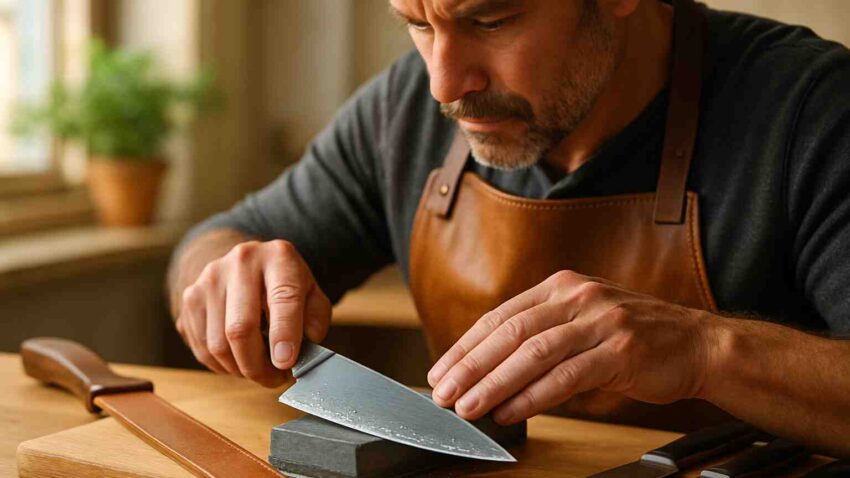 A quality knife, whether for meat or boning, represents a significant investment that can last for decades with proper care. Regular maintenance not only preserves the tool’s performance but also ensures safety during use.
Sharpening: The Art of Restoring the Edge
Regular sharpening is the most important practice in maintaining any knife. A dull knife is not only inefficient but dangerously unpredictable, as it requires more force and is more prone to slips.
For the meat knife, sharpening with a medium to fine grit stone (1000-3000) restores the working edge needed for clean and uniform cuts. The sharpening technique should maintain the original blade angle, typically between 15 and 20 degrees per side.
The boning knife requires an even sharper and more precise edge. Many professionals use fine grit stones (3000-6000) to achieve the level of sharpness that allows it to glide between bone and meat with minimal resistance. Sharpening flexible blades requires special technique to maintain angle uniformity along the entire blade.
Cleaning and Storage
Immediate cleaning after use is essential, especially when working with proteins that can leave acidic or fatty residues that affect the steel. Hand washing with warm water and mild soap, followed by complete drying, prevents corrosion and maintains the integrity of the handle.
Proper storage protects both the edge and user safety. Wooden blocks, wall-mounted magnetic strips, or individual protective sheaths are superior options to storing knives loose in drawers, where contact with other utensils damages the edge and poses a risk of accidents.
Professional Review and Maintenance
Even with regular home sharpening, professional knives benefit from periodic reviews by experienced sharpeners. A professional can correct irregularities in the edge, repair minor damage, and restore the original blade geometry when home sharpening has gradually modified the profile.
For high-end knives, especially those with special steels or Damascus construction, annual professional maintenance ensures that the investment maintains its optimal performance for decades.
Complementarity in the Professional Kitchen
True mastery in meat work does not arise from choosing between a meat knife and a boning knife, but from understanding when and how to use each tool in its optimal application. In expert hands, these knives do not compete: they complement each other.
The professional workflow often begins with the boning knife, meticulously separating meat from bone structures, removing tendons and membranes, preparing the piece for transformation. Once cleaned and boned, the meat knife takes over, cutting uniform portions, creating impeccable presentations, or preparing the meat for different cooking techniques.
This dance between specialization and versatility reflects the fundamental philosophy of professional cutlery: each tool exists to maximize efficiency in a specific task. The chef who understands this truth does not seek the universal knife that does everything mediocrely, but the set of specialized tools that, together, elevate every aspect of their craft.
Investing in both types of knives, far from being redundant, represents a commitment to excellence in every phase of preparation. The boning knife minimizes waste and optimizes the use of costly raw materials. The meat knife ensures professional presentation and efficiency in service. Together, they form the essential arsenal of anyone who takes the art of working with meat seriously.
In your kitchen, whether professional or domestic, the question should not be which knife to choose, but which to add first to your collection. Start with the versatility of the meat knife if your work is general. Incorporate the boning knife when the frequency of working with bone-in pieces justifies the investment in specialization. And observe how the right tool at the right time transforms not only your efficiency but the very quality of your work.
Every clean cut, every precise separation, every impeccable presentation is the silent testimony of the right steel in the right hand. That is the difference that defines the professional: not the number of tools, but the wisdom to use each to its maximum potential.
Clarifying Doubts About Boning and Fillet Knives
What is the main difference between a boning knife and a fillet knife?
The main difference between a boning knife and a fillet knife is that the boning knife has a stiffer and thicker blade, designed to cut tough meat and separate meat from bones, while the fillet knife has a thinner, longer, and very flexible blade, optimized for making precise cuts in tender fish meat and separating skin or bones without damaging the meat.
| Characteristic | Boning Knife | Fillet Knife |
|---|---|---|
| Blade flexibility | Rigid or semi-flexible | Very flexible |
| Blade thickness | Thicker | Thinner |
| Main use | Separating meat from bones (meat and poultry) | Filleting fish and separating skin and bones |
| Length | Generally 12-17 cm | Usually longer, 15-23 cm |
| Cutting type | Forceful cuts, around bones | Fine and precise cuts in soft meat |
This difference in design and flexibility makes each knife more suitable for specific kitchen tasks.
What type of knife is most suitable for amateur cooks?
The most suitable type of knife for amateur cooks is the chef’s knife (also called a cook’s knife) of approximately 8 inches (20 cm) in blade length. This knife is versatile and allows for cutting meat, fish, vegetables, mincing herbs, and performing both large and precise tasks, making it ideal for learning and developing kitchen skills. Additionally, it is recommended that it be a well-balanced and comfortable knife to handle, preferably with a good quality steel blade that maintains its edge and is easy to sharpen.
The main reasons for choosing a chef’s knife for amateurs are:
- Versatility: Suitable for most kitchen tasks: slicing, chopping, and dicing.
- Standard size: Between 7 and 8 inches (18-20 cm) is ideal for control and easy handling.
- Material and quality: Good quality stainless steel blades that maintain their edge and are easy to sharpen.
- Comfort and balance: The knife should feel comfortable in the hand to prevent fatigue when using it, promoting a good grip and balance.
Recommended brands for beginners include Victorinox Swiss Classic, Mercer Culinary Genesis, and Wüsthof Classic, which offer good quality and value for money for those starting out.
Alternatively, the Japanese Santoku knife is another popular option for amateur cooks who prefer a straighter edge and a lightweight design, ideal for cutting vegetables and precise tasks, although the conventional chef’s knife is usually more versatile for various ingredients.
In summary: for an amateur cook, an 8-inch, well-balanced Western chef’s knife with a stainless steel blade is the most recommended and practical option.
What materials are commonly used in the manufacture of boning knives?
The most common materials for the manufacture of boning knives are high-carbon stainless steel, carbon steel, and Damascus steel. These materials offer a good balance between durability, corrosion resistance, and the ability to maintain a sharp edge. Additionally, in some cases, special steels with additions of chromium, molybdenum, or tungsten are used to improve performance. For the handles, materials such as wood, synthetic compounds (micarta, polyoxymethylene, polypropylene), or ergonomic non-slip materials are used to provide comfort and safety during use.
How does blade flexibility affect the performance of a boning knife?
The flexibility of the blade in a boning knife directly affects its performance by allowing greater precision and adaptability in delicate cuts, especially around bones and in thin meats such as poultry and fish. A flexible blade facilitates lateral and contoured movements without damaging the meat or the knife, improving cleanliness and detail in boning.
On the other hand, a stiffer blade provides more strength and control necessary for cutting tougher and denser meats, such as beef or pork, preventing the blade from bending and allowing firm and quick cuts in large pieces.
Therefore, the choice between a flexible and rigid blade depends on the type of meat and the delicacy of the task: flexibility favors delicate tasks and precise cuts, while rigidity is ideal for boning thick, tough pieces.
What advantages does a curved boning knife have over a straight one?
A curved boning knife has the advantage of offering greater control and precision for tasks that require enveloping or sliding movements around bones and joints, facilitating clean and precise cuts in irregularly shaped pieces of meat. Its curved shape adapts better to the anatomy of the meat, allowing for better separation of meat from bone with a single fluid movement. This makes it ideal for boning and trimming with precision, especially in complex cuts.
In comparison, a straight boning knife provides a more linear cut and may be more suitable for direct and exact cuts, but it is less versatile for curved maneuvers and detailed work around bones. The curved blade reduces friction and improves ergonomics by following the natural shape of the meat, which can also help preserve more product and prevent abrupt movements that damage the texture or appearance of the cut.