
A well-sharpened knife is not just a matter of efficiency in the kitchen or in the field; it is, above all, a matter of safety. The task of sharpening a knife is simple, but it is always convenient to do it correctly to avoid shortening its useful life. It must be taken into account that the knife blade wears out every time it is sharpened, therefore, it must be done correctly to leave it perfect and have to repeat the process as little as possible.
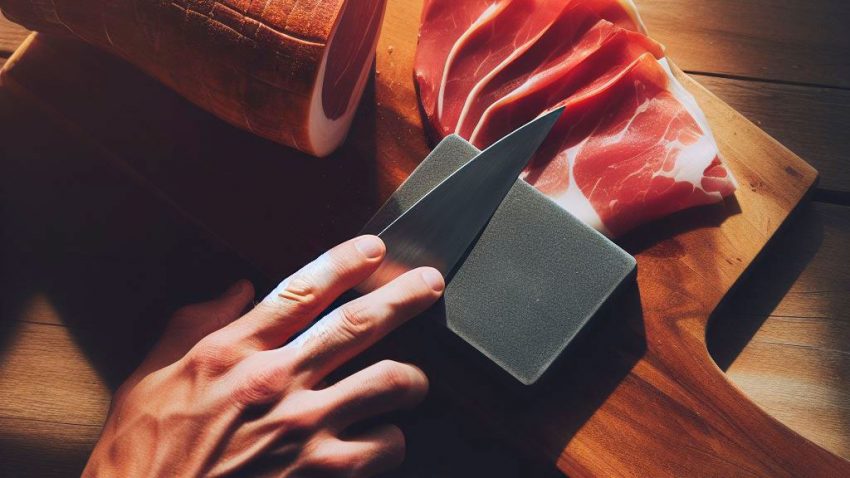
Cutting with a dull blade requires more effort, which drastically increases the likelihood of slips and, consequently, cuts. With the quality of steel manufactured today, knives should not lose their edge so often, but the truth is that they are also often used daily, and this leads to accelerated wear. A knife can become dull from cutting on hard surfaces, from corrosion with citrus acids, from washing in the dishwasher at high temperatures, or from the blade being nicked. Fortunately, keeping your knives in optimal condition is simpler than you imagine.
Why is the Sharpening Angle Everything?
Contents
Imagine cutting a ripe tomato and the blade slipping instead of gliding smoothly. In most cases, the real culprit is not the steel or the technique, but the sharpening angle. A few degrees can transform a “laser” edge that lasts for weeks into an edge that dulls quickly. Understanding the geometry of the edge is the first step towards impeccable sharpening.
Degrees, Bevels, and Micro-bevels Explained
The edge of a knife can be compared to a microscopic roof. The inclination of that “roof” (the bevel) determines how easily the knife will cut.
- Completely Flat Bevel (12-17° per side): Ideal for slicing, filleting, and sushi, but its tip is fragile and can chip with intensive use.
- Standard Double Bevel (18-22° per side): Offers a balance between durability and cutting ability, being perfect for daily kitchen use and general purpose knives.
- Robust Work Bevel (24-30° per side): Used on butcher or camping knives; it loses the razor-sharp cutting feel, but withstands very demanding use.
The micro-bevels, or secondary bevels, act as an additional “seat belt”, adding a small inclination of 1 to 3° to the edge. These can be quickly touched up, prolong the life of the edge, and allow a low primary angle to be maintained without constant chipping.
How Steel Type Influences the Optimal Angle
Steel is not just “metal”, but a mixture of components that affect its hardness (resistance to dents) and toughness (resistance to chipping). The optimal sharpening angle depends on this balance.
- High Carbon Steels (56-60 HRC): Like 1095 or W2, they benefit from angles of 18-22° per side.
- Stainless Kitchen Steel (56-60 HRC): Steels like X50CrMoV15 or VG-10 are ideal for angles of 15-20° per side.
- “Super” Powder Metallurgy Steels (60-64 HRC): Materials like S35VN or Elmax maintain ultra-sharp bevels with angles of 12-17° per side.
- Ultra-hard and Fragile Steels (65+ HRC): Offer incredible cutting with angles of 10-15° per side, but require a micro-bevel to prevent chipping.
Standard Angles According to Knife Type
Here’s a quick guide to the most common knife types:
- Western Kitchen Knives (Chef, Paring): 20-22° per side (40-44° inclusive). This gives them durability and comprehensive performance.
- Japanese Kitchen Knives (Gyuto, Santoku): 15-17° per side. Their harder steels allow for sharper angles for superior precision.
- Pocket and Outdoor Knives: 18-22° per side. A slightly thicker angle offers security against dirt and outdoor tasks.
- Hunting, Fillet, and Special Blades: Vary greatly depending on the task. Skinning (15-18°), filleting fish (12-15°), or a butcher knife (25-30°).
Methods for Sharpening a Knife
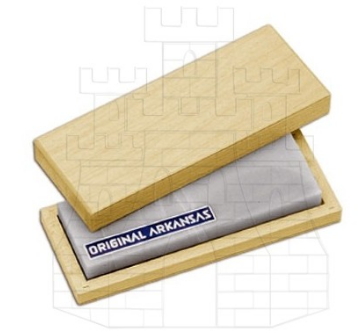
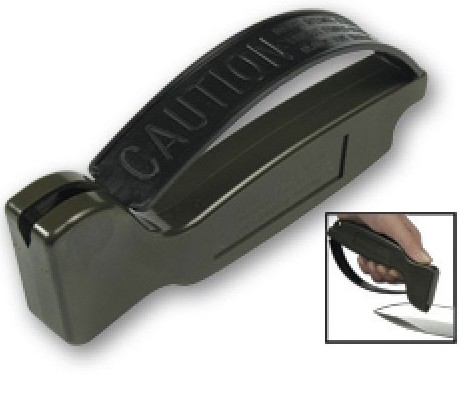
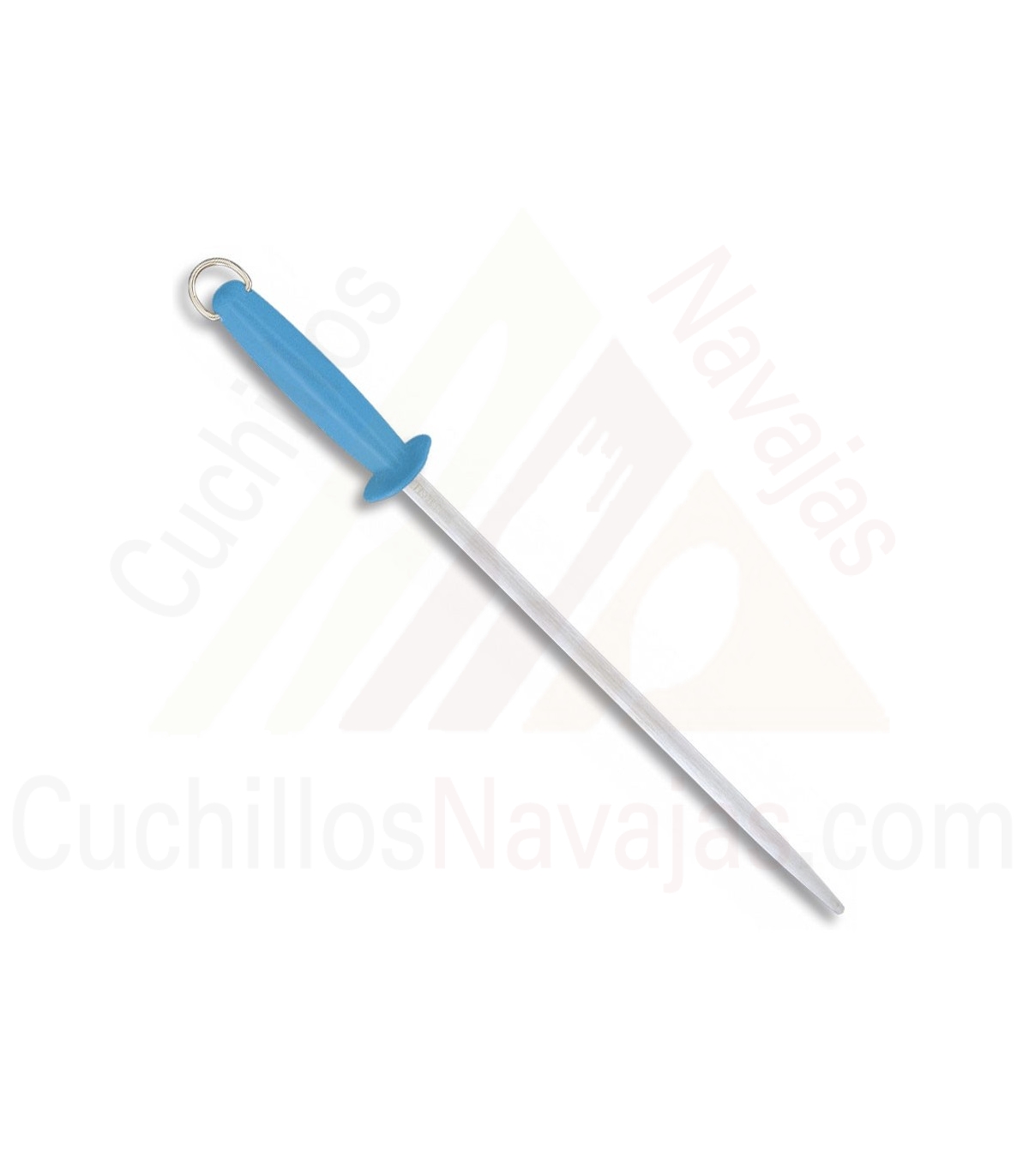
The methods of knife sharpening are varied, as are the tools. The most common are the sharpening stone, the honing steel, and manual or electric sharpeners. Even a ceramic mug can get you out of a bind.
Sharpening a knife with a sharpening stone (Whetstone)
Sharpening stones, whether water, oil, or diamond, are classic and very effective tools for bringing any edge back to life.
- Preparation: Check if your stone needs water or oil. Water stones usually require soaking for 10-15 minutes. Place it on a stable surface, such as a damp towel, so it doesn’t move.
- Angle: An angle of 17-20 degrees is a good starting point. To keep it constant, you can paint the edge with a permanent marker; if the ink erases evenly, you’re on the right track.
- Process: Start with the coarse grit side. Slide the knife over the stone, in the opposite direction of cutting, from the heel to the tip. Continue until you notice a small “burr” on the opposite side. This indicates that you have removed enough metal.
- Refining: Flip the knife over and repeat the process. Then, move to the fine grit side of the stone to polish the edge, removing the burr and achieving greater sharpness. Make alternating passes on each side for a perfect finish.
Sharpening a knife with a honing steel
A honing steel does not sharpen in the strict sense of removing metal, but rather realigns the edge, correcting small imperfections and nicks. Using it regularly before cooking postpones the need for a full sharpening.
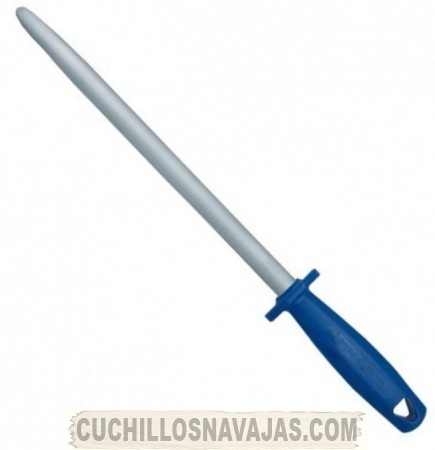
- Hold the honing steel vertically with your non-dominant hand.
- Keep the knife at a 15-20 degree angle to the honing steel.
- Slide the blade from the part closest to the handle to the tip, alternating each side of the knife.
- Make about 6-8 passes on each side with a fluid and constant motion.
Sharpening a knife with a manual sharpener
Manual sharpeners are a practical and safe option for beginners, as they have guides that fix the sharpening angle.
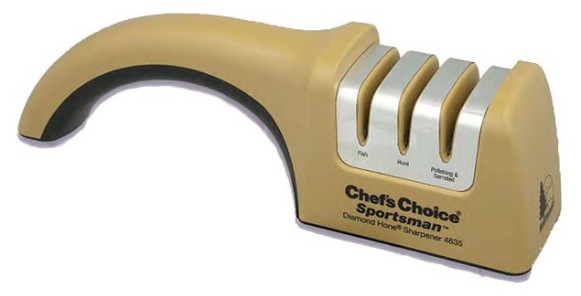
- Choose a sharpener with an ergonomic handle that offers a firm and secure grip.
- They usually have several slots: a coarse one for repairing very damaged edges and a fine one for regular sharpening and maintenance.
- Pass the knife through the slots in order, applying gentle pressure and always towards you.
Sharpening knives with an electric sharpener
They are the fastest and most convenient option. They guide the blade through abrasive wheels with a preset angle, offering consistent results with minimal effort.
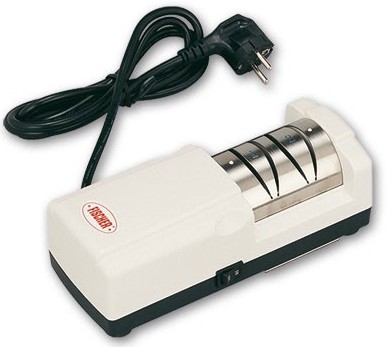
- Coarse sharpening: Use this function to restore the edge of very worn knives or those with small nicks.
- Fine sharpening: Ideal for regular maintenance and for polishing the edge after coarse sharpening.
- Simply insert the blade into the corresponding slot and let the machine do the work. Be careful, as they are aggressive and can remove more metal than necessary if not used correctly.
Sharpening knives with a ceramic mug (Emergency method)
If you don’t have tools at hand, the rough edge of the base of a ceramic mug can be a surprisingly effective sharpener. The ceramic material is abrasive enough to create a functional edge.

- Place the mug upside down on a stable surface.
- Hold the knife firmly and slide one side of the blade over the bottom rim of the mug, maintaining an angle of about 20 degrees.
- Repeat the process several times on each side of the blade until you notice an improvement in the edge.
The Special Case of Ceramic Knives
Ceramic knives are extremely hard but fragile. They cannot be sharpened with conventional tools, as they would be damaged. They require a sharpener with diamond heads, the only material harder than the zirconium oxide of their blades. There are specific electric sharpeners for them, such as the Kyocera DS 50, which guarantee safe and effective sharpening.
General Tips Before Sharpening the Knife
Taking into account some recommendations can make the difference between a good sharpening and an accident or a bad result.
- Low-quality knives usually do not allow for good sharpening, so moderate your expectations.
- Always use lubricants (water or oil) when using sharpening stones to protect both the stone and the knife blade.
- Safety comes first. Have a first aid kit handy in case of any unforeseen event.
- Consistency in the angle is key to a good result. Practice to develop muscle memory and achieve a uniform edge.
Keeping your cutting tools in perfect condition not only makes work easier, but also makes it a safer and more pleasant experience. Whether you prefer the precision of a Japanese stone, the convenience of an electric sharpener, or the reliability of a good honing steel, mastering the art of sharpening is an essential skill for any cutlery or cooking enthusiast. With the right tools and a little practice, your edges will always be ready for any challenge.
VIEW KNIFE SHARPENERS | VIEW KITCHEN KNIVES | VIEW HUNTING KNIVES