
Maintaining a proper edge on your tools is essential, whether for woodworking projects, DIY tasks, or simply for your kitchen knives. A good edge not only ensures precise cuts and quality finishes, but also makes tool handling safer and easier, reducing effort and the risk of accidents. Imagine trying to cut a tomato with a dull knife: the result is a disaster. The same goes for any other tool you use. A well-maintained edge is key to efficiency and safety in any task that requires a cutting tool.
Among the many sharpening options available on the market, from traditional natural stones to electric sharpeners, diamond sharpening stones stand out as an exceptional solution. These tools are not a recent invention; in fact, the use of diamond as an abrasive dates back centuries, although its modern application in sharpening stones has evolved significantly with technology.

Diamond stones are compact, smooth blocks that can be made of synthetic materials or, in some cases, metal bases coated with diamond particles. They have been used for centuries in various cultures and applications, from jewelry to heavy industry. If you are looking for an option that combines speed, durability, and precision, diamond sharpening stones are a smart choice that will transform the way you maintain your tools.
Why Diamond? The Ultimate Hardness for Sharpening
Contents
Diamond is, without a doubt, the hardest natural material known on Earth. Its position on the Mohs scale, with a hardness of 10, is unmatched, making it an ideal abrasive for cutting and shaping a wide variety of extremely hard materials. This includes not only metals, but also stone, concrete, ceramics, glass, and even other gemstones. Its ability to work with materials that would quickly wear down other abrasives is what makes it so valuable.
The use of diamond in cutting and abrasive tools dates back to antiquity, with records of its application from 300 BC in civilizations such as India and China, where it was used to polish gems and carve hard materials. However, it was the development of synthetic diamonds in the mid-20th century that revolutionized their industrial application, making these tools even more accessible and efficient for a wide range of purposes, including domestic and professional sharpening.
In the context of sharpening, the superior hardness of diamond means that diamond-coated stones do not wear down easily. Unlike traditional sharpening stones that can develop grooves or irregularities with use, diamond stones maintain their flatness and consistency, which is crucial for achieving a uniform and precise sharpening. In addition, their ability to remove material quickly significantly reduces the time needed to sharpen, even the dullest tools. This efficiency makes them especially recommended for high-alloy steels, such as martensitic stainless steel, which are notoriously difficult to sharpen with conventional abrasives.
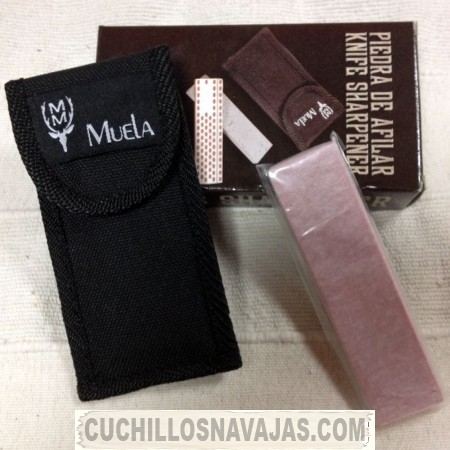
It is true that diamond can react with transition metals present in some steels at extremely high temperatures, which could lead to slight degradation of the diamond. However, at manual sharpening temperatures, which are relatively low, this is usually not a significant problem for the durability of the stone. The friction generated is insufficient to cause a detrimental chemical reaction.
An example of advanced technology in this field is that proposed by Muela, which offers a Diamond Stone with the latest sharpening technology. This innovation incorporates multiple layers of micron-sized diamonds bonded in a nickel matrix, resulting in a smooth metallic surface that allows for quick and easy sharpening. The ovals engraved on the surface of the stone are an intelligent design that allows for the collection and retention of metal particles that normally detach during the sharpening process. This feature is fundamental, as it prevents the removed material from obstructing the abrasive surface, allowing the diamond to remain clean and free. This, in turn, enables non-aggressive and constant sharpening of the utensil, prolonging the life of the stone and ensuring optimal performance with each use.
Composition and Varieties: Beyond the Surface
When we talk about a diamond-coated sharpening stone, it is important to understand that it is not simply diamonds glued to a surface. Typically, these tools consist of a robust base, which can often be aluminum, steel, or plastic, chosen for its lightness and stability. This base is reinforced with a thin iron sheet or a stainless steel plate onto which tiny synthetic diamond particles are fixed. The process of bonding these particles is not a simple gluing, but rather a complex galvanization process is used. In this method, the diamond particles are electrochemically fixed to the sheet, covering it with a layer of nickel that keeps them firmly bonded and exposed on the abrasive surface. This method ensures that the diamonds do not easily detach during use, guaranteeing the durability and effectiveness of the stone.
It is crucial to note that the diamonds used in these stones are not natural, but are grown in a laboratory. These synthetic diamonds are molecularly almost identical to natural ones, sharing the same crystalline structure and hardness. The advantage of synthetic diamonds is that they can be produced in large quantities with controlled sizes and shapes, which not only lowers their cost for industrial and sharpening applications, but also allows for consistency in quality and performance that is not always possible with natural diamonds.
Within synthetic diamonds, there are different types that influence the behavior of the sharpening stone:
- Monocrystalline: As their name suggests, they are composed of a single diamond crystal. These crystals are very hard and wear down very slowly and uniformly. This means that the stone sharpens more finely and slowly over time, as the abrasive surface remains constant. They are ideal for precision sharpening and for users who prefer a smoother, more consistent feel.
- Polycrystalline: Unlike monocrystalline diamonds, these diamonds are formed by multiple bonded microcrystals. During sharpening, these microcrystals fracture and gradually dissolve, continuously exposing new diamond edges. This feature helps the stone maintain its grit size and abrasive effectiveness throughout its lifespan, as new “fresh” diamond particles are always available for cutting. They are known for their initial aggressiveness and for maintaining their cutting ability for longer.
The lifespan of a diamond stone is remarkably long, but it depends on several key factors: the pressure applied during sharpening, the specific material being sharpened (some steels are more abrasive than others), and the frequency of use. However, if used and maintained correctly, a good quality diamond stone can last for many years, making it a durable and cost-effective investment for any enthusiast or professional.
In addition to the type of diamond, the bonding agent (the material that binds the abrasive particles to the base) is a crucial factor influencing the stone’s performance. Although diamond powders are often outsourced by manufacturers, true innovation and differentiation often lie in the formulation of these bonding agents to improve sharpening performance and durability. Some common bonding agents include:
- Electroplated: This is the most common and economical type of bonding agent. It consists of a single layer of diamond powder embedded in a nickel alloy that is electrochemically deposited onto the base. They are very effective for quick sharpening, but the diamond layer can wear off over time, although their durability is still superior to that of many conventional stones.
- Metallic: Stones with metallic bonding agents are significantly harder and offer high thermal stability. This makes them ideal for more demanding working conditions, such as sharpening industrial tools or extremely hard steels. They tolerate liquid cooling well and are very durable. These stones are usually solid blocks or metal plates with the diamonds deeply embedded.
- Resin: Stones with resin bonding agents have relatively low hardness and thermal stability compared to metallic ones. However, their main advantage is that they are ideal for fine sharpening and finishing operations, as they provide a very smooth polish and an extremely sharp edge. Generally, they do not require lubricant and often need support due to their lower rigidity.
- Combined (Metal-Resin): This type of bonding agent seeks to combine the best characteristics of both worlds: the delicacy and fine polish of the resin bonding agent with the wear resistance and productivity of the metallic bonding agent. They are an excellent option for those looking for an optimal balance between durability, cutting speed, and the ability to achieve a high-quality finish.
For manual sharpening, a combination of bonding agents is often recommended for different stages of the process: metallic bonding agents can be ideal for coarse grits, where rapid material removal and high resistance are needed, while combined or resin bonding agents are perfect for fine grits, where a smoother polish and edge are desired. This strategy allows for an optimal balance between durability and edge quality.
Usage Guide: Sharpening with Precision
Sharpening with a diamond stone is a relatively simple process, but following some key tips will help you maximize its performance and prolong its lifespan, as well as ensure effective and safe sharpening. Technique is fundamental to obtaining the best results and avoiding damage to both the tool and the stone.
The most important thing is to apply very little pressure. Let the diamonds do their work. The inherent hardness of diamond means you don’t need to force the tool against the stone. If you press too hard, not only will you not improve the sharpening, but you could prematurely detach the diamond layer from the base, reducing the lifespan of your stone. A smooth and consistent movement is much more effective.
Regarding lubrication, although many coated diamond stones, especially electroplated ones, can be used dry, using a little lubricant can significantly improve the process. Water is an excellent option, but you can also use WD-40 or a specific cleaner for sharpening stones. The lubricant helps to carry away metal shavings that come off during sharpening, preventing them from clogging the stone’s surface and slowing down the process. For diamond stones with a metallic bonding agent, the use of lubricant is even more recommended, as it helps keep the surface clean and the cutting efficient.
Regular cleaning is essential to maintain optimal performance. Over time, metal particles removed from the tool can accumulate on the stone’s surface, which is known as “loading,” and this can reduce its effectiveness. To clean diamond stones periodically, simply apply a drop of degreasing cleaner (or soapy water) to soak the stone, gently scrub with a soft brush (like an old toothbrush), and then rinse thoroughly. Be sure to let it air dry completely before storing to prevent corrosion of the base, if it is metallic. Specific cleaners usually evaporate quickly without leaving a greasy film.
Here are some step-by-step Sharpening Instructions:
- Step 1: Angle Preparation. Place the blade of your knife or razor at the end of the stone, making sure to maintain the desired sharpening angle. This angle is crucial for your tool’s performance. For most kitchen knives, an angle between 15 and 20 degrees per side is ideal. For heavy-duty tools, such as axes, a larger angle (25-30 degrees) may be more appropriate. You can use angle guides or simply practice to develop “muscle memory” that allows you to maintain consistency.
- Step 2: Sharpening One Side. Push the blade outwards, as if you were trying to cut a thin slice from the stone. Apply moderate pressure, but remember that the diamond should do the work, not your force. Repeat this operation three or four times, or until you feel a burr (a small raised edge) has formed on the opposite side of the edge. Try to maintain approximately the same angle on each pass; this is the key to obtaining a good sharpening and a uniform edge.
- Step 3: Sharpening the Other Side. Now sharpen the other side of the edge. Place the blade on the opposite side of the stone and repeat steps 1 and 2, this time pressing towards you. As in the previous step, look for the formation of a burr on the opposite side.
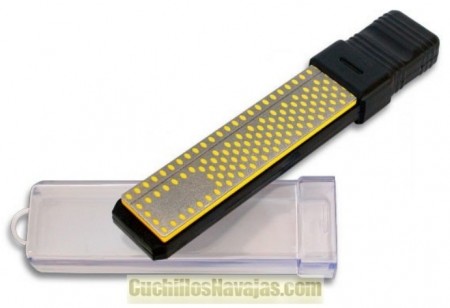
Repeat these steps, alternating sides, until you feel your razor or knife is truly sharp. You can check the edge with the “paper test” (if the knife cuts a sheet of paper effortlessly) or the “thumbnail test” (if the edge “grips” your thumbnail without slipping).
Additional Tips for Optimal Sharpening
- Use water as a sharpening lubricant, although the stone can be used dry. Water helps dissipate heat and carry away metal shavings, keeping the stone’s surface clean and the process more efficient.
- Do not use oil as a lubricant. Unlike traditional natural or synthetic stones that often require oil, diamond stones do not benefit from oil, and in fact, it can be difficult to clean and leave residues that affect performance.
- Always dry the surface of your Diamond Stone after each use. This prevents moisture buildup and possible oxidation on the stone’s base, prolonging its lifespan.
- Occasionally, clean your stone with soapy water and a soft brush to remove any embedded residue that may reduce its effectiveness. Regular maintenance is key to consistent performance.
The Art of Grit: Choosing the Right Stone
Sharpening stones are classified by their grit, a measure that refers to the size of the abrasive particles embedded in the stone’s surface. Understanding grit size is fundamental to selecting the appropriate stone for each sharpening stage and for the type of edge you want to achieve. The lower the grit number, the coarser the particles and, therefore, the more aggressive and faster the sharpening, ideal for removing material. Conversely, the higher the grit number, the finer the particles, which allows for more refined sharpening and edge polishing.
One of the great advantages of synthetic diamond stones is their precision in grit size. Unlike some natural stones, where grit consistency can vary, synthetic diamonds are produced with very strict control over particle size, ensuring predictable and uniform performance with each use.
Here are the most common grit ranges and their specific uses, so you can choose the perfect tool for every need:
- Coarse Grit (80-200 / 100-80μ): These stones are the “heavy workers” of sharpening. They are ideal for reshaping damaged edges, removing deep nicks, repairing very dull edges, or even changing the angle of an edge. If you have a knife that has completely lost its cutting ability or has visible damage, starting with a coarse grit will allow you to quickly restore the basic shape of the edge. Think of gardening tools, axes, or work knives that need significant restoration.
- Medium Grit (400-800 / 40-28μ): This range is the workhorse for general sharpening. Once you have restored the basic shape with a coarse grit (if necessary), the medium grit is used for the initial refinement of the edges. It removes the marks from the coarse grit and begins to create a sharper, more functional edge. It is the most versatile grit and often the first one used for regular maintenance of knives that are not extremely dull.
- Fine Grit (1000-3000 / 20-14μ): This is where the edge truly begins to take shape. Fine grit stones are perfect for polishing the edge, removing any remaining burrs from the medium grit, and achieving very sharp, even mirror-like finishes. This step is crucial for achieving an edge that cuts smoothly and precisely. They are ideal for everyday kitchen knives, pocket knives, and other tools that require a good edge for delicate tasks.
- Ultra Fine Grit (8000-12000 / 7-5μ): This is the grit for the final finish and extreme polishing. Ultra fine grit stones are designed to achieve an extreme edge, a mirror polish, and an incredibly delicate cutting surface. They are used by professionals and enthusiasts to obtain maximum sharpness on precision tools, such as straight razors, scalpels, or sushi knives. The result is an edge that seems to glide through the material.
For maximum effectiveness and to achieve a truly exceptional edge, professional sharpeners and enthusiasts often use a set of stones with different grit sizes. The process involves progressively moving from the coarsest to the finest grit. This stepped method allows for efficient removal of damaged material, gradual refinement of the edge, and finally, polishing it to achieve impressive sharpness and smoothness. It is a process that rewards patience and attention to detail.
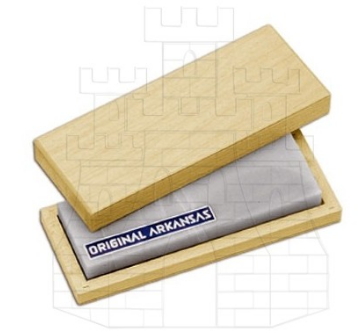
Key Advantages of Diamond Stones
Diamond stones offer multiple benefits that position them as a superior option for a wide range of users, from DIY enthusiasts to demanding professionals. Their unique characteristics distinguish them from other sharpening solutions available on the market:
- Exceptional Durability: As diamond is the hardest known material, these stones do not wear down significantly with use. Unlike conventional sharpening stones, which can develop grooves or lose their flatness over time, diamond stones maintain their shape and abrasive surface, ensuring an extraordinarily long lifespan. This makes them a long-term investment that will not need to be replaced frequently.
- Speed and Efficiency: The superior hardness of diamond allows these stones to remove material from the tool much faster and more efficiently than other abrasives. This significantly speeds up the sharpening process, especially when working with very dull or damaged tools. Fewer passes mean less time spent sharpening and more time using your tools.
- Unmatched Versatility: Diamond stones are excellent for sharpening a vast range of materials, including high-alloy steels (such as hard stainless steels or tool steels), ceramics, carbides, and other hard materials that other abrasive stones might struggle to process or simply could not sharpen. This makes them ideal for high-end chef knives, woodworking tools, carving tools, and virtually any instrument with an edge.
- No Liquids Required (generally): Unlike water or oil stones, which must be constantly submerged or lubricated to function properly, many diamond stones can be used dry. This feature makes them more convenient and cleaner to use, especially in situations where access to water is limited. However, as mentioned, the use of a lubricant (such as water or a specific cleaner) can improve the process by preventing obstructions and facilitating the removal of shavings.
- Grit Precision: Thanks to synthetic diamond manufacturing technology, diamond particles are produced with very precise and uniform grit sizes. This consistency ensures more predictable sharpening and a more consistent edge finish compared to variations sometimes found in natural stones. This translates into greater control over the final sharpening result.
- Minimum Maintenance: Their durability and resistance to loading (obstruction by metal particles) mean that diamond stones require relatively low maintenance. Occasional cleaning with soapy water is sufficient to keep them in optimal condition, unlike traditional stones that often need to be flattened or “dressed” to correct their surface.
Diamond sharpening stones are a smart investment for anyone who values speed, durability, and effectiveness in sharpening their tools. Their exceptional hardness and synthetic diamond manufacturing technology make them a robust and high-performance solution that quickly pays for itself thanks to its longevity and efficiency. If you are looking for quick results, a durable edge, and the ability to sharpen almost any material, diamond stones are, without a doubt, an excellent option that will elevate the quality of your tools and the safety of their use.
Now that you know the power and benefits of diamond sharpening stones, we invite you to explore our selection of high-quality sharpeners to find the perfect stone that suits your needs and helps you keep your tools always ready for any challenge. SEE MORE SHARPENERS and take your sharpening skills to the next level.