
In recent decades, cuisine has evolved exponentially, inspired by other cultures, expanding its knowledge, its tastes, and the way even traditional dishes are prepared. If you are passionate about cooking or fishing, you know that precision is key to great results. Within the vast world of knives, there is a tool that stands out for its specialization and its ability to transform food preparation: the fillet knife.
World gastronomy recognizes the quality of our foods, the tenderness of our meat, fresh fish, legumes, etc.—generally, the foods that assure the perfection of the Mediterranean diet. The availability of both national products and those from other cuisines is nowadays an advantage for those who know how to unleash their imagination in the culinary arts. Of course, to achieve the desired results, you must equip yourself with the best utensils that make your work easier.

The most faithful allies in the kitchen are knives, but those that are well-sharpened, high-quality, and easy to handle. In addition, designs are becoming more attractive and perfectly combine utility and aesthetics.
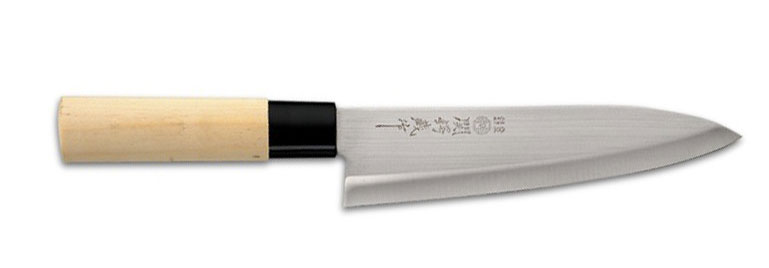
Japanese Gyuto Knife
What is a Fillet Knife and Why Do You Need One?
Contents
- What is a Fillet Knife and Why Do You Need One?
- Anatomy of a Fillet Knife: Discovering Its Key Parts
- The Multiple Uses of the Fillet Knife
- Advantages and Challenges of Using a Fillet Knife
- How to Choose the Perfect Fillet Knife for You
- The Art of Keeping Your Fillet Knife Sharp and in Optimal Condition
- Fillet Knives We Recommend
The fillet knife is a kitchen tool designed with a very specific purpose: to make precise, clean cuts that allow you to easily obtain fish or meat fillets. Its most distinctive feature is its blade, which is notably thin, flexible, and elongated, allowing it to adapt to the contours of food, separating meat from bone or skin effortlessly. This flexibility is crucial, especially when working with delicate fish like salmon or sole, where an incorrect cut could affect the texture and presentation.
Often, the terms “fillet knife” and “knife for filleting” are used interchangeably to refer to this essential piece. Unlike a chef’s knife, which is a more versatile tool for multiple tasks, the fillet knife specializes in the precision required for flat cuts, such as filleting fish or thinly slicing meats. While it shares similarities with the boning knife, which also has a thin, sharp blade, the fillet knife is differentiated by its greater flexibility and its focus on flat cuts, whereas the boning knife typically has a more rigid blade, ideal for maneuvering around bones.
For anglers, fillet knives are a kitchen staple. They are typically made from soft, pliable steel, which provides the flexibility needed for filleting, helping avoid micro-wear when cutting close to bones.
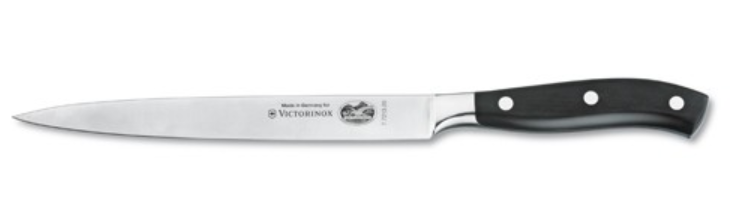
Anatomy of a Fillet Knife: Discovering Its Key Parts
The efficiency of a fillet knife lies in the harmony of its components, designed to optimize precision in every cut. Here are its essential parts broken down:
- Blade: The heart of the knife: long, thin, and flexible, usually between 15 and 25 centimeters. Its edge is extremely sharp, often with a reduced angle (between 15° and 20°) to maximize cutting ability.
- Tip: Fine and pointed, ideal for starting cuts with accuracy and separating meat from skin.
- Spine: The side opposite the cutting edge is thicker and provides structural rigidity to the blade without compromising essential flexibility.
- Handle: Designed with ergonomics and comfort in mind for prolonged use. It can be made of polymer, treated wood, or synthetic materials, offering a secure grip even in wet conditions. A curved design favors firm control for delicate maneuvers.
- Tang: The extension of the blade that is inserted into the handle. In high-quality knives, the full tang runs the entire length of the handle, improving balance and strength.
- Bolster: Present in some models, especially Western ones, it acts as a stop between the blade and the handle, protecting the fingers and providing additional stability.
- Butt: Located at the end of the handle, it helps to balance the weight of the blade, improving the knife’s maneuverability.
The unique arrangement of these elements makes the fillet knife an indispensable tool for those seeking maximum precision in food preparation.
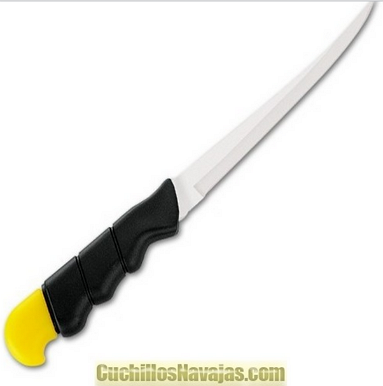
The Multiple Uses of the Fillet Knife
Although its name suggests its main function, the fillet knife is surprisingly versatile for a variety of tasks requiring delicacy and precision.
- Fish Filleting: Its main function. The thin, flexible blade glides effortlessly between flesh and bones, producing clean fillets with minimal waste. Its fine tip is perfect for maneuvering in delicate areas.
- Cutting Meat and Poultry: It is ideal for removing fat and membranes with precision. It allows for thin cuts in pieces such as chicken breasts or pork loins, useful for gourmet preparations or where uniformity is desired.
- Sushi and Sashimi Preparation: Essential in Asian cuisine for cutting extremely thin, uniform fish fillets, highlighting the aesthetics and flavor of these dishes. Its sharp edge preserves the texture of the fish.
- Cutting Delicate Fruits and Vegetables: Although not its main use, its narrow blade allows you to work precisely with fruits and vegetables that require delicacy, such as tomatoes or exotic fruits, without damaging the pulp or skin.
- Specialty Charcuterie Applications: Excellent for cutting thin slices of ham, smoked salmon, or carpaccio, ensuring a professional presentation and highlighting the product’s qualities.
The utility of the fillet knife is enhanced by its ergonomic design and the quality of its blade steel.
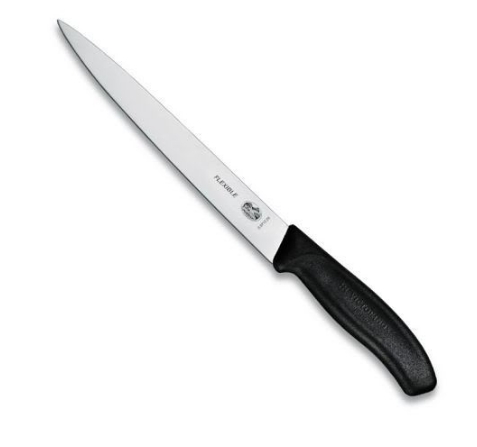
Advantages and Challenges of Using a Fillet Knife
Like any specialized tool, the fillet knife has its strengths and its own particularities:
Advantages:
- Precision in thin cuts: Its long, flexible, sharp blade is perfect for extremely precise cuts, making it easy to separate meat from bones and achieve uniform fillets.
- Optimized flexibility: Allows you to work easily around curved surfaces, such as the ribs of a fish, maximizing meat extraction and minimizing waste.
- Durable materials: Most are made from stainless steel or specialized steels (like Sandvik 12C27), offering good corrosion resistance, essential in damp environments.
- Ergonomic handle: Many models feature non-slip, ergonomic handles for a secure grip, even with wet hands, improving safety and control.
- Versatility in blade sizes: Available in various sizes, they are useful for small fillets and large pieces of meat alike.
Disadvantages:
- Frequent maintenance: By using softer steels for flexibility, the blade may lose its edge more quickly, requiring frequent sharpening.
- Limited durability under extreme use: Lower-price models or those with excessive flexibility can wear out early when tackling tough tasks.
- Specialization: It is designed for specific tasks, limiting its use for general cuts or very hard foods.
- Poor quality accessories: Some sheaths or accessories may not match the knife, affecting safe storage or transport.
- Learning curve: The blade’s flexibility can be a challenge for beginners until they master its handling.
How to Choose the Perfect Fillet Knife for You
Choosing the right fillet knife is key to optimizing your cooking tasks. Here are the essential factors to consider:
1. Types of Fillet Knives
- Flexible: The most common and recommended for fish filleting, as their flexibility allows them to adapt to the contours of bones for clean cuts.
- Inflexible: Offer greater rigidity, making them better suited for thicker meats or with robust bones. They may double as a boning knife, though they are less precise for filleting.
- Electric: Practical for processing large amounts of food quickly, but tend to make less precise cuts and are bulkier.
2. Blade Material
The quality of the steel is essential for durability and edge retention. High-carbon stainless steel offers a good balance of durability, corrosion resistance, and edge retention, making it a popular choice among chefs and anglers. Japanese steels (VG10 or AUS-8) are known for keeping an extremely sharp edge, though they may require more maintenance. Titanium is lightweight and highly resistant to corrosion, though less common and more expensive.
3. Blade Length
The ideal length varies according to the size of the food. Blades of 15 to 18 centimeters are versatile and suitable for most home uses or small fish and poultry. For large pieces such as salmon or extensive cuts of meat, 20–23-centimeter blades provide greater reach and efficiency.
4. Shape and Design of the Knife
- Fine, curved tip: Facilitates precise maneuvers, such as separating skin from meat without damaging it.
- Ergonomic handle: Fundamental for comfort and control, reducing fatigue during extended use. Non-slip materials like rubber or treated wood improve grip, even with wet hands.
- Balance: A knife well-balanced between handle and blade improves precision and safety when cutting.
5. Edge Retention and Sharpening Ease
A good fillet knife should keep its edge for a considerable time, especially with frequent use. It is essential that it is compatible with common sharpeners. Some models feature small oval indentations (granton edge) on the blade, which create air pockets so the knife glides better, preventing very thin fish fillets from tearing or sticking to the blade.

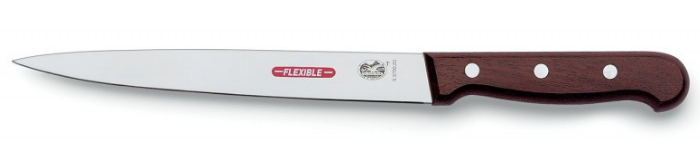
Forged knife with 20 cm flexible blade for filleting fish. Includes gift case.
Blade Length: 20 cm.
Manufacturer/Distributor: Victorinox
The Art of Keeping Your Fillet Knife Sharp and in Optimal Condition
A well-maintained fillet knife not only ensures precise and safe cuts, but also prolongs its useful life. Regular sharpening of the blade is crucial—in fact, it is recommended that the edge is always sharp to extend the knife’s lifespan.
The key is knowing how to prepare meat to our preference without losing its flavor, juices, or nutrients. And if you also want your dishes to have a delicious presentation, there’s no doubt that a well-sharpened, flexible, quality knife will shape your ingredients; moreover, fillet knives not only allow, but invite you to use your imagination, as they are lightweight, very manageable, and the materials used in their construction are perfectly suited to their intended use. The results you can achieve with this type of knife are thin or very thin fillets, of both meat and fish, and caring for them only requires keeping them clean and dry after each use.
1. Proper Cleaning After Each Use
It’s vital to clean the knife immediately after use to prevent food residues from corroding the blade. Never wash knives in the dishwasher, as high temperatures and abrasive detergents can damage the blade and handle, accelerating deterioration.
2. Safe Storage
Correct storage protects the edge and prevents accidents. Use sheaths, blade guards, knife blocks, or magnetic bars to keep your knife safe. Avoid disorganized drawers.
3. Regular Sharpening and Edge Maintenance
Edge maintenance is essential for knife performance. For daily maintenance, use a sharpening steel to realign the edge. For deeper sharpening, use a whetstone one or more times a year, or consider an electric sharpening system. It is crucial to keep a constant angle (between 15 and 20 degrees) during the process.
4. Preventing Corrosion
Although stainless steel is resistant, it’s not immune to corrosion. Apply a thin layer of mineral or camellia oil if the knife will not be used for an extended period, and store it in a dry, well-ventilated place.
5. Additional Tips
- Not for bones: Fillet knives are not designed to cut bones or hard materials.
- Use an appropriate cutting board: Always cut on a wooden or other soft cutting board to protect the edge.
- Check the edge regularly: Test the sharpness by cutting through paper or a tomato. If there’s resistance, it’s time to sharpen.
Fillet Knives We Recommend


Taking care of your fillet knife involves a combination of meticulous cleaning, safe storage, and regular sharpening. Investing time in these steps will ensure your knife remains a reliable and effective tool for years to come. If you are passionate about cooking and are looking for the best tools to take your creations to the next level, don’t miss our kitchen knife collection and find the perfect steak knives for you.