
The ham holder or ham stand is much more than an accessory: it’s the base that ensures a safe, comfortable and attractive cut of the ham or shoulder. A good stand allows you to work with the ham knife precisely, reduces the risk of accidents and improves the presentation of the product. In this complete guide you will find everything you need to choose the right ham holder, how to secure the ham, cutting techniques, maintenance and safety.
Why is a good ham holder essential?
Contents
- Why is a good ham holder essential?
- Key components of a ham holder
- Types of ham holders: advantages and disadvantages
- How to choose a ham holder according to the type of ham
- How to place and secure the ham correctly
- Basic cutting technique with a ham knife
- Safety when using a ham holder and knives
- Maintenance and cleaning of the ham holder
- How to keep the ham knife in perfect condition
- Common mistakes when cutting ham and how to avoid them
- Tips for buying the perfect ham holder
- Accessories that improve the experience
- Practical questions before cutting
- Preserving the ham between cutting sessions
- Design and aesthetics: the ham holder as a visible object
- Summary of practical recommendations
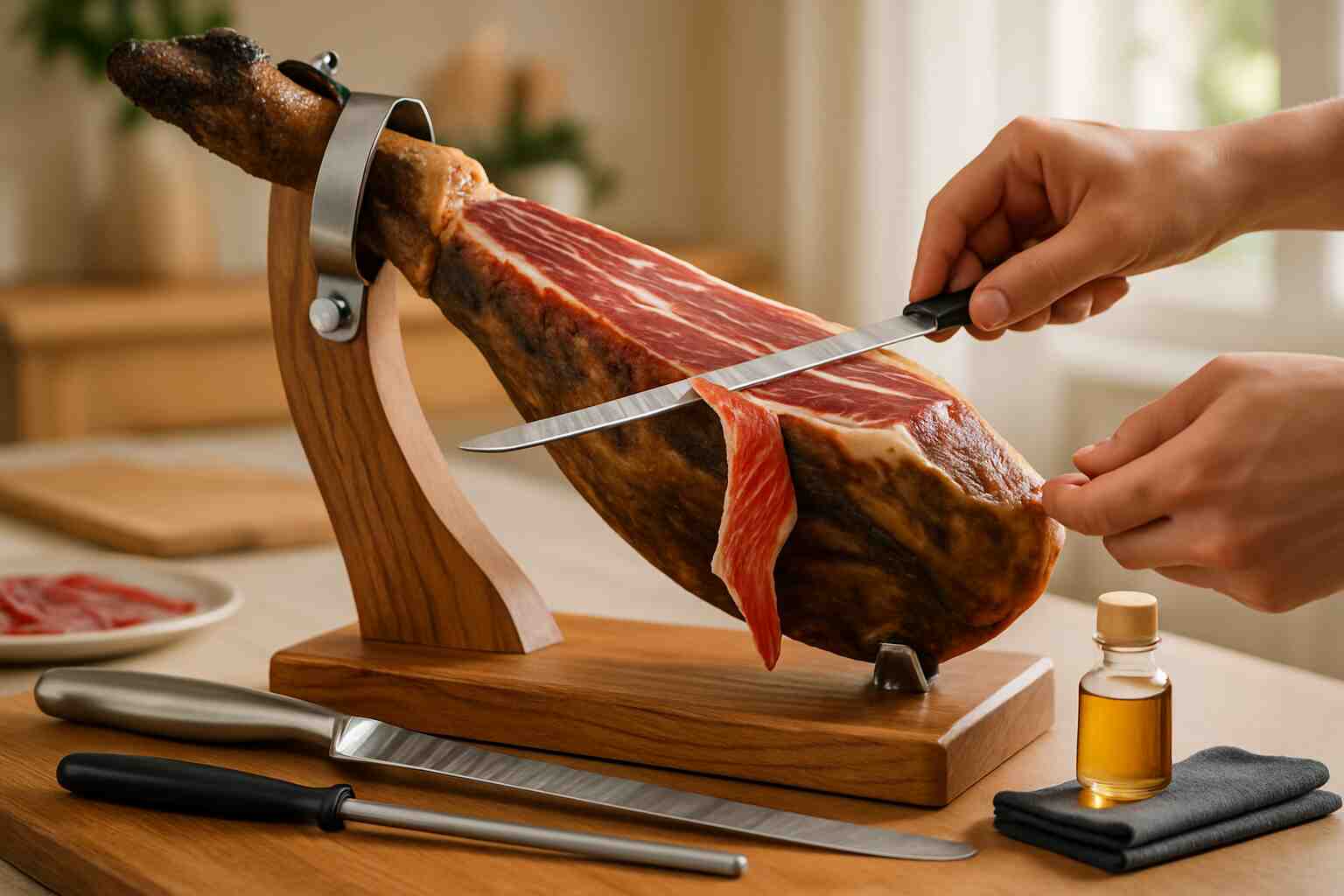
Cutting a ham requires stability. If the ham is not well secured, the knife can slip and cause avoidable cuts. The ham holder provides that grip and lets you keep control of the ham knife, a long, narrow knife designed to follow the ham’s fibers and obtain thin, even slices. A heavy, non-slip base, adjustable arms and a reliable clamping system transform the cutting experience.
Key components of a ham holder
Knowing the parts and their function helps you choose better:
- Base or board: it should have weight and a suitable size for stability. Very light bases create movement and risk.
- Arms and clamps: allow the support to be adapted to the size of the ham or shoulder. The best models offer extendable arms and rotating grips.
- Spikes and screws: fix the piece to the holder. They should be sturdy and, in many cases, adjustable for different diameters.
- Material: wood, stainless steel, aluminum or combinations. Each material provides a balance between aesthetics and functionality.
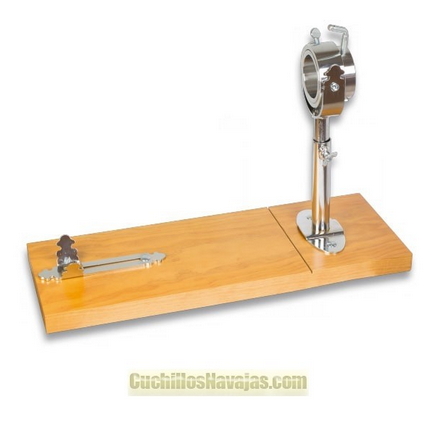
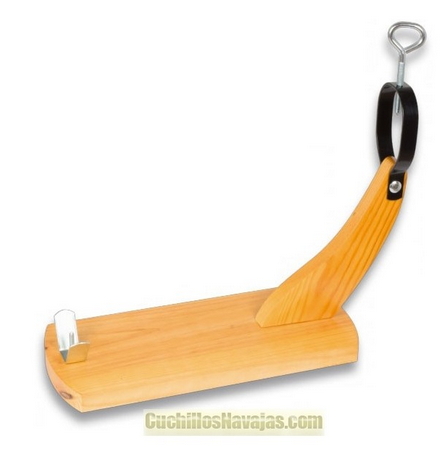
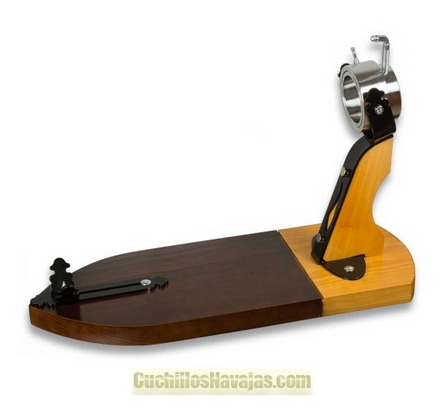
Below you will see visual examples of representative ham holders so you can evaluate design and construction.
Types of ham holders: advantages and disadvantages
There is no perfect ham holder for everyone; the choice depends on use, space and budget. Here is a practical classification:
Wooden ham holders
Traditional and aesthetic, they are usually made from hardwoods that absorb vibrations and offer a warm surface. They are ideal for those who want a piece that stays on display in the kitchen or dining room. Advantages: classic appearance and good grip. Disadvantages: require maintenance and are not as easy to disinfect as steel.
Stainless steel ham holders
Robust, hygienic and easy to clean. They are an excellent professional option. They offer high durability and often include more precise adjustment systems. Advantages: easy cleaning and long service life. Disadvantages: they can be colder aesthetically and somewhat more expensive.
Folding or portable ham holders
Designed for those who need to transport the holder or store it in small spaces. They usually have locking mechanisms to provide stability when assembled. Advantages: space saving and portability. Disadvantages: stability inferior to a very heavy fixed base.
Combined and high-end models
Combine wood and steel, offer complex gripping systems and designs intended for professionals. They often include features such as non‑slip feet, support carts or rotating systems that facilitate cutting.
How to choose a ham holder according to the type of ham
It’s not the same to prepare a paletilla (shoulder) as a whole ham. Keep in mind:
- Ham size: length and width determine the position and type of grip. A holder with extendable arms and adjustable spikes is versatile.
- Type of ham: Iberian hams are often more prized and are sliced with special care; for that reason many carvers prefer stable, robust holders that allow fine, controlled cuts.
- Frequency of use: for occasional domestic use a simple holder may suffice; for frequent or professional use, opt for more durable materials and more precise holding systems.
How to place and secure the ham correctly
Correct placement prevents movement and improves cutting. Practical steps:
- Position: if you will consume the ham over several days, place the hoof up at first; when you approach the bone, rotate it to make access to the meat near the bone easier.
- Securing: use the front spike in the maza (the fattier area) or in the shank depending on the piece; make sure the screw or clamp tightens firmly but without deforming the piece.
- Height and angle: place the holder on a stable surface and at a comfortable height to avoid straining your back.
Basic cutting technique with a ham knife
The ham knife is long, flexible or semi‑rigid, and allows you to make thin slices that highlight texture and flavor. Follow these principles:
- Tension and support: always cut with your other hand gently holding the end of the ham to guide the knife, keeping fingers clear of the path.
- Thin slices: look for almost translucent slices that melt in the mouth; to achieve this, move the knife with a smooth, firm sliding motion, following the grain.
- Order of cutting: start with the maza (the fattier area) to serve the best slices first. As you advance and approach the bone, adapt the angle and cut carefully.
- Complementary tools: use a honing steel to maintain the edge and a boning knife to separate tricky areas around the bone.
Safety when using a ham holder and knives
Safety should be a priority:
- Stable surface: place the holder on a firm table and, if necessary, add a non‑slip base.
- Correct securing: check that the piece is well held and that the screws are not loose.
- Hand position: keep fingers away from the edge and use the hand holding the end only to guide, not to push.
- Edge and care: a dull knife forces you to apply more force and increases risk; always keep it sharp.
Maintenance and cleaning of the ham holder
Maintenance depends on the material:
- Wood: avoid soaking. Clean with a damp cloth, mild soap and let dry in the air. Apply mineral oil from time to time to protect the wood.
- Stainless steel: allows deeper cleaning with water and soap. Avoid overly abrasive products that might damage finishes.
- Metal parts: keep screws and spikes oiled if necessary and check for loose parts periodically.
How to keep the ham knife in perfect condition
A sharp, well‑cared‑for knife guarantees thin cuts and reduces risks. Recommendations:
- Regular sharpening: use a honing steel between uses and sharpen with a stone or professional service when needed.
- Drying: after cleaning the knife, dry it immediately to prevent corrosion of metal parts.
- Storage: use a sheath or holder to avoid knocks and preserve the edge.
Common mistakes when cutting ham and how to avoid them
Avoiding frequent mistakes improves performance and safety:
- Poorly secured ham: causes irregular and dangerous cuts. Check the base and grips before starting.
- Slices that are too thick: give worse texture and tasting experience; practice long, controlled movements.
- Not adapting the holder: using a small stand for a large ham reduces stability; choose an appropriate holder.
Tips for buying the perfect ham holder
When choosing, think about:
- Use: domestic or professional.
- Material: wood for aesthetics, steel for hygiene and durability.
- Stability: heavy base and non‑slip feet.
- Adjustability: extendable arms and rotating grips.
- Design: if the holder will be on display, choose an attractive design that matches your space.
Accessories that improve the experience
Some useful complements to have:
- Ham knives: long and thin for perfect slices.
- Boning knife: to separate meat around the bone.
- Honing steel or sharpener: to maintain the edge.
- Cut protector: sheets or covers to protect the ham between uses.
Practical questions before cutting
Before you start check:
- That the holder is on a stable surface and at a comfortable height.
- That the piece is well fixed and does not move when pressure is applied.
- That you have sharp knives at hand.
Preserving the ham between cutting sessions
If you are not going to consume the entire ham at once, protect the cut area with a layer of fat from the piece itself and cover with cling film or a clean cloth. Keep the ham at a moderate room temperature, avoiding sudden changes of heat or cold that affect its texture.
Design and aesthetics: the ham holder as a visible object
Ham holders are often placed in a visible spot such as the kitchen or dining room, so design matters. Look for pieces that combine functionality with an attractive finish: wood and steel combinations can offer the best of both worlds—warmth and hygiene.
Summary of practical recommendations
For best results:
- Choose a stable, adjustable holder.
- Keep the ham knife sharp.
- Always secure the piece safely and work with controlled movements.
- Clean and maintain the holder according to its material.
With a suitable holder and the correct techniques you will achieve thin, uniform slices and a safer, more enjoyable cutting experience. Investing in a good stand and quality knives shows in the ease of cutting and the final presentation of the ham.