
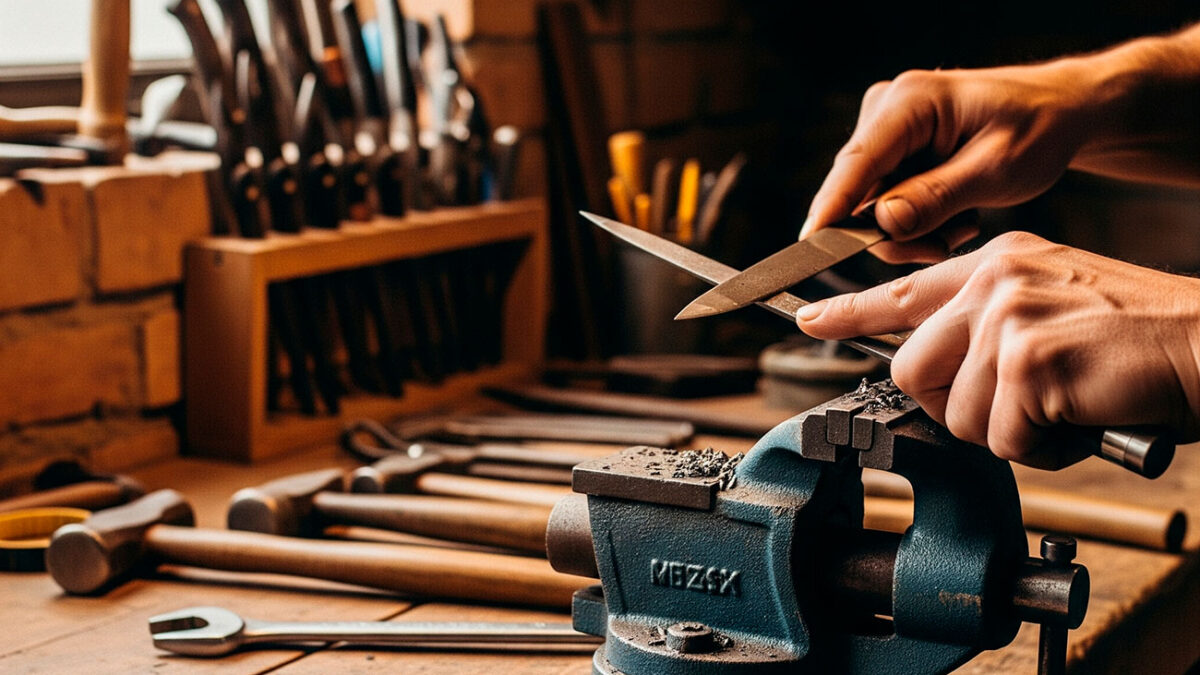
Imagine the orange glow of a forge, the metallic song of the file, and the patience of an artisan transforming a steel bar into a blade with a story. Handmade knives are not just tools: they are tales of technique, materials, and hands that endure beyond a single lifetime. In this article, you will discover how a handmade knife is crafted, what materials and tools make a difference, how to choose the right piece for its use, and what care ensures its longevity.
Why Handmade Knives Still Make a Difference
Contents
- Why Handmade Knives Still Make a Difference
- What Differentiates a Handmade Knife: Materials and Properties
- Essential Tools in the Knifemaker’s Workshop
- Detailed Process: How a Handmade Knife is Forged
- Safety and Good Practices in the Workshop
- How to Choose a Handmade Knife According to its Use
- Technical Comparison of Common Materials
- Essential Materials and Products
- Common Mistakes to Avoid
- Ideas to Personalize and Add Value to Your Handmade Knife
- Relationship Between Tradition and Current Trends
- Final Words for Those Who Wish to Start
A handmade knife brings uniqueness, fit, and soul. While industrial production pursues perfect replication, artisanal cutlery focuses on total control over the material and process, which translates into ergonomics designed for the hand that will use it, personalized finishes, and the possibility of repairing or remaking pieces over time. The result: a tool that works and also tells a story.
What Differentiates a Handmade Knife: Materials and Properties
The choice of material is the backbone of any knife. It is not uncommon for an artisan to first evaluate the intended use (kitchen, hunting, survival, collection) and then select the appropriate steel and handle for that purpose. Below are the most common materials and their advantages.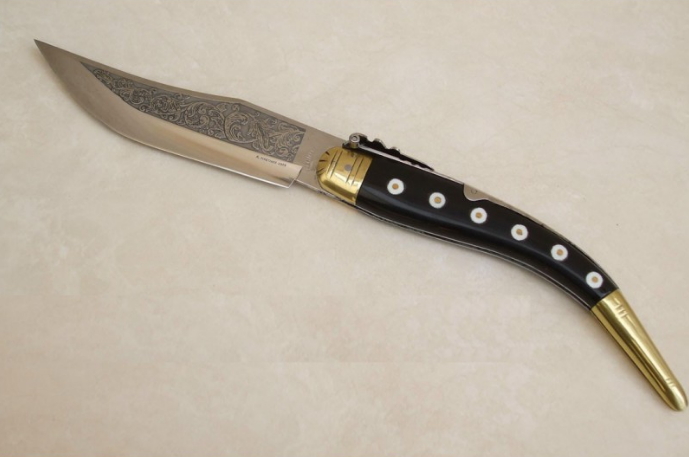
Steel
Carbon Steel: easy to sharpen, maintains an extraordinary edge, but requires maintenance against corrosion. Ideal for those seeking cutting precision and ease of repair. Classic examples: 1095, K720.
Quality Stainless Steel: greater corrosion resistance, less maintenance, although some grades sacrifice a bit of ease in obtaining and maintaining an ultra-fine edge. Examples: VG10, S30V.
Damascus Steel: composed of layers that combine hardness and flexibility; valuable for its aesthetics and mechanical behavior.
Handles
Noble woods, horn, or stabilized synthetic materials are common in artisanal handles. The choice is based on ergonomics, durability, and aesthetics. For example, deer antler adds character and texture, while stabilized woods better resist moisture and intensive use.
Essential Tools in the Knifemaker’s Workshop
From files to heat treatment ovens, the equipment defines your ability to customize and control each stage. Even so, it is not necessary to start with everything: a file, a vise, a hacksaw, a sharpening stone, and a basic belt sander allow for functional and very satisfying projects.
- File and Sandpapers: for shaping and finishing the blade.
- Hacksaw or Bandsaw: for cutting profiles with control.
- Vise and Clamps: for safe working.
- Drill: for pins and handle assembly.
- Oven or Forge: for hardening and tempering the steel.
- Stones or Sharpening Systems: for achieving the optimal edge.

Detailed Process: How a Handmade Knife is Forged
The process combines technique, safety, and aesthetic criteria. Below is a practical guide, integrating traditional steps and the best tips to avoid common mistakes.
1. Design and Template
Trace the profile on paper, adjust it to your hand, and cut out a template. This template will be the compass that guides the cut on the steel sheet.
2. Marking and Cutting
Mark the profile on the sheet and cut with a bandsaw or disc. It is normal for burrs to remain; they will be corrected in later processes.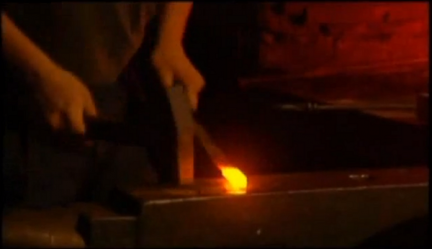
3. Roughing and Shaping
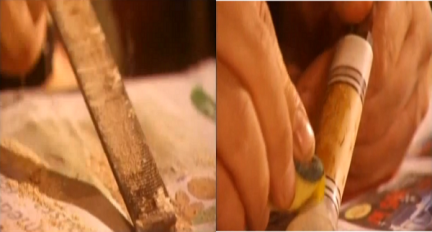
With the belt sander or file, shape the ‘tables’ that form the bevel. Maintain temperature control: if the piece gets too hot, you can ruin the steel structure.
4. Heat Treatment
Hardening and tempering define hardness and toughness. Many artisans recommend for carbon steels a rapid quench and oil cooling to avoid sudden stresses. For complex stainless steels, it is common to resort to specialized services to ensure consistent hardness between 58 and 60 HRC.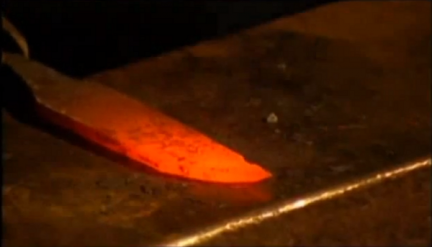
5. Sharpening and Final Polishing
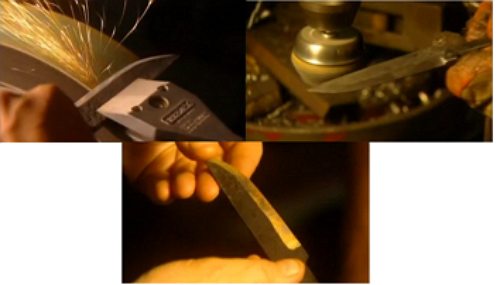
After tempering, remove marks with fine abrasives and sharpen on progressive stones. A primary edge between 9º and 12º per side offers great precision; for rough uses, a larger angle provides resistance.
6. Handle Making and Assembly
If you opt for a full tang, you will have greater robustness and ease of working the handle. Combining different tones of wood or antler provides a unique aesthetic. Use pins and epoxy to secure the scales and then polish the handle until the desired ergonomics are achieved.
Safety and Good Practices in the Workshop
Metal and cutting tools demand respect. Always protect your eyes and respiratory tract with glasses and a mask, use gloves when appropriate, and keep fire extinguishers if you work with a forge or welding. An organized workshop reduces accidents and improves work quality.
How to Choose a Handmade Knife According to its Use
The choice is based on three axes: blade material, geometry, and handle type. Below is a quick guide to help you decide.
- Kitchen: look for blades with good edge retention and well-treated stainless steel or carbon steel if you accept extra maintenance.
- Hunting and Field: carbon steels or resistant steels with full tang for greater robustness.
- Survival and Outdoor: robust geometries, drop point or tanto, full tang, and handle materials that resist moisture.
- Collecting: aesthetic priority, finishes, Damascus, and noble woods.
Technical Comparison of Common Materials
| Aspect | Carbon Steel | Stainless Steel | Damascus Steel |
|---|---|---|---|
| Hardness | High (good for edge) | Variable (depending on alloy) | High (combination of layers) |
| Edge Retention | Excellent | Good to very good | Excellent |
| Corrosion Resistance | Low (requires maintenance) | High | Better than carbon but depends on the core |
| Ease of Sharpening | Very good | Variable | Good but depends on layers |
Essential Materials and Products
If you are interested in exploring finished pieces or getting inspired by designs, here you will find a random selection of products from the featured category.
Maintenance for Life
A well-cared-for handmade knife can last for generations. For carbon steels, avoid leaving food residue on the blade; clean and dry it immediately. Apply maintenance oil to the blade and wooden handles to protect against moisture. Sharpen regularly and correct small damages to the edge before they turn into major fractures.
Common Mistakes to Avoid
- Not controlling the temperature during roughing or hardening: overheating can ruin the steel structure.
- Using poorly fitted handles: a loose handle reduces safety and aesthetics.
- Neglecting sharpening: a dull edge forces inefficient and dangerous cuts.
- Not protecting materials: unstabilized woods or unprotected carbon steels deteriorate quickly.
Ideas to Personalize and Add Value to Your Handmade Knife
Personalization turns a good knife into a unique piece. Adding engravings, selecting woods with singular grains, combining ornamental pins, or including inlays in the handle elevates the functional and emotional value of the blade. Even a discreet engraving with initials turns the knife into a family heirloom.
Relationship Between Tradition and Current Trends
Artisanal cutlery merges traditional methods (forging, manual hardening, hand finishes) with modern trends (high-alloy steels, wood stabilization, and CAD techniques for design). This fusion allows preserving the historical essence of the craft, while taking advantage of technological improvements to produce more durable and precise pieces.
Final Words for Those Who Wish to Start
Starting in knifemaking means accepting a demanding but extraordinarily rewarding learning curve. Begin with simple projects, invest in safety and tools that ensure control over the metal. Learn to read the steel: its sound, color, and behavior will tell you when to act. With patience and practice, your hands will eventually leave an indelible mark on every blade you make.
Now that you know the technical keys, the work sequence, and the essential care, your next decision is to think about what story you want your knife to tell: that of a kitchen companion, that of a tool for the field, or that of a unique piece to treasure.