
The knife is much more than a simple tool. It has been a constant companion of humanity for millennia, evolving from rudimentary stones to sophisticated steel blades, and reflecting at each stage our technological, cultural, and social advancements. Its presence is universal, being at once an indispensable tool, a weapon, and a cultural heritage. The versatility of this everyday object is a symbol of human ingenuity.
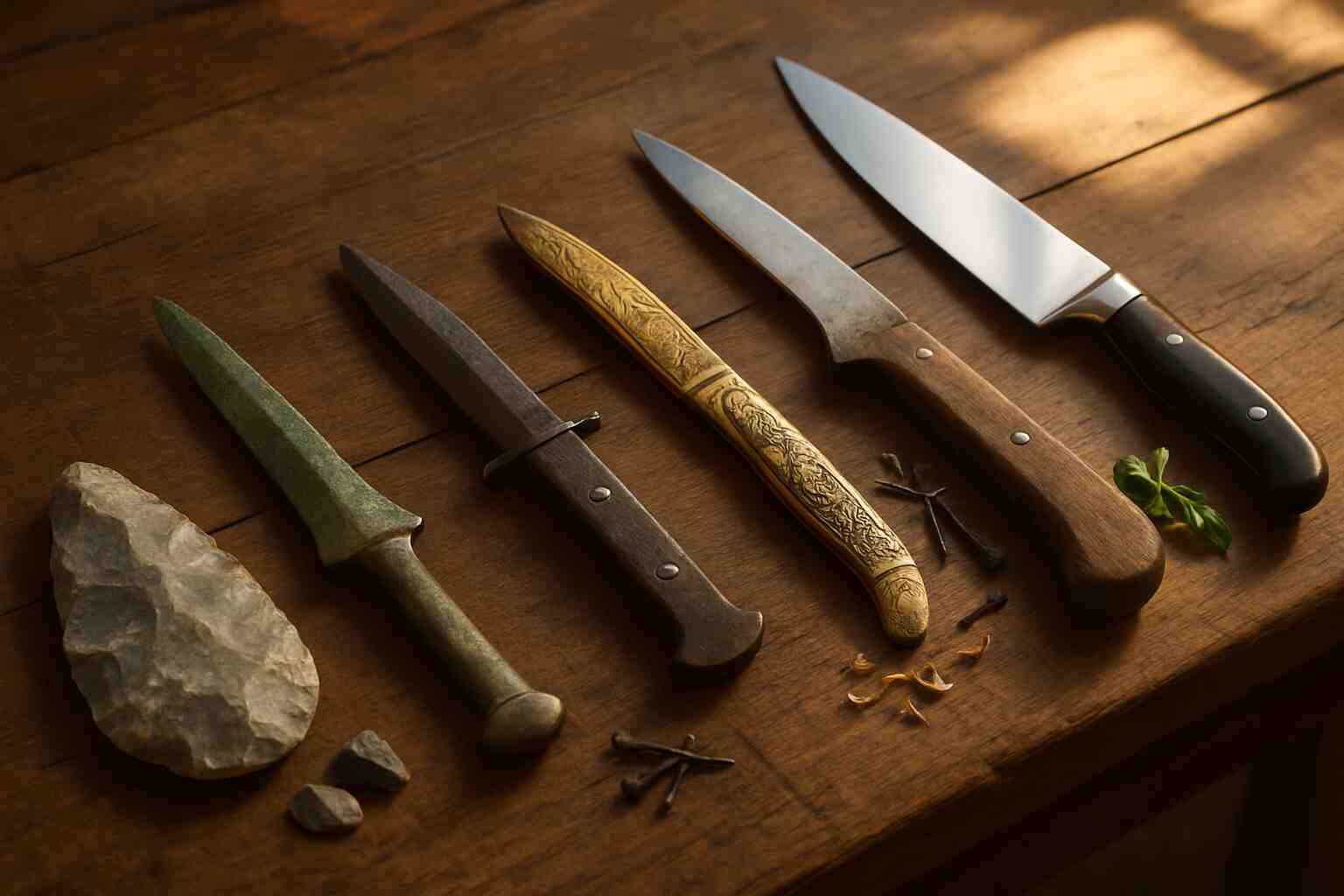
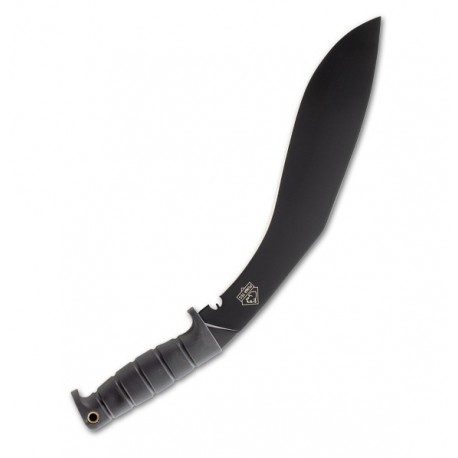
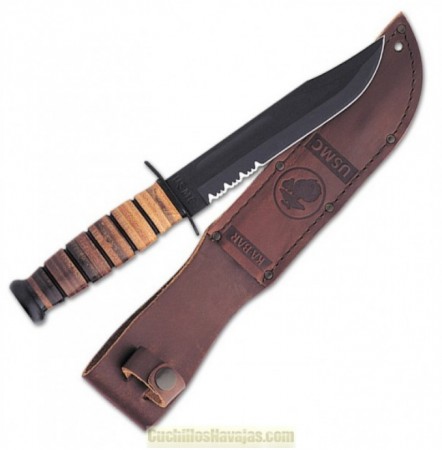
In this article, we will explore the fascinating evolution of the knife, from its humble origins in prehistory to its complex diversity in modern society. It is one of the few objects produced worldwide and in all Homo Sapiens cultures. The knife has many uses, perhaps the most important being personal, domestic, agricultural, and technical use; also some surgical instruments. In addition, both knives and pocket knives and machetes are considered bladed weapons.
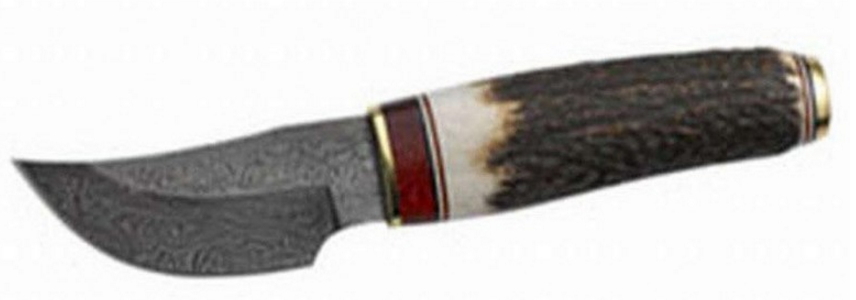
Since time immemorial, people have paid special attention to those objects that are associated with their basic needs. The history of the knife has been greatly altered since, with the passage of time, the material of the blade, the shape (whether curved or straight), the type of blade, the handle, and the decoration change according to each historical period and each type of use for which it is intended.
Prehistoric Origins: From Stone to Bone
Contents
- Prehistoric Origins: From Stone to Bone
- The Age of Metals: Durability and Sophistication
- Knives in Ancient Cultures: Beyond the Tool
- Knife Traditions Around the World: A Cultural Reflection
- Knives in Special Contexts: From the Sacred to the Culinary
- Knife Manufacturing and Art: An Enduring Tradition
- The Knife in Modern Society: Indispensable and Multifunctional
- The Future of Knife Culture: Between Tradition and Innovation
- The Knife: A Timeless Tool in the Flow of Time
The history of the knife dates back an astonishing 2.5 to 3.3 million years ago, to the Stone Age. Our earliest ancestors, such as Homo Habilis and perhaps Australopithecus afarensis, began manipulating stones to create sharp edges. Paleolithic man used sharp blades made of stone, bone, or other hard materials, but without a wooden handle. These early tools were sharp fragments of rocks such as flint and obsidian, the latter a volcanic glass that could achieve an edge superior even to modern scalpels. They were primarily used for butchering animals, cutting meat, and preparing food, although they also served for defense and for making other tools. They helped herbivores exploit other food sources and scavenge, because their teeth were not designed to tear meat. The knife has historically been a universal tool. It would be equally divided between women and men of aristocratic, bourgeois, and peasant backgrounds.
Recent research has revealed even more surprising findings. In Nahal Mahamayyem Outlet (Israel), **stone knives with handles** used intensively for butchery more than 60,000 years ago have been documented, demonstrating technological control and advanced planning by these populations.
A revolutionary discovery in Olduvai Gorge, Tanzania, has rewritten our understanding: early hominids were already making **bone knives 1.5 million years ago**. These tools, made from elephant and hippopotamus bones, were not simple sharp fragments, but were precisely shaped, some even with notches to improve grip. This finding indicates a much earlier capacity for adaptation and experimentation than previously believed, suggesting that our ancestors applied lithic carving techniques to different materials. These bone knives were crucial for processing meat and accessing resources such as bone marrow, which may have influenced human diet and brain evolution.
More than two and a half million years ago, Homo Habilis, the ancestor of modern man, created the first rudimentary tools, etc. Later, around two million years ago, tools were created that already allowed the separation of large bones to reach the bone marrow of hunted animals, rich in fats and nutrients. With the passage of time, the hand axe appeared. They were between 15 and 30 centimeters long and weighed from 40 grams to kilograms. Surprisingly, in those times there was already what we know today as the Swiss Army knife, which had several uses such as hand axes for cutting, scraping, hitting, or throwing. The transition from the Paleolithic to the Neolithic of hunter-gatherer cultures to sedentary farmers with domestic animals and plants has been through this evolution of the knife.
The Age of Metals: Durability and Sophistication
With the passage of time, humanity discovered the art of metallurgy, marking a before and after in knife manufacturing. Continuous innovations helped people find metals, so they could make bronze and later iron or steel blades. Production was initially determined by the functionality of the knife as a utensil. At a later time, it was about artistic value, with bright colors, different from the blade, with gold, silver, precious stones, and precious inlays and engravings. The knife (like its extended form, the sword) has always been surrounded by a touch of mysticism, which led to ornamented ritual and ceremonial knives.
The Bronze Age
Already in the Bronze Age, copper tools began to be used in addition to stone ones. By 3000 BC, bronze (an alloy of copper and tin) allowed for the production of more stable and versatile blades. These knives were not only practical tools, but often functioned as symbols of status, with beautifully decorated examples found in the tombs of dignitaries. As early as 2600 BC, the Egyptians were able to produce a surgical copper knife. Due to its greater strength and easier processing than stone, bronze material began to be used more frequently until it completely replaced stone. The handles of the knives were made entirely of metal.
The Iron and Steel Age
From the Bronze Age, the iron knife quickly replaced the bronze knife, as iron has certain advantages over copper. Around 1200 BC, the arrival of iron raised the quality of knives to a new level. Iron blades were harder, sharper, and easier to repair. In Ugarit (Syria), a knife from around 1200 BC was found. The blade is made of iron, the handle decorated with silver and copper stains. Iron metallurgy continued until the 12th century, leading to constant demand, increased prosperity, and many new techniques for process renewal. Over time in Europe, modern furnaces were manufactured, which allowed for a quantitative and qualitative increase in production. Production increased through bellows and hammers moved by hydraulic power.
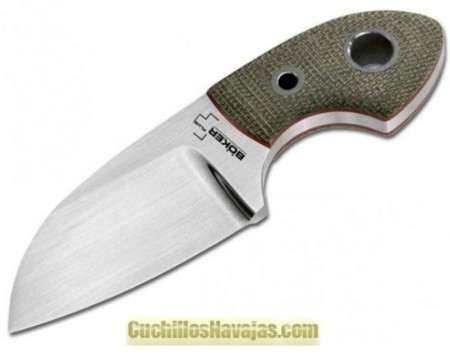
Damascus Steel: Art and Resistance
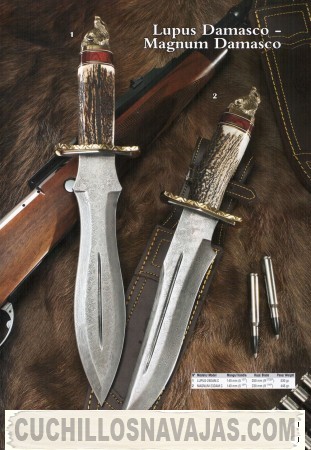
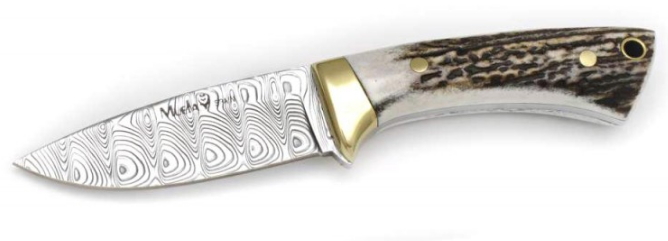
A prominent innovation of the Iron Age was the development of Damascus steel, a forging technique that fused different types of steel, resulting in knives of exceptional hardness and elasticity with characteristic wavy patterns. Although the secret of its manufacture was lost for a time, it has been rediscovered and perfected by modern metallurgists.
Modern Steel: Towards Perfection
From 1850 onwards, steel became the predominant material in knife manufacturing. With the Industrial Revolution, advances in machinery and metallurgy allowed for the mass production of knives of unprecedented quality and precision, with stainless steel being a key material due to its corrosion resistance and durability. As early as 1912, stainless steel was developed, which has a higher chromium content (13 to 15 percent), giving the blade a brighter color. Knives with stainless steel blades are better preserved from environmental influences such as humidity. Since its discovery, it has been used more than any other type of steel in knife manufacturing.
Knives in Ancient Cultures: Beyond the Tool
Ancient civilizations integrated knives deeply into their daily lives and rituals:
Ancient Egypt: Between Life and the Afterlife
Knives were essential for both daily life and religious ceremonies. They used bronze knives with curved blades for cutting food, and ritual knives for mummification, often decorated with inscriptions and divine representations to protect the deceased. One of the great knives of the time was the sacrificial knife (Secespita). Roman priests sacrificed animals with that knife. The knife had a long and wide, almost triangular blade with a short, wide handle.
Mesopotamia: The Cradle of Civilization and the Knife
In this cradle of civilization, various forms were developed, highlighting sickle-shaped knives that served as both tools and weapons. Cuneiform tablets indicate that high-quality knives also functioned as a means of payment and investment.
Greece and Rome: The Specialization of the Edge
The manufacture of knives reached a high degree of specialization. There were knives for almost any purpose, from surgical instruments to sacrificial knives for rituals. They are credited with the development of the pocket knife, used by Roman soldiers, which, in some examples, even incorporated several tools, precursors of modern multi-tools. In antiquity, there was a diversity of surgical knives. Hippocrates’ doctors had forbidden the use of the knife, which was reserved for the surgeon. The instruments were generally made entirely of bronze, although there were some that had steel blades. All societies in which religion required blood sacrifices, killing their victims with a knife, not with a sword, while for suicide the knife was almost never used, rather a weapon (Brutus, Mark Antony) was preferred, they preferably used the sword. Iron knives were frowned upon as cult knives.
Knife Traditions Around the World: A Cultural Reflection
The cultural diversity of knives is immense, with each region developing unique shapes and functions:
Asia: Precision and Philosophy
- China: Known for its variety of **specialized kitchen knives**, adapted to local gastronomy. The caidao, or Chinese chef’s knife, with its wide, rectangular blade, is a versatile example for finely chopping and cutting.
- Japan: The Japanese art of forging is world-renowned. The katana, the samurai sword, transcends its function as a weapon to be a symbol of honor and artisanal perfection, manufactured with strict traditional rules that give it a unique combination of hardness and flexibility. Japanese cuisine, famous for its precision, is reflected in knives such as the yanagiba (for cutting raw fish) and the santoku (multipurpose), which are true works of precision art.
Medieval and Renaissance Europe: Status Symbols and Everyday Utensils
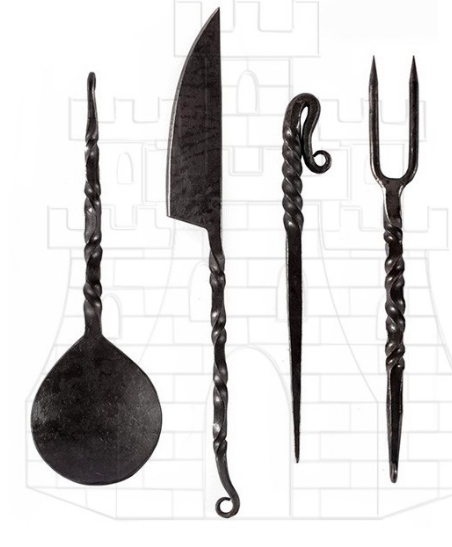
Already in the Middle Ages, in a medieval house there were different types of knives. However, guests would bring their own table knives when they went to eat at a neighbor’s or relative’s house. A small difference with noble houses, since in these houses the guest, when sitting down to eat, already had the knife on the table and did not have to bring it from home. The knife was used not only to cut meat but also to bring it to the mouth, and since then, fingers have not been used to eat. The table knife we all know has no date, that is, it is not known exactly when it appeared. Until then, multi-purpose knives were used.
- Chivalric Daggers: During the Middle Ages and the Renaissance, daggers were more than weapons; they were symbols of status and works of art. The “disk dagger,” for example, was not only effective in combat but also a mark of rank, often decorated with fine engravings and precious stone inlays.
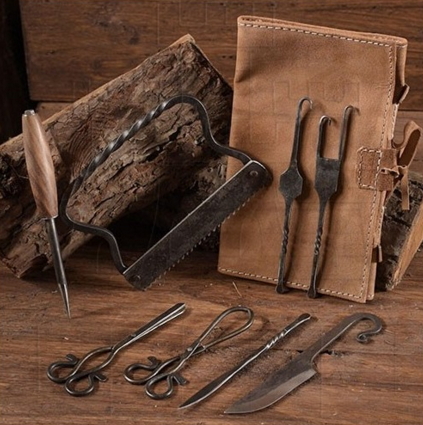
- Pocket Knives and Everyday Knives: In parallel, pocket knives gained popularity among artisans and common people. The “peasant defense knife” was a kind of medieval Swiss Army knife, including a blade, an awl, and sometimes a buttonhook, demonstrating multifaceted functionality. Mechanisms evolved, and the first spring-loaded folding knives, which could be opened with one hand, emerged in the late Middle Ages.
- Knives at the Table: In the Middle Ages, it was customary for each diner to bring their own knife to the table. Banquets featured **magnificent carving knives**, which were true jewels with luxuriously decorated handles. Curiously, forks did not become widespread until the Renaissance, and only among the upper classes. It was Cardinal Richelieu in the 17th century who, tired of seeing his guests using pointed knives to pick their teeth or for altercations, ordered the tips of table knives to be rounded, influencing court manners. Table knives are characterized by their shorter handle and the finer design that the knife generally has. Over time, the handles of table knives had gold and silver ornaments rich in ornamentation according to social status.
Indigenous Traditions: Functionality and Rhythm of Nature
- North America: The Inuit ulu is an incredibly versatile crescent-shaped knife, used for skinning animals, cutting meat, and even cutting hair. Plains Indians decorated their hunting knives with spiritual symbols.
- South America: The Inca tumi was a ceremonial knife with a semicircular blade, loaded with deep spiritual meaning, used in important rituals. In the Amazon, many tribes used bamboo knives, efficient and easy to manufacture. Daggers also had a strong ritual function, especially in human sacrifices, and were personalized with feathers and precious metals.
- Africa: The African continent is home to enormous diversity. The famous throwing knives of Central Africa are precise weapons with shapes that resemble abstract art. The shotel of East Africa is a sickle-shaped sword/knife effective for reaching opponents behind their shields. Many African knives also had a social function, serving as status symbols or indicating the marital status of their bearer.
- Australia: Australian Aboriginal people used the woomera, a spear-thrower that also functioned as a knife and bowl. The tula knife was a multifunctional tool, used for cutting, scraping, and chiseling, with a stone blade and wooden handle.
Knives in Special Contexts: From the Sacred to the Culinary
Knives transcended their practical use, acquiring deep meaning in religion and culinary art:
Religious and Spiritual Knives: Instruments of Faith and Deep Symbolism
- Sacrifice: In many ancient religions, specific knives were used for rituals. The Egyptian peseshkaf, shaped like a fish, was used in the opening of the mouth ceremony during mummification. The Aztecs used obsidian sacrificial knives in their religious ceremonies.
- Ceremonies and Symbolism: Not all ritual knives were for sacrifices. For Sikhs, the kirpan is a small ceremonial dagger and one of their five sacred symbols. In shamanic traditions, knives were used for spiritual purification or to symbolically “cut” negative energies. In Tibetan Buddhism, the phurba is a three-sided ritual dagger to “nail” evil spirits. Symbolically, the knife can represent wisdom that “cuts” ignorance in Buddhism or the destruction of the ego in Hinduism with the sword of the goddess Kali. In the Gypsy zodiac, the dagger is a special sign symbolizing independence, ingenuity, and good luck.
Knives in Cooking and Gastronomy: Precision and Flavor
Cultural differences are clearly manifested in specialized kitchen knives, adapted to the culinary traditions of each region.
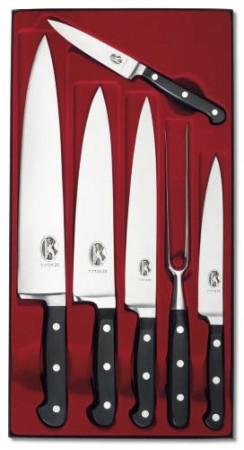
- Europe: The chef’s knife (or cook’s knife) is the best known, versatile for meat and vegetables. Other classics include the serrated bread knife, the butcher’s cleaver, and the French oyster knife.
- Asia: The santoku (Japanese multi-purpose knife) and the yanagiba (for sushi) stand out. In China, the caidao is the most common rectangular kitchen knife. There are also special knives for preparing dim sum.
- Middle East and Africa: The Moroccan zirfak is common for preparing tagine, and the Ethiopian gourade, with its curved blade, is used for both cooking and harvesting.
- Latin America: In Brazil, the faca de churrasco is indispensable for the popular grilled dish, while in Mexico, the taquero knife has a wide, curved blade ideal for cutting meat and vegetables at the taco stand.
Knife Manufacturing and Art: An Enduring Tradition
The art of cutlery has a millennial tradition in various cultures, with regions that have become true benchmarks:
| Historic Center | Country | Highlighted Features |
|---|---|---|
| Solingen | Germany | Known as the “City of Blades,” more than 700 years of tradition, famous for high-quality kitchen knives and pocket knives. |
| Sheffield | England | Crucial center for industrial knife production. |
| Thiers | France | Manufactures knives since the 14th century, standing out for its elegant “Laguiole” pocket knives. |
| Albacete | Spain | World-renowned since the 15th century for the durability, precision, and elegance of its knives and pocket knives. |
Modern Resurgence and Art: Beyond Function
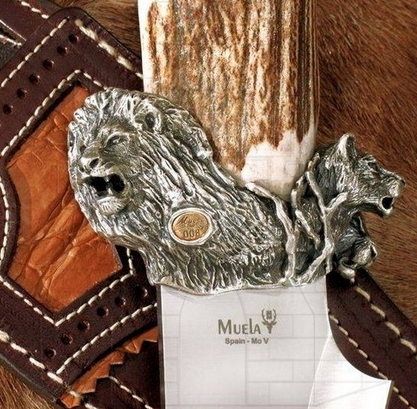
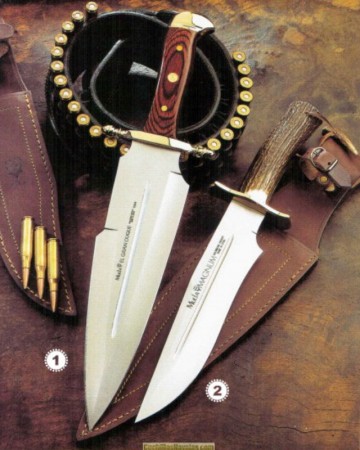
With industrialization and the French Revolution, the knife suffered a great impact. New industrial techniques allowed for a superior quality knife at low cost, and little by little, knives made by the artisan blacksmith disappeared. Currently, there is a growing interest in preserving traditional artisanal techniques, combining them with modern materials and designs. Many knives are no longer just tools, but true works of art and coveted collector’s items. There are knives decorated with precious stone inlays, ivory carved handles, and Damascus blades combined with exotic materials such as meteorite iron. Museums such as the German Blade Museum in Solingen exhibit the rich history and craftsmanship of these objects. There are also manufacturers who specialize in reproducing historical knives, using ancient techniques and materials to create precise replicas.
The Knife in Modern Society: Indispensable and Multifunctional
Although its role has changed, the knife remains an indispensable tool in today’s world:
The Evolution of the Pocket Knife: From Simple to Multifunction
Pocket knives have evolved from simple folding blades to complex multifunction tools, such as the famous Swiss Army knife or multi-tools that integrate various functions into a compact format.
Professional and Sports Knives: Tools for Every Task
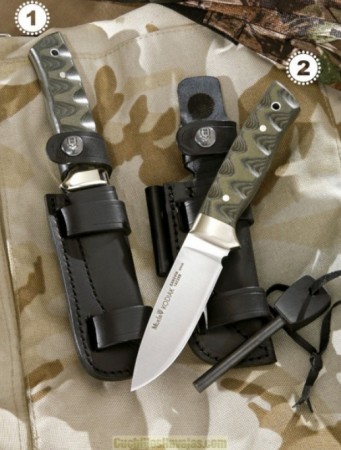
In numerous professions, specialized knives are essential: chefs use high-quality blades, hunters and forest rangers employ robust outdoor knives, divers have knives for cutting ropes, and rescue teams rely on special belt tools. In sports, they are used in martial arts such as Japanese Iaidō, in knife throwing, and the blades of ice hockey skates require constant sharpening.
Laws and Cultural Norms: An Object of Diverse Regulations
Legal regulations on knives vary enormously globally. Germany, for example, has strict rules on automatic and fixed-blade knives, while in Texas (USA) it has been permitted to carry swords in public since 2017. Japan has very rigorous laws, prohibiting the carrying of knives longer than 6 cm without a valid reason. Culturally, the carrying of knives also has different perceptions; from the traditional knife in Bavarian attire, the religious kirpan of the Sikhs, to the teaching of knife handling to children in Nordic countries.
Knives as Gifts: Cultural Meanings
The act of giving a knife also has different cultural connotations. In Germany, it is considered bad luck unless the recipient pays a symbolic cent. In contrast, in Japan, high-quality kitchen knives are a popular wedding gift, symbolizing a long and happy marriage. Among the Maasai of East Africa, receiving a traditional knife marks the passage to adulthood.
The Future of Knife Culture: Between Tradition and Innovation
Despite technical advances, knife culture moves between preservation and innovation:
Preservation of Ancient Techniques: Respect for the Legacy
Knife makers in Japan continue to forge samurai swords by hand using ancestral methods, and in Europe, small manufacturers produce Damascus steel following historical models.
Innovations in Materials and Design: The Search for Perfection
Evolution continues with new materials such as ceramics and advanced metal alloys that allow for sharper and more durable blades. The design focuses on ergonomic handles and intelligent folding mechanisms. Even “smart” knives with built-in sensors are being explored.
There is a positive trend towards greater cultural exchange in cutlery, with Japanese knives gaining global popularity and Western pocket knives finding followers in Asia. This exchange enriches techniques and designs, creating interesting hybrids of tradition and innovation.
The Knife: A Timeless Tool in the Flow of Time
From its rudimentary beginnings in the Stone Age to sophisticated modern tools, the knife has been a constant in human history. Its evolution not only reflects technological advances but also cultural and social changes over time.
Whether as an indispensable tool in the home, in various professions, or in haute cuisine, the knife continues to be a testament to human ingenuity and adaptability, with an unparalleled diversity of shapes, materials, and uses. Its history continues, and it is fascinating to observe how old artisanal traditions and new technologies combine in this seemingly simple object of profound cultural and artistic importance.
SEE MORE KNIVES | SEE POCKET KNIVES | SEE MACHETES | SEE AXES