For any hunter, the hunting knife is not merely a tool, but an extension of oneself, an indispensable companion that has evolved alongside humans since time immemorial. Its versatility and functionality make it a vital element for various tasks in the field, from game processing to survival activities. But do you truly know the different types of hunting knives and which one is suitable for each situation?
In this comprehensive guide, we will delve deep into the fascinating world of hunting knives, breaking down their uses, characteristics, the most common and specialized types, and offering practical advice for their selection, maintenance, and sharpening. Furthermore, we will address the importance of current legislation for responsible carrying and transport.
—
I. Hunting Knives: General Concept and Essential Uses
Contents
- I. Hunting Knives: General Concept and Essential Uses
- II. Types of Specialized Hunting Knives
- III. Hunting Knives: Handcrafted vs. Industrial
- IV. Key Criteria for Selecting the Right Hunting Knife
- V. Recommended Hunting Knife Brands
- VI. Hunting Knife Maintenance and Sharpening
- VII. Legislation and Regulations on Hunting Knives in Spain
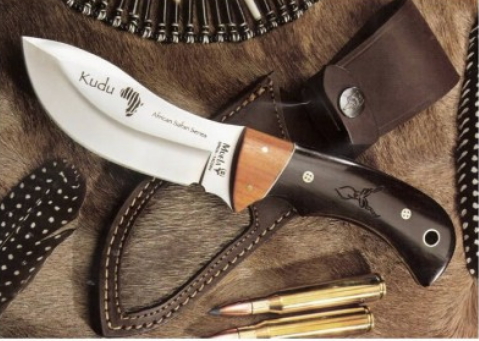
A hunting knife is a multifunctional tool designed to assist the hunter at various stages of their activity. Its importance lies in its ability to facilitate crucial tasks in the field, ensuring efficiency and respect for the game.
Main Uses and Functionalities of a Hunting Knife:
- Finishing the game: To quickly and humanely end the animal’s life.
- Skinning and cleaning: Separating the hide or fur and cleaning downed game, preparing the meat for consumption or transport.
- Evisceration: Removal of entrails to prevent meat contamination.
- Dismembering and preparing meat: Cutting and portioning the animal to facilitate its transport and storage.
- General field tasks: From cutting ropes and preparing wood for starting fires to minor camp repairs.
- Retrieving the trophy: Making precise cuts around the head to preserve the animal’s trophy.
- Survival or defense: A crucial tool in unforeseen situations in nature.
General and Essential Qualities of a Hunting Knife:
For a hunting knife to effectively perform its functions, it must possess certain fundamental characteristics:
- Balance and control: Lightweight and wide, with the center of gravity in the hunter’s hand to offer precision and control in every movement.
- Superior sharpness: A well-sharpened blade is crucial for ease of cutting, especially on tough hides and resistant tissues.
- Secure grip: The guard or bolster is vital to prevent the hand from accidentally slipping towards the blade during use.
- Steel resistance: The type of steel must be hard to maintain the edge, but flexible enough to withstand deviations without breaking.
- Robust construction (Full Tang): The steel piece must be a single piece (full tang), extending from the tip to the end of the handle. This ensures maximum structural strength and prevents fragility.
Within the vast range of knives, hunting knives are classified as specialized, although some, like the bushcraft knife, demonstrate remarkable versatility.
—
II. Types of Specialized Hunting Knives
Hunting is a multifaceted activity, and each facet may require a specific tool. Below, we present the most common types of hunting knives and their particular functions.
Skinning Knife (Skinner)
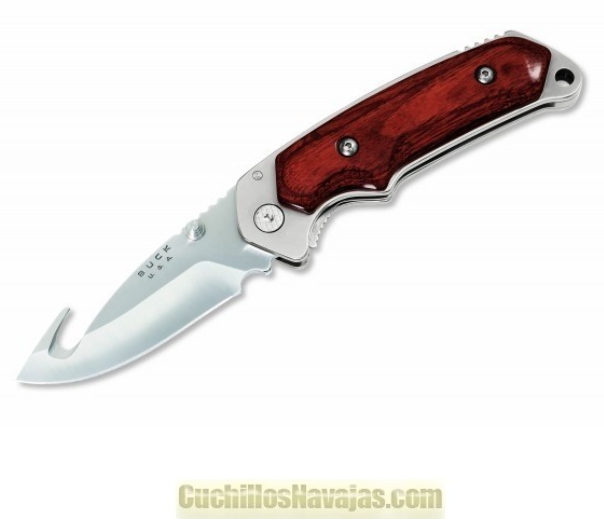
The skinning knife, or skinner, is a highly specialized tool for the delicate task of separating the hide or fur of game animals from their flesh. Its optimized design makes it the best ally for this function.
- Function: Primarily skinning game, although it can also be used for evisceration.
- Characteristics: Wide and short blade for greater maneuverability. Its tip is usually slightly dulled, blunt, or upswept to avoid damaging the underlying meat or hide. It is lightweight and designed for precise cuts, often with a closed and curved angle. The usual blade length is 3 to 4 inches, and the handle requires a firm grip, even with stained hands.
- Use: Skinning, especially for large game with thick hides, but it is also very useful for rabbits, hares, and even wild boar.
- Advantages: Offers exceptional control over cuts, minimizes damage to hides, and is lightweight and easy to maneuver.
- Disadvantages: Its utility is limited beyond skinning and it can be fragile if used for heavy cuts.
Recommended Brands and Models:
The quality of Spanish brands in this segment is exceptional, making it difficult to determine a “best” as it depends on the type of game and personal preferences:
- Cudeman: With 40 years of history, this brand from La Mancha offers a wide variety of skinners with or without a gut hook, using premium stainless steels and handles made of noble woods or rubbers.
- Joker: Another prominent cutlery brand from Albacete, internationally recognized for its fine handcrafted blades. Their skinner models usually feature olive wood and deer antler handles. The Joker Cocker is a compact and safe skinning folding knife.
- Muela: Prestigious Spanish cutlery since the 1950s. Their skinners are characterized by their ergonomic design and resistance, often incorporating gut hooks on the blades and scales made of deer antler or pressed woods. Examples include the Sabueso, Beagle, Sioux, and Mouse models.
Hunting Finishing Knife
The finishing knife is designed with a clear and fundamental purpose: to end the life of the downed animal quickly and effectively, minimizing suffering.
- Function: Humanely dispatching game, especially in hunts with dog packs.
- Characteristics: Long blade to reach vital organs in a single thrust, often with a drop point for better penetration. Its blade is wider and more robust than standard knives. Formerly double-edged, current legislation only allows one sharpened side.
- Types: The “cow’s tongue” is the widest and most precise due to its weight. Others, like the pear-leaf blade or triangular point, are lighter and smaller, suitable for wounded, non-dangerous wild boars.
- Importance: Crucial for handling large and dangerous animals, ensuring a quick and safe finish.
- Limitations: Not suitable for cutting meat or skinning due to its thick and wide blade.
Featured Joker Models:
- Joker Guepardo: Double-edged blade (though one side remains unsharpened by law) of 30 cm Mova 1.4116 stainless steel and deer antler handle.
- Joker Bisonte: 25.5 cm Mova 1.4116 stainless steel blade and deer antler handle.
- Joker Chamois: 25.5 cm Mova 1.4116 stainless steel blade and olive wood handle.

Game Skinning Knife
Similar to the skinner, but optimized for smaller game.
- Function: Removing the hide from small game with thin skin (small game).
- Characteristics: Smaller dimensions and greater lightness than a traditional skinner.
Recommended Model:
- Grizzly Creek Folding Knife with Gut Hook by Benchmade: Featuring an 8.89 cm blade, it includes a gut hook as a separate tool and a stabilized wood handle with AXIS® lock system.
Game Head-Capping Knife
For hunters looking to preserve their game trophy, the head-capping knife is indispensable.
- Function: Performing delicate skinning around the head and neck for taxidermy, ensuring the integrity of the trophy.
- Characteristics: Hard steel and great firmness, with enough strength to cut bone. Small and thin blade (2 to 4 inches) with a very fine and sharp point, super lightweight for tight cuts.
- Advantages: Excellent precision, lightness, and maneuverability.
- Disadvantages: Limited to fine detail work and can dull quickly if used excessively.
Bowie or Bushcraft Knife
The Bowie knife, or bushcraft knife, is the epitome of versatility, being a multi-purpose tool for any situation in the field.
- Function: Survival or defense knife. Very versatile, used for cutting, skinning, deboning, and even for field lunches.
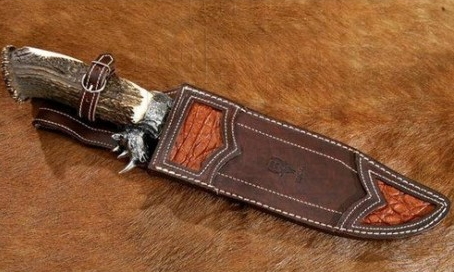
- Characteristics: Fixed blade with an upswept point or clip point, with a length ranging from 10 to 30 cm. Often features a bone handle.
- Use: Popular for both big and small game; the blade size adapts to the type of prey. Ideal for gutting game.
Featured Joker Model:
- Joker Bowie 945: Böhler N695 stainless steel, 24 cm long blade, 4.2 cm wide and 5.5 mm thick, with a robust 16 cm deer antler handle.

Hunting and Survival Axe
More than a knife, the hunting axe is a robust tool for the most demanding tasks.
- Function: Opening and butchering large animals. It is also invaluable for clearing brush, cutting firewood, and other heavy tasks at the campsite.
- Characteristics: Very hard tool with a drop point edge. It can cut on both sides and often incorporates a gut hook on the back. Large and heavy blade (10 to 18 inches) for power and durability.
- Advantages: Allows for great force to be transmitted in cutting, it is a multi-purpose tool, durable, and long-lasting.
- Disadvantages: Bulky and heavy, not ideal for fine detail work.
Deboning Knife
For meat processing, the boning knife is an indispensable tool.
- Function: Separating meat from the bones of game animals (deer, wild boar, birds), facilitating processing and reducing waste.
- Characteristics: Narrow and thin blade, often slightly curved for greater precision around bones and joints. It can be somewhat flexible. Blade length between 5 and 7 inches with an ergonomic handle.
- Advantages: Provides clean and precise cuts, is lightweight and flexible for better maneuverability.
- Disadvantages: Not suitable for cutting heavy materials or tough jobs; blades can be delicate.
Hunting Dagger / Hunting Dirk
The hunting dagger is a specialized tool for precise penetration.
- Function: Penetrating the game (the heart in particular) without destroying the hide, meat, and organs. Quickly dispatching wounded game or for self-defense.
- Characteristics: Also called a drop-point knife. Thin and long blade, symmetrical double-edged, tapering to a sharp point. Blade length between 4 and 8 inches, with a full tang design and ergonomic grip.
- Advantages: Ease of use, excellent for deep punctures and cuts, durable and solid construction as a backup tool.
- Disadvantages: Limited utility for general hunting tasks, not ideal for skinning or processing meat, and can be heavy to carry.
Replaceable Blade Knives
Innovation for maximum cutting efficiency.
- Function: Versatile cutting with the convenience of replacing the edge, eliminating the need for sharpening. Effective for skinning and capping.
- Characteristics: The handle holds very sharp disposable blades; various blade shapes exist (drop point, scalpel type, etc.). Blade length of 2 to 3 inches.
- Advantages: Always sharp, lightweight, and practical.
- Disadvantages: Blades can break easily and are limited to light tasks.
Bird and Trout Knife
Designed for small game hunting and fishing.
- Function: Cleaning and processing small game, such as birds and fish.
- Characteristics: Small, thin, often flexible blade. Sharp point for delicate work; may include scraper/gut hook features for gutting. Blade length between 2.5 and 3.5 inches.
- Advantages: Excellent control and precision, lightweight, and easy to transport.
- Disadvantages: Not suitable for large animals, the blade can dull quickly.
Bone Saw
For efficient processing of large game.
- Function: Cutting bones during butchering and processing of large game, facilitating quartering more quickly and cleanly.
- Characteristics: Serrated blade specifically designed for sawing bones; often with a T-handle, foldable or packable designs. Thick and aggressive teeth.
- Advantages: Efficient for butchering large game, lightweight, and foldable.
- Disadvantages: Limited to specific tasks, blades require maintenance.
Camp Knife / Hunting Machete
For the most demanding tasks in the field.
- Function: Clearing brush, cutting firewood, heavy camp tasks, and dismembering large animals.
- Characteristics: Large and heavy blade designed for cutting power and durability (10 to 18 inches long).
- Advantages: Multi-purpose tool, durable, and long-lasting.
- Disadvantages: Bulky and heavy, not ideal for fine detail work.
Field Dressing Knife
The main knife for post-hunt work.
- Function: Main tool for most of the work after an animal has been downed, including gutting, skinning, quartering, and light camp tasks. It is key for keeping the meat clean and doing the job efficiently.
- Characteristics: Robust blade (often fixed), common shapes like drop point or clip point, versatile size (4-5 inches), full tang construction.
- Advantages: Versatile, durable, sturdy, simple construction, comfortable for prolonged use.
- Disadvantages: Can be cumbersome for fine detail work, heavier than smaller specialized knives.
—
III. Hunting Knives: Handcrafted vs. Industrial
The choice between a handcrafted or industrial hunting knife is an important decision that influences the tool’s performance, durability, and value.
Handcrafted Hunting Knife:
A unique piece, the fruit of an artisan’s work and mastery.
- Definition: A handmade tool where every detail is executed by an expert artisan.
- Difference from Industrial: They are crafted in a personalized way, which increases their value and functionality. They are unique pieces, often of higher quality and durability than those mass-produced.
- Materials:
- Blade steel: Options such as stainless steel, carbon steel, and Damascus steel, each with advantages in durability, ease of sharpening, and corrosion resistance.
- Handle: Common materials include exotic woods, antler, horn, and high-quality synthetic materials, which provide good grip and aesthetics.
- Sheath and accessories: Leather or high-quality synthetic materials are preferable to protect the knife and complement its beauty.
- Manufacturing Process: Involves meticulous stages such as material selection, forging, and heat treatment (key for a strong and resistant blade), and final details such as polishing and handle finishing.
- Advantages:
- Durability and resistance: Handcrafted manufacturing ensures a longer lifespan due to care at each stage.
- Customization: Possibility of choosing materials, design, and finish to create a unique knife tailored to the hunter’s needs.
- Connection and legacy: Implies an emotional connection with the piece and can be passed down to future generations.
- Featured Brands and Artisans: Can be found at hunting fairs, specialized stores, and online platforms that promote artisan cutlery.
—
IV. Key Criteria for Selecting the Right Hunting Knife
Choosing the right hunting knife is a personal decision that depends on your specific needs as a hunter and the type of hunting you practice. Consider the following factors to make the best choice:
Blade Type: Fixed or Folding
The choice between a fixed or folding blade directly impacts the knife’s robustness and portability.
- Fixed Knives (Fixed Blade):
- Advantages: Incredibly resistant and durable, they offer absolute reliability, are easier to clean as they have no folding mechanisms, and adapt well to various heavy and prolonged tasks. They are favorites for survival.
- Disadvantages: More bulky and heavy to carry, and not ideal for extremely precise and detailed cuts.
- Folding Knives (Hunting Folding Knives):
- Advantages: Lightweight and compact, easy to carry and conceal, and safer to carry in your pocket.
- Disadvantages: Generally less durable than fixed blades, can be difficult to clean if blood or dirt gets into the hinge, and will not withstand abuse like a fixed blade.
For beginners, a fixed-blade hunting knife is recommended due to its robustness, ease of use, and maintenance.
Blade Material: Resistance and Edge Retention
The blade material is fundamental for the knife’s durability and performance.
- Stainless Steel: High corrosion resistance and easy to maintain. Ideal for humid environments or for those who prefer low maintenance.
- Carbon Steel: Renowned for its durability and excellent ability to hold a sharp edge. However, it requires more care to prevent oxidation.
The type of steel directly influences hardness, edge retention, and corrosion resistance.
Handle Design and Ergonomics: Comfort and Safety
A comfortable and secure handle is crucial to prevent hand fatigue and ensure a firm grip, even in adverse conditions.
- Common materials: Wood, plastic, aluminum, bone, antler, G10, Micarta, and rubber.
- Recommendations: Rubber, Micarta, or textured plastic handles usually offer a better grip when hands are wet, stained, or in difficult conditions. Wooden handles, while aesthetic, can be slippery in these circumstances.
Ergonomics is a key factor for prolonged use without discomfort.
Blade Shape: Adapted to the Task
The blade design determines its specific functionality:
- Drop Point: Offers strong and versatile cutting edges, ideal for general hunting tasks. It is one of the most popular shapes due to its balance.
- Clip Point: Provides greater precision for detailed work and is more pointed, facilitating penetration.
- Skinning Blades: Designed with a curved edge to separate skin from meat without perforating it, as seen in skinner knives.
- Serrated Edge: Useful for cutting rope, tendons, or bone with greater ease.
- Gut Hook: A protrusion on the top of the blade that facilitates opening the animal’s abdomen without damaging internal organs, minimizing meat contamination.
Size and Weight: Balance for Handling
Finding the right balance between size and weight is fundamental for effective and comfortable handling.
- A knife that is too large or heavy can be difficult to handle, especially for tasks requiring precision.
- One that is too small may not be suitable for certain more demanding tasks.
- The longer the blade, the harder it will be to handle, especially for beginners.
Specific Functionality: Consider Your Needs
Finally, think about the main tasks for which you will use the knife. Some knives are designed for very specific functions, such as skinners for skinning or bone saws. If you perform a variety of tasks, a more versatile knife like a Bowie or a bushcraft knife will be a better choice.
—
V. Recommended Hunting Knife Brands
The market offers a wide range of hunting knife brands, each with its own reputation and specialties. Here are some of the most prominent and reliable ones:
- Cudeman: A brand from La Mancha with 40 years of experience, inheriting the rich cutlery tradition of Albacete. It stands out for its wide variety of skinning knives, manufactured with premium quality stainless steel, noble woods, and rubber handles, and meticulous finishes.
- Joker: Another renowned cutlery from Albacete, internationally recognized for its fine handcrafted blades. Their skinning knife models typically feature olive wood and deer antler handles. The Joker Cocker is a compact and safe skinning folding knife.
- Featured models: Bowie 945, Gabato, Laguiole Folding Knife, Cocker Folding Knife (skinner), Cebra II, Guepardo Finishing, Bisonte Finishing, Chamois Finishing, Montes, Bushcraft Pantera.
- Muela: Prestigious Spanish cutlery with a history since the 1950s, combining artisan knowledge with cutting-edge technology. Their skinning knives are distinguished by their ergonomic design and ease of handling in tough conditions. Many incorporate gut hooks on their blades, and the scales are crafted from deer antler, olive wood, pressed coral wood, and phenolcraft. Numerous models are completely handcrafted.
- Examples: Sabueso, Beagle, Sioux, and Mouse.
- Benchmade: Recognized for its durable and high-quality knives, especially its fixed-blade models. They offer customization options, premium blade steels, and exceptional after-sales service (Lifesharp). The Hidden Canyon Hunter is a standout model for precision tasks.
- Buck Knives: Synonymous with American tradition in knife manufacturing. This family business with over a century of history is distinguished by its commitment to durability and excellence. The Buck 110 Folding Hunter is an emblematic example of its legacy, using advanced steels and focusing on ergonomics.
- Gerber: Established in hunting and outdoor communities, Gerber is known for its innovative and accessible tools. The Gerber Vital is an example of practicality, notable for its replaceable blades.
- Ka-Bar: With a rich history since World War II, Ka-Bar is revered for its toughness and reliability. Its legacy of robustness carries over to its hunting knives. The KA-BAR Becker BK2 Campanion is a highly appreciated multi-purpose knife.
- ESEE Knives: Produces tough and functional survival knives, with designs forged from real-world field experiences. The ESEE-5 is an example of its hardness and reliability, backed by a no-questions-asked warranty.
- Spyderco: Stands out for its innovation, unique designs, and the introduction of the thumbhole for easy one-handed opening. Their knives are famous for their ergonomic design, high-quality steel blades, and cutting-edge features.
- Helle Knives: From Norway, Helle embodies the Scandinavian knife-making tradition, known for their handmade blades and the use of natural materials. The Helle Temagami is an example of craftsmanship and functionality.
—
VI. Hunting Knife Maintenance and Sharpening
A well-maintained and sharpened hunting knife is synonymous with efficiency, safety, and durability. Proper maintenance not only extends the lifespan of your tool but also prevents the proliferation of bacteria and ensures optimal performance.
Importance of Cleaning:
- Prevent deterioration: Prevents oxidation and premature wear of the blade and handle.
- Prevent contamination: Crucial for knives that will come into contact with food, avoiding the proliferation of bacteria.
- Maintain performance: A clean knife is always ready for its next adventure, maintaining its edge and functionality.
Tools and Materials Needed for Cleaning:
- Damp or dry cloth.
- Warm water and mild soap.
- Specific maintenance oil for blades.
- Small brush (for crevices).
- Isopropyl alcohol (for disinfection).
Steps to Clean a Hunting Knife:
- Removing Surface Dirt: Remove any visible debris (blood, dirt, grease) with a damp or dry cloth. For stubborn stains, a few drops of hydrogen peroxide can be helpful.
- Washing with Soap and Water: Wet the knife under warm water and apply mild soap. Clean the blade and handle with a cloth or sponge, always with extreme care to avoid cuts.
- Detailed Brushing: Use a small brush to reach corners and textured areas of the handle, where dirt can accumulate.
- Disinfection: Apply isopropyl alcohol to the blade to disinfect and eliminate any remaining bacteria.
- Drying and Lubricating: Dry the knife completely with a clean, dry cloth to prevent oxidation. Then, apply a thin layer of specific blade oil. This will protect the steel and help preserve the edge.
- Proper Storage: Store the knife in a dry place, preferably in its sheath or wrapped in breathable material like paper, to prevent moisture accumulation.
Additional Cleaning Tips:
- Avoid abrasive chemicals or harsh sponges that could scratch the blade.
- Do not leave the knife in contact with water for prolonged periods.
- Remember to sharpen the knife after several cleanings to maintain its cutting efficiency.

Knife Sharpening:
Good sharpening not only facilitates cutting tasks but also reduces the risk of accidents, as a dull knife requires more force and is more prone to slipping.
Assessing Edge Damage:
- Slightly dull: A simple sharpening may suffice.
- Severely dull: If the edge is visibly worn, bent, or chipped, it requires intensive sharpening or rectification.
- Structural damage: Large chips, cracks, or deformations may require professional intervention or, in extreme cases, knife replacement.
Sharpening Methods:
There are various tools and techniques to maintain your knife’s edge:
- Sharpening Stones: These are the preferred option for restoring damaged edges and achieving a high-quality sharpen.
- Choosing the stone: Use stones with different grits:
- Coarse grit (200-400): To remove damaged material and reshape the edge.
- Medium grit (800-1000): To refine the edge.
- Fine grit (3000-8000): To polish and obtain a mirror edge.
- Process: Dampen the stone to lubricate and prevent overheating. Place the blade at a constant angle (15-20 degrees for hunting knives) relative to the stone. Slide the knife along the stone, applying even pressure, from the base to the tip. Repeat on both sides. It is crucial to maintain the same angle throughout the process. If the stone dries, add more water; it should form a paste or “slurry” with the metal.
- Burr removal: Detecting and removing the burr (a small edge that forms on the opposite side to where you are sharpening) is key for a perfect edge.
- Choosing the stone: Use stones with different grits:
- Manual or Electric Sharpeners:
- Manual: Easy to use for moderately damaged edges, with guides that align the blade at a fixed angle. They usually have two parts: one of iron/carbide/diamond for grinding and another of ceramic for polishing. They are excellent for carrying in a backpack.
- Electric: Offer a quick and convenient solution, with several stages (grinding, polishing). Ideal for less experienced users, but can remove too much material if used incorrectly.
- Sharpening Rods (Honing Steels): More suitable for daily maintenance than for restoring a damaged edge. They are used after sharpening with stones or sharpeners to realign the edge and remove burrs.
- Professional Sharpening: Recommended if the edge is very damaged and you do not have the experience or adequate tools. Professionals use grinding machines or belt sharpeners.
- Homemade Method (Ceramic Mug): You can use the unglazed back of a ceramic mug. Pass the knife, finding the correct angle, making passes on each side. It’s very good to combine with a rock if you don’t have a fine-grit stone for finishing.
- River Stones: Although possible, it is complicated. Flat stones with higher to lower grits would be needed. The knife would be passed over the stone (like with the mug), not the other way around, because the stone is not completely flat.
Blade Rectification:
Necessary if the knife shows severe damage (large chips, bent sections). It involves grinding down the damaged material until the edge is uniform. Start with a coarse-grit stone and, once rectified, follow the usual sharpening process.
Future Prevention:
- Correct Use: Use each knife for its specific task. Improper use is one of the main causes of damage.
- Keep Sharp: A sharp knife is safer and more efficient, as it reduces the necessary force and, therefore, the risk of accidents.
- Proper Storage: Store the knife in a block, sheath, or magnetic holder to protect the edge and prevent knocks or drops.
—
VII. Legislation and Regulations on Hunting Knives in Spain
It is essential to know the legal regulations regarding the carrying and transport of hunting knives to avoid problems. In Spain, legislation (based on European directives) allows adults to acquire and possess hunting knives without specific authorization. However, carrying and transport are subject to the notion of “legitimate reason.”
Categorization:
- Since September 6, 2013, knives (including hunting knives) are classified as category D or D2a weapons in the new French nomenclature (formerly 6th category).
Notion of Legitimate Reason:
It is a justification that the bearer must present to law enforcement or a judge, who will decide if the reason is legitimate based on the established elements and the situation.
- Examples of legitimate reasons: Possessing a hunting license, a sports federation license (such as Olympic shooting), being a collector heading to an exhibition or historical reenactment, or a statement from an employer/cooking school.
- NON-legitimate reasons: Carrying a hunting knife for self-defense, to get out of a dangerous situation, or carrying it in a public place without clear and documented justification.
Carrying and Transport:
- Carrying: Implies that the knife is on the person, ready for immediate use.
- Transporting: The knife is not necessarily on the person, but in a secure and specific container for this purpose ( ideally with a padlock or other system). Transport in everyday backpacks should be avoided. The weapon must never be immediately usable.
Regulation (since 2019):
The law states that all Category D weapons, whether freely sold or not, must never be carried or transported without a legitimate reason.
- Penalties for infringement: Fines that can amount to 15,000 euros and one-year prison sentences. Penalties are doubled if transport is carried out by at least two people acting in concert (in a car, motorcycle, etc.).
- Jurisprudence: Carrying standard-sized knives like Laguiole, Opinel, or Swiss is not considered carrying a bladed weapon, but rather traditional tools, and is therefore permitted. However, they can be reclassified as bladed weapons depending on their use in a specific context.
- Law enforcement discretion: Evaluation is done on a case-by-case basis in the field. For example, carrying a knife on a family picnic will not be viewed the same as in a stadium or an airport. The weapon bearer must be able to provide a convincing legitimate reason.
Local Regulations:
In addition to national legislation, it is fundamental to respect local regulations on weapons, which may impose additional prohibitions on carrying weapons in certain places, such as football stadiums or entertainment venues, even with a legitimate reason. An object as common as a screwdriver on a train bound for Paris can be considered a prohibited weapon if there is no legitimate reason for its transport.
Remember: Owning a hunting knife carries great responsibility. Always inform yourself about current legislation and act sensibly and lawfully.
—
Hunting knives are essential tools for any hunter, each designed to optimize a specific task in the field. Choosing the right one, understanding its characteristics, and knowing how to maintain and use it safely and legally are fundamental aspects to maximize your hunting experience and ensure the durability of your equipment. Investing in a good hunting knife is investing in efficiency, safety, and success in your hunting trips.
Want to see the best selection of hunting knives to complement your equipment?