For any hunter, the hunting knife is not merely a tool, but an extension of oneself, an essential companion that has evolved alongside humans since time immemorial. Its versatility and functionality make it vital for various tasks in the field, from processing game to survival activities. A good hunting knife is synonymous with efficiency and safety, allowing the hunter to perform their work effectively and without unforeseen events.
In this comprehensive guide, we will explore the fascinating universe of hunting knives, breaking down their uses, essential characteristics, the most common and specialized types, and provide you with practical tips for their selection, care, and sharpening. Additionally, we will address the importance of current legislation for responsible carrying and transport.

Currently there are so many brands of hunting knives, that it is very difficult to choose the best and most outstanding ones, since many of them are excellent in quality, design and elegance.
We know that Spain and Germany have a worldwide reputation for having the best hunting knife manufacturing houses, as their cutlery tradition is millenary. The general criteria for knowing the quality of a knife begin with its good edge, its firmness, its easy handling, its ergonomic handle, the manufacturing materials, its proportion, its heat treatment, its resistance to water and rust, its design, its stability, its durability, its good balance, its adequate weight, its tempering, its type of full tang blades, and its forging.
The Hunting Knife: A Tool with History and Purpose
Contents
- The Hunting Knife: A Tool with History and Purpose
- Types of Specialized Hunting Knives: A Tool for Every Task
- Hunting Knives: Handcrafted vs. Industrial
- Key Criteria for Selecting the Right Hunting Knife
- Trusted Brands in the World of Hunting
- Maintenance and Sharpening: Keys to Durability and Efficiency
- Legislation and Regulations on Hunting Knives in Spain
The hunting knife is a multifunctional tool, designed to assist the hunter in every phase of their activity, from prehistoric stone-carved origins to sophisticated modern instruments. Its importance lies in its ability to facilitate crucial tasks in the field, ensuring efficiency and respect for the game.
Main Uses and Functions of the Hunting Knife:
- Finishing the game: For a quick and humane end to the animal.
- Skinning and cleaning: Separating the hide and cleaning downed game, preparing the meat for consumption or transport.
- Evisceration: Removal of entrails to prevent meat contamination.
- Dismembering and preparing meat: Cutting and butchering the animal to facilitate its transport and storage.
- General field tasks: From cutting ropes and preparing wood for fire to small repairs at camp.
- Obtaining the trophy: Making precise cuts around the head to preserve the trophy.
- Survival or defense: A crucial tool in unexpected situations in nature.
Indispensable Qualities of a Hunting Knife:
For a hunting knife to effectively fulfill its functions, it must possess certain fundamental characteristics:
- Balance and control: It must be lightweight and have the center of gravity in the hunter’s hand to offer precision in every movement.
- Superior sharpness: A well-sharpened blade is crucial for ease of cutting, especially on tough hides and tissues.
- Secure grip: The guard or bolster is vital to prevent the hand from accidentally slipping onto the blade during use.
- Steel resistance: The type of steel must be hard to maintain the edge, but with enough flexibility to withstand deviations without breaking.
- Robust construction (Full Tang): The steel piece must be integral, extending from the tip to the end of the handle, guaranteeing maximum structural strength.
Types of Specialized Hunting Knives: A Tool for Every Task
Hunting is an activity with multiple facets, and each may require a specific tool. Within the wide range of knives, hunting knives are classified as specialized tools. Below, we present the most common types and their particular functions:
Skinning Knife (Skinner):
- Function: A specialized tool for separating the skin or fur from animals without damaging the meat. It can also be used for evisceration.
- Characteristics: Wide and short blade for greater maneuverability, with a blunt or upswept tip to avoid puncturing the skin or meat. It is lightweight and designed for precise cuts, often with a closed and curved angle.
- Advantages: Exceptional control over cuts, minimizes damage to hides, lightweight and easy to maneuver.


Hunting Finishing Knife:
- Function: To quickly and effectively end the life of a downed animal, minimizing suffering, especially in hunts with dog packs.
- Characteristics: Long blade to reach vital organs in a single thrust, often with a drop point for better penetration. Wider and more robust than standard knives, with a defined edge and tip, and a thickness that prevents breakage.
- Importance: Crucial for handling large and dangerous animals, ensuring a quick and safe finish.


Hunting Caping Knife:
- Function: Similar to a skinner, but optimized for smaller game and thin hides, such as small game.
- Characteristics: Smaller dimensions and lighter than a traditional skinner.
Hunting Head-Removing Knife:
- Function: Indispensable for hunters who seek to preserve the trophy of their game, performing a delicate skinning around the head and neck for taxidermy.
- Characteristics: Small and thin blade (2 to 4 inches) with a very fine and sharp tip, super lightweight for tight cuts.
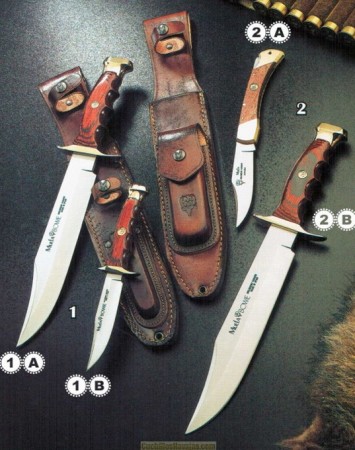
Bowie or Bushcraft Knife:
- Function: The epitome of versatility, being a multi-purpose tool for any situation in the field, including survival or defense.
- Characteristics: Fixed blade with an upswept or clip point, with a length ranging from 10 to 30 cm. Popular for both big and small game, ideal for gutting game.


Hunting and Survival Axe:
- Function: Opening and butchering large animals, clearing brush, cutting firewood, and other heavy camp tasks.
- Characteristics: Robust tool with a drop point edge, designed for power and durability (10 to 18 inches).
Boning Knife:
- Function: Separating meat from the bones of game animals (deer, wild boar, birds), facilitating processing and reducing waste.
- Characteristics: Narrow and thin blade, often slightly curved and flexible for greater precision around bones and joints.
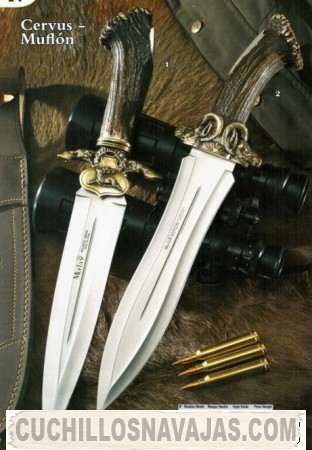
Hunting Dagger / Hunting Dirk:
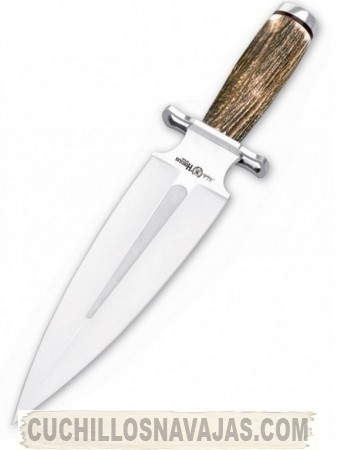
- Function: Piercing the game (the heart in particular) without destroying the skin, meat, and organs. Quickly dispatching wounded game or for self-defense.
- Characteristics: Thin and long, symmetrical double-edged blade that tapers to a sharp point.
Replaceable Blade Knives:
- Function: Versatile cutting with the convenience of replacing the blade, eliminating the need for sharpening. Effective for skinning and caping.
- Characteristics: The handle holds very sharp disposable blades; various blade shapes exist.
Bird and Trout Knife:
- Function: Cleaning and processing small game animals, such as birds and fish.
- Characteristics: Small, thin, often flexible blade. Sharp tip for delicate work; may include scraper/hook features for gutting.
Bone Saw:
- Function: Cutting bones during butchering and processing of large game animals, facilitating faster and cleaner quartering.
- Characteristics: Serrated blade specifically designed for sawing bones.
Camp Knife / Hunting Machete:
- Function: Clearing brush, cutting firewood, heavy camp tasks, and disassembling large animals.
- Characteristics: Large, heavy blade designed for cutting power and durability (10 to 18 inches long).
Field Dressing Knife:
- Function: Primary tool for most of the work once an animal is downed, including gutting, skinning, quartering, and light camp tasks.
- Characteristics: Robust blade (often fixed), common shapes like drop point or clip point, versatile size (4-5 inches), full tang construction.
Hunting Knives: Handcrafted vs. Industrial
The choice between a handcrafted or industrial hunting knife is an important decision that influences the performance, durability, and value of the tool.
A handcrafted hunting knife is a unique piece, the result of the work and mastery of an artisan, where every detail is executed by hand by an expert. They are custom-made, which increases their value and functionality, often being of higher quality and durability than mass-produced ones.
The advantages of handcrafted knives include:
- Durability and resistance: Handcrafted manufacturing ensures a longer lifespan due to the care taken at each stage.
- Customization: Possibility to choose materials, design, and finish to create a unique knife adapted to the hunter’s needs.
- Connection and legacy: Implies an emotional connection with the piece and can be passed down to future generations.
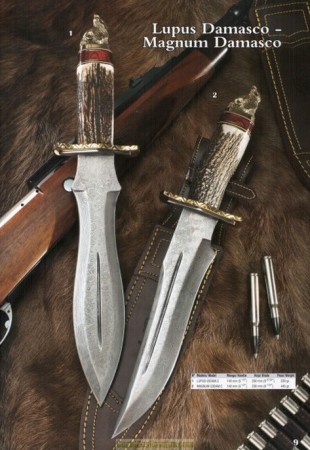
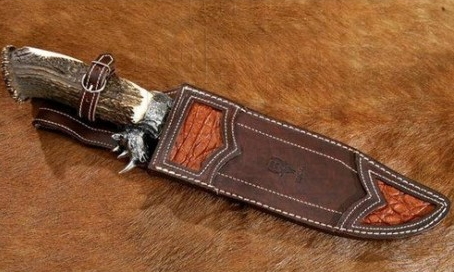
The materials in handcrafted knives are carefully selected: blade steels such as stainless, carbon, or Damascus, each with advantages in durability, ease of sharpening, and corrosion resistance. For the handle, exotic woods, antler, horn, and high-quality synthetic materials are used, which provide good grip and aesthetics. The sheath is usually made of leather or high-quality synthetic materials to protect the knife.
The blade of a hunting knife, in addition to being stainless, must have excellent cutting ability and ease of restoring it once dulled. These qualities depend on the steel, the correct heat treatment applied, called tempering, and the proper execution of subsequent manufacturing processes.
The best are those made of carbon steel, forged, with triple rivets, with a full tang blade whose tang or spine remains entirely within the handle, which must be ergonomic. There are also titanium ones, which make them stainless and 40% lighter.
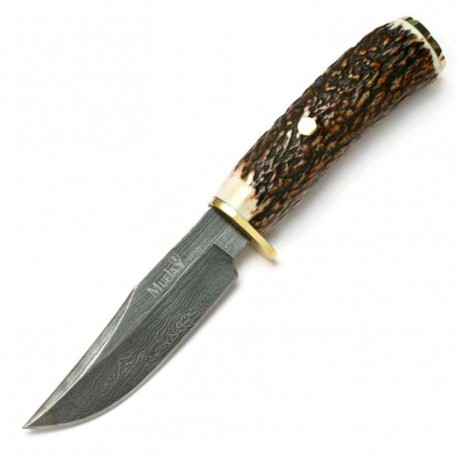
Damascus steel knives have the particularity that the blade has 30 to 40 layers of VG-10 type steel of enormous hardness.
Key Criteria for Selecting the Right Hunting Knife
Choosing the right hunting knife is a personal decision that depends on your specific needs as a hunter and the type of hunting you practice. A good knife will influence not only the efficiency of your work, but also your safety and the overall hunting experience.
Blade Type: Fixed or Folding:
- Fixed Knives (Fixed Blade): They are incredibly strong and durable, offering absolute reliability. They are easy to clean and adapt well to heavy and prolonged tasks, being favorites for survival. Their disadvantage is that they are bulkier and heavier to transport. For beginners, a fixed knife is recommended for its robustness and ease of use.
- Folding Knives (Hunting Folders): Lightweight and compact, they are easy to transport and safer to carry in your pocket. However, they are generally less durable than fixed blades and can be difficult to clean if dirt gets into the hinge.
Blade Material: Strength and Edge Retention:
The material is fundamental for durability and performance. The type of steel directly influences hardness, edge retention, and corrosion resistance.
- Stainless Steel: High corrosion resistance and easy to maintain. Ideal for humid environments or for those who prefer low maintenance. Although it can be harder to sharpen than carbon steel.
- Carbon Steel: Renowned for its durability and excellent ability to maintain a sharp edge. Requires more care to prevent oxidation, especially when in contact with water or blood.
Handle Design and Ergonomics: Comfort and Safety:
A comfortable and secure handle is crucial to prevent hand fatigue and ensure a firm grip, even in adverse conditions.
- Common materials include wood, plastic, aluminum, bone, antler, G10, Micarta, and rubber. Rubber, Micarta, or textured plastic handles usually offer a better grip when hands are wet or stained.
Blade Shape: Adapted to the Task:
- Drop Point: Offers strong and versatile cutting edges, ideal for general hunting tasks.
- Clip Point: Provides greater precision for detailed work and is more pointed, facilitating penetration.
- Skinning Blades: Designed with a curved edge to separate skin from meat without puncturing it.
- Serrated Edge: Useful for cutting rope, tendons, or bone with greater ease.
- Gut Hook: A protrusion on the top of the blade that facilitates opening the animal’s abdomen without damaging internal organs.
Size and Weight: Balance for Handling:
Finding the right balance between size and weight is essential. A knife that is too large or heavy can be difficult to handle for precision tasks, while one that is too small may not be suitable for demanding tasks.
Specific Functionality: Consider Your Needs:
Think about the main tasks you will use the knife for. Some are designed for very specific functions (like skinners for skinning), while if you perform a variety of tasks, a more versatile knife like a Bowie or a bushcraft knife will be a better choice.
Trusted Brands in the World of Hunting
The market offers a wide range of hunting knife brands, each with its own reputation and specialties. Here we present some of the most prominent and reliable, recognized by experienced hunters for their quality and dependability:
- Cudeman: A brand from La Mancha with 40 years of experience, known for its wide variety of skinning knives, manufactured with top-quality materials and meticulous finishes.
- Joker: Cutlery from Albacete, specialized in sporting and hunting knives. Their handcrafted knives and folders are internationally recognized for the fineness of their blades.
- Muela: Prestigious Spanish cutlery with a history dating back to the 1950s, combining artisanal knowledge with cutting-edge technology. Their knives are distinguished by their ergonomic design and ease of handling in harsh conditions.
- Benchmade: Renowned for its durable and high-quality knives, especially its fixed-blade models, offering customization options and premium steels.
- Buck Knives: Synonymous with American tradition, highlighted by its commitment to durability and excellence in folding and fixed-blade knives.
- Gerber: Known for its innovative and accessible tools, with robust and functional knives, standing out for their replaceable blades.
- Ka-Bar: Revered for its toughness and reliability, with a rich history since World War II, transferring its robustness to its hunting knives.
- ESEE Knives: Produces tough and functional survival knives, with designs forged from real-world field experiences, appreciated for their extreme durability.
- Spyderco: Stands out for its innovation, unique designs, and the introduction of the thumb hole for easy one-handed opening.
- Helle Knives: From Norway, embodies the Scandinavian knife-making tradition, known for their handmade blades and the use of natural materials.
Maintenance and Sharpening: Keys to Durability and Efficiency
A well-maintained and sharpened hunting knife is synonymous with efficiency, safety, and durability. Proper maintenance not only extends the life of your tool but also prevents the proliferation of bacteria and ensures optimal performance.
Importance of Cleaning:
- Prevent deterioration: Prevents oxidation and premature wear of the blade and handle.
- Prevent contamination: Crucial for knives that will come into contact with food, preventing the proliferation of bacteria.
- Maintain performance: A clean knife is always ready for its next adventure, maintaining its edge and functionality.
Basic Steps to Clean Your Hunting Knife:
- Removal of Surface Dirt: Remove any visible debris (blood, dirt) with a damp or dry cloth.
- Washing with Soap and Water: Wet the knife under warm water and apply mild soap, cleaning carefully.
- Detailed Brushing: Use a small brush to reach corners and textured areas.
- Disinfection: Apply isopropyl alcohol to the blade to disinfect and eliminate bacteria.
- Drying and Lubricating: Dry completely with a clean cloth to prevent oxidation and apply a thin layer of specific knife oil.
- Proper Storage: Store the knife in a dry place, preferably in its sheath or wrapped in a breathable material.
Knife Sharpening:
Good sharpening not only facilitates cutting tasks but also reduces the risk of accidents, as a dull knife requires more force and is more prone to slipping.
Sharpening Methods:
- Sharpening Stones: Preferred option for restoring damaged edges and achieving a high-quality sharpen. Stones with different grits (coarse, medium, fine) are used to deburr, refine, and polish the edge. It is crucial to maintain a constant angle (15-20 degrees for hunting knives) throughout the process.
- Manual or Electric Sharpeners: Manual ones are easy to use for moderately damaged edges and are portable. Electric ones offer a quick and convenient solution.
- Sharpening Rods (Steels): More suitable for daily maintenance and realigning the edge than for restoring severe damage.
Legislation and Regulations on Hunting Knives in Spain
It is essential to know the legal regulations regarding the carrying and transport of hunting knives to avoid problems. In Spain, legislation allows the acquisition and possession of hunting knives by adults without the need for particular authorization, but carrying and transport are subject to the notion of “legitimate reason.”
- Categorization: Since 2013, hunting knives are classified as Category D or D2a weapons.
- Notion of Legitimate Reason: This is a justification that the carrier must present to law enforcement, who will decide if the reason is legitimate according to the situation. Examples include possessing a hunting license or heading to an exhibition. Non-legitimate reasons would be carrying it for self-defense or in a public place without clear justification.
- Carrying and Transport:
- Carrying: Implies that the knife is on the person, ready for immediate use.
- Transporting: The knife is not on the person, but in a secure and specific container (ideally with a lock) and should not be immediately usable.
- Regulation (since 2019): Category D weapons must never be carried or transported without a legitimate reason.
- Penalties for infringement: May include fines of up to 15,000 euros and prison sentences. The assessment is made on a case-by-case basis in the field.
- Local Regulations: In addition to national legislation, it is crucial to respect local regulations that may impose additional prohibitions in certain places, even with a legitimate reason.
We offer you a wide variety of the best and most outstanding hunting knives, so you can choose the ones that best suit your needs, your own experience, the type of hunting you practice, and your personal preference for manufacturing materials and brands that convince you the most. Investing in a good hunting knife is investing in efficiency, safety, and success in your hunting trips. Remember that having a well-maintained and adapted knife is essential to ensure effective and ethical hunting.
To explore our selection and find the perfect companion for your adventures, visit our collection of hunting knives. We also invite you to discover our Bowie knives and hunting folding knives.