
Knives with deer antler handles combine tradition, natural beauty and functionality. Why do so many collectors and users value this material so highly? In this article you will find everything about its history, characteristics, manufacturing processes, care, buying tips and how to distinguish a handmade piece from a mass-produced one. Learn how to choose a good knife with a deer antler handle and how to preserve it so it lasts for generations.
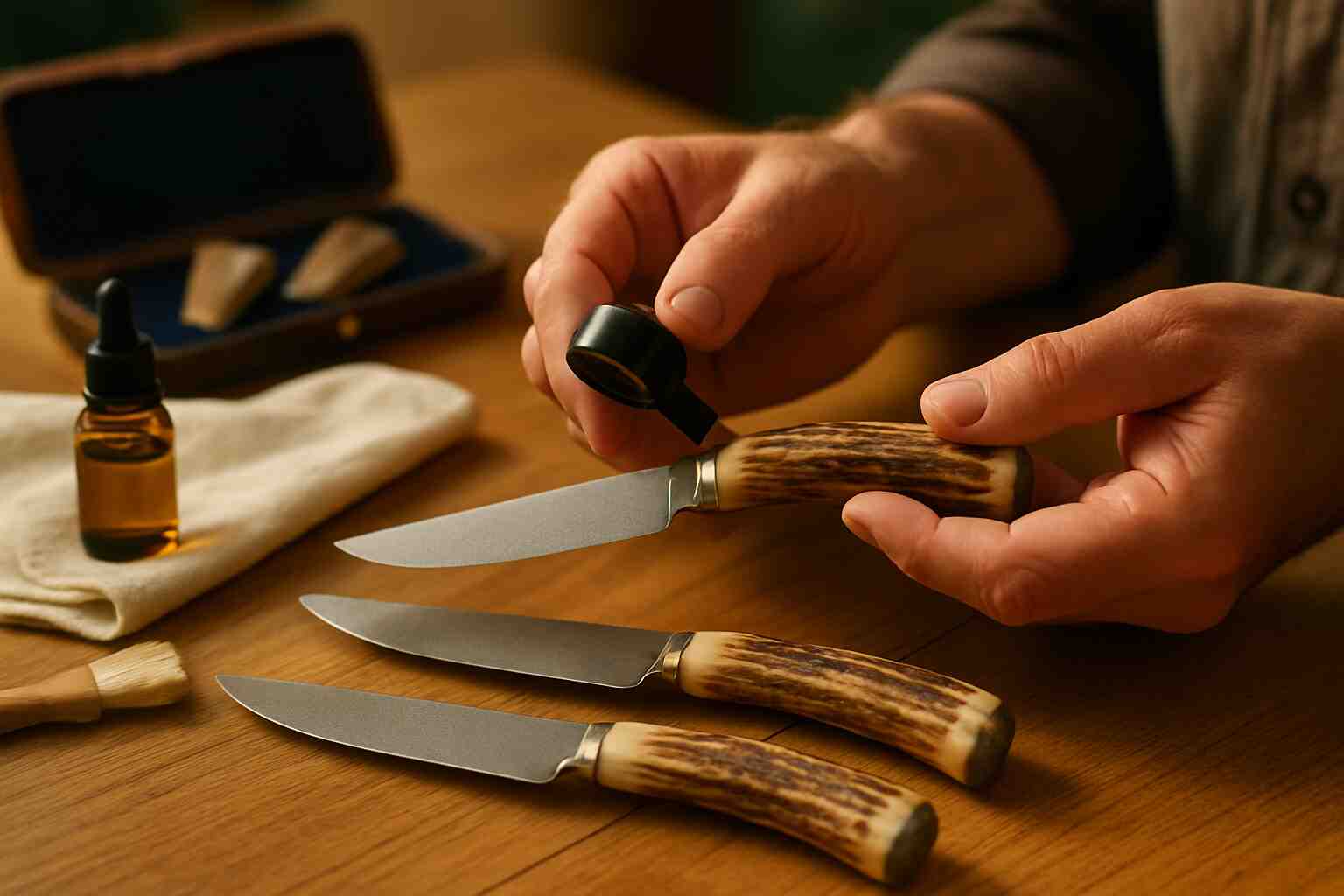
Why choose a deer antler handle
Contents
- Why choose a deer antler handle
- Brief history: from the Neolithic to contemporary workshops
- How deer antler is worked: from blank to finished handle
- Physical properties and material care
- Types of knives that use deer antler
- Comparison: deer antler versus other materials
- Tips for buying a knife with a deer antler handle
- Care and restoration: maintaining aesthetic and functional value
- Ethical and legal aspects
- How to distinguish a good handmade piece
- Frequently asked questions you won’t see here but should consider
- Aesthetics and display: how to show off your collection
- Final recommendations for those seeking an antler piece
Deer antler offers a hard-to-match combination: a warm texture, ergonomic grip, and a rustic aesthetic that ages with character. Unlike synthetic materials, antler is natural, recyclable and, when well worked, resists the kinds of corrosion that would affect metals or porous materials. In addition, its feel conveys a sense of quality and tradition, highly prized by hunters, craftsmen and collectors.
Main advantages
- Natural ergonomics: shapes that fit well in the hand.
- Unique aesthetics: grain and tones that make each piece one of a kind.
- Durability: when properly treated, it withstands knocks and temperature changes.
- Simple maintenance: gentle cleaning and occasional oiling.
For these reasons, many cutlery houses in Spain and Europe keep antler as the preferred raw material for their most elegant lines.
Brief history: from the Neolithic to contemporary workshops
The use of antlers for handles of tools and weapons is ancient. Rudimentary knives with deer antler handles have been found in Celtiberian sites. Over time the technique was perfected: today the craft combines tradition and modern technical processes to guarantee the material’s stability and safety.

How deer antler is worked: from blank to finished handle
Working antler is not simply sanding and gluing. It is a craft process that involves:
- Antler selection: thickness, curvature and absence of internal cracks are examined.
- Controlled drying: to avoid deformities and the appearance of fissures.
- Cutting and carving: the ergonomic and aesthetic shape is defined.
- Fitting to the tang: the joint must be precise to ensure stability.
- Finishing and treatment: polishing, protective oil and, where appropriate, decorative carving.
A good craftsman combines hand tools and light machinery to respect the antler’s natural fibers and achieve a balance between robustness and elegance.
Decorative and utilitarian techniques
- Carving: geometric or figurative motifs that personalize the piece.
- Rosettes and guards: brass, silver or steel inlays to reinforce and beautify.
- Full handles or pommels: continuous designs that cover a larger surface of the handle.

Physical properties and material care
Deer antler is compact and has a fibrous structure that gives it mechanical strength without losing lightness. It is not porous like soft wood, but it is sensitive to excessive hydration or extreme heat. Keeping it in optimal condition is straightforward if basic rules are followed:
- Cleaning: wipe with a dry or slightly damp cloth after use.
- Oiling: apply mineral oil or camellia oil once or twice a year to prevent drying.
- Avoid immersion: do not submerge in water or place in a dishwasher.
- Temperature: avoid direct heat sources or sudden changes.
With basic care, the handle will retain its shape and tone, and may even develop a patina that enhances its appearance.
Types of knives that use deer antler
Antler adapts to different styles: hunting knives, traditional folding knives, collector’s knives, table cutlery knives and artistic pieces. In Spain there are emblematic lines made with antler handles, and many local workshops keep historical models in production.

Practical examples
- Hunting knives: robust handles that withstand intensive use and allow gloved grip.
- Traditional folding knives: refined pieces with decorative carving and compact designs.
- Table cutlery: elegance and personality in knife and fork sets.
Even table cutlery can feature worked antler in exclusive series, adding distinction to the tableware.

Comparison: deer antler versus other materials
| Material | Appearance | Durability | Maintenance | Approximate price |
|---|---|---|---|---|
| Deer antler | Unique, natural grain | High if properly dried and treated | Low to medium (occasional oil) | Medium to high |
| Premium wood (olive, ebony) | Warm and polished | High with varnish | Medium (protection and oil) | Medium |
| Micarta/Resins | Uniform, modern | Very high | Low (regular cleaning) | Medium |
| Bone | Classic, ivory-like | Medium | Medium (avoid humidity) | Medium |
Tips for buying a knife with a deer antler handle
Buying an antler piece requires attention to several details that indicate quality and durability. Before purchasing:
- Check the fit: the tang must fit without play.
- Observe the drying: pieces with internal cracks or odd odors indicate poor treatment.
- Ask about the origin: antlers from managed game use are often more sustainable.
- Check the inlays: well-mounted rosettes and guards extend the useful life.
- Prefer recognized craftsmanship: workshops with a track record guarantee proper processes.
Price versus value
A well-worked antler handle is not cheap, but it represents an investment. Value the piece for its finish, functionality and potential for appreciation on the collectors’ market.
Care and restoration: maintaining aesthetic and functional value
If your knife shows small cracks, loss of patina or has darkened, there are conservative restoration techniques:
- Cleaning with isopropyl alcohol and a soft cloth to remove surface dirt.
- Filling small cracks with compatible resins and subsequent polishing.
- Applying special waxes or oils to nourish the surface.
- In case of structural damage, consult a craftsman for tang readjustment or partial replacement.
Restoration should always prioritize conserving the original material, avoiding aggressive interventions that would alter the piece’s character.

Ethical and legal aspects
Buying deer antlers involves considering legality and ethics. In Europe, most antlers come from natural deaths or regulated hunting, and their use is legal. Still, request documentation when purchasing valuable pieces and look for suppliers who certify sustainable practices. Avoid pieces of dubious origin or treated with prohibited substances.
How to distinguish a good handmade piece
Signs of a quality handmade piece:
- Smooth finish without burrs.
- Perfect fit of the tang and quality rivets.
- Sharp, well-proportioned carvings.
- Balanced weight and ergonomics when held.
A visit to the workshop or a conversation with the craftsman usually clears up doubts about techniques and materials.

Frequently asked questions you won’t see here but should consider
Although we avoid FAQ lists, it’s useful to ask yourself: Will I use it heavily or is it for display? Do I want custom carving? What is my maintenance budget? The answers will help you choose better.
Aesthetics and display: how to show off your collection
An antler handle enhances any display case. Some display tips:
- Avoid direct sunlight to prevent fading.
- Keep relative humidity stable, ideally between 40–60%.
- Use supports that do not press on weak points of the handle.
The patina that forms over the years adds character and shows the owner’s care.

Final recommendations for those seeking an antler piece
If you opt for a knife with a deer antler handle, seek a balance between aesthetics, functionality and traceability. Favor manufacturers who document origin and apply good drying and finishing treatments. Consider the intended use: some handles are geared for heavy work, others for collection. In both cases, periodic maintenance ensures longevity.
Spain is a leader in manufacturing high-quality knives and folding knives with deer antler handles. Many classic models, limited series and handmade pieces come from workshops that preserve traditional techniques combined with modern controls.
There is no serious collector who does not value at least one antler piece in their display. They are objects that speak of tradition, craft and good taste.