In the exciting and ancient world of cutlery, there are mechanisms that not only define the functionality and safety of a piece, but also hold a rich history and cultural legacy. Among the vast diversity of knives that have been forged over the centuries, the lever knife stands as an unmistakable hallmark of Spanish cutlery tradition. This ingenious locking system has accompanied generations of users, from farmers and artisans to collectors and adventurers, becoming today synonymous with reliability, craftsmanship, and an enduring heritage. But what exactly is a lever knife, what is the origin of its profound legacy, and how does this fascinating and proven mechanism work? Join us on this comprehensive journey to unravel all its secrets, understand its differences from other locking systems, and discover why it remains a preferred choice for many.
A Look at History: When Was the Lever Born? A Journey Through the Centuries of Spanish Cutlery
Contents
- A Look at History: When Was the Lever Born? A Journey Through the Centuries of Spanish Cutlery
- The Soul of the Knife: What is the Lever Mechanism and How Does it Work?
- Proven Reliability: The Lever in Daily Use
- Beyond the Lever: Other Locking Mechanisms in Folding Knives
- Choosing Your Edged Companion: Purchase and Usage Recommendations
- An Enduring Cultural and Artisanal Legacy
The history of cutlery is a reflection of the evolution of human needs and artisanal mastery. When speaking of antique knives and their locking mechanisms, the question of the exact origin of the lever often arises. Some might, intuitively, place its birth in earlier times, such as the flourishing 18th century, a period of great innovation in the manufacture of bladed weapons and tools. However, historical research and the oral tradition of master cutlers offer us a more precise and fascinating perspective.
The traditional lever, as we recognize and appreciate it today in classic Spanish cutlery, began to be significantly implemented in the late 19th century. Its true boom and consolidation as a common and widely used mechanism occurred at the beginning of the 20th century, extending its popularity to the present day. This transition period was crucial for the identity of the Spanish knife.
During the 18th and much of the 19th centuries, the most widespread and predominant locking systems in the Iberian Peninsula and other regions of Europe varied. Among them, the “window” mechanisms (which could include “wings” or a ring to secure the blade) or the traditional “forced spring” stood out. The latter was particularly typical of renowned cutlery areas such as Thiers or Chatellerault in France, where robustness and simplicity were key. These systems, although functional for their time, often presented limitations in terms of ease of use and absolute safety, sometimes requiring more careful manipulation or two hands for closing.
The arrival of the lever represented a significant technological and ergonomic advancement in the design of folding knives. Its design allowed for a more intuitive and secure lock, improving the user experience. For many experts and enthusiasts, the lever is not just a mechanism, but an intrinsically “Spanish” distinctive and a classic of our Albacete and Santacruceña production of the 20th century. This statement underscores its deep cultural roots and its fundamental role in the identity of the cutlery of these regions, which became epicenters of its development and refinement.
It is true that, although less frequently, there were some types of French levers at the end of the 19th century, such as the famous Batisse de Thiers. However, it was in Spain where this mechanism found its true vocation and evolution, consolidating itself as an unmistakable hallmark of our knife. This rootedness is not only due to its functionality, but also to the skill and art of Spanish artisans who knew how to integrate this system with unparalleled aesthetics and quality, turning each knife into a collector’s item and a reliable tool.
The Soul of the Knife: What is the Lever Mechanism and How Does it Work?
The heart of the lever knife lies in its ingenious and robust locking system, a testament to simplicity and effectiveness in mechanical design. The lever is, as its name indicates, a small lever. This piece rests strategically on the upper part of the bolster, which is the metal piece that reinforces the base of the blade and handle, providing stability and resistance to the assembly.
Its main function is crucial for the safety and operation of the knife: to facilitate the lifting of the spring and, with it, release the locking tooth. This tooth is a small protrusion on the heel of the blade that fits into an elongated perforation of the spring itself when the knife is open, holding it firmly locked. By actuating the lever, the spring lifts, the tooth is released, and the blade can be folded or unfolded safely and controllably. This design represented a notable improvement over other more rudimentary locks, which were often difficult for the user’s hands to operate, especially in adverse conditions or with one hand.
The lever is a fundamental piece that enables the secure closing of the knife and is precisely embedded in the arms of the spring plate. It is traditionally made from a small sheet of steel or alpaca, which the artisan cuts with shears and meticulously shapes with a file, paying attention to every detail to ensure a perfect fit and impeccable operation.
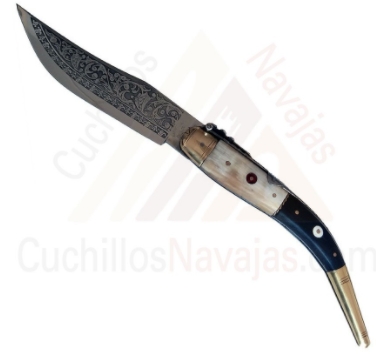
In Spain, historically, the closure called “de muelles” (springs) became popular. This system consists of a series of precisely crafted teeth on the heel of the blade. When the knife is opened, these teeth slide and engage in the spring’s perforation, producing the characteristic and resonant “clack-clack” that many associate with traditional knives. This sound, far from being a defect, is a sign that the mechanism is functioning correctly and the blade is secured.
Currently, the “palanquilla” or “teja” (tile) closure is the most popular and recognized, being a direct evolution of the spring system. Although similar in concept, the key innovation lies in the fact that the main spring has a collapsible leaf (the lever) that the user must manipulate to release the lock and close the knife. This is considered the first type of effective safety mechanism incorporated into a knife, specifically designed to prevent the blade from accidentally closing while being handled when open, which significantly increases user safety.
Materials and Styles: The Diversity that Defines the Lever Knife
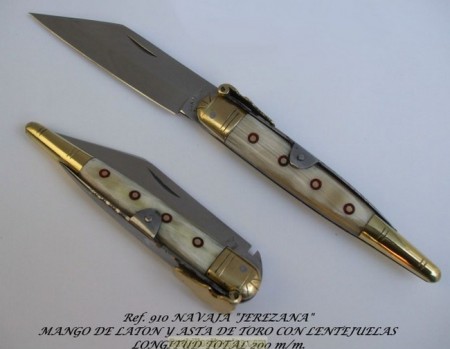
The richness of lever knives is not limited to their mechanism; it extends to the wide variety of materials and styles that compose them, reflecting both local availability and the artisan’s creativity. We can find handles made from a wide range of materials, each contributing a unique aesthetic, feel, and durability:
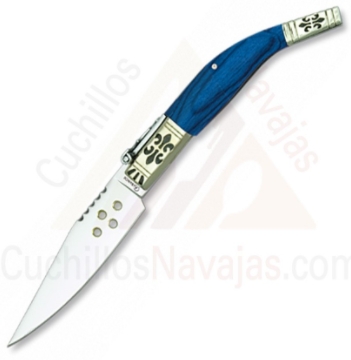
- Noble woods: Such as holm oak, olive, ebony, or boxwood, which offer warmth, natural beauty, and excellent ergonomics. The grain of the wood makes each piece unique.
- Plastics and resins: Modern materials that allow for a greater variety of colors and textures, in addition to being moisture-resistant and easy to maintain.
- Deer antler or bull horn: Classic materials highly valued for their natural beauty, resistance, and the character they impart to the knife. Each piece of antler is different, adding exclusivity.
- Metals: Such as brass or alpaca (nickel silver), used in bolsters and caps, which not only reinforce the structure but can also be decorated with grooves, engravings, or filework, enhancing the overall beauty of the knife.
The Blade: Shapes, Grinds, and Exceptional Steels
As for the blades, the diversity is equally rich and fascinating, with typologies that evoke the history and geography of Spanish cutlery. Although the Albacete blade, with its particular morphology characterized by a slightly raised tip and an elegant profile, is very common in this type of knives, other distinctive typologies are also found:
- Machete type: With a wider and more robust blade, ideal for more demanding tasks.
- Pastora: A classic and functional shape, often associated with field work.
- Sevillana: Characterized by its pronounced curve and elegance, often with a more stylized design.
- Bandolera: With its distinctive drops and curves, which give it a bold and traditional look.
The blade grinds, i.e., the way the steel is reduced from the spine to the edge, are crucial for cutting performance. In lever knives, the grinds can be:
- Flat grinds: Where the blade narrows linearly from the spine to the edge. They provide a very efficient cut and are easy to sharpen. They are known for their ability to achieve a “brutal cut” and a “very good edge” due to the geometry that facilitates penetration and sliding through the material.
- Hollow grinds: Where the blade has a concavity that makes it thinner near the edge. This creates an extremely thin and sharp edge, ideal for precision cuts.
The quality of the steel is, without a doubt, one of the most important factors for an exceptional edge and cut. Steels such as V10 or 12C27 are examples of high-quality materials used in these knives. Sandvik 12C27, for instance, is a Nordic-sourced stainless steel, very popular in cutlery for its excellent balance between hardness, corrosion resistance, and ease of sharpening. Its chemical composition (approximately 0.60% carbon and 14% chromium) gives it ideal properties for maintaining a durable edge and resisting rust, even in humid environments. V10, though less common in public information, usually refers to steels with similar high-performance characteristics.
Finally, some of these knives, particularly the larger ones or those seeking a more traditional touch, may feature a ratchet mechanism. This system produces a series of audible stopping points when opening the blade, accompanied by a distinctive “clack-clack”. This sound is not only an aesthetic and traditional element, but also serves as an audible confirmation that the blade is opening and progressively locking, adding an element of safety and authenticity to the user experience.
Proven Reliability: The Lever in Daily Use
Beyond their aesthetics, history, and manufacturing complexity, lever knives are universally valued for their unwavering reliability. Users and collectors agree that this type of safety is “very reliable” and has proven not to fail, even under the most constant and demanding conditions of use. This inherent robustness makes them practical and trustworthy tools for everyday life, capable of tackling a wide range of tasks with competence and safety.
From preparing a simple sandwich on a country outing to more intensive uses in work or adventure environments, the lever knife behaves as a tireless companion. Its mechanism, being less prone to dirt accumulation or failures due to lateral impact compared to other systems, ensures that the blade will remain firmly locked when most needed, minimizing the risk of accidental closures that could cause injuries.
It is fundamental to emphasize the importance of a good finish in the integration of the lever. When its “wings” or “flaps” are well-designed and polished, they integrate smoothly with the handle, without protruding or bothering in the slightest during use. This attention to detail not only contributes to a superior aesthetic, but also improves ergonomics, allowing for a comfortable and secure grip, even during prolonged periods of work. The feel in the hand is one of solidity and balance, which facilitates cutting precision and reduces fatigue.
Furthermore, as already mentioned, the flat grind design, so common in these knives, offers a “brutal cut” and a “very good edge”. This is because the blade geometry allows for less resistance when penetrating material, making the cut cleaner and more efficient. Whether for cutting rope, opening packages, preparing food, or performing precision work, the cutting ability of a good lever knife is exceptional.
Maintenance for an Extended Lifespan
To ensure your lever knife maintains its reliability and exceptional edge over time, it is crucial to follow some simple but effective maintenance guidelines:
- Regular cleaning: After each use, especially if the knife has been in contact with food, dirt, or corrosive substances, clean it with a damp cloth and dry it immediately. Avoid using abrasive detergents.
- Mechanism lubrication: Occasionally apply one or two drops of specific knife lubricating oil to the springs and joints of the lever mechanism. This will facilitate opening and closing, prevent oxidation of internal parts, and reduce wear due to friction. Make sure the mechanism is clean before lubricating.
- Blade protection: Clean the blade with a cloth slightly dampened with oil (such as mineral or camellia oil) to prevent corrosion, especially if you live in a humid environment or if the knife will be stored for a while. Fingerprints and moisture are the main causes of oxidation.
- Avoid moisture and salt: If the knife comes into contact with salt water or any substance it is not designed for, rinse it immediately with fresh water, dry it thoroughly, and apply a light coat of oil.
- Proper storage: If you are going to store your knife for a long period, do not leave it in its leather sheath, as leather can retain moisture and cause blade corrosion. It is preferable to store it in a dry, ventilated place and, if possible, in a breathable fabric bag or a box.
- Sharpening: Keep the blade’s edge properly sharpened. A sharp knife is safer and more efficient, as it requires less force to cut, reducing the risk of slips.
- Appropriate use: Do not use your knife for functions it is not designed for, such as prying, using it as a hammer, or a screwdriver. This can damage the mechanism, blade, or handle.
Beyond the Lever: Other Locking Mechanisms in Folding Knives
While the lever is an emblematic mechanism, the world of folding knives offers a diversity of locking systems, each with its own characteristics, advantages, and disadvantages. Understanding these differences is key to choosing the right knife for every need. Below, we explore some of the most common mechanisms and compare them with the lever.
Locking Mechanism: Liner Lock
The Liner Lock is one of the most widespread and popular locking systems today, especially in everyday carry (EDC) knives. It consists of a part of the metal liner of the handle (the “liner”) that flexes inward when the blade opens, engaging against the heel of the blade and locking it in its open position.
- Advantages:
- Easy one-handed use: Allows for quick and fluid one-handed opening and closing, making it very convenient.
- Slim design: Generally allows for a thinner knife profile, which facilitates pocket carry.
- Versatility: Adapts to a wide variety of knife designs and is relatively inexpensive to manufacture.
- Less prone to dirt accumulation: Compared to some other mechanisms, it has fewer cavities where dirt can accumulate.
- Disadvantages:
- Security: Although it is safe for most uses, its resistance to extreme stress may be less than that of other locks. There is a small risk of the thumb getting in the way of the blade when closing if not careful.
- Wear: Over time, the liner can wear out, which could reduce the security of the lock.
- Sensitivity to dirt: Although less prone than others, dirt accumulation in the pivot area can affect its operation.
Locking Mechanism: Back Lock
The Back Lock is one of the oldest and most proven locking systems, known for its robustness and reliability. It consists of a spring-loaded lever located on the spine of the handle that engages a notch on the back of the blade’s tang when it opens. To close it, the lever on the spine is pressed, releasing the blade.
- Advantages:
- High security: It is considered one of the strongest and safest locks, ideal for tasks involving pressure or force on the blade.
- Reliability: Its simple and robust design makes it very reliable and less prone to failure.
- Ambidextrous: Generally easy to use for both right-handed and left-handed users.
- Disadvantages:
- Two-handed closing: Often requires the use of both hands to close the knife safely, which can be a disadvantage in certain situations.
- Dirt accumulation: The slot on the spine can accumulate dirt and lint, which could affect the mechanism if not cleaned regularly.
- “Finger trap”: When closing, fingers can get in the way of the blade if caution is not exercised.
Locking Mechanism: Slip Joint
The Slip Joint is a retention mechanism, rather than a full lock, and is very common in traditional knives and multi-tools. The blade is held in the open position by the pressure of a spring that seats in a notch on the blade’s tang, but it does not rigidly lock. To close it, pressure is simply exerted on the spine of the blade.
- Advantages:
- Simplicity and lightness: Very simple design, resulting in lightweight and easy-to-maintain knives.
- Legality: In many jurisdictions, Slip Joint knives are easier to legally carry, as they do not have a fixed lock.
- Traditional aesthetic: Often associated with classic and elegant designs.
- Disadvantages:
- Not a real lock: The blade can close if enough pressure is applied to the spine or if it is accidentally hit. This makes it less safe for tasks requiring force or precision.
- Lower security in intensive use: Not recommended for heavy-duty work where accidental closure could be dangerous.
Comparison with the Lever
The lever sits at an intermediate point between the robustness of a Back Lock and the ease of use of a Liner Lock, while offering superior security to a Slip Joint. Its locking system is firm and reliable, comparable in security to a Back Lock for most tasks, but with a release method that, although requiring a specific movement of the lever, is intuitive and safe.
- Security: The lever offers very high security, comparable to more robust systems, preventing accidental closures.
- Ease of use: Requires conscious manipulation of the lever, which makes it safe but perhaps not as “fast” as a one-handed Liner Lock for initial deployment. However, its closing is controlled and safe.
- Maintenance: Like the Back Lock, the lever mechanism may require regular cleaning to prevent dirt accumulation in the spring and lever, although its design is less prone to problems than some more complex systems.
- Aesthetics and Tradition: The lever stands out for its strong connection to craftsmanship and tradition, offering a classic aesthetic and a distinctive “clack-clack” that many value.
Choosing Your Edged Companion: Purchase and Usage Recommendations
Choosing a knife is a personal decision that should be based on the intended use, the user’s experience level, and aesthetic preferences. Lever knives, due to their versatility and reliability, are an excellent option for a wide range of profiles.
For the Beginner and Occasional User
If you are new to the world of knives or are looking for a practical and safe tool for occasional uses (such as opening packages, cutting light ropes, or for sporadic field use), a lever knife is an outstanding choice. Its mechanism, though traditional, is intuitive to learn and offers a level of security that will give you confidence. Look for models with wood or plastic handles, which are usually more affordable and easy to maintain. Opt for a medium size (between 8 and 10 cm of blade) that is comfortable to carry and handle. The robustness of the lever will ensure that the knife will not fail you in everyday tasks.
Recommendation: A lever knife with a pastora or Albacete type blade in 12C27 steel and holm oak wood or durable plastic handles. These are ideal for their balance of tradition, functionality, and ease of use.
For the Adventurer and Outdoor Enthusiast
For those who enjoy outdoor activities, hiking, hunting, or fishing, reliability is a critical factor. A lever knife becomes an irreplaceable companion. Its resistance to dirt and its robustness make it ideal for demanding environments. Look for models with deer antler or bull horn handles, which are not only aesthetically appealing but also extremely durable and offer a secure grip even in wet conditions. Consider a knife with a slightly larger blade size (10-12 cm) for more demanding tasks, such as preparing kindling or skinning small game. The ratchet mechanism, present in some of these knives, can be a plus for its characteristic sound and audible confirmation of the lock.
Recommendation: A larger lever knife, with antler handles and a machete or bandolera type blade, made with high-quality steels like V10 or 12C27 to ensure a durable edge and corrosion resistance.
For the Expert and Collector
Connoisseurs and collectors will appreciate the lever knife for its historical value, craftsmanship, and the diversity of its variants. For this profile, the focus is on authenticity, material quality, and perfection in finishing. Models with exotic material handles, richly decorated bolsters and caps, and blades with complex grinds or premium steels will be the most desired. Attention to detail in the integration of the lever, the absence of play, and the smoothness of the mechanism are indicators of a high-quality piece. Furthermore, exploring the different blade typologies (Sevillana, Bandolera, etc.) and models with ratchets will add value to the collection.
An Enduring Cultural and Artisanal Legacy
The lever knife is much more than a simple utilitarian object; it is a living symbol of traditional Spanish craftsmanship and a pillar of its cultural heritage. Its deep roots in specific geographical areas, such as the historic cities of Albacete and Santa Cruz de Mudela, are no coincidence. These localities have been, for centuries, true melting pots of cutlery, where knowledge and techniques have been passed down from generation to generation, forging a unique identity in each piece.
The profound affection and cultural value of these pieces are reflected in the existence of specialized literature, such as the valuable books by D. Rafael Martínez del Peral Fortón, which document and celebrate the richness of Spanish cutlery. These works not only serve as guides for collectors but also as guardians of a savoir-faire that might otherwise be lost.
Currently, interest in lever knives remains vibrant and constantly growing. This is possible thanks to the dedication of active communities of enthusiasts who gather in specialized forums, digital platform dissemination channels, and collector associations. In these spaces, technical knowledge and historical anecdotes are shared, personal collections are admired and exhibited, and the most intricate details of each piece are discussed, from steel quality to the perfection of the lever’s adjustment. This constant and passionate dialogue ensures that the knowledge, appreciation, and love for these knives continue to be passed down from generation to generation, adapting to new times without losing their essence.
The lever knife is, in short, a brilliant and tangible example of how tradition, functionality, and beauty can harmoniously merge into a timeless piece. Its rich history, ingenious design, and proven reliability solidify it as a true classic of Spanish cutlery, a piece that not only cuts but also tells a story, captivating bladed weapon lovers worldwide and securing its place in the future.
If you are looking for a knife that combines tradition, reliability, and an unmistakably Spanish aesthetic, we invite you to explore our selection. You will find a wide variety of lever knives, from classic models to unique artisan pieces, perfect for daily use, adventure, or for enriching your collection. Discover the mastery of Spanish cutlery and make a piece of history and functionality your own.