
Are you a fan of sport fishing or do you spend long days on board looking for the perfect folding knife or fishing knife? Choosing a good marine folding knife or fish knife is not just about design: the type of fishing, the material, ergonomics and, of course, maintenance all matter. In this practical guide you’ll find everything you need to choose, use and care for your tool at sea, with real examples, professional tips and direct links to our store to buy tested models.
Why choose a marine folding knife or a knife specifically for fishing?
Contents
- Why choose a marine folding knife or a knife specifically for fishing?
- Types of knives and folding knives for fishing
- Materials, edge and construction: what to look for
- How to choose according to your type of fishing
- Maintenance: steps to extend the life of your knife
- Safety at sea: recommended practices
- Useful accessories and complements
- Where to buy: recommended models and warranty
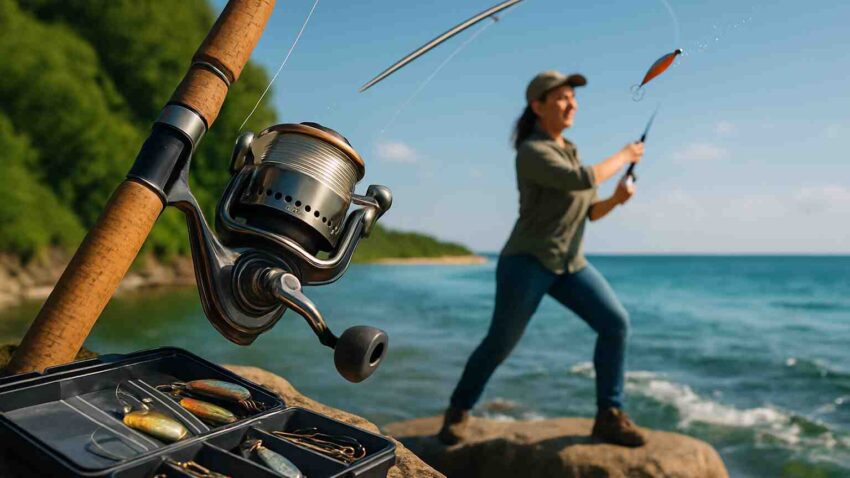
A knife designed for the marine environment offers clear advantages: corrosion resistance, ergonomics for quick maneuvers and edges that make filleting or cutting lines easier. Not every knife is suitable for every task; using the right tool improves safety and efficiency.

Shore fishing, boat fishing or diving require different solutions. Choosing correctly reduces work time, prevents damage to the catch and extends the life of the tool.
Types of knives and folding knives for fishing
Knowing the options will help you decide according to your activity:
- Marine folding knives: compact, safe and designed for daily use on board. Ideal for cutting lines, opening small boxes and preparing bait.
- Fish knives: with long, flexible blades for precise filleting.
- Diving knives: robust, with a point and serrations for underwater situations and rescues.
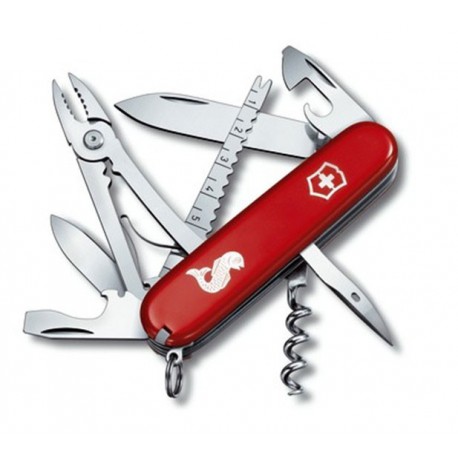
- Multi‑tool knives for anglers: combine tools (pliers, line cutters) in a single body for anglers who want versatility.
Each type has a clear purpose; below we explain when to choose each one.
Materials, edge and construction: what to look for
A knife’s performance is determined by:
- Blade steel: marine stainless steel (such as 420, 440C, or steels with special heat treatments) offers good corrosion resistance. High‑carbon steels have great edge retention but require more care to prevent rust.
- Coatings: ceramic or PVD coatings help protect the blade in saline environments.
- Handle: non‑slip, ergonomic and with a good wet grip. Materials like G10, rubber or stabilized wood are common.
- Locking system: a good lock prevents accidental openings and is essential for folding blades.
The edge should match the intended use: a thin, flexible blade for filleting, thicker and stronger for cutting lines or preparing bait.
How to choose according to your type of fishing
The criteria change depending on the activity:
Sport fishing from shore and from a boat
If you fish from shore or from a boat, consider compact marine folding knives and fish knives for larger catches. Portability and a secure lock are key.
Practical recommendations:
- Choose a knife with a safe tip and a solid lock.
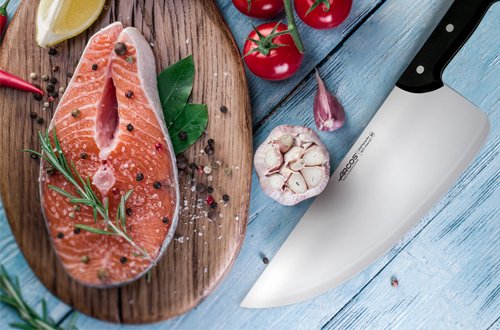
- For filleting, look for blades of 15–25 cm, flexible and well sharpened.
- Consider a sheath or attachment system for the dinghy or belt.
Fly fishing and light tackle
For light tackle, a multi‑tool knife with a line cutter and pliers is the best option. It takes up little space and handles small tasks without needing a large knife.
Diving and spearfishing
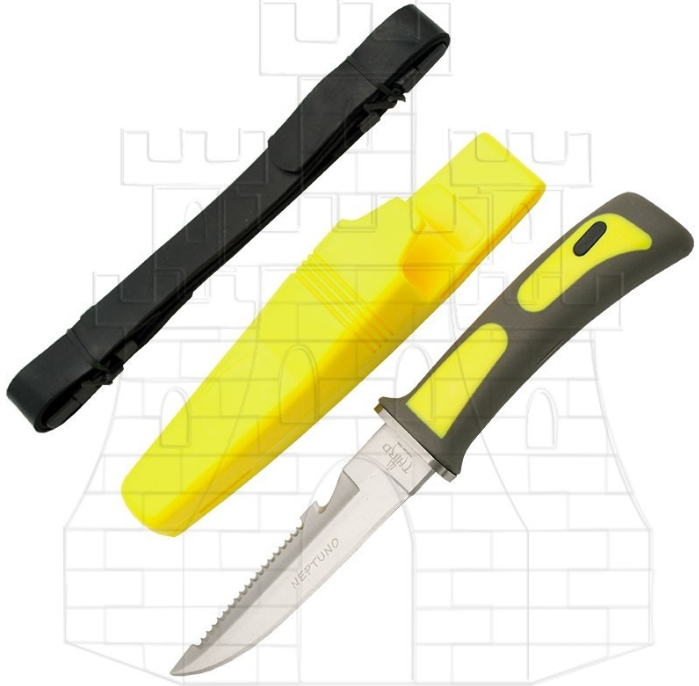
Underwater you need diving knives with robust blades, sharp points and serrated sections to free yourself from tangles. Also, the knife is often used as a survival tool, so underwater ergonomics and salt resistance are essential.
Professional fishing and onboard gutting
Repetitive tasks like gutting or cleaning fish require fish knives that withstand continuous use, with comfortable handles for long shifts and blades that keep their edge after many cuts.
Maintenance: steps to extend the life of your knife
The number one enemy of any knife in marine environments is corrosion. Regular maintenance extends service life and keeps the edge in optimal condition.
- Rinse after use: rinse with fresh water and mild soap to remove salt and organic residues.
- Immediate drying: dry the blade and closing mechanisms to avoid stains and corrosion.
- Lubrication: apply a light film of specific oil or an anti‑corrosion product to the pivot and blade.
- Sharpening: sharpen with a stone or guided system according to the original blade geometry. Maintain the correct angle to preserve functionality.
- Inspection: regularly check the lock, sleeves and handle condition.
Safety at sea: recommended practices
A poorly used knife is a hazard. These practices reduce accidents:
- Do not handle the knife with soaking wet hands without control of the grip.
- Keep the blade closed and secured when not in use.
- Use a sheath or tool holder on your life jacket or belt to avoid loss or accidental openings.
- Do not use the knife as a lever or screwdriver; lateral forces can break the blade or cause injuries.
Useful accessories and complements
Accessories can turn a good knife into a complete tool:
- Waterproof sheaths: protect the blade and make transport easier.
- Attachment systems: magnets or clips to fix the tool on the boat.
- Portable sharpening kits: ideal for long trips or travel.
Even adding a glass‑breaker tip or a whistle can provide extra safety on long outings.
Where to buy: recommended models and warranty
To buy reliable marine folding knives, fish knives or diving knives, visit our official store: CuchillosNavajas.com. There you will find professional models, spare parts and advice to choose according to your fishing practice.
Diving or spearfishing knives
Marine folding knives
Kitchen knives for fish
Featured models and what they are for
When choosing, compare features: steel type, length, handle type and locking system. Below I explain typical examples:
- Classic marine folding knife: ideal for general work on board. Compact, with a good lock and fits perfectly in a pocket or sheath.
- Flexible fillet knife: designed for precise cuts when filleting. Non‑slip handle for long sessions.
- Robust diving knife: wide blade, with saw and point, for cutting in difficult environments.
Advanced maintenance: protection and restoration
If you work intensively with your knife, consider advanced treatments:
- Passivation of the blade to improve corrosion resistance.
- Polishing and regeneration of PVD coatings when the original finish deteriorates.
- Replacement of handle scales or repair of locks by specialists to maintain functionality.
Basic filleting techniques
A good fillet starts with a sharp blade and an orderly technique. Follow these steps:
- Place the fish on a stable surface and hold the head if necessary.
- Make an initial cut behind the gills and slide the blade following the spine with long, controlled strokes.
- Keep the blade almost parallel to the spine to maximize the yield of the fillet.
Practice with small fish until you master the technique; precision reduces waste and improves the presentation of the product.
Legal issues and recommendations
Before you set off, check local regulations on tools and bladed weapons on boats or in ports. Some places regulate carrying and blade size. Complying with the rules avoids fines and problems with authorities.
Daily use tips for experienced anglers
- Always carry a multi‑tool knife as a complement to a main knife.
- Check the attachment on the boat before each outing.
- Prepare a small maintenance kit with oil, a cloth and a portable sharpening stone.
- Label it or mark the sheath to avoid confusion among boatmates.
SEE MARINE FOLDING KNIVES | SEE FISH KNIVES | SEE DIVING KNIVES
Choosing the right knife improves your fishing experience and protects your investment. With knowledge of materials, types and care, you can select the tool that best suits your outings. Remember that regular maintenance and responsible use make the difference between a tool that fails and one that performs day after day. Visit CuchillosNavajas.com to see models, compare features and find the ideal marine knife for your needs.