Are you looking for a single tool that assists you in various activities and repairs? One that saves you space and weight, but offers you a multitude of solutions? Then, it’s time for you to thoroughly explore the fascinating world of multi-tool pliers. These ingenious devices have become an essential item in homes, workshops, and for any outdoor adventure, redefining what practicality and efficiency mean in a single piece. The ability to concentrate multiple functions in a compact design makes them an ideal solution for those looking to optimize their equipment without sacrificing versatility.
A Journey Through Time: The Evolution of Versatility
Contents
- A Journey Through Time: The Evolution of Versatility
- The Anatomy of an Infallible Companion: Beyond Pliers
- Types of Pliers: Beyond the Multi-tool
- Practicality in Every Situation: An Unbeatable Ally
- Choosing Your Ideal Companion: Key Factors
- Keeping Your Tool Always Ready: Essential Tips
- Usage and Safety Tips: Maximize Your Tool’s Lifespan
Pliers, in their most basic form, are one of the most common and ancient tools used by humans. Their main function is simple but powerful: to enhance the strength of the user through the lever principle, allowing them to bend, cut resistant materials, or manipulate small objects with ease. From the rudimentary tongs of ancient blacksmiths to today’s complex designs, the essence of pliers has remained, but their evolution into the “multi-tool” is a story of ingenuity, necessity, and the constant pursuit of efficiency.
It all began, in a way, with the iconic Swiss Army knife. In the late 19th century, cutler Karl Elsener set out to stop Switzerland from importing German tools, and thus invented his own “soldier’s knife,” to which he added innovative functions for the time, such as a screwdriver, a can opener, and a reamer. This knife became a symbol of versatility and a precursor to what was to come. Although modern Swiss Army knives often include small pliers, these were not always effective for tasks requiring great strength or precision, mainly because the knife’s body did not serve as an adequate handle for the force that pliers require.
A century later, in 1975, mechanical engineer Timothy Leatherman, during a trip through Europe with his wife, encountered constant problems that required improvised repairs, from leaky pipes to breakdowns in his old Fiat car. He realized that his explorer’s knife, while useful for some things, could not replace the fundamental need for robust and functional pliers. This personal experience prompted him to dedicate years to the development and patent of his innovative idea: a multi-tool that had pliers as its central and primary element. In 1983, he launched the first Leatherman tool, the PST (Pocket Survival Tool), which revolutionized the concept by incorporating multiple functions, but with pliers as the primary component and, crucially, with two robust handles that allowed for effective and powerful use. This ingenious design laid the foundation for all the multi-tools we know today.
The Anatomy of an Infallible Companion: Beyond Pliers
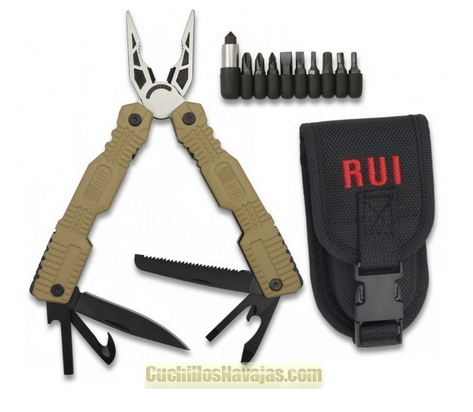
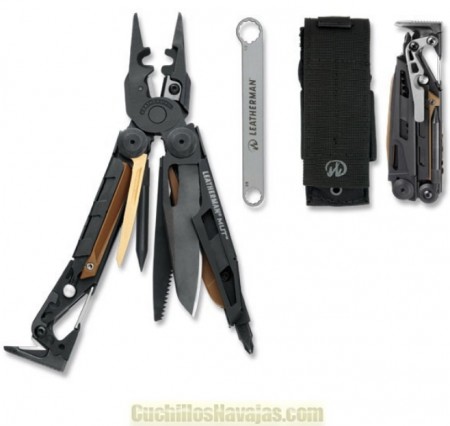
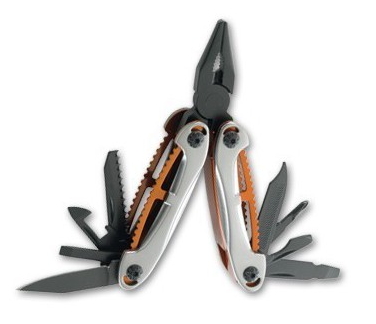
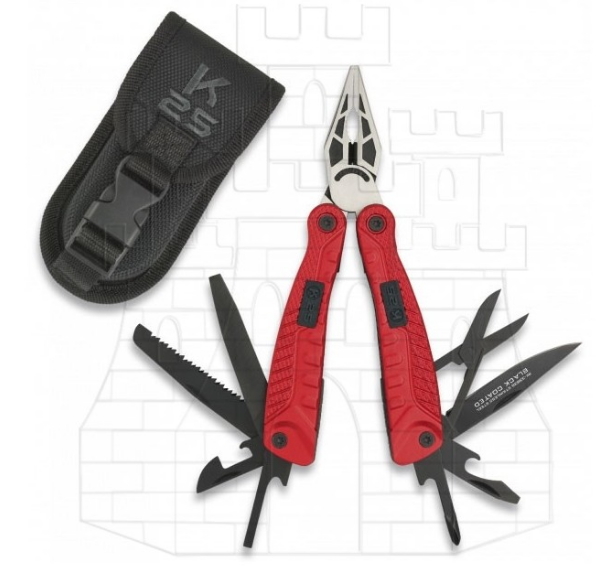
Today’s multi-tools are true miniature toolboxes, meticulously designed to offer maximum functionality in the smallest possible space. Although there are dozens of models, each with a specific set of devices adapted to different needs, some tools are more common and fundamental, forming the core of the versatility of these kits.
- The Pliers: They remain the undisputed heart of the multi-tool. They allow bending and cutting metals, as well as manipulating screws and nuts with precision, even in confined spaces where other tools could not reach. Their ergonomic design and manufacturing quality are crucial to ensure a firm grip and efficient force transmission.
- Wire Cutters: They use the same lever principle as pliers, but are specifically designed for precise cutting of wires and cables. The quality of their steel and the sharpness of their edges guarantee strength and durability, even against hard materials. Some advanced models even have interchangeable wire cutters, which extends the tool’s lifespan and allows for easier maintenance.
- Blades: Indispensable in countless situations, from daily tasks to emergencies. Flat or smooth blades are ideal for precise cuts, peeling food, cutting fishing lines, or performing delicate manual work. Serrated blades, on the other hand, are perfect for tougher and fibrous materials, such as thick ropes, seat belts, or fabrics. Many models offer combined designs (smooth and serrated) for maximum versatility, allowing the user to adapt to different types of cuts without changing tools.
- Saws: When a simple blade is not enough, the integrated saw allows cutting pieces of wood, small branches, or even less noble metals with relative ease. Their compact design and folding capacity make them safe and efficient for jobs that require a deeper and more aggressive cut.
- Screwdrivers: Essential for any type of repair, maintenance, assembly, and disassembly of equipment. Multi-tools usually include a variety of types (flat, star, Phillips) and sizes, often with interchangeable bits or ingenious designs that allow adaptation to different screw heads. This versatility in screwdrivers is key to tackling a wide range of tasks.
- Openers: Elements that, although seemingly trivial, are very necessary in daily life or at a campsite. The inclusion of bottle openers and can openers ensures that you will always have access to your drinks and food, no matter where you are. Their usefulness manifests itself in the most unexpected moments.
- Files: Grooved surfaces designed to polish metal or wood, remove sharp edges, burrs, or even to sharpen other small tools. The file is a valuable addition for finishing and maintenance.
In addition to these fundamental tools, some multi-tools may incorporate other specific functions that make them even more specialized, such as compact hammers, rulers, cutting hooks (ideal for cutting seat belts in emergencies), punches for disassembling firearms, or even dedicated seat belt cutters. The versatility of these devices is, without a doubt, their greatest advantage, allowing the user to carry an arsenal of solutions in a format that fits in the palm of the hand.
Types of Pliers: Beyond the Multi-tool
While multi-tool pliers are the pinnacle of versatility, it’s important to understand that there are various types of traditional pliers, each designed for specific functions. Knowing these differences will help you further appreciate the ingenuity of a multi-tool that integrates several of these capabilities. Pliers, in their purest form, are two-armed metal tongs and are indispensable everywhere, so they cannot be missing from any manual and DIY tool kit, as they can be used for multiple functions such as holding small elements or cutting and shaping conductors.
Universal Pliers: The Classic All-Rounder
Universal pliers are, as their name suggests, the most well-known and widely used due to their multiple applications. Their jaws are ingeniously shaped to grip and cut, making them a versatile tool for a wide range of tasks. Their use varies from holding parts for drilling or welding, to cutting or bending electrical wires, threads, and wires. The part closest to the pivot usually has a ribbed section for a firmer grip, while the front part can be thinner for precision work. They are the go-to tool for many DIY jobs and general repairs.
Flat-Nose or Straight-Nose Pliers: Precision Grip
Flat-nose or straight-nose pliers are designed with flat, parallel jaws that prevent the gripped piece from slipping. They are primarily used for holding, bending, tightening, or straightening flat or hard-to-reach parts. Their design allows for a firm and uniform grip, making them ideal for precision work and for manipulating small components without damaging them. They are very useful in electronics, jewelry, or any task where exact control over the object is needed.
Round-Nose or Conical-Nose Pliers: Access to Difficult Corners
On the other hand, round-nose or conical-nose pliers also serve to hold, bend, and tighten, but their main use is when working in hard-to-reach places or for shaping wires and cables with curves and loops. Their conical shape allows them to reach narrow spaces and make bends with small radii, being indispensable in electrical work, jewelry making, or any craft that involves wire modeling. The fine, round tip is perfect for creating loops or rings in small components.
Practicality in Every Situation: An Unbeatable Ally
The ability of multi-tool pliers to offer multiple solutions in an incredibly compact format makes them an unbeatable ally for various facets of life. Their versatility not only saves space but also ensures that you always have the right tool at hand, no matter the challenge.
In the Car and Motorcycle: Preparation for the Unexpected
Thanks to their compact size, you can store a multi-tool in the car’s glove compartment, in the motorcycle’s compartment, or even in a small backpack without taking up much space. In unforeseen situations on the road, such as a loose cable, a battery that needs a quick adjustment, or even getting trapped in a seat belt after an accident, its blade can save your life by allowing you to quickly free yourself. They are ideal for small emergency repairs or on-the-go adjustments, avoiding the need to carry a bulky tool kit.
At Home: Your Pocket Toolbox
Imagine having 70% of your toolbox in your pocket or kitchen drawer! With a multi-tool, you’ll avoid searching for and storing pliers, saws, screwdrivers, and files separately, as you’ll have them all conveniently grouped in your hands. They are excellent multi-purpose tools for the home, perfect for assembling furniture, tightening loose screws, opening packages, performing small electrical repairs (with proper precautions), or even for craft projects. Their accessibility encourages quick resolution of everyday problems, making DIY much simpler and less intimidating.
Outdoor Activities: Survival in Your Hand
For trekking, camping, hiking, hunting, or fishing enthusiasts, the multi-tool is an indispensable item. Models specifically designed for adventurers are equipped to handle common or emergency situations away from civilization. From repairing a tent, cutting a rope, preparing firewood, adjusting fishing gear, to performing improvised first aid, the multi-tool becomes a portable survival kit. Its robustness and reliability are crucial when help is far away.
Professional Use: Efficiency and Durability
Electricians, mechanics, maintenance technicians, and construction workers find multi-tool pliers to be fundamental equipment. Leading brands like Leatherman, for example, manufacture their tools to meet the demanding requirements of professional work in DIY, construction, and mechanics, with strength and durability as part of their DNA. The ability to have multiple functions in a single device streamlines work, reduces tool search time, and allows for greater mobility in the workplace, improving productivity and efficiency.
Choosing Your Ideal Companion: Key Factors
Given the vast variety of models available on the market, choosing the right multi-tool pliers can seem like a challenging task. However, the key lies in first defining your main purpose and then considering some fundamental features that suit your specific needs. An informed choice will ensure that your investment is durable and truly useful.
Functionality: What do you need it for?
The first question you should ask yourself is: What do you need it for? Will it be for daily use and light tasks at home, for camping, hunting, and fishing activities where survival is key, or for more specific professional jobs that demand robust and specialized tools? Carefully evaluate the tools included in each model and whether they fit your needs. There’s no point in paying for functions you’ll never use, nor falling short with a model that doesn’t cover your basic requirements. Some models focus on screwdrivers and bits, others on heavy-duty pliers, and some on outdoor blades and saws.
Blade Types: Adaptability to Cutting
Consider the three main types of blade edges, as each offers distinct advantages for different types of cutting:
- Smooth Edges: These are ideal for straight and precise cuts, offering greater control over the material. They are excellent for stripping wires, cutting paper, opening packages, or performing delicate work that requires a clean finish. They are the easiest to sharpen and maintain.
- Partially Serrated Edges: These are the most versatile, as they combine a smooth section with a serrated one. They allow for both types of cuts: the smooth part for precision and the serrated part for tougher materials. However, they can make cutting on very hard or very thin surfaces difficult, and their sharpening is more complex than that of a completely smooth blade.
- Serrated Edges: These are excellent for cutting harder, fibrous, or slippery surfaces such as thick ropes, seat belts, fabrics, or even small branches. Their teeth “bite” into the material, preventing it from slipping. Although they are very effective for these tasks, they are less precise for fine cuts and are considerably more difficult to sharpen, requiring specific tools.
Material and Manufacturing Quality: Durability and Performance
Stainless steel is the most resistant and durable material for the blades and body of the tool, and it is commonly used in the manufacture of these kits. Look for high-quality steels (such as 420HC, 154CM, or S30V in premium brands) that offer a good balance between hardness, corrosion resistance, and ease of sharpening. Some handles may be made of aluminum or high-strength polymers to reduce weight without compromising robustness. Manufacturing quality is an important factor; some brands opt for domestic production to ensure the highest standards of quality control and durability, which translates into a tool that will last you for years.
Keeping Your Tool Always Ready: Essential Tips
To ensure that your multi-tool serves you faithfully for a long time and maintains its optimal performance, regular maintenance is absolutely crucial. A well-maintained tool not only works better but also extends its lifespan and guarantees your safety.
Cleaning: The Basis of Good Functioning
It is essential to keep your multi-tool impeccably clean. Prevent sand, dust, lint, or any type of dirt from getting trapped between the tools and in the pivot mechanisms, as this can severely affect their smooth operation, cause excessive friction, and even damage the parts over time. After each use, especially if it has been exposed to dirty environments, clean it with a damp cloth. To remove ingrained dirt in small spaces, you can use compressed air (canned or from a low-pressure compressor) or a wooden skewer or a soft-bristled brush to dislodge residues. Make sure it is completely dry before storing it.
Rust Prevention: Protecting Your Investment
Although most multi-tools are made of stainless steel, they are not completely immune to corrosion. The carbon needed to maintain a durable edge on the blades can make the steel susceptible to rust if not properly cared for. It is important to follow these guidelines:
- Post-Use Cleaning: If the blade or any part of the tool comes into contact with fruit juices, tree sap, blood, or any acidic or corrosive substance, clean it immediately with soap and water, and dry it thoroughly. These liquids can accelerate oxidation.
- Saltwater Exposure: If the tool comes into contact with saltwater (e.g., at the beach or in a marine environment), it is imperative to clean it with fresh water as soon as possible and dry it very well. Saltwater is extremely corrosive to steel.
- Periodic Oiling: Periodically oil the moving parts and joints with a light lubricating oil specific for tools (mineral or synthetic oil). This not only prevents rust but also keeps the moving parts smooth and facilitates the opening and closing of the tools. A few drops are enough.
Rust Removal: Practical Solutions
A little surface rust is not the end of the world and is often easy to remedy. A drop of maintenance oil and a rag can remove most mild rust stains with a little rubbing. For more difficult stains or areas with more ingrained rust, a soft abrasive sponge (like those for washing dishes, but the green part) or specific rust removal products can be useful. Always proceed carefully so as not to scratch the polished surface of the tool. If the rust is deep, professional treatment may be necessary.
Sharpening: Keep Your Edges Sharp
It is often forgotten that a multi-tool, like any knife or cutting tool, also needs to be sharpened to maintain its effectiveness. Each edge is different and requires a specific sharpening technique:
- Knives (smooth blades): These are the easiest to sharpen. You can use small sharpening stones, pocket sharpeners, or portable sharpening systems. Maintain a consistent angle for best results.
- Serrated edges: These require more meticulous sharpening, as each individual saw needs to be sharpened. This is done using round or conical sharpening rods that fit the size of the teeth. It is a process that requires patience and precision.
- Wire cutters: If they are sharp and do not have a “shearing” design (which self-sharpens), straight and narrow sharpening rods are used to maintain their edge.
- Saws: These are particularly difficult to sharpen due to their fine and numerous teeth. Generally, very small sharpening rods with sharp angles are needed to reach each tooth. In many high-end models, saw blades are replaceable, which is a more practical option than trying to sharpen them.
- Cutting hooks: These are sharpened with triangular or round sharpening rods, depending on the specific shape of the hook.
Disassembly: Caution and Warranty
Generally, it is not recommended to disassemble the multi-tool on your own. Doing so can void the manufacturer’s warranty, and furthermore, many of these tools use special screws and mechanisms that require specific tools for their assembly and disassembly. If your multi-tool has a serious mechanical problem or needs complex repair, it is best to seek a professional or contact the manufacturer’s technical service directly, especially if it is still under warranty.
Usage and Safety Tips: Maximize Your Tool’s Lifespan
To ensure the longevity of your pliers, whether multi-tools or traditional, and to ensure your own safety, it is essential to follow some usage guidelines:
- Proper Use: Pliers should under no circumstances be used to loosen or tighten nuts or bolts. For these tasks, there are fixed wrenches, adjustable wrenches, or socket wrenches that are the appropriate tools and will prevent damage to both the nut/bolt and the pliers themselves.
- Specific Cutting: Do not cut sheet metal with pliers, but only cables, threads, and wires. The jaws of pliers are designed for a specific type of material; forcing them with sheet metal can dull or break them.
- Avoid Impacts: Do not hit any object with them, as they can break, deform, or even project fragments that could cause injuries. Pliers are gripping and cutting tools, not hammers.
- Electrical Insulation: When using them in any place with electrical risk, such as electrical cables or small appliances, you must check that they have their corresponding electrical insulation on the handles. This insulation is crucial to protect you from shocks. In addition, whenever possible, disconnect the power before working with electricity.
Multi-tool pliers are much more than a simple tool: they are a symbol of efficiency, preparedness, and autonomy. From their humble origins in the need for practical solutions to their current complexity, these pocket companions have proven invaluable in countless situations, adapting to the demands of modern life. Choosing the right one and taking good care of it will ensure that you have a reliable ally ready for any challenge life throws your way, whether at home, on the road, or in nature. Their ability to concentrate multiple functions in a robust and portable design makes them a smart investment for anyone who values practicality and preparedness.
If you are looking for a tool that offers versatility and reliability in one package, we invite you to see a wide variety of MULTI-TOOL PLIERS and find the perfect companion for your needs.