In the culinary world, where precision and efficiency make all the difference, there are tools that, though small, are truly essential. Among them, the peeling knife, also known as a “puntilla” (small pointed knife), stands out as a true workhorse in any kitchen. If you’ve ever wondered how to make your food preparation tasks easier, you’re about to discover your new best friend.
As their name suggests, these knives are designed to peel the skin or rind from fruits, potatoes, tomatoes, and other vegetables.
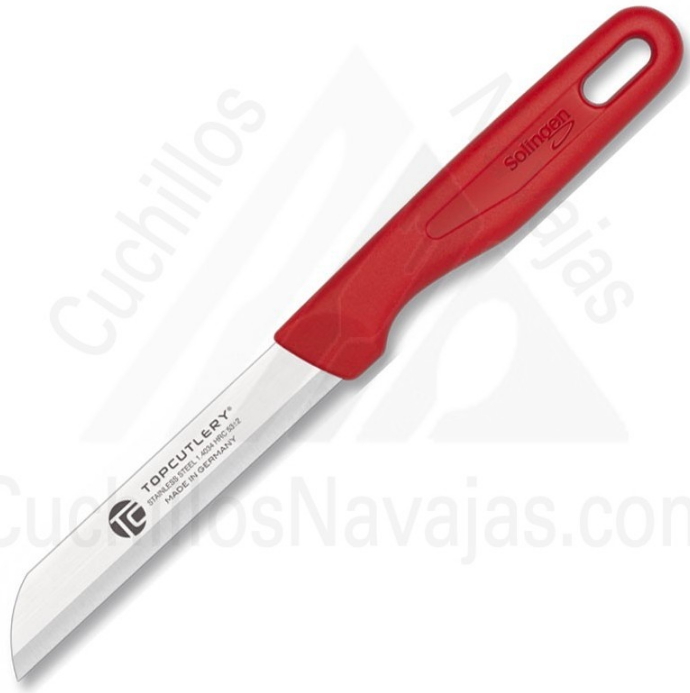
They come in beautiful designs and are made with very good quality, at very low prices.
What is a Peeling Knife or Puntilla?
Contents
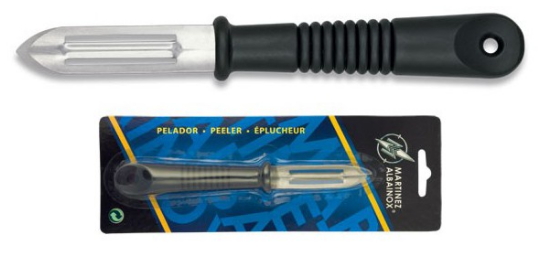
The peeling knife is a kitchen instrument specifically designed to remove the skin from fruits and vegetables with firm peels or those that can be easily sliced. It is often confused with a common knife, but its distinctive feature is a movable blade that adapts to the contours of the food, allowing for more precise and safe peeling.
These knives are characterized by their compact size, with a blade length that usually ranges between 6 and 12 cm, with 10 cm being the most common measurement. Their small and light design makes them extremely manageable, ideal for tasks that require great dexterity and precision on small to medium-sized foods.
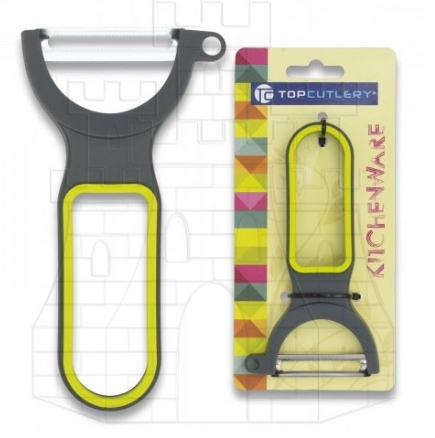
They come in various brands and colors.
Why Should You Use a Peeler?
Although peeling with a traditional knife is possible, the peeler offers significant advantages that make it an indispensable tool:
- Efficiency and Speed: A good peeler can triple the peeling speed compared to a standard knife. Its design facilitates quick and uniform skin removal.
- Improved Safety: By requiring less effort and having a blade designed for the specific task, the risk of accidents and cuts is considerably reduced.
- Superior Precision: Its small size and great maneuverability allow for work with enviable precision, ideal for delicate tasks such as peeling small vegetables or fruits, or making detailed cuts.
- Surprising Versatility: Beyond basic peeling, these knives are perfect for tasks such as obtaining long strips of citrus for desserts, or even for a special potato technique that we will explain later.
Get to Know the Types of Peelers: Shapes and Functions
There is a surprising variety of peeling knives, each with characteristics that adapt to different needs. Knowing them will help you choose the perfect tool for each task.
Manual Peelers
These are the most common and can be found in almost all kitchens. Their designs vary to adapt to different techniques and preferences:
- Standard (or Straight/P-shaped): The most common shape, with a blade similar to that of a chef’s knife but in miniature, slightly curved and with a point. It is very versatile and can be used by right-handed and left-handed people.
- Curved: The smallest, with a blade that has a more pronounced curvature, ideal for peeling fruits (apples, pears, peaches) freehand.
- Carved: Similar to a miniature Santoku knife, with a curvature at the end of the blade. It is excellent for cutting small vegetables, distributing force better.
- Serrated: Its serrated blade makes it perfect for peeling citrus fruits (oranges, lemons) or vegetables with thin, tough skin, such as tomatoes, garlic, or onions, without damaging the pulp.
- Y-shaped: With the blade suspended between two supports that form an angled handle, it is used by pushing the blade away from the body. The famous “REX” peeler from 1947 is an example of this design.
- Lancashire: It has immovable blades attached to the handle and moves slowly towards the person peeling.
- Australian: Similar to the Lancashire, but with a rotating action on the blade to adapt to the shapes of fruits and vegetables, facilitating skin removal.
- With Finger Support: A newer design with a molded plastic support that slides over the middle finger, providing greater control and pressure when peeling.
Specialized or Heavy-Duty Peelers
For more specific tasks or for those seeking greater efficiency and speed, there are peelers with more complex designs:
- Electric or Tabletop Peelers: Tools that attach to the countertop and rotate the food against blades for spiral peeling, often with additional functions such as grating or shredding.
- Apple Peelers: Specifically designed to efficiently peel apples, although they can be used for other similarly shaped fruits and vegetables.
- Double Vegetable Peelers: Allow peeling both sides of a vegetable with a single movement, ideal for asparagus, carrots, or cucumbers.
- Peelers with Multiple Rotating Blades: Offer the possibility of changing the type of cut (smooth, serrated, julienne) simply by rotating a support, without needing to change tools.
Master the Art of Peeling: Key Techniques
Using a peeling knife may seem simple, but like everything in the kitchen, it has its tricks to maximize its efficiency and safety.
- Preparation: Make sure to wash fruits or vegetables thoroughly. Hold them firmly with one hand to prevent unexpected movements. It is advisable to work on a stable surface.
- Correct Grip: Hold the peeler by the handle, with your index finger touching the top and your thumb holding the bottom of the product.
- Complete Movement: Slide the peeler applying light but firm pressure, from the top and tilting it downwards to achieve complete strips of skin. Avoid making half strips, which are inefficient.
- The “Cracking” Potato Technique: A puntilla is excellent for “cracking” potatoes, that is, breaking them slightly instead of cutting them cleanly. This technique releases the starch from the tuber, which is very beneficial. For example, in a stew, it helps to naturally thicken the broth without needing to add cornstarch or flour. For a Spanish omelet, it makes the potato less floury.
Care and Maintenance of Your Peeler
To prolong the life of your peeling knife and ensure its optimal performance, follow these tips:
- Regular Sharpening: A sharp peeler is safer and more effective. Sharpen it regularly; its narrow, low-volume blade facilitates this process with a sharpening stone.
- Hand Washing: Although some peelers are dishwasher safe, hand washing them with warm water and mild soap after each use helps preserve the edge and handle.
- Immediate Drying: Always dry your peeler completely before storing it to prevent damage.
- Proper Storage: Store the peeler in a dry, cool place, preferably in a drawer or holder where it is not exposed to bumps or contact with other utensils, which could scratch the blade and affect its edge. If it has a protective cover, use it.
- Intended Use: Use the peeler exclusively for its main function: peeling. Avoid using it to pry, cut bones, frozen foods, or open cans, as this will deteriorate its blade.
Choose the Perfect Peeling Knife for You
The choice of the right peeling knife depends on your experience level and the tasks you perform most frequently. If you are a beginner, a standard manual peeler or a Y-shaped one is ideal to start. They are versatile, easy to use, and allow you to familiarize yourself with the peeling technique. For more advanced cooks or those who prepare large quantities of food, a specialized peeler, such as a heavy-duty model or one with multiple blades, can be a valuable investment that saves time and effort. Also consider the material of the handle and blade; stainless steel ones are durable and corrosion-resistant, while ergonomic handles offer greater comfort and control.


Peeling Knives: The Tool That Transforms Your Kitchen
Ultimately, the peeling knife or puntilla is a practical and fundamental tool that can make your food preparation faster, more efficient, and safer. Incorporating it into your kitchen routine and mastering its use will give you experience and skill, turning you into a true master of small culinary details. If you are ready to elevate your kitchen skills, consider exploring our wide selection of high-quality peeling knives, available in our online store. Time to practice!