
Owning a handcrafted blade, collector’s knife, or specialist cutting tool isn’t just about acquiring an object; it’s about embracing a legacy of precision and craftsmanship. To prevent wear and tear on your knives and ensure they retain their functionality, beauty, and value over time, it’s essential to implement proper conservation techniques from day one. A mistreated edge or a tarnished handle can transform a cutlery masterpiece into a useless item, so proactive care is key to prolonging its lifespan and fully enjoying every cut.
The Art of Durability: Understanding Deterioration in Handcrafted Knives
Contents
- The Art of Durability: Understanding Deterioration in Handcrafted Knives
- Materials and Their Specific Care: Forging a Long Life for Your Tool
- Smart Storage Techniques to Preserve an Impeccable Edge
- Beyond the Edge: Preventive Maintenance and Basic Repairs
- Common Mistakes You Must Avoid to Protect Your Knife’s Lifespan
- Discover our selection to prevent wear and tear on your knives: conservation techniques
- Got Questions? Unravelling the Secrets of Care for Experts and Novices

The deterioration of a handcrafted knife is a multifaceted process that goes beyond simple dulling. Understanding its root causes is the first step towards effective conservation. Factors such as corrosion, abrasion, and material fatigue act constantly, compromising both the aesthetics and functionality of the piece.
Exposure to moisture, acids, or aggressive environments can initiate oxidation, especially in steels with lower chromium content. This process not only stains the blade but also weakens its structure, making it more susceptible to unexpected breaks or chips. Abrasion, on the other hand, is physical wear caused by contact with unsuitable surfaces or incorrect sharpening, which can permanently alter the geometry of the edge.
Furthermore, material fatigue, though less visible, is a crucial phenomenon. Repeated cycles of use and stress can cause microfractures invisible to the naked eye, eventually leading to structural failures. A knife that is not stored correctly, not cleaned after each use, or used for tasks it wasn’t designed for, dramatically accelerates these deterioration processes. Recognising these threats allows for appropriate preventive measures to be adopted.
Materials and Their Specific Care: Forging a Long Life for Your Tool
Understanding the composition of your knife is essential to applying the correct conservation techniques. Each material, from the blade to the handle, possesses unique characteristics that demand specific and conscientious care. Ignoring these particularities can lead to premature deterioration.
Carbon Steel vs. Stainless Steel: A Duel of Resilience
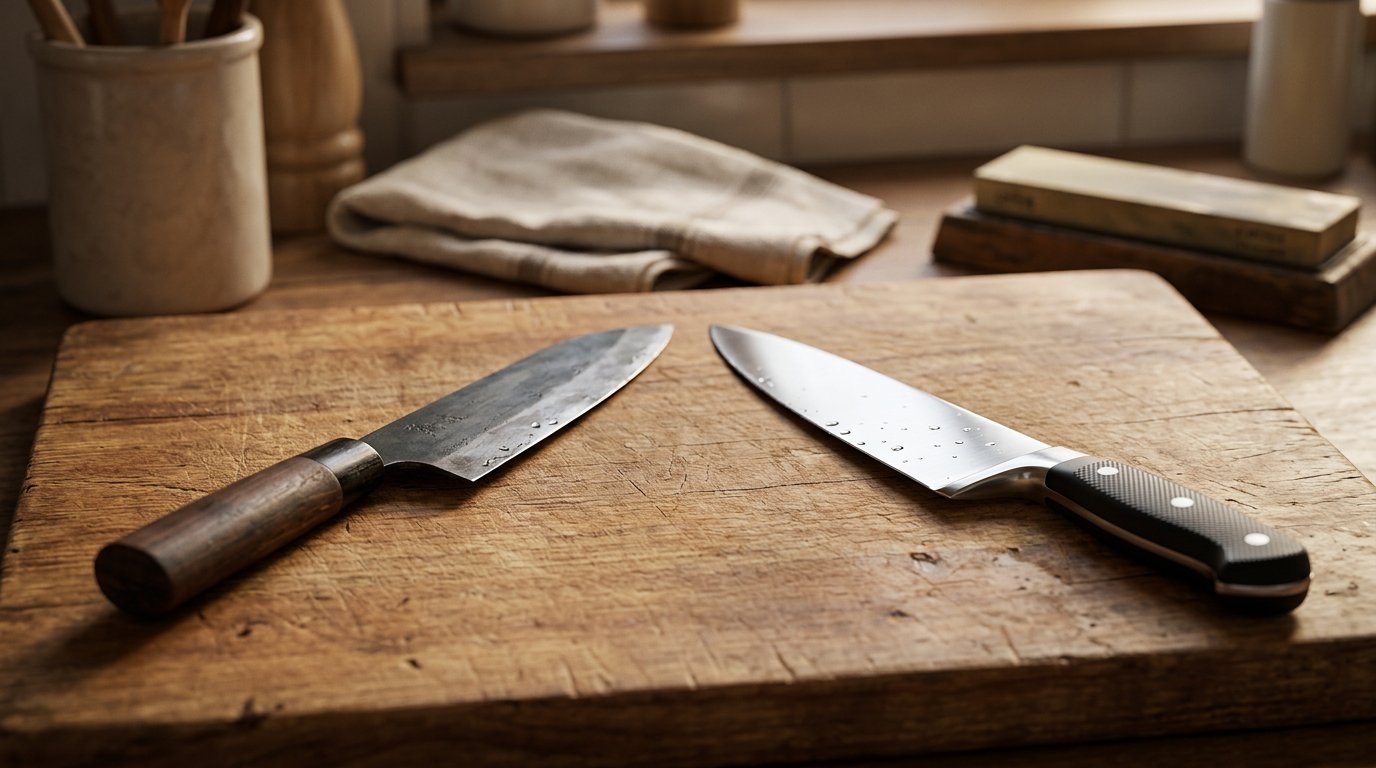
Carbon steel knives are prized for their exceptional edge retention and ease of sharpening. However, their Achilles’ heel is their high propensity for oxidation. They require immediate cleaning after each use and thorough drying, followed by the application of a thin layer of mineral oil or microcrystalline wax to protect the surface. The dark patina they develop over time is desirable for some, but red rust must be avoided at all costs.
On the other hand, stainless steel knives, while more corrosion-resistant due to their chromium content, are not immune. They can stain or corrode if exposed to strong acids or salt for prolonged periods. Although they don’t need oiling as frequently as carbon steel, effective cleaning and drying are still essential to maintain their shine and prevent water stains.
Handles: Woods, Resins, and Composite Materials
Natural wood handles, such as olive wood or walnut, are beautiful but sensitive to moisture and temperature changes, which can cause cracks or warping. It’s crucial to nourish them regularly with specific food-grade wood oils or beeswax to maintain their hydration and prevent drying out. In contrast, handles made from synthetic materials like G-10, micarta, or plastic are much more resistant to the elements and require minimal maintenance, usually just a clean with water and mild soap.
|
Component |
Common Materials |
Main Risks |
Essential Care |
|---|---|---|---|
|
Blade |
Carbon steel, stainless steel |
Corrosion, edge loss |
Immediate cleaning, complete drying, oiling (carbon), regular sharpening |
|
Handle |
Wood, bone, ivory, G-10, micarta, plastic |
Cracks, warping (wood), stains, discolouration |
Oil/wax (wood), gentle cleaning (all) |
|
Sheath/Scabbard |
Leather, kydex, nylon |
Moisture, blade abrasion |
Drying, avoid damp storage |
Smart Storage Techniques to Preserve an Impeccable Edge
Storing your knives is just as crucial as using and cleaning them. An improper method can ruin a perfect edge, damage the blade or handle, and even pose a safety risk. The key lies in protecting the blade from impacts and moisture, and maintaining a stable environment for the other components.
- Knife Blocks: If you opt for a wooden block, make sure it’s clean and dry. Insert the knives with the edge pointing upwards or sideways to prevent constant rubbing against the wood from dulling the edge. Dust can accumulate, so periodic cleaning of the block is advisable.
- Magnetic Strips: Magnetic strips are excellent for displaying your knives and keeping them accessible, but they require careful application. Place the spine of the knife on the strip first, then pivot the blade so the edge doesn’t hit the metal. This avoids nicks and scratches.
- Edge Guards (Sheaths): For knives stored in drawers, plastic or wooden edge guards are indispensable. They prevent the edge from being damaged by clashing with other utensils and protect your hands when handling them. Ensure the knife is completely dry before sheathing it to prevent moisture accumulation and potential corrosion.
- Knife Rolls or Cases: Ideal for transport or long-term storage, these should offer individual compartments for each piece, preferably with a soft interior material that won’t scratch. Ensure knives are coated with a thin layer of protective oil before storing for extended periods, especially if the environment is damp.
- Environmental Conditions: Avoid storing knives in locations with extreme temperature or humidity fluctuations, such as near a dishwasher or in damp basements. These environments can cause oxidation of steel blades and negatively affect wood or bone handles, leading to cracks or warping. Storing knives in a cool, dry environment is the best general practice.
Beyond the Edge: Preventive Maintenance and Basic Repairs
Preventive maintenance is not limited to sharpening; it encompasses a set of practices aimed at prolonging the lifespan of each component of your knife. Negligence in seemingly minor aspects can lead to major problems and costly repairs.
Deep Cleaning and Regular Lubrication
After each use, especially with acidic or salty foods, clean your knife immediately with warm water and mild soap. Use a non-abrasive cloth or sponge to avoid scratching the blade surface. It’s crucial to dry the knife completely to prevent water spots and oxidation, particularly on carbon steels. Once dry, apply a thin layer of food-grade mineral oil to the blade. For moving parts of folding knives (pivots, springs), a drop of specific knife lubricant or sewing machine oil will keep the action smooth and corrosion-free, extending the lifespan of internal mechanisms.
Sharpening and Honing: Preserving the Edge Geometry

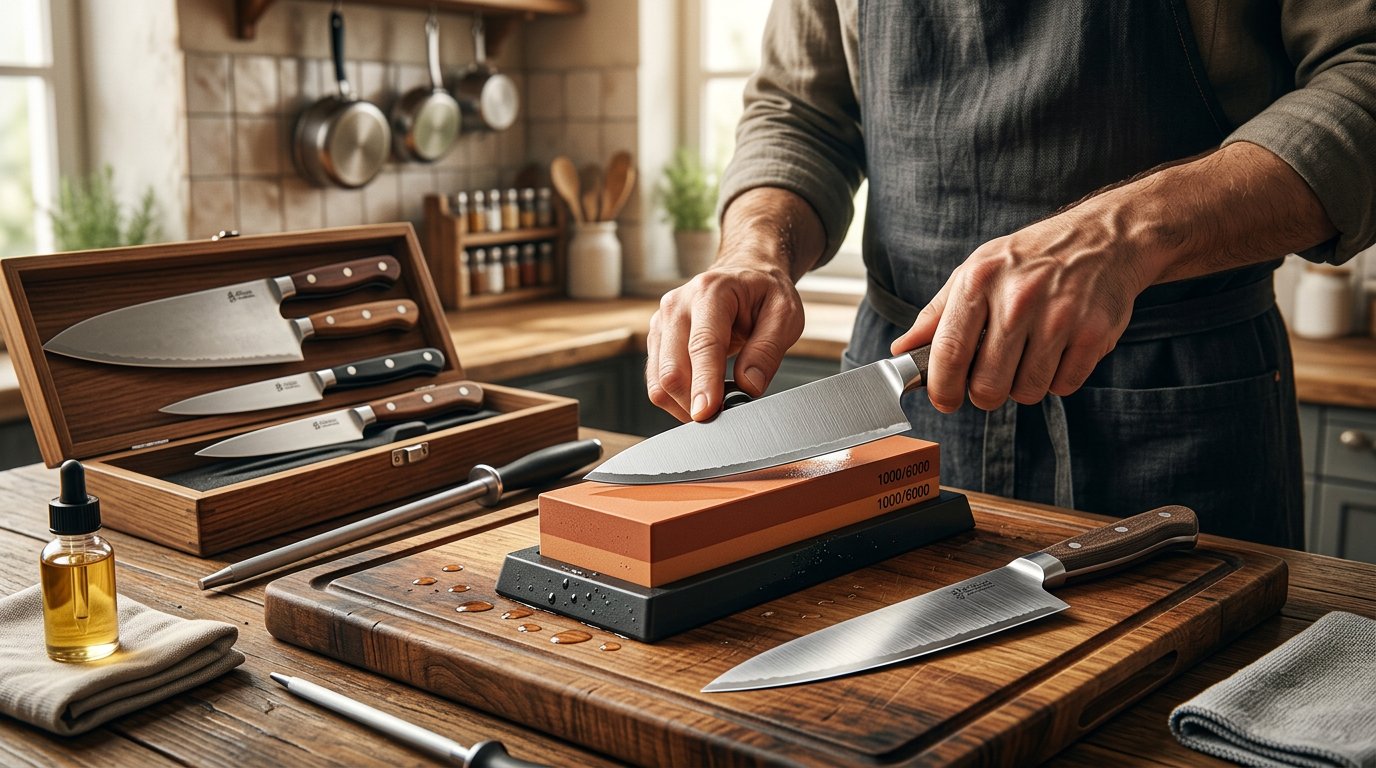
Correct sharpening is the cornerstone of a functional knife. Learn to use sharpening stones with different grits, from roughing to polishing, to maintain the original edge geometry. It’s preferable to make several gentle passes with a fine-grit stone and then hone the edge with a steel or leather strop to maintain its sharpness. Avoid poor-quality electric sharpeners that can excessively abrade the metal and irreversibly alter the edge angle. Regular, gentle sharpening is far better than aggressive, sporadic sharpening, as it minimises material loss from the blade.
Common Small Repairs
Should a small chip appear on the edge, it’s not always necessary to consult a professional immediately. With care and patience, you can use a coarse sharpening stone to gently remove material around the chip, reforming the edge. Then, progress to finer grits. For wooden handles that are starting to dry out or show small cracks, gentle sanding and the application of linseed oil or wood wax can restore their appearance and prevent further damage. Periodic inspection of the handle’s rivets or screws is also important; if loose, tighten them with the appropriate tools.
Common Mistakes You Must Avoid to Protect Your Knife’s Lifespan
Often, premature deterioration of a knife results from inadequate habits and misinformation. Avoiding these erroneous practices is as important as applying the correct conservation techniques.
- Dishwasher use: Exposure to high temperatures, corrosive detergents, and contact with other objects in the washing cycle is extremely damaging to any quality knife. This can dull the knife, corrode the blade, and irreparably damage the handle. Always hand wash your knives.
- Inadequate storage: Leaving knives loose in a drawer, where they clash with each other or other utensils, is a death sentence for the edge. Scratches, chips, and rounding of the edge are inevitable consequences of this practice.
- Applying excessive force: Using a knife for prying, screwing, or opening cans is not only dangerous but can bend, break, or chip the edge and tip. Each knife is designed for a specific function.
- Using inappropriate chopping boards: Cutting on glass, ceramic, or metal surfaces will dull your knife almost instantly. Always use wooden or plastic chopping boards designed for this purpose, as they are gentler on the edge.
- Ignoring initial corrosion: Failing to treat small rust spots or corrosion as soon as they appear can lead to irreversible blade deterioration. Act quickly at any sign of oxidation.
Discover our selection to prevent wear and tear on your knives: conservation techniques
Got Questions? Unravelling the Secrets of Care for Experts and Novices
How often should I sharpen my knife?
The frequency of sharpening depends on how often you use your knife. For daily kitchen use, honing with a sharpening steel every few uses and a full sharpen every few weeks or months is recommended, depending on the intensity. For collector’s knives or sporadic use, sharpen only when you feel it begins to lose its initial bite, always with patience and proper technique to preserve the integrity of the edge and blade. The key is consistent maintenance.
Is it safe to wash my carbon steel knife with soap and water?
Yes, it’s completely safe to wash your carbon steel knife with soap and mild water, but with one condition! It is absolutely crucial to dry it immediately and thoroughly after washing. Moisture is the main enemy of carbon steel, which is prone to oxidation. A soft, dry cloth, followed by a thin layer of protective oil, will ensure your blade remains impeccable and corrosion-free.
What type of oil should I use to protect my knife blade?
- Food-safe use (kitchen): The ideal is food-grade mineral oil (often sold as “chopping board oil”). It’s safe, doesn’t go rancid, and has no taste or smell.
- General use or collection: You can use synthetic oils like camellia oil, WD-40, or specific gun and tool oils (such as Ballistol).