Why a sharp knife changes everything
Contents
- Why a sharp knife changes everything
- Why keeping your knives sharp is essential
- Types of sharpeners and when to use them
- Featured professional products and how to use them
- Practical comparison: features and recommended use
- How to choose the best sharpener for your knife
- Sharpener maintenance and edge care
- Sharpening methods by blade type
- Advantages of investing in professional sharpeners
- Practical examples and workflow
- Recommended accessories
A well-sharpened knife is not just another tool; it is a guarantee of safety, precision and efficiency. Did you know that a worn edge forces you to apply more force and increases the risk of slips and accidental cuts? Here I explain how to choose the right sharpener, how to use each type and which professional products are worth it, including pocket options, natural stones, diamond and ceramic rollers.
Why keeping your knives sharp is essential
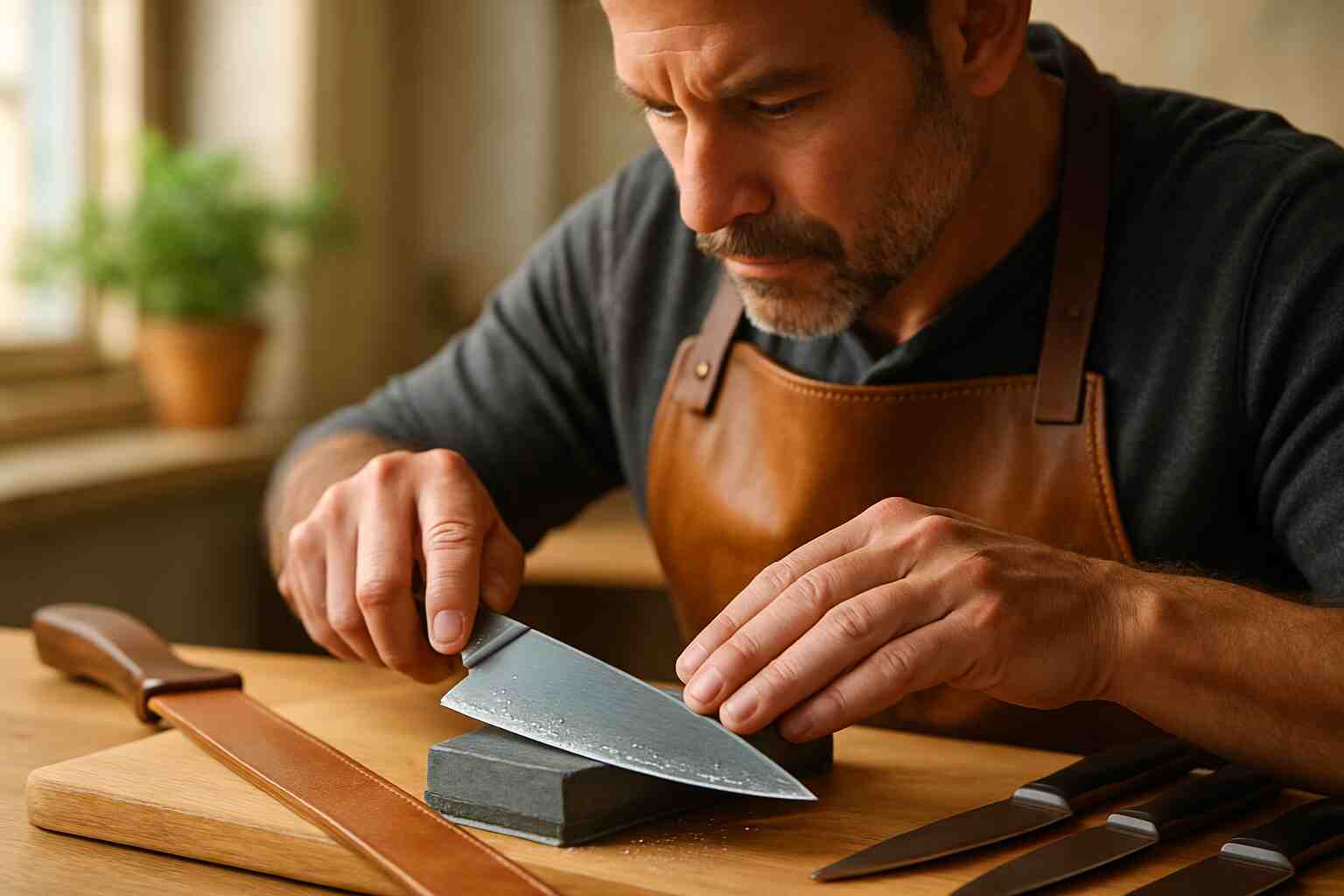
Keeping the edge in optimal condition has clear benefits: more precise cuts, less effort, longer blade life and safer handling. A good sharpening reduces risk because the knife cuts with the edge and not by pushing with force. In addition, a proper sharpening respects the hardness of the steel if done correctly, avoiding overheating that damages the metal structure.
Main benefits
- Safety: clean, controlled cuts.
- Efficiency: less effort and precision on every pass.
- Durability: an edge that lasts longer when appropriate techniques and tools are used.
Types of sharpeners and when to use them
There are many solutions on the market. Here I describe the most useful for professionals and enthusiasts:
- Metal pocket sharpeners: ideal to carry in the field or in the kitchen when you need a quick adjustment.
- Natural or synthetic stones: perfect for fine sharpening and edge restoration. They require technique and time.
- Diamond sharpeners: very effective for removing material quickly and restoring a uniform edge.
- Ceramic rollers: compact and fast for daily edge maintenance.
Featured professional products and how to use them
Let’s look at four sharpeners that combine quality, portability and performance. I have integrated and updated the descriptions from the original material to offer you a practical guide.
Professional metal pocket sharpener – ARCOS
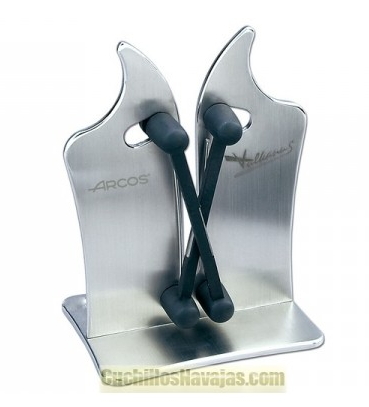
We begin with this professional metal pocket sharpener from ARCOS. Keeping knives sharp is a basic rule to ensure safe handling. A well-sharpened knife is safer, as cuts will be precise and require no force.
When to use it
Ideal for quick adjustments in the field, hunting or the kitchen. Its size makes it perfect to carry in the knife sheath or on the belt. It does not replace a stone sharpening when the blade needs restoration, but it is perfect for daily maintenance.
Natural sharpening stone 1800 grit – A PEDRA DAS MIGAS
We continue with this natural sharpening stone, 1800 grit (polishing) with a 25 cm blade and a total length of 37.5 cm. It includes a fabric cover. With a handle of estamina wood and an internal stainless steel core, it can keep your tools and knives perfectly sharp, and because large material removal (which can generate heat in the steel) is not necessary, it preserves the steel’s hardness so the edge lasts much longer. Always use wet with water, never with oil, and once dry store in its cover.
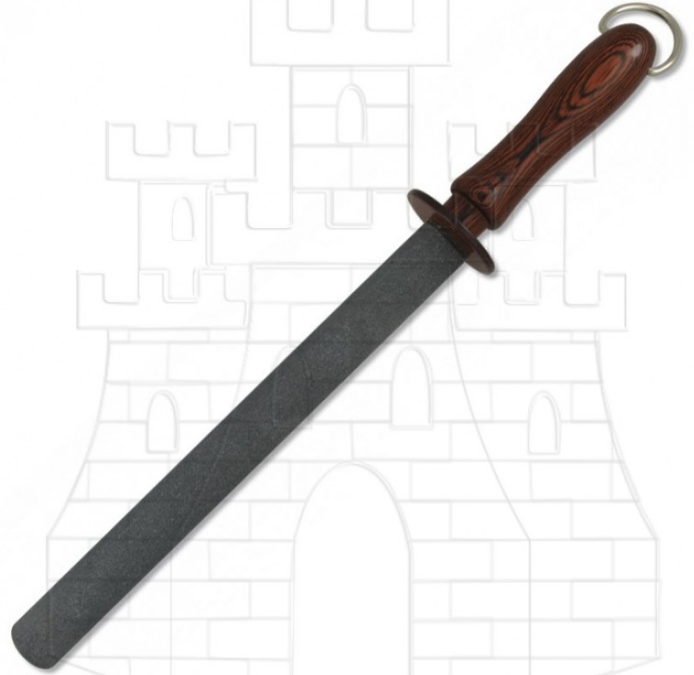
Handle length: 12.5 cm. Blade length: 25 cm. Handle material: estamina. Total length: 37.5 cm. Manufacturer/Distributor: A PEDRA DAS MIGAS.
Manual sharpener with diamond stone – ALBAINOX
How about this manual sharpener with diamond stone with 3 different slots for hunting, fishing and polishing knives or serrated blades from ALBAINOX. Diamond stones are excellent for recovering damaged edges and restoring a uniform angle in a short time.
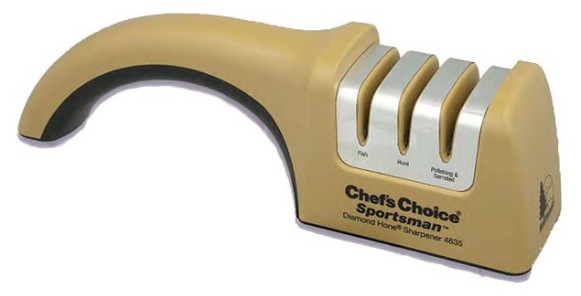
Advantages of diamond
- Quick material removal.
- Very effective on hard steels.
- Consistency in the sharpening angle thanks to specific slots.
Ceramic roller sharpener
Finally, a knife sharpener with ceramic rollers that stands out for its speed and ease of use. It is ideal for daily maintenance and for users seeking an intuitive and safe motion.

Practical comparison: features and recommended use
| Product | Type | Best use | Advantages | Precautions |
|---|---|---|---|---|
| ARCOS professional metal sharpener | Portable / metal | Quick adjustments in the field and kitchen | Lightweight, portable, fast | Does not restore very damaged edges |
| Natural stone 1800 grit (A PEDRA DAS MIGAS) | Stone | Fine polishing and deep maintenance | Respects steel hardness, long-lasting edge | Requires technique, always use with water |
| Manual sharpener with diamond stone (ALBAINOX) | Diamond | Recovery of edges and hard steels | Fast and effective | Can remove a lot of material if used incorrectly |
| Ceramic roller sharpener | Ceramic / Rollers | Daily maintenance and quick touch-ups | Easy and safe | Not suitable for deep restorations |
How to choose the best sharpener for your knife
Questions to ask yourself
To choose wisely, answer these questions: do you use serrated or plain knives? How much time can you dedicate to sharpening? Do you take the knife into the field or use it only in the kitchen? The answer makes the difference between a portable sharpener or a larger stone.
Quick selection tips
- If you seek portability, opt for pocket models or ceramic rollers.
- If you need to restore edges, a stone (natural or synthetic) or a diamond stone will be the best option.
- If your steel is very hard, diamond stones work better.
Common mistakes to avoid
- Do not force sharpening with excessive pressure.
- Do not use oil on stones that must be used with water (e.g. 1800 stone).
- Do not keep inconsistent angles; set an angle and follow uniform strokes.
Sharpener maintenance and edge care
A good sharpener also needs care. Clean metal residues after use, store stones in their cover and protect rollers from impacts. If you work with stones, flatten and level them when they show depressions using a specific abrasive or a leveling stone.
Recommended post-use routine
- Clean and dry metal parts properly.
- Allow natural stones to dry and store them in their cover.
- Check the edge with the tomato or paper test to evaluate the result.
Sharpening methods by blade type
There are differences between plain blades, serrated or professional-use blades. Serrated blades are sharpened on the teeth with specific tools; plain blades benefit from stones and rollers to maintain a consistent bevel.
Plain blades
Use a stone or diamond to restore and rollers for quick maintenance.
Serrated blades
Sharpeners with specific slots or small files are the right option for individual teeth.
Advantages of investing in professional sharpeners
Buying a quality sharpener means fewer replacements, a better cutting experience and safety. Also, a well-made edge preserves food better — clean cuts affect texture and cooking — especially important in professional kitchens.
Practical examples and workflow
Weekly maintenance routine (home kitchen)
- Visual inspection of the edge.
- Passes with a ceramic roller 5–10 times.
- Once a month, light polishing with a fine stone or a quick diamond sharpening.
Routine for heavily used knives (professionals / hunting)
- Repair micro-chips with a diamond stone.
- Profiling with a 1000–3000 stone to leave a uniform bevel.
- Final polishing on a 6000–8000 stone or 1800 grit for a very fine finish.
With these guidelines you will prolong the life of your knives and ensure superior performance with every use.
Recommended accessories
- Cover and protection for stones.
- Safety gloves for dexterity and protection.
- Non-slip base for stones and sharpening stations.
SEE MORE HIGH-QUALITY SHARPENERS
If you want to keep your knives in optimal condition, the choice of sharpener makes the difference. Decide based on use, frequency and blade type and combine daily maintenance with occasional repairs. That way you’ll always have the best edge, safely and efficiently.