In a world where prevention and preparedness are key, having the right tools can make a crucial difference in unexpected moments. Rescue and emergency knives have established themselves as an indispensable tool for those who value safety—not only in critical situations, but also in everyday life and outdoor activities. But what makes them so special and why should you consider keeping one on hand? Join us to find out.
What Are Rescue and Emergency Knives? A Multifunctional Tool
Contents
- What Are Rescue and Emergency Knives? A Multifunctional Tool
- What Makes Them So Special? Key Features and Functions
- Uses Beyond Extreme Emergencies
- Legal Aspects: Can You Carry a Rescue Knife in Spain?
- Maintenance and Safety: Caring for Your Lifesaving Tool
- How to Choose the Best Rescue Knife for You
- An Investment in Your Safety
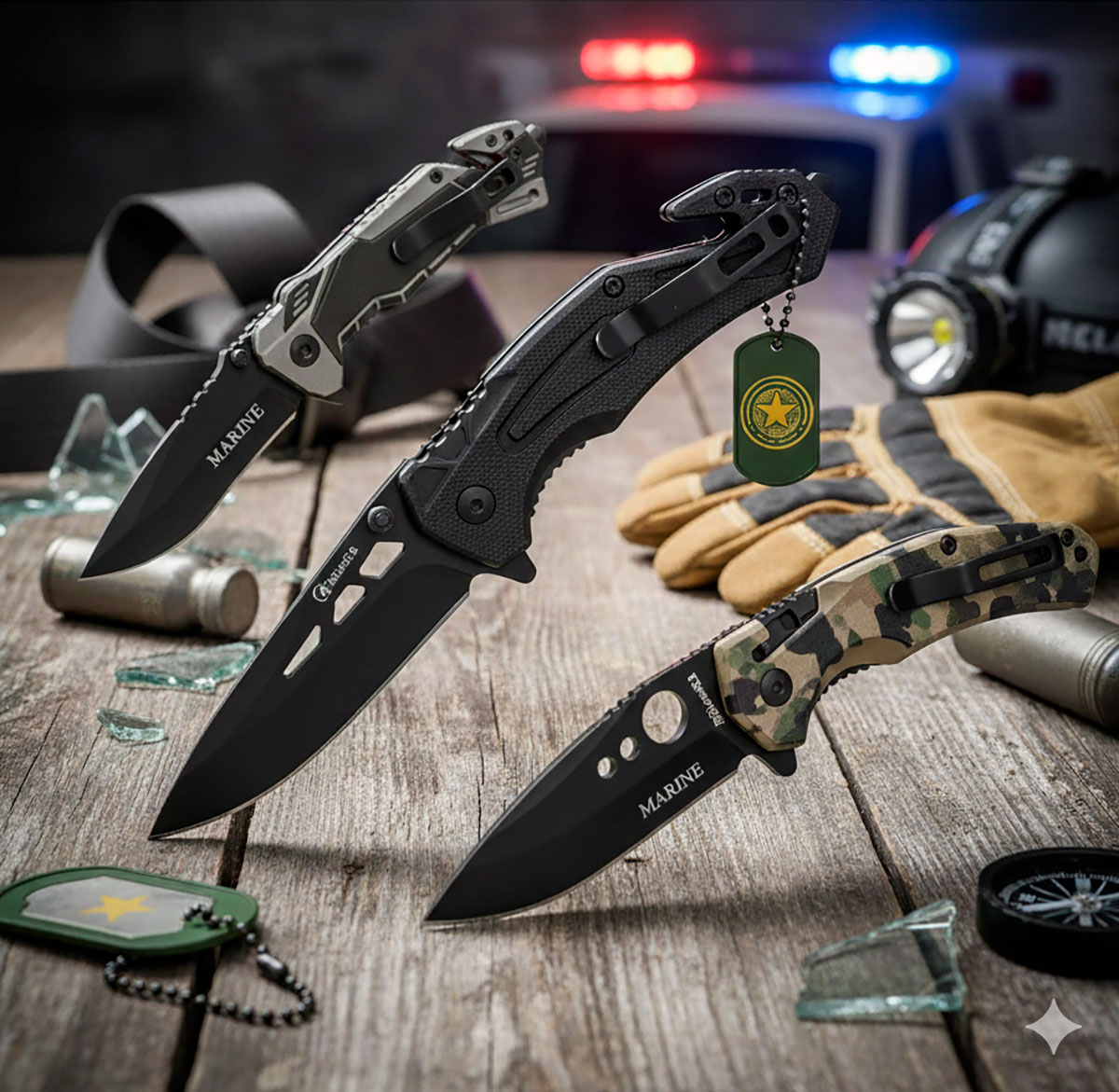
Rescue knives are far more than a simple cutting blade; they are multifunctional tools specifically designed to assist in emergency and rescue situations. Unlike conventional knives, these models are equipped with specialized features that make them essential allies when every second counts.
Originally conceived as daily-use tools for professionals such as members of the State Security Forces and Corps (FCSE), Security Forces and Corps (FCS), healthcare personnel, firefighters, emergency technicians and military personnel, their usefulness has quickly spread to the civilian population. Many civilian users consider them a survival tool that should be carried at all times.
What Makes Them So Special? Key Features and Functions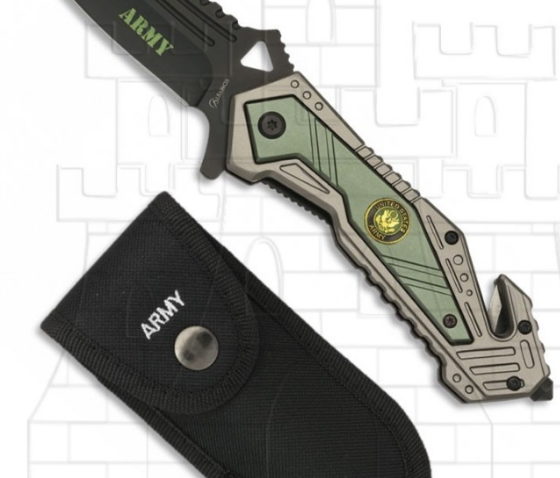
Rescue knives are built to withstand extreme scenarios, combining durability, functionality and an ergonomic design for efficient use under pressure. Here are their main features:
1. Seatbelt Cutter
One of the most distinctive and vital functions of a rescue knife is its seatbelt-cutting blade, usually located on the back of the handle. It is designed to quickly cut seat belts trapped in wrecked vehicles. The design includes a notch to guide the belt, which makes cutting easier and keeps the user safely away from the blade, preventing accidental cuts. This is crucial when the belt release button is blocked after an accident. Some models may have single or double blades.
2. Glass Breaker (Punch)
Another fundamental element is the glass-breaking tip, usually located at the rear end of the knife. This tool is key for accessing a crashed car with deformed doors, or for getting out if it submerges and water pressure prevents the doors from opening. It is also useful for entering or exiting a room or dwelling through a window in an emergency. A NHTSA study in the U.S. reported an average of 384 drowning deaths per year in automobile accidents between 2004 and 2007, highlighting the scale of the problem and the potential lifesaving value of these tools. Some high-end knives, like the Victorinox Rescue Tool, even include a serrated blade capable of scoring windshields. The punch can be made of steel or tungsten.
3. The Blade
- Material and Edge: Blades on these knives are typically made from high-quality stainless steel, often with a hardened titanium coating for superior edge retention and corrosion resistance. They can have a plain edge or, commonly, a serrated or partially serrated edge. The serrated edge is ideal for cutting tough materials like thick ropes (including paracord), plastics, wood or cardboard.
- Tip: To avoid punctures or unnecessary injury to the person being rescued, most rescue blades have a blunt or slightly rounded tip. However, some designs, like the “Tanto,” maximize the cutting area and tip strength for efficient penetration of high-density materials.
- Opening: They are designed for quick and easy opening, often with one hand. Some include assisted opening, which is perfectly legal in Spain and allows very rapid deployment of the blade by activating a spring with the thumb.
- Locking System: To ensure safety during use and prevent accidental closure, these knives feature robust locking mechanisms, with the “Liner Lock” being one of the most popular and secure. Other systems include back lock or button lock.
4. The Handle
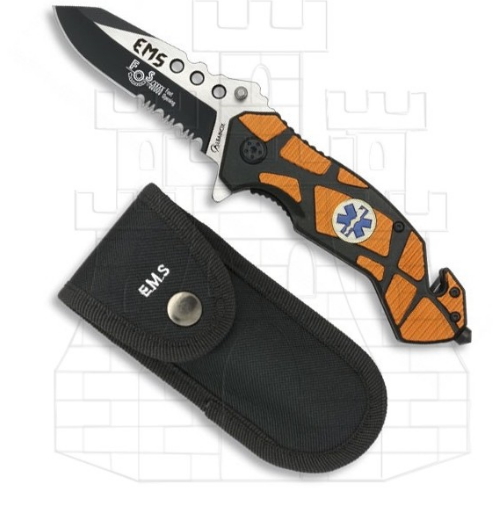
Handles are designed for a firm, secure and comfortable grip, even in wet or slippery conditions. Common materials include aluminum, ABS polymer or FRN (fiberglass-reinforced nylon), which offers superior strength without adding extra weight. They often incorporate ergonomic details such as finger grooves, texturing or thumb rests (“saber”-style grip). To make them easier to locate in emergencies, many handles come in bright colors like intense yellow (sometimes luminescent), red or orange. Tactical or military models, on the other hand, opt for colors like black or camouflage to avoid reflections and blend with uniforms.
5. Portability and Ergonomics
Rescue knives are lightweight and manageable, with weights ranging from 57 g to 222 g, depending on the model and its features. Their compact design makes them easy to carry daily in a pocket, backpack or vehicle. Many models include a metal clip for attaching to pockets or belts, and some come with a cordura or nylon sheath that allows belt carry vertically or horizontally. It is highly recommended to carry it in a proper belt sheath at appendix height for quick accessibility and comfort, and to avoid leaving it loose in the car, as it could be inaccessible in the event of an accident.
6. Additional Accessories
Beyond the main functions, some rescue knives can integrate useful accessories such as screwdrivers, small saws, can openers, built-in and removable flashlights and fire starters. They also often have holes at the rear end for passing paracord-type lanyards or small carabiners, facilitating transport and securing.
Uses Beyond Extreme Emergencies
Although their name associates them directly with critical situations, the versatility of rescue knives makes them useful in many everyday scenarios.
- Traffic Accidents: Their most common and vital use, allowing trapped people to be freed by cutting seat belts or breaking glass.
- Outdoor Activities: Essential for those who enjoy hiking, camping, climbing or extreme sports. They are useful for cutting ropes, light wood, untangling fishing lines or nets, or improvising survival tools.
- First Aid: They can be used to cut clothing, bandages or adhesive tape, facilitating quick access to wounds and medical care.
- Home Environment: Useful for tasks such as opening difficult packaging, making small repairs or dealing with unexpected events like fires or electrical outages.
Having an emergency knife means having safety and efficiency in responding to any situation, providing peace of mind at all times.
Legal Aspects: Can You Carry a Rescue Knife in Spain?
The legality of carrying a rescue knife can raise questions, and it is essential to be informed about current regulations.
In Spain, the regulation states that non-automatic knives with a single edge and a blade shorter than 11 centimeters are considered legal to carry. The measurement is taken from the rim or stop of the handle to the tip of the blade. Any knife that exceeds this limit is considered a bladed weapon and its possession, marketing, advertising and sale may have legal consequences.
It is important to note that assisted-opening knives are perfectly legal in Spain, as long as they comply with the permitted blade length.
Although rescue knives are usually allowed if their use is justified for safety or professional reasons, it is always advisable to consult the specific local laws of each region to avoid problems.
Maintenance and Safety: Caring for Your Lifesaving Tool
To ensure your rescue knife performs optimally when you need it most, regular maintenance is essential.
- Cleaning: Clean the blade after each use, dry it completely and store it in a dry place.
- Lubrication: Apply lubricant to moving parts to facilitate opening and closing of the mechanism.
- Safety: Always handle the knife with care and keep it out of reach of children. If you transport it in vehicles or backpacks, do so in an appropriate sheath.
- Inspection: Perform periodic inspections to detect possible wear or damage, ensuring its effectiveness and preventing accidents.

How to Choose the Best Rescue Knife for You
The market offers a wide variety of rescue knives, with different qualities and price ranges. When choosing yours, consider the following key factors:
- Blade Type: Plain edge, serrated or combined; design (Tanto, drop point to avoid punctures).
- Opening and Closing System: Ease of one-handed opening, assisted mechanisms, and the safety of the locking system (Liner Lock, back lock).
- Materials: High-quality stainless steel blade (e.g. 3Cr13Mov, 7Cr17Mov, CPM S30V, H2, VG-10). Handles in anodized aluminum, reinforced fiber (FRN, SFL) or ABS polymer for strength and durability.
- Additional Functions: Presence of seatbelt cutter, glass breaker, screwdrivers, saws, LED light or fire starter.
- Size and Weight: Should suit the intended use; more compact for daily carry, more robust for professional use.
- Ease of Use: Consider whether it can be used comfortably with gloves and in extreme conditions.
- Brand and Warranty: Opt for manufacturers with a good reputation who offer a warranty. Brands like Victorinox, Spyderco, Extrema Ratio, Gerber or Eickhorn Solingen are well regarded. There are also very economical options (under €20) from brands like RUI / K25 Tactical Knives (of Chinese origin, which have notably improved in quality) or MIL-TEC (German), which surprise with their value for money and perform well in emergencies.
An Investment in Your Safety
In short, rescue and emergency knives are a smart investment in personal safety and in the ability to react effectively when circumstances demand it. Their versatile design and specialized features make them an essential tool for any emergency team, as well as an invaluable accessory in your car, backpack or even at home. Being prepared means peace of mind.
Want to see the best selection of rescue and emergency knives? Don’t miss our collection: