What would you propose if I told you there’s a knife designed to pull someone out of rubble and another meant to accompany you in the darkness of the jungle? In this article, we will rigorously and epically break down the differences between the rescue knife and the tactical knife, when each makes sense, and how to choose the tool that can make a difference when every second counts.
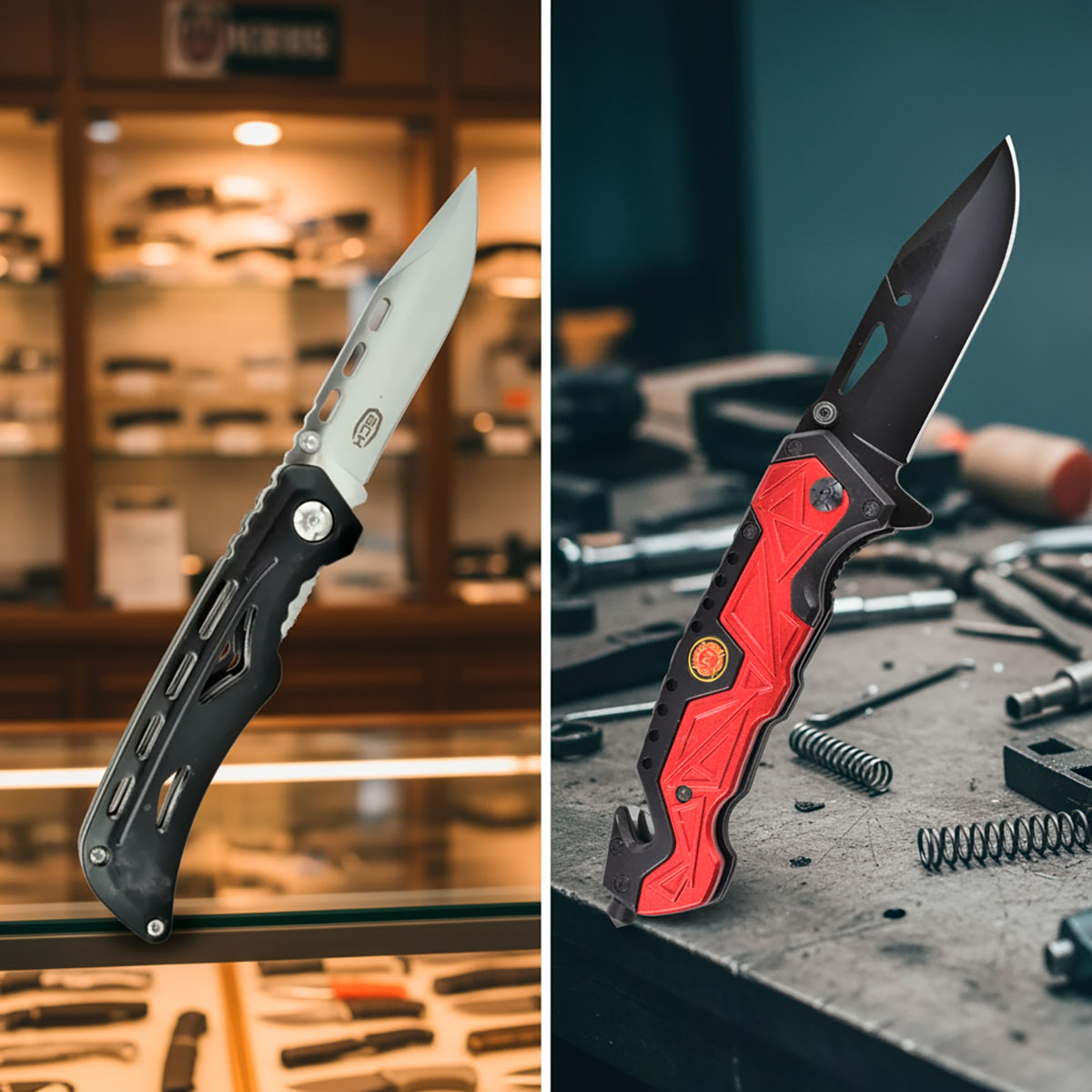
The Hook: A Decision That Can Save or Change the Game
Contents
- The Hook: A Decision That Can Save or Change the Game
- What Defines a Tactical Knife? Origin, Purpose, and Anatomy
- What Defines a Rescue Knife? Design Oriented to Saving Lives
- Models and Functionalities: What to Look for When Comparing
- Technical Comparison and Summary Table
- Real Use Cases: When to Choose Each
- Maintenance and Care: Prolong the Life of Your Tool
- Legal and Responsibility Considerations
- Myths and Truths: Debunking Common Confusions
- How to Choose: A Checklist Before Buying
- Alternatives and Complements That Expand Operational Capacity
- Stories of Use That Illustrate the Difference
- Final Recommendations for Making an Informed Decision
Imagine a nighttime crash on an icy road: broken side windows, tension, and the need to cut a trapped seatbelt to free an unconscious person. Now imagine an operation in hostile terrain, where resistance, rapid deployment, and versatility define success. Both scenes call for a tool, but not the same one.
In the following sections, you will discover the technical differences, recommended uses, legal myths, purchase and maintenance criteria, and a detailed comparison so you can choose with knowledge and authority.
What Defines a Tactical Knife? Origin, Purpose, and Anatomy
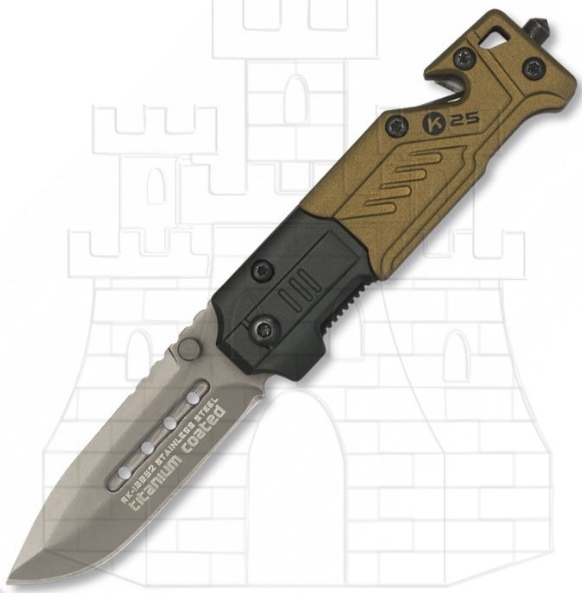
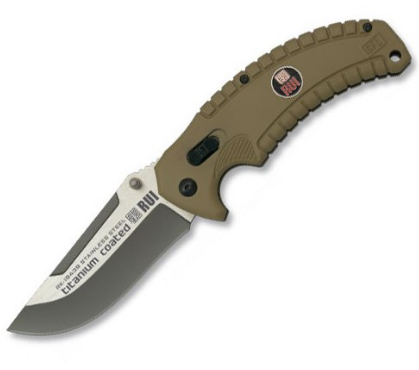
The tactical knife is born from the cross between military necessity and modern outdoor culture. It’s not just a blade: it’s a tool designed for situations that demand speed, resistance, and multifunctionality. Its presence in the hands of military personnel, security forces, and survivalists is no coincidence.
Elements that define it:
- Blade materials: high-alloy steels that prioritize edge retention and corrosion resistance.
- Handle design: G-10, titanium, aluminum with rubber inserts and aggressive textures for a firm grip.
- Opening mechanisms: assisted opening, flipper, blade hole, or thumb stud that allow the blade to be deployed quickly.
- Robust locking systems: liners, frame-lock, or axis-lock to ensure the blade does not fold during demanding tasks.
- Edge and geometry: plain, serrated, or combo; optimized profile for powerful cuts and field dressing tasks.
Typical Uses of a Tactical Knife
Security operations, survival activities, structural cuts, field tasks, and self-defense. Its versatility makes it popular among those who need a resistant tool for various uses.
What Defines a Rescue Knife? Design Oriented to Saving Lives
The rescue knife is a specialized tool for emergencies. Its mission is clear: to allow an immediate response to free victims, secure escape routes, and minimize additional risks during intervention.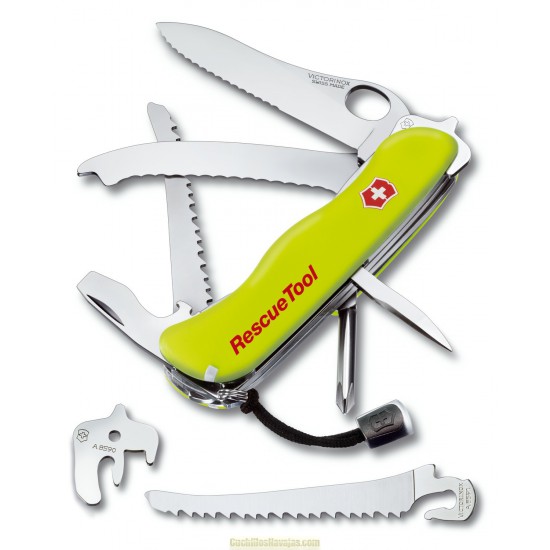
Essential features:
- Integrated seatbelt cutter: protected notch to cut seatbelts without risk of cutting the person being assisted.
- Window breaker: tungsten carbide or hardened steel striker designed to fragment side windows with controlled impacts.
- Safe blade tip: often blunt or slightly rounded to avoid puncturing clothing or skin during extraction maneuvers.
- Visible colors and luminescent elements: to locate the tool in low visibility conditions.
- Accessibility: one-handed opening and clips or sheaths that ensure the knife is always at hand inside the vehicle or emergency kit.
Typical Uses of a Rescue Knife
Actions in road accidents, building rescues, intervention in entrapment situations, and use by emergency personnel such as firefighters, police, and paramedics.
Models and Functionalities: What to Look for When Comparing
When choosing, there is no single answer: the decision depends on the context of use. What you can do is filter by key functions.
Here is a practical criterion for comparing models:
- Safety priority: if your goal is to assist in vehicles and entrapment situations, the seatbelt cutter and window breaker are indispensable.
- Versatility priority: if you are looking for a tool for camping, security, or versatile professional use, a tactical knife with good locking and assisted opening is usually better.
- Ergonomics and weight: think about where and how you will carry it; a knife you don’t carry is useless.
- Legality: review local regulations on assisted opening, blade length, and carrying in public spaces.
Technical Comparison and Summary Table
The following table summarizes the most relevant differences directly and usefully.
| Feature | Tactical Knife | Rescue Knife |
|---|---|---|
| Main Purpose | Tactical operations, defense, survival, and demanding field use. | Extraction and rescue, cutting seatbelts, breaking windows, and saving lives. |
| Edge | Plain, serrated, or combo; sharp tip or designed for aggressive manipulation. | Plain or combo; often blunt or rounded tip to prevent punctures. |
| Opening | Frequently assisted; fast mechanisms and variety of one-handed deployment. | Designed for one-handed opening; not always assisted, prioritizes safety and accessibility. |
| Seatbelt Cutter | Optional in some multi-purpose models. | Integrated and protected; essential in most models. |
| Window Breaker | Present in many models as an additional function. | Integrated as an essential feature with carbide or hardened steel tip. |
| Handle | Technical materials (G-10, titanium, aluminum) with aggressive textures. | Resistant materials and visible colors; ergonomics for use under stress. |
| Legislation | May be restricted by assisted opening and blade length. | Generally permitted as an emergency tool, but check local regulations. |
Real Use Cases: When to Choose Each
If you spend many hours on the road
The rescue knife is the logical ally. Its seatbelt cutter and window breaker, combined with a visible handle and quick opening, allow for effective rescues when time is critical.
If you work in security or intervention forces
A tactical knife with quick opening, reliable locking, and high-performance materials will respond better in hostile and versatile environments.
If you practice outdoor activities or survival
The versatility and robustness of a tactical knife will give you tools to build shelters, prepare food, and solve unforeseen problems in the field.
Maintenance and Care: Prolong the Life of Your Tool
Both knives require maintenance, but the nature of the care varies depending on the intended use.
- Regular cleaning: remove dust, biological debris, or saltpeter; lubricate the locking system and opening areas.
- Sharpening: respect the original geometry; tactical knives may require more aggressive sharpening due to demanding uses.
- Window breaker review: ensure the striker is not worn; in places where emergency use is expected, keep it functional.
- Seatbelt cutter inspection: test the notch on synthetic materials to ensure its effectiveness without compromising safety.
Legal and Responsibility Considerations
Owning a knife implies responsibility. Assisted opening, blade size, and certain functions may be regulated. Before deciding, consult the legislation of your country or region and act ethically: these tools can save lives or cause harm if used carelessly.
Myths and Truths: Debunking Common Confusions
- Myth: “Every tactical knife is suitable for rescue.” Reality: Many tactical knives do not have integrated seatbelt cutters or window breakers.
- Myth: “Rescue knives are useless for everyday life.” Reality: Their blade can perform everyday tasks, although they are not optimized for intense survival work.
- Myth: “Assisted opening is always better.” Reality: In some environments, assistance can be illegal or dangerous; the choice depends on the context and regulations.
How to Choose: A Checklist Before Buying
Follow this practical list to evaluate models quickly and rationally:
- Is the main goal to rescue lives on the road? Prioritize seatbelt cutters and window breakers.
- Do you need a tool for daily work and adventure? Look for strong locking, reliable opening, and resistant materials.
- Does local legislation allow assisted opening and a certain blade size?
- Where will you carry it and how will its ergonomics affect prolonged use?
- Do you prefer visible colors for emergencies or sober finishes for professional use?
Alternatives and Complements That Expand Operational Capacity
Often, it’s not about choosing one knife or another, but about complementing your gear. A vehicle emergency kit with an additional seatbelt cutter, a portable window breaker hammer, and a tactical knife in your backpack can offer the best of both worlds.
Stories of Use That Illustrate the Difference
A firefighter recounts how a small notch on a rescue knife allowed him to cut the seatbelt of a trapped victim and prevent major injuries. A soldier remembers a night when his tactical knife, with a firm lock and combo edge, allowed him to improvise tools and complete an extraction in rugged terrain. These stories show that the right tool at the right time can change destinies.
Final Recommendations for Making an Informed Decision
If your priority is road safety and emergency response, choose a rescue knife with proven seatbelt cutters and window breakers. If your priority is extreme versatility, defense, and durability in inhospitable environments, a quality tactical knife will be the indicated option. Remember that basic training in first aid and handling rescue tools multiplies the effectiveness of any knife.
Select with criteria, respect the law, and train its use in a controlled environment. The correct tool is not only the one you carry, but the one you know how to use when history demands it.