
Have you ever wondered what tool is as vital for a sailor as the wind itself is for the sails? We are talking about the sailor’s knife, an instrument that transcends its cutting function to become a true symbol of life at sea. Its history is as rich as the waters it has sailed, and its functionality, as deep as the ocean. It is most logical that sailor knives are intended for use on board a ship or for repairing nets on the beach by fishermen or sailors. This seemingly simple tool hides behind its design centuries of evolution and a perfect adaptation to the demands of the maritime environment, making it an indispensable piece for any sea lover, whether an experienced old salt or an occasional navigator.

A Journey Through Time: The Origin and Evolution of the Sailor’s Knife
Contents
- A Journey Through Time: The Origin and Evolution of the Sailor’s Knife
- Why is a Sailor’s Knife Indispensable Today?
- Key Features of an Excellent Sailor’s Knife
- Common Types of Sailor Knives: Diversity for Every Need
- A Lifelong Ally: Essential Maintenance of Your Sailor’s Knife
- A Tool with History and Legacy: Beyond Function
The history of the sailor’s knife is a fascinating tale of ingenuity and necessity. Born in Europe between the 18th and 19th centuries, this tool was a direct response to the demands and dangers of working aboard vessels. Sailors, fishermen, and navigators from all latitudes needed a reliable, robust, and safe tool to carry out critical tasks that often defined the difference between success and failure, or even between life and death. Cutting taut ropes, undoing impossible knots, working with soaked sails, or performing small repairs in adverse weather conditions and with the constant movement of the ship, were daily challenges that required a specialized tool.
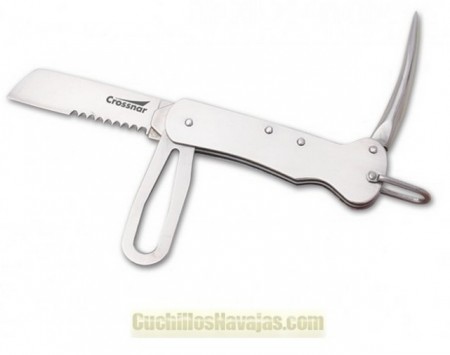
Unlike other knives of the era, the sailor’s knife incorporated a revolutionary piece that distinguished it and elevated it to the category of indispensable tool: the marlinspike or parrot’s beak. This addition was fundamental, allowing the manipulation of tight knots, wet ropes, or even shackles with an astonishing ease that no other tool could offer. Its inherent resistance to oxidation, its compact design that facilitated its transport, and the crucial ease of one-handed opening quickly made it an essential element, adopted in both the merchant and military navies, and later by fishermen and recreational sailors.
A curious detail deeply rooted in naval tradition is that, traditionally, these knives usually have their tips cut or “blunt”. This particularity dates back to the 16th or 17th centuries, a time of long voyages, harsh conditions, and often, tensions on board. Captains, concerned about the safety of their crews and discipline, would cut the tips of sailors’ knives as a preventive measure. With the constant movement of the ship, forced coexistence, and the consumption of rum, a knife without a tip significantly reduced the risk of stabbings in case of altercations or brawls, although it still allowed essential cuts for daily tasks. Thus, safety on board was preserved without sacrificing the basic utility of the tool, a testament to pragmatic seafaring wisdom.
Why is a Sailor’s Knife Indispensable Today?
Beyond its rich historical heritage, the sailor’s knife remains a fundamental tool today. For any recreational sailor, fisherman, or even for those who enjoy outdoor activities near the water, it should be part of their personal equipment. Its value lies not only in facilitating daily tasks on the boat or on the coast, but in its potential to be a true lifesaver in emergency situations. It is an investment in safety and efficiency.
Imagine the urgent need to cut a small tangled line, free a halyard stuck at a critical moment, cut a rope or net that has dangerously entangled in the vessel’s propeller, or even the vital task of cutting a life raft strap or a raft to release it. Its ability to undo knots or open shackles is, in many cases, crucial for the safety of the crew and the vessel. In fact, its importance is such that many professional offshore crews require their members to always carry a sailor’s knife, considering it as basic an item as a life jacket or communication equipment.
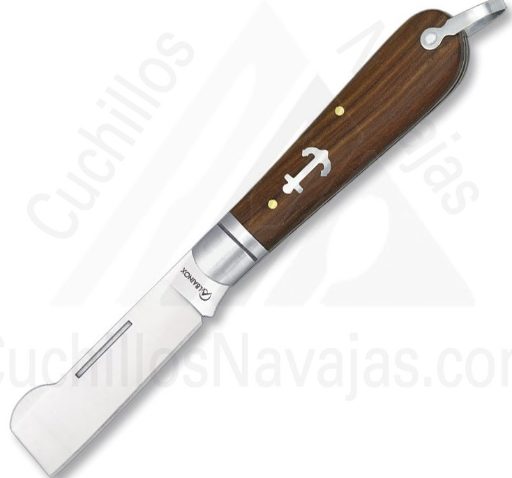
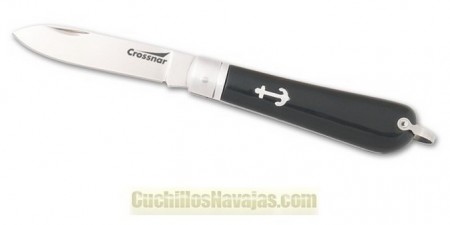
In addition to its functionality in extreme situations, the sailor’s knife is invaluable for daily tasks such as opening packages, preparing food, or making small repairs. Its robust design and resistance to adverse conditions make it a reliable companion for any adventure on the water. Almost all sailor knives are adorned with an anchor, an unequivocal symbol of their purpose and heritage, and those used for repairing nets have a “punch,” a specific tool for untangling and working with meshes.
Key Features of an Excellent Sailor’s Knife
When looking for a nautical knife, it is vital to consider certain attributes that ensure its optimal performance and durability in the challenging and corrosive marine environment. Choosing the right knife involves understanding how each component contributes to its functionality and resistance.
Blade Material: Unsurpassed Corrosion Resistance
The sea is an unforgiving environment, especially due to saltwater and constant humidity, which are highly corrosive to most metals. Therefore, the blades of sailor knives must be made of high-quality stainless steel to effectively resist oxidation and corrosion. Although there are many types of stainless steel, some high-quality ones such as CPM Magnacut, H1 steel, or LC200N offer superior corrosion resistance and excellent edge retention, meaning the knife will maintain its cutting ability for longer, even after intensive use in wet conditions.
CPM Magnacut, for example, is a powder steel that combines exceptional hardness with very high corrosion resistance, making it ideal for marine environments. H1 steel is a nitrogen steel that is practically immune to saltwater corrosion, although it may require more frequent sharpening. LC200N is another nitrogen steel that offers corrosion resistance similar to H1, but with better edge retention. The choice of blade material is, therefore, the first and most important factor to consider to ensure the longevity and reliability of your sailor’s knife.
Blade Shape: Safety, Efficiency, and Versatility
Nautical knives often feature blades with specific shapes designed for safety and efficiency in the marine environment. The most common are the sheepsfoot or drop point shapes. This choice is not accidental: the more curved or blunt tip significantly reduces the risk of accidents if the knife falls overboard or if it is used on a moving boat, where a slip could have serious consequences. In addition to safety, these shapes provide a wider and more robust cutting surface, ideal for cutting large diameter ropes or lines, opening packages, or making precise cuts without piercing underlying surfaces.
Its greater thickness at the tip allows for more pressure, offering greater control and precision in cutting. Curved blades are also useful, especially for specific fishing tasks such as filleting or efficiently cutting nets. There are also other variations, such as cut-tip sailor knives, half-moon tip sailor knives, stiletto-tip sailor knives, rounded-tip sailor knives, and others with a flat tip, each adapted to specific needs.
Handle or Scales: Secure Grip and Visibility in Any Condition
The handle is as important as the blade for the functionality and safety of a sailor’s knife. It must be easy to clean, durable, and, crucially, water-resistant, which is why they are made with waterproof materials or treated not to absorb moisture. Materials such as FRN (fiber reinforced nylon), G-10, or micarta are common, offering a solid grip without adding excessive weight to the tool. Manufacturers often add non-slip textures (such as bitextured, grooves, or rough patterns) to improve grip and control, even when hands are wet, greasy, or gloved.
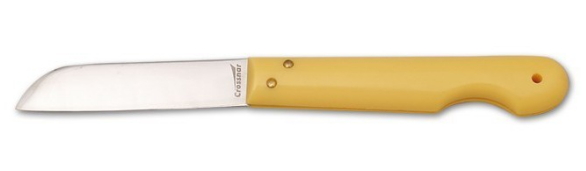
Furthermore, it is common for the handles of sailor knives to have striking colors such as bright yellow, fluorescent orange, or electric blue. This practical feature is not merely aesthetic; it greatly facilitates the location of the knife if it falls into the water or on deck, especially in emergency situations or with low light. Visibility is a key safety factor in the marine environment.
Additional Features: Versatility and Functionality at Sea
Beyond the blade and handle, certain additional features make a sailor’s knife even more valuable and versatile:
- Marlinspike or Parrot’s Beak: As mentioned, this piece is the hallmark of an authentic sailor’s knife. Its curved and robust design allows for the manipulation of tight knots, water-swollen ropes, or locked shackles with astonishing ease, an indispensable capability for any rigging task.
- Shackle opener: An additional accessory that can be very useful on board, allowing shackles and other fittings to be opened without the need for additional tools.
- Additional tools: Some multi-purpose models, especially popular in the second half of the 20th century, include a screwdriver (flat or Phillips), an awl (for piercing or untangling), or a can opener. These tools increase the versatility of the knife, turning it into a small portable toolbox.
- Rescue hook: Modern models, designed with maritime safety in mind, may incorporate a curved blade or a seatbelt cutter hook. These features are vital for firefighters, coastal rescuers, or anyone who needs quick and safe cutting capability in emergency situations.
- Carbide tips: Some advanced models include tungsten carbide tips integrated into the handle, designed to break glass in rescue situations, such as evacuating a submerged vehicle or a trapped cabin.
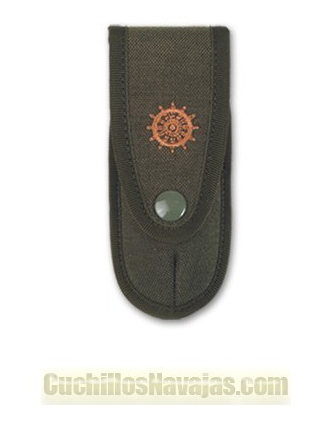
- Pocket clip or sheath: A good pocket clip or the ability to carry it in a suitable sheath ensures that the knife is always accessible and secure. You can also protect, store, and carry it in its appropriate sheaths with nautical motifs.
Common Types of Sailor Knives: Diversity for Every Need
Over time and with the evolution of maritime needs, the sailor’s knife has given rise to several types, each with a specific design and functions, adapted to different user profiles and tasks.
Classic Sailor Knife
This is the essence of the sailor’s knife. Simple, robust, and designed for pure functionality. It generally features a high-strength stainless steel blade or, in more traditional models, carbon steel (which requires more maintenance but offers an exceptional edge). Its most distinctive feature is the curved marlinspike, indispensable for tasks involving ropes and sails. It is the ideal choice for those looking for a reliable and no-frills tool, focused on basic cutting operations and knot manipulation.
Multi-purpose Sailor Knife
As its name suggests, this type of knife goes beyond the simple blade and marlinspike. Equipped with additional tools such as a screwdriver, awl (very useful for untangling or making eyelets), or can opener, it is extremely versatile for various needs on board. These models were widely used in the second half of the 20th century, when efficiency and multifunctionality began to be highly valued. They are perfect for the sailor who seeks to optimize their equipment and have several tools at hand in a single compact instrument.
White-Handled Sailor Knife
Popular in the Spanish Navy and other European navies, the white-handled knife is distinguished by its bone or white plastic handle. This color choice is not merely aesthetic; it greatly facilitates its location on deck, especially in emergency situations or with low visibility. Its design is usually classic, prioritizing robustness and functionality for military and professional use, where the speed of finding the tool can be critical.
Sailor Knife with Rescue Hook
A more modern and specialized model, designed with maritime safety and rescue in mind. It incorporates a curved blade or a specific hook for cutting seatbelts, tangled fishing lines, nets, or even clothing in emergency situations. It is the preferred tool for maritime safety professionals, firefighters, coastal rescue teams, and anyone who needs quick and safe cutting capability in life-or-death situations.
English Sailor’s Knife (Sailor’s Knife)
Very popular among British sailors since the 19th century, the Sailor’s Knife is characterized by its compact structure, its blunt-tipped blade (for greater safety), and a solid marlinspike. Its design is intended for quick and efficient maneuvers on deck, being a reliable and resistant working tool. Often, these knives have a hole for a lanyard or rabiza, allowing them to be secured to the body or equipment and prevent their loss at sea.
All models of sailor knives are very beautiful, practical, and useful for the hard work at sea, combining aesthetics with unparalleled functionality.
A Lifelong Ally: Essential Maintenance of Your Sailor’s Knife
The maritime environment is particularly aggressive for any metal tool. For your sailor’s knife to accompany you throughout your life on board, maintaining its functionality and appearance, proper and constant maintenance is crucial. Ignoring these steps can lead to corrosion, dulling of the edge, and malfunction.
Constant Cleaning: Fresh Water, Your Best Ally
Saltwater is the number one enemy of any metal. After each use at sea or near it, it is imperative to rinse the knife with abundant fresh water. Make sure there are no salt or sand residues anywhere, especially in the hinges and opening mechanisms. Once rinsed, dry it very well with a clean, soft cloth. Residual moisture is a breeding ground for oxidation, even in high-quality stainless steels. Pay special attention to hard-to-reach areas and use compressed air if necessary to remove any remaining water.
Regular Lubrication: Smoothness and Protection
A few drops of marine lubricating oil on the hinges, blade pivot, and any other friction areas will keep the mechanism smooth, fluid, and functional. Lubrication not only facilitates opening and closing but also creates a protective barrier against moisture and corrosion. For sharpening, it is also recommended to use a little oil (especially if you use sharpening stones) to prevent steel particles from embedding in the stone and to facilitate the blade’s glide. Make sure to use specific oils for tools or marine lubricants, which are formulated to resist the saline environment.
Periodic Sharpening: An Edge Always Ready
The blade must be kept well sharpened to ensure its effectiveness and safety. A dull knife is more dangerous than a sharp one, as it requires more force to cut and increases the risk of slips. The ideal sharpening angle for a sailor’s knife is 12º to 15º per side, which provides an optimal edge for cutting ropes and performing demanding tasks. Use a fine-grit sharpening stone or a sharpening system designed for knives. If you are inexperienced, consider taking it to a professional to maintain the correct angle and prolong the life of the blade.
Correct Storage: Lasting Protection
Store your knife in a dry place, away from moisture and salinity. Preferably, use a protective sheath made of breathable material. Leather or cordura sheaths are excellent options, as they protect the knife from bumps, scratches, and keep it isolated from environmental humidity. Avoid storing the knife in closed, damp places, such as unventilated boat drawers or metal toolboxes where condensation can accumulate.
Marlinspike Care: Guaranteed Functionality
The marlinspike is a key part. Make sure this piece does not deform or oxidize, as its integrity is fundamental for it to work correctly with thick ropes and tight knots. Clean and lubricate it with the same regularity as the main blade.
Proper Use: Prolonging Lifespan
A sailor’s knife is a cutting tool, not a can opener, screwdriver, or pry bar. Do not use the blade for tasks it is not designed for, as this can damage the edge, bend the blade, or even break the mechanism. Avoid hitting or throwing the knife. If it is a multi-purpose model, do not try to operate two pieces with the same spring at once, as excessive tension could break it and compromise the knife’s functionality. Conscious and respectful use will prolong the life of your tool and ensure its reliability when you need it most.
A Tool with History and Legacy: Beyond Function
The sailor’s knife has been, for centuries, an inseparable companion of navigators. Its functional design, unparalleled resistance, and adaptability to work at sea make it one of the most ingenious and enduring tools in nautical history. It is a testament to how necessity and experience forge perfect instruments for their purpose.
There are stories that highlight its invaluable worth, demonstrating that a sailor’s knife is much more than a simple object. For example, in the tragic sinking of the Cruiser General Belgrano on May 2, 1982, during the Falklands War, a simple sailor’s knife, one of those with a “blunt” tip and an awl, played a heroic and decisive role. Amidst the darkness, chaos, and freezing cold of the South Atlantic after the impact of an English torpedo, a group of 23 people were trapped in a life raft that, due to a fatal accident, remained tied to the rapidly sinking ship. They tried to cut the rope with whatever they had at hand —a comb, their teeth, nail clippers— without success. Desperation grew as the ship submerged, dragging the raft and its occupants to a certain death.
It was the sailor’s knife of one of them, a modest but well-maintained tool, that finally cut the thick one-and-a-quarter-inch rope, freeing the raft from the suction of the sinking ship and thus saving the 23 lives on board. This astonishing anecdote underscores that the sailor’s knife is much more than a simple cutting tool; it is a symbol of resilience, of naval tradition, of preparedness, and, at times, a decisive factor between life and death. Its utility transcends time, maintaining its relevance both for its practicality and for its immense historical and cultural legacy. It represents a life of effort, of the sea, and of craft, a tangible link with generations of sailors who have entrusted their safety to this humble but powerful tool.
In short, the sailor’s knife is an essential piece that every navigator should consider. Its design, materials, and history make it a smart investment for safety and efficiency in any maritime adventure. If you are looking for a knife that combines tradition, resistance, and functionality, we invite you to explore our wide selection of sailor knives, where you will find the perfect model for your needs and that will accompany you on countless voyages.