The skinning knives, also known as skinning knives or skinners, are much more than just a sharp blade. They are a specialized tool, forged by history and human necessity, designed with exceptional technical precision for one of the most important tasks in game processing: removing the skin cleanly and efficiently. From primitive tools of the Paleolithic era to the modern steels of the 21st century, their design has evolved to ensure maximum efficiency, safety, and respect for the animal.
In this article, we will explore in depth what makes a skinning knife so special, its technical features, manufacturing materials, and why choosing the right tool is fundamental for any hunter or professional involved in meat processing.
What Sets a Skinning Knife Apart From Other Knives?
Contents
- What Sets a Skinning Knife Apart From Other Knives?
- Key Features of an Effective Skinning Knife
- Manufacturing Materials: The Key to Durability
- Use, Maintenance and Ethical Considerations
- Advantages and Disadvantages of Skinning Knives
- Renowned Brands in Skinning Knives
- The Perfect Tool for a Demanding Task
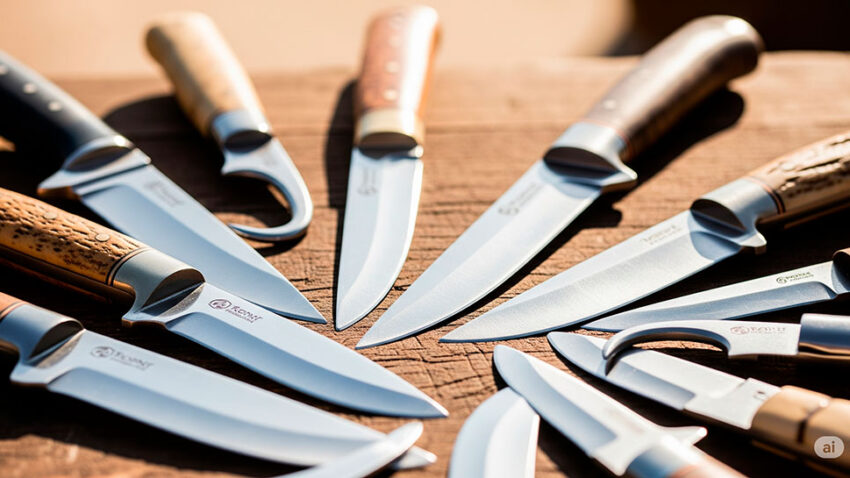
In the vast world of cutlery, there is a knife for every task. The skinning knife belongs to the category of highly specialized tools. Its purpose is twofold:
- Facilitate evisceration: A critical step for making the meat fit for consumption, preventing contamination.
- Clean skin separation: Allows the removal of the skin from game animals, from small such as rabbits to large such as deer or wild boar, without damaging the meat or the skin if preservation is desired.
Unlike conventional knives, skinners are designed to hold their edge longer under the specific conditions of this task, are easier to handle in confined spaces, and provide superior cutting capacity during skinning, reducing effort and the risk of mistakes. They are not hunting weapons, but tools perfected for their mission.
Key Features of an Effective Skinning Knife
To achieve high effectiveness, a skinning knife must meet specific requirements in its design and construction. Its morphology, from the ergonomics of the handle to the shape and thickness of the blade, is fully adapted for skinning.
Blade Design: Precision and Safety
Generally, the blades of skinning knives have the following distinctive features:
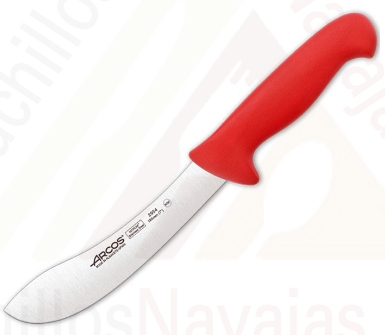
- Wide, short blade: A wide blade provides greater contact area with the skin, allowing the knife to glide smoothly and with control. Its short length enables optimal and precise handling during repetitive movements, minimizing the risk of accidental cuts to the meat.
- Blunt or rounded tip: Unlike knives with a sharp tip, the blunt or rounded tip is a key safety and functionality feature. It allows access to all corners of the animal without puncturing the meat or internal organs, which is crucial to avoid contamination. The skinner shape, with its pronounced curve and rounded tip, is ideal for sliding between the skin and the muscle without snagging.
- Appropriate thickness: Although lightness is sought, the blade must have the appropriate thickness to provide the necessary rigidity and avoid excessive flex, which would compromise accuracy and safety.
Skinning knives usually have a curved blade to facilitate cuts under and along the skin, quickly and carefully separating it from the meat. A curved blade with a wide cutting area increases the sweeping length, allowing maximum use of the heel region of the blade. Additionally, this shape minimizes the risk of puncturing the skin during the skinning process.
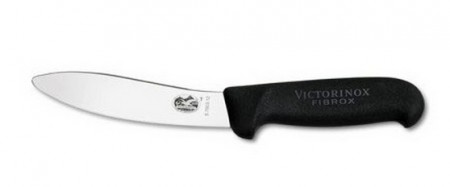
In this category, two knives stand out: the German and American skinning knives. Both are characterized by the curved shape of the blade, which makes cutting easier and requires less effort. Additionally, their blades are flexible and the handle is non-slip, often made from materials like Fibrox.

Balance and Handling: Weight and Ergonomics
A good skinning knife should be lightweight to reduce fatigue during prolonged use. The ergonomics of the handle is key for precise cutting and to prevent fatigue. A well-designed handle fits comfortably in the hand, providing a secure grip and reducing tension.
The length of the blade should be a personal choice that depends less on experience and more on hand size; a small hand will benefit more from a short blade and vice versa.
Functional Innovations: The Gut Hook
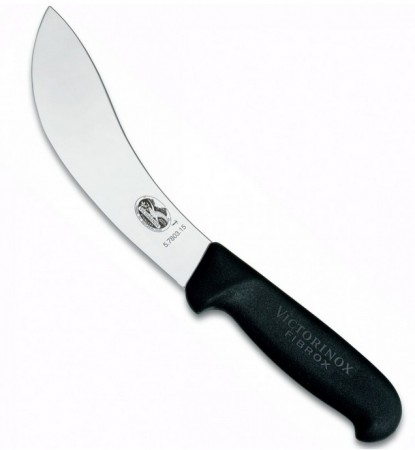
The gut hook is an optional but highly valued feature. Located on the opposite side of the main edge, this small sharp protrusion makes it easier to make the initial opening of the animal’s abdomen without puncturing internal organs. This is crucial to avoid contaminating the meat with gastrointestinal contents, which is a determining factor in the quality and safety of the meat.
Manufacturing Materials: The Key to Durability
The choice of materials is fundamental for the knife’s durability, performance, and maintenance.
For the Blade
- Stainless Steel: The most common option for its excellent corrosion resistance and ease of maintenance.
- Carbon Steel: Offers excellent edge retention and greater toughness, ideal for demanding cuts but requires more care to prevent rusting.
- Titanium: A high-end option valued for its exceptional lightness and superior corrosion resistance, though more expensive.
For the Handle: A good material should provide a secure grip even in adverse conditions. The handle of the knife must provide the highest safety when holding it by hand to prevent accidents; there is always some safety gap or a guard between the handle and the base of the blade. Additionally, a blade specifically designed for each task helps perform it as effectively and safely as possible.
- Wood, Deer Antler, or Bone: Bring classic aesthetics, warmth, and natural resistance.
- Synthetic Materials (Micarta, G10, Polymers): Modern options that stand out for their resistance to moisture, impact, and chemicals. They are low-maintenance and provide a safe, non-slip grip.
Use, Maintenance and Ethical Considerations
The skinning knife is crucial in game meat utilization. Its use goes beyond simply removing the hide; it is part of a complex process involving technical skills and a deep respect for nature. Proper game processing is a core pillar of responsible hunting.
Efficient Grip and Cutting Techniques
A firm grip is essential for control with every movement. Fingers should wrap around the handle without obstructing the blade for precise cuts. When cutting, always direct the motion away from your body to minimize injury risks. Useful techniques include the pinch grip for delicate moves and the palm grip for cuts that require more force.
Knife Maintenance: Proper Sharpening and Cleaning
A sharp knife is essential for efficient and safe use. A dull knife requires more force, increasing the risk of accidents. For sharpening, it is recommended to use a quality stone or sharpener, identifying the ideal angle (between 15 and 20 degrees for hunting knives).
Cleaning is crucial after each use. Rinse with warm water, use a soft brush, and dry the knife completely. Once clean and dry, apply a light protective oil layer, especially on carbon steel blades. For storage, keep the knife in a dry, safe place—preferably in a clean sheath of treated leather or synthetic material. Skinning knives by the well-known Victorinox brand, such as the American and German types, come in two sizes and are an excellent quality choice.
Advantages and Disadvantages of Skinning Knives
Like any specialized tool, skinning knives have their pros and cons.
Advantages:
- Exceptional durability: Made with high-quality steels, they’re resistant to corrosion and wear.
- Highly sharp and long-lasting edges: Designed to maintain a razor-sharp edge for extended periods.
- Secure and ergonomic grip: Handles with non-slip materials guarantee a firm hold even in wet conditions.
- Compact and practical design: Lightweight and easy to carry.
Disadvantages:
- Required maintenance: They need regular cleaning and frequent sharpening.
- Limited specialization: They may not be ideal for other survival tasks.
- High cost: High-quality models can be a significant investment.
- Risk of injury: Their extremely sharp edges increase the risk of accidental cuts.
Renowned Brands in Skinning Knives
Choosing a trusted brand is key to ensuring quality and reliability. Spain, with its rich history in cutlery (especially in Albacete), has forged a worldwide reputation. Brands like Cudeman, Joker, and Muela stand out for combining artisanal tradition, functionality, and high-quality materials. Internationally, brands like Benchmade, Buck Knives, and Victorinox are also renowned for their quality.
The Perfect Tool for a Demanding Task
Choosing the right skinning knife, based on a deep knowledge of its features and uses, together with diligent maintenance, ensures a more efficient, safe, and satisfying hunting experience. Investing in a good skinning knife means investing in hunting quality and ethics, ensuring that every animal is processed with maximum respect and use.


