At the forefront of every outdoor expedition, knives stand as essential tools, distinct in their purpose and design. Tactical knives, with their robustness and additional features like glass breakers, are geared towards emergency and defense situations. Survival knives, on the other hand, focus on durability and multifunctionality to face extreme environments. In contrast, bushcraft knives stand out for their versatility in natural survival techniques, such as carving and food preparation. Each type offers unique advantages against the specific challenges of nature, combat, and survival.
Bushcraft Knives & Tactical Knives
Contents
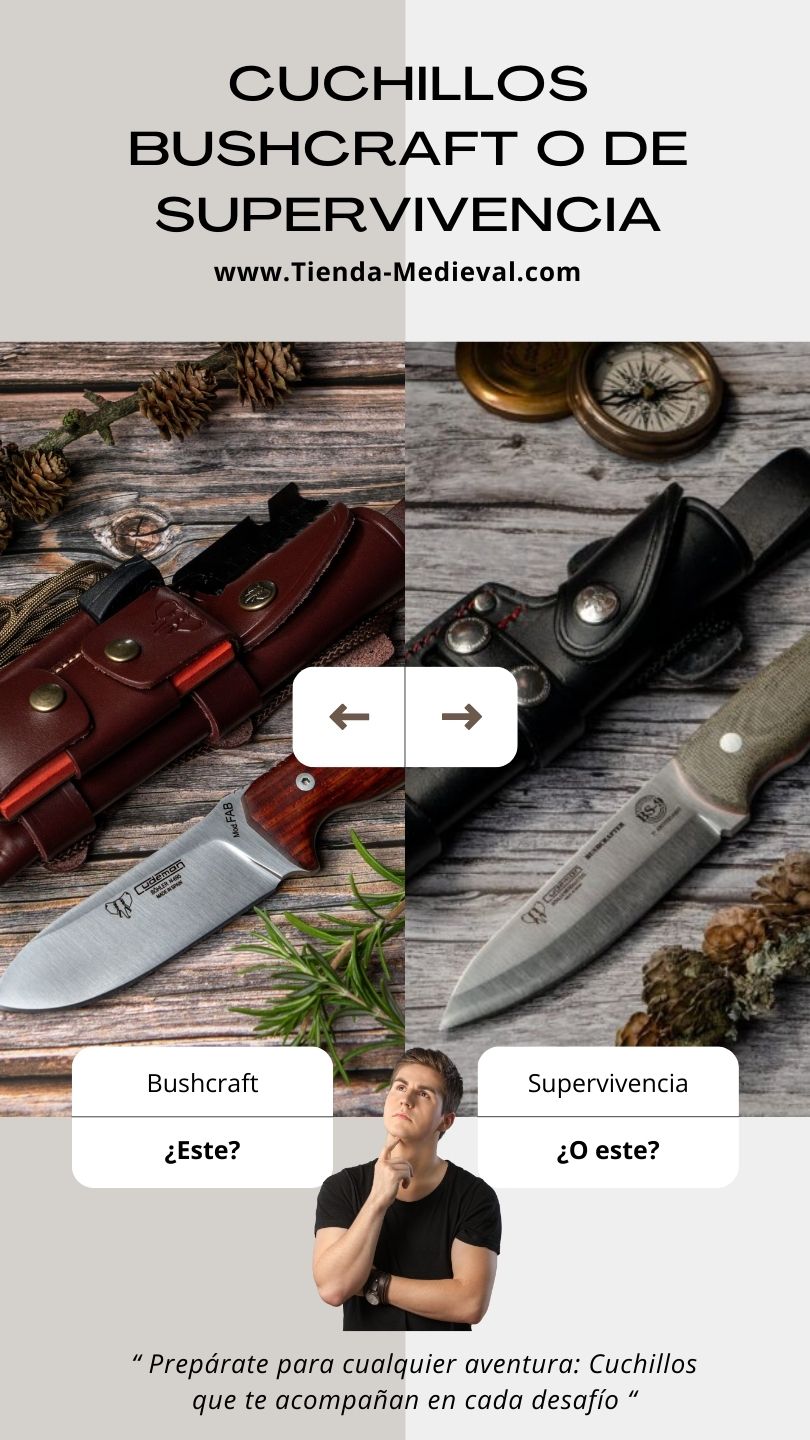
Bushcraft knives are designed for self-sufficiency in natural environments, focusing on survival tasks and wilderness skills like carving, cutting, and food preparation. They are versatile, with robust blades and ergonomic handles for prolonged use. Tactical knives, in contrast, are oriented towards military use, personal defense, and rescue situations. They possess specific features such as resistant blades, often with serrated or mixed designs, and additional features like glass breakers and seatbelt cutters. The choice between one and the other depends on the intended use, with bushcraft being ideal for nature and tactical knives for emergency or defense situations.
The Crucial Role of Knives in Bushcraft and Survival
Knives transcend their basic cutting function, emerging as vital allies in survival and bushcraft. These multifaceted tools are essential for a wide range of outdoor activities, including food preparation, wood carving, tool making, and self-protection. A competent knife is often what separates mere survival from the ability to thrive in wild environments. Their importance lies in their versatility, durability, and reliability, characteristics that make them irreplaceable companions in interacting with nature.
Knives are much more than simple cutting tools; they are trusted companions in handling various outdoor tasks. From preparing food and cutting wood to creating tools and self-protection, a good knife can mean the difference between thriving and simply surviving in nature.
Tactical Knives
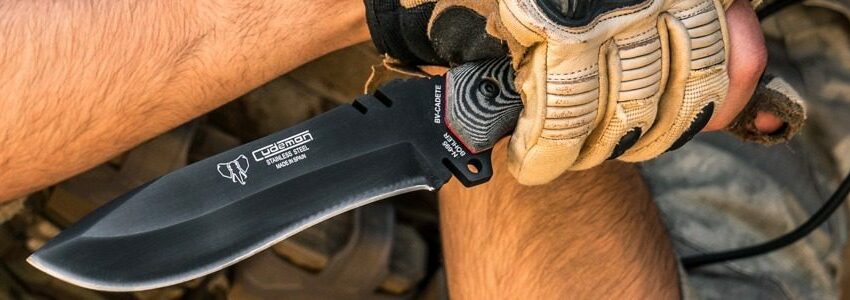
Tactical knives are designed to optimize efficiency and functionality in high-tension situations. They are characterized by their robustness and strong blades, adapted to face extreme conditions. They incorporate additional features such as glass breakers and seatbelt cutters, making them essential multifunctional tools in military and rescue missions. They are intended to offer speed and reliability, indispensable qualities for effective response in critical scenarios. Their versatile and durable design makes them reliable allies for professionals in the field.
Bushcraft Knives
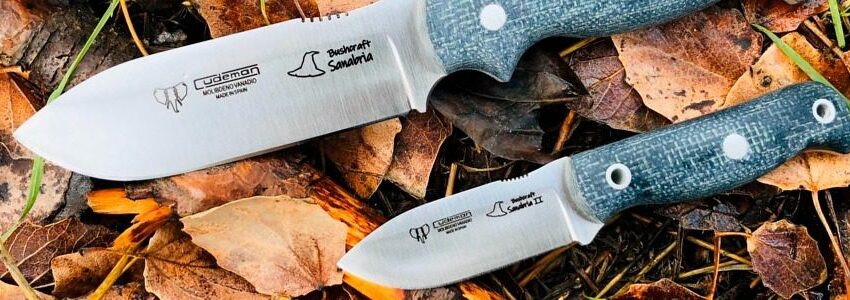
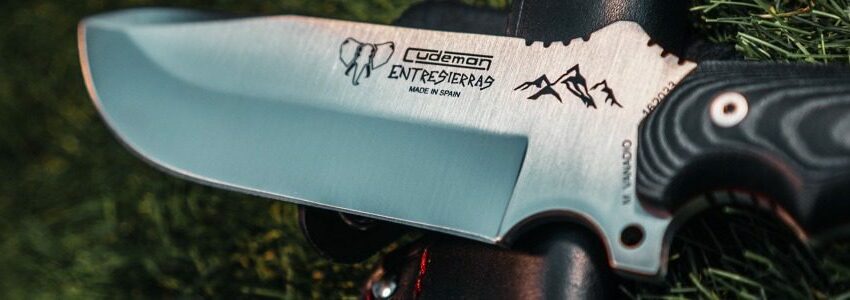
Bushcraft is not just about surviving in nature, but about thriving in it using the resources it offers. Bushcraft knives are at the heart of this philosophy, designed for unparalleled versatility. They allow for tasks ranging from the most delicate, such as carving intricate designs in wood, to the most robust, such as batoning firewood. Their blades, typically longer, are forged to offer precision and durability. Ergonomic handles ensure a secure and comfortable grip, crucial during long hours of manual work in the forest. These knives are true companions for adventurers, facilitating connection with the natural environment and efficient execution of bushcraft skills.
Survival Knives
Survival knives are essential tools designed to withstand extreme conditions. They are equipped with thick fixed blades capable of cutting, carving, and digging. Many models include additional features such as saws on the spine for cutting wood or metal and compartments in the handle for storing survival kits, including matches, fishing line, and hooks. Their robust and multifunctional design makes them ideal for any survival situation, ensuring users are prepared to face unforeseen challenges in hostile environments.
How to Choose the Right Knife
The choice of the right knife depends on the activity you plan to do. Here are some factors to consider:
- Purpose: Define whether you need a tool for specific tasks or a more versatile one.
- Blade type: Fixed blades are more durable for heavy-duty tasks, while folding ones offer portability.
- Material: Stainless steel resists corrosion, ideal for humid environments, while carbon steel holds a sharper edge for longer.
- Size: A larger knife can handle heavier tasks, but a more manageable size may be more practical to carry.
- Accessory compatibility: Check if the knife can be coupled with survival kits or additional tools.
- Reviews and recommendations: Look for user and expert opinions to inform yourself about reliability and performance in real conditions.
- Brand and reputation: Research the brand’s trajectory and ratings to ensure quality and reliability.
- Handcrafted vs. mass production: Handcrafted knives can offer superior quality and personalization, but are usually more expensive.
Care and Maintenance
Properly maintaining your tactical and bushcraft knives is vital to ensure their long-term performance and durability. In addition to regular sharpening and cleaning after each use, it is important to pay attention to corrosion prevention, especially in carbon steel knives that are susceptible to rust. Applying a light protective oil to the blade can help keep it in optimal condition. Also, storing it in a dry place with a suitable sheath will protect the knife from environmental damage. Periodically checking the condition of the handle and the blade’s attachment will ensure the knife is always ready for action. These practices will not only extend the life of your tool but also ensure you always have a reliable companion on your adventures.
For the care and maintenance of bushcraft and tactical knives, consider these additional tips:
- Completely dry the knife after cleaning to prevent corrosion.
- Regularly inspect and adjust any screws or moving parts.
- Use quality sheaths that protect the blade without retaining moisture.
- Avoid misuse such as using it as a lever, which can damage the blade or handle.
- Learn proper sharpening techniques for each type of blade, keeping them always ready for use.
These tips will ensure your knives remain in optimal condition, ready for any adventure or challenge you face.
- Can a bushcraft knife be used for tactical tasks? Yes, although not specifically designed for it, its versatility can make it useful in tactical situations.
- How does climate affect my knife choice? In humid climates, stainless steel is preferable to prevent corrosion, while in cold climates, a handle that does not conduct cold is ideal.
- What is the main difference between a survival knife and a bushcraft knife? The main difference lies in robustness and additional features for survival in extreme conditions.
- Is it necessary to carry more than one knife on expeditions? Yes, carrying a main knife and a smaller secondary knife is recommended for finer tasks.
- What features should the handle of a good survival knife have? It should be ergonomic, offer a good grip even in wet conditions, and preferably have storage capacity.
- Why is knife balance important? Good balance improves handling and reduces fatigue during prolonged use.
- How do you properly sharpen a knife? By using a sharpening stone or a sharpener specific to the blade type, maintaining the correct angle and being consistent with each pass.
Knives are not just tools, but indispensable companions in bushcraft adventures and survival situations. The right knife choice can transform your outdoor experience, offering you the confidence and ability to face any challenge. To ensure you have the best quality and design suitable for your needs, we recommend visiting a professional cutlery store like www.CuchillosNavajas.com. Here you will find a wide selection of tactical, bushcraft, and survival knives that will meet your most demanding expectations.
Do not underestimate the importance of a good tool; invest in a knife that is as tough and reliable as your adventurous spirit.