At the heart of any kitchen, whether it belongs to a professional chef or a home cooking enthusiast, lies a fundamental tool: the knife. Not only does it facilitate food preparation, making it faster and more efficient, but a well-sharpened knife is, surprisingly, also much safer. Have you ever noticed how a dull knife slips when cutting, increasing the risk of accidents and deteriorating the quality of your ingredients? Learning to sharpen and maintain your knives is not just a practical skill; it’s a way to honor an ancestral tradition that dates back centuries.
This article will immerse you in the fascinating world of knife sharpening, demystifying concepts and offering you a clear guide so that your blades are always in their best shape. A knife, a pocketknife, scissors must always have a very good edge to cut well, because if they were not well sharpened they would make no sense. The use of these work tools wears down their original edge. Hence the need to use scissor sharpeners frequently and conveniently.
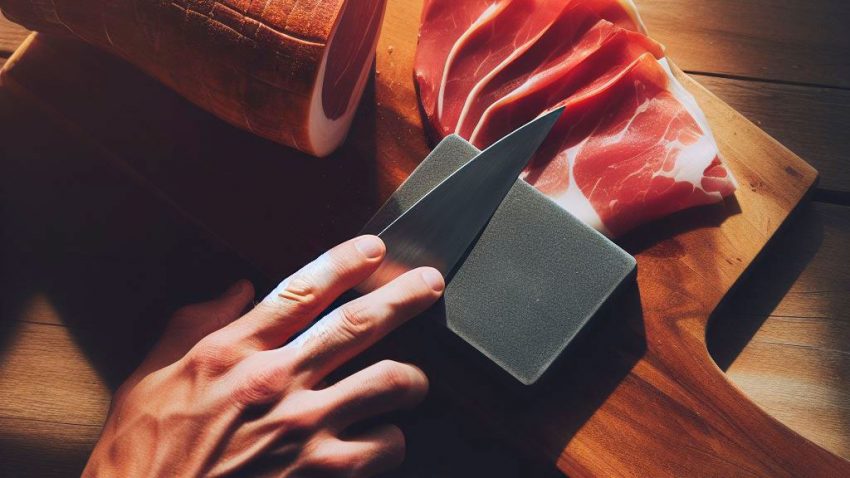
Sharpening vs. Honing: Unveiling the Secret of the Edge
Contents
It is one of the most common confusions in the world of knives: are “sharpening” and “honing” the same? Although the dictionary sometimes equates them, knife experts clearly differentiate them, and for good reason.
Sharpening: The Deep Renovation
This process involves removing material from the blade to create a completely new edge. Think of it as a “deep repair” or the creation of a new geometry for the edge. For very dull or damaged knives, sharpening is the solution. It is a task that, if not done correctly, can overheat and “detemper” the knife, rendering it useless. That’s why many opt to resort to a professional for this task.
Honing the Edge: Daily Maintenance
If your knife is already sharp, but has lost a bit of its “bite” with use, what it needs is honing. With use, the edge of the blade can bend or form a small “burr” or “curl”. Honing consists of realigning or straightening this burr, restoring the knife’s cutting ability without removing material. It is regular maintenance to prolong the life of the edge between deeper sharpenings. It is ideally recommended to do it before each use.
The Perfect Angle: The Key to an Optimal Edge
The true secret to professional sharpening lies in maintaining the correct angle throughout the process. The sharpening angle refers to the degrees by which the knife’s bevel deviates from the center of the blade. A double-beveled knife sharpened at 10 degrees on each side, for example, has a total angle of 20 degrees. What is important for achieving a good sharpen is to get a good angle of inclination (generally 12º for many sharpeners, but it can vary) and to have a good sharpener so as not to damage knives, pocket knives, or scissors. Sharpening is a technique that requires precision and a steady hand.
Angles vary depending on the type of knife and its intended use:
- Less than 10 degrees: For extremely fine cuts and very soft materials, such as razor blades. These edges are delicate and easily damaged.
- 10-15 degrees: Common in Japanese knives. Ideal for cutting soft foods or slicing meats with precision. Single-bevel Japanese knives (kataba) typically use an angle between 10 and 15 degrees, while double-bevel (ryoba) use between 15 and 20 degrees. Their hardness allows for very fine edges.
- 15-17 degrees: Provide a fairly easy cut. Some Japanese knives and modern cutlery come from the factory with this angle.
- 17-22 degrees: The most common range for general kitchen knives and outdoor use knives. Offers an excellent balance between durability and edge. Many knives manufactured in North America are sharpened to about 20 degrees.
- 22-30 degrees: For knives requiring greater durability in tougher applications, such as hunting knives or pocket knives. The edge is stronger, though less acute for fine cuts.
- More than 30 degrees: Very durable but with significantly reduced cutting capacity. Suitable for robust tools like axes or machetes.
In summary, lower angles offer finer, sharper cuts, while wider angles create stronger edges for tougher jobs.
Essential Tools for Expert Sharpening
Mastering sharpening requires knowing the right tools for each task. There are all kinds of knife sharpeners, pocketknife sharpeners, and scissor sharpeners: there are manual, mechanical, electric, etc. There are even special stones for dry or wet sharpening. A good sharpener must be easy to use, safe, and, above all, not damage the instrument. Sharpening requires maximum care in the work, patience, and the necessary time for each piece.
Sharpening Stones (Whetstones or Water Stones)
The traditional method preferred by many professionals. They are submerged in water before use (between 10 and 20 minutes) and come in different grits:
- Coarse grit (200-600): For re-profiling the edge or repairing damage.
- Medium grit (800-2000): For sharpening and refining the edge.
- Fine grit (3000-8000): For polishing the blade and achieving a very sharp edge.
One of their advantages is the ability to “thin” the knife, that is, to reduce excess material from the sides to preserve its cutting properties.
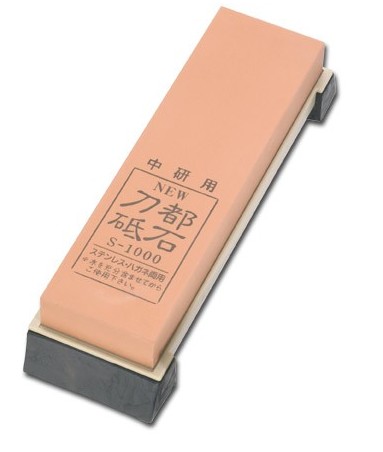
Japanese sharpening stone Nakato, 1000 grit
Stone for sharpening knives and pocket knives
Honing Steels
Cylindrical tools that, as we have already seen, do not sharpen, but rather realign the edge. They are ideal for daily maintenance. The knife is slid along the steel at a slight angle (15º-20º). Honing steels have a very resistant coating, great grip, and an excellent capacity to hone the edge.
- Ceramic steels: The most common and recommended for regular maintenance, especially for Japanese knives with harder steels.
- Diamond steels: More aggressive, ideal for quick re-sharpening. However, they can be too abrasive for regular use on kitchen knives, and the diamond grits can break off over time.
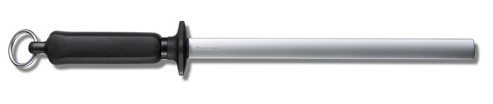
Oval diamond honing steel
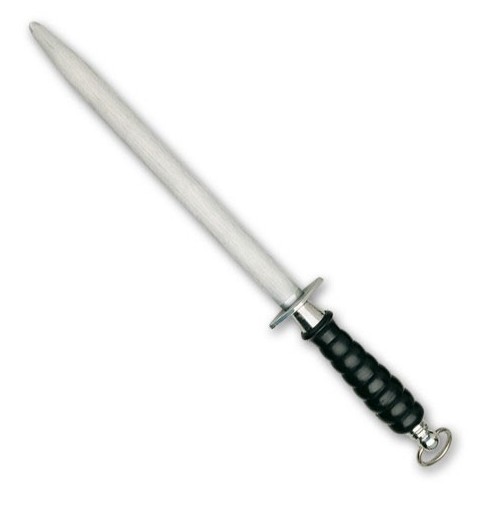
Professional honing steel
Manual Sharpeners (Slot-Style)
Easy and quick to use for home. You simply pass the blade through the slots. However, they usually leave a less refined and short-lived edge, and are not recommended for harder steels.
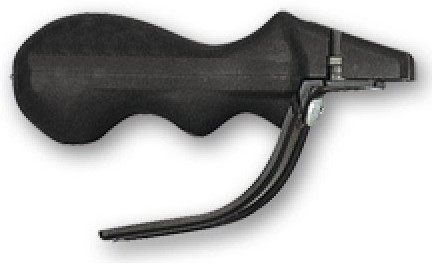
Manual sharpener
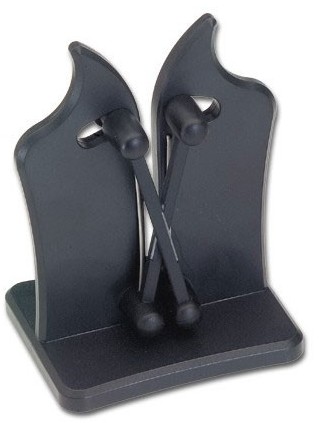
Vulkanus knife sharpener
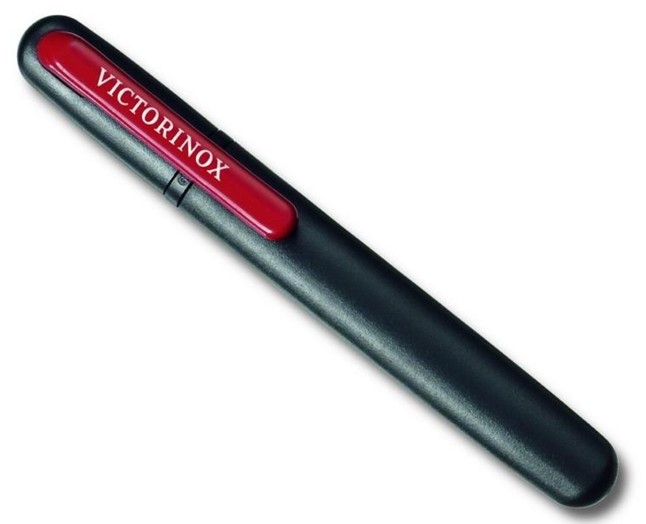
Multi-tool knife sharpener
Electric Sharpeners
Fast and convenient. They have slots with fixed angles. However, they remove significantly more blade material than stones, shortening the knife’s lifespan, and are not ideal for Japanese knives or fine pocket knives. Sharpening experts say that the best sharpening work is done by hand, freehand, and not with automatic or electric machines. Others say that there are sharpening machines of excellent quality and with excellent results.

Fischer electric sharpener
Guided Sharpening Systems
They use a fixture to secure the knife and rods or stones that move along the edge, maintaining a constant angle. They are excellent for achieving a straight and beautiful edge, especially on expensive knives, although the process can be slower. It is advisable to cover the blade with adhesive tape to prevent scratches from the clamping system.
The Step-by-Step Sharpening Process (With Sharpening Stone)
Although each tool has its particularity, the sharpening stone is a good starting point for understanding the fundamental process:
Stone Preparation
If using a water stone, submerge it in water until no bubbles appear (about 10-15 minutes). Place the stone on a stable surface, preferably with a non-slip holder.
Set the Angle
For double-bevel knives, look for an angle between 15 and 20 degrees. For single-bevel knives, between 10 and 15 degrees. You can use a sharpening guide or the “marker trick”: color the bevel with a black marker and sharpen until the ink completely and uniformly disappears, which indicates that you are maintaining the correct angle.
Sharpening the Knife
- For Double-Bevel Knives: Start with one side, sliding the blade from the base to the tip over the stone. Apply pressure when pushing and relax when pulling. Repeat several passes and then flip the knife to sharpen the other side. It is crucial to alternate sides to achieve a uniform edge.
- For Single-Bevel Knives: Place the beveled side on the stone and apply force by sliding the blade in a circular motion, ensuring you sharpen the entire side. Once the beveled side is finished, flip the knife and place the flat side lightly touching the stone, sliding it gently to remove any burr.
Grit Progression
Start with a coarse-grit stone if the knife is very dull or damaged. Then, move to a medium-grit stone to refine the edge, and finally to a fine-grit stone for a polished finish and a “razor-sharp” edge. This progression ensures that the edge is smooth and free of micro-serrations.
Removing the Burr and Honing
After sharpening, a small ridge of metal (the burr) will form on the edge. To remove it and achieve a smooth edge, use a finer-grit stone or a leather strop. Rotate the blade over the strop or stone with light pressure, alternating sides.
Edge Test
A good indicator is if the knife can effortlessly cut a sheet of paper or slice a tomato cleanly. If it’s still not perfect, repeat the process or focus on the areas that need it.
Special Cases: Serrated and Ceramic Knives
Not all knives are sharpened the same way. Each instrument has its own sharpening method; it’s not the same to sharpen a knife, a pocket knife, a sword, a scalpel, a machete, an axe, etc.
Serrated Knives
Although it is often believed that they do not need sharpening, they do require it to maintain their performance. Serrated bread, tomato, or steak knives have “teeth” that need to be sharpened individually.
- Tools: Sharpening rods, conical diamond rods, or ceramic rods are ideal. A sharpening stone can be used for the straight sections between the teeth.
- Process: Color the edges of the teeth with a marker to identify the angle. With a rod or stone of the appropriate angle (about 20 degrees), insert it into each serration and move it back and forth with a gentle sawing motion. Once a burr forms on all teeth, remove it with light passes on the unsharpened side, alternating sides until it disappears.
Ceramic Knives
These knives are extremely hard but fragile, so they should not be sharpened with traditional stones or common sharpeners. Ideally, they should be taken to a professional service or a diamond sharpener specifically designed for ceramics should be used. It is vital to work very gently to prevent the blade from chipping.
Beyond Sharpening: Maintenance and Common Mistakes
Maintaining the edge of your knives is a continuous process that goes beyond sharpening. To sharpen scissors, which come in different types (dressmaking, tailoring, hairdressing, paper, etc.), it is necessary to first disassemble the piece, then polish it, and finally sharpen it. Sharpening well is not just a matter of technique; it is also a craft, to avoid scratching the surface of the piece, and to use the necessary time for an impeccable result.
Sharpening Frequency
For most home cooks, sharpening every 2 to 3 months is sufficient. If you use your knives daily or for demanding tasks, it could be monthly. However, honing the edge should be done much more frequently, ideally before each use to maintain the alignment of the edge.
Proper Cleaning and Storage
- Wash your knives immediately after each use with warm water and mild soap.
- Dry them thoroughly to prevent moisture and corrosion.
- Store knives correctly, either in a block, on a magnetic strip, or with protective sheaths, to prevent them from hitting other utensils and becoming dull or chipped.
Avoid Common Mistakes
- Using inadequate cutting boards: Glass or ceramic boards can dull your knives faster. Opt for wooden or plastic boards.
- Pressing too hard: This can damage the knife or the sharpening tool.
- Inconsistent angles: Maintain a constant sharpening angle to ensure a uniform edge.
- Over-sharpening: For serrated knives, over-sharpening can wear down the serrations or alter their shape.
- Ignoring straight sections: For serrated knives, don’t forget to sharpen the straight sections between the teeth.
- Using dry stones: They can damage the edge of your knives.
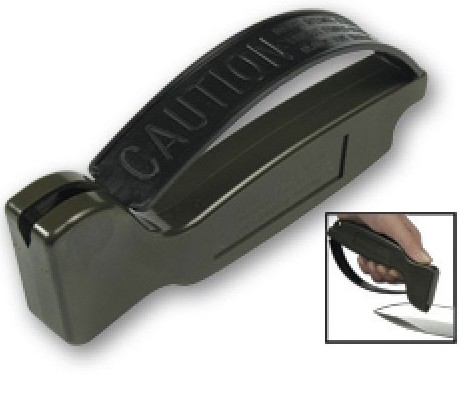
Carbide sharpener
Sharpening a knife is much more than a simple task; it is a practice that combines art, technique, and dedication. Mastering this skill will not only allow you to work more safely and efficiently in the kitchen but will also connect you with a centuries-old tradition. By understanding the differences between sharpening and honing, choosing the right tools, and following best maintenance practices, you will be able to keep your knives in optimal condition, ready for any culinary challenge. A sharp knife is a joy in the kitchen, and yours can be too!
If you are looking for the perfect tools to take your sharpening skills to the next level or simply need to renew your cutting arsenal, we invite you to explore our wide selection of knife and pocket knife sharpeners, as well as our collection of high-quality knives and pocket knives. Find the perfect edge for every task!