Have you ever found yourself struggling to separate meat from the bone, leaving valuable pieces stuck or, even worse, risking a dangerous slip? If the answer is yes, it’s the perfect time for you to meet a true unsung hero of modern cuisine: the boning knife. Although to many gastronomy enthusiasts it may seem like a specialized utensil, or even exclusive to the professional sphere, you’ll be surprised to discover how quickly this knife transforms into a fundamental and irreplaceable piece once you incorporate it into your culinary arsenal.
Designed with millimeter precision and specific functionality, the boning knife’s primary objective is to separate meat from bones with unparalleled accuracy and efficiency. It is much more than a simple sharp blade; it is a tool that allows you to make clean and meticulous cuts, maximizing the use of each piece of meat and minimizing waste. In addition, its proper use helps prolong the life of your other knives, as common blades are not designed to withstand the tension and type of work involved in boning, which could damage or dull them prematurely.
The boning knife is expertly used to make precise cuts on pieces such as a leg of lamb, or to bone a chicken breast with complete ease. This specialized knife cuts meat around bones, ensuring no excessive waste and also allowing you to remove skin from meats and poultry with surprising dexterity. Its design allows for easy removal of tendons and fat, and it is ideal for cutting very thin slices of meat or fish, achieving results that enhance the presentation and flavor of your dishes.

A Journey Through its Essence: From Butcher Shop to Home
Contents
Historically, the boning knife was perceived and used almost exclusively as a professional tool, confined to butcher shops, slaughterhouses, and high-end restaurant kitchens. However, in recent years, this utensil has begun to gain significant and steady ground in domestic kitchens worldwide. What is this growing popularity due to? The reason is simple and powerful: it allows gastronomy enthusiasts, from curious beginners to more experienced home cooks, to work with medium and large pieces of red meats, poultry, and fish with a ease, precision, and yield that previously seemed exclusive privileges of experts.
Imagine the satisfaction of being able to perfectly clean a rack of pork ribs, expertly separating each piece of meat from the bone to freeze only the edible part and thus optimize space in your freezer. Or think about the pleasure of enjoying the tastiest and juiciest pieces attached to the bone, which are often lost when using inadequate knives. Mastering the use of the boning knife will not only give you superior culinary results, with cleaner cuts and a greater yield from your ingredients, but it will also help you develop an invaluable skill in handling kitchen knives. This dexterity, once acquired, you can apply with confidence and effectiveness to other knife models, elevating your overall kitchen technique.
In the industrial sector, especially in the meat industry, the boning knife is undoubtedly a basic and intensively used instrument, valued for its ability to maximize product utilization and reduce waste. Nevertheless, the constant search for process optimization and the imperious need to further minimize waste have driven the development of even more efficient and automated tools, such as the circular knife or mechanical boning systems. Despite these technological advances, for the vast majority of kitchens, whether medium-sized professional or, above all, domestic kitchens, the boning knife remains the manual tool par excellence. Its simplicity, control, and versatility maintain it as a fundamental pillar in food preparation.
Spanish cuisine, with its rich tradition and innovative current techniques, is a clear example of how gastronomy allows for the creation of a series of exquisite dishes and accommodates the distinctive personal touch of each cook. This personal touch is manifested not only through the selection and combination of ingredients, but also, and crucially, through the way food is cut and prepared, where precision and knife technique are essential.
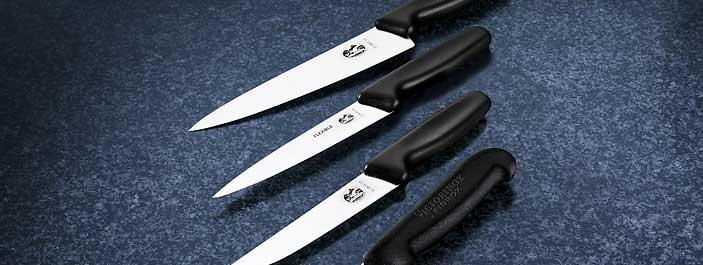
To satisfy this diversity of culinary needs and allow creative expression in the kitchen, there is a wide range of specialized utensils. Within the knife category, for example, classification is meticulously carried out according to the specific food to be cut. Thus, we can find everything from knives designed for vegetables or fruits, which allow delicate and precise cuts, to specific knives for cheeses, which prevent sticking, or for bread, which ensure clean, tear-free slices. Each knife is optimized for its task, ensuring efficiency and the best results.
Anatomy of Precision: What Makes It Unique?
The true key to the exceptional performance of a boning knife lies in its meticulous and highly specialized design. Each component, from the tip of the blade to the base of the handle, is optimized with a clear purpose: to facilitate the task of separating meat from bones with the utmost precision, efficiency, and safety possible. This level of detail in its construction is what distinguishes it from other kitchen knives and makes it an indispensable tool for certain preparations.
The Blade: Soul of the Knife
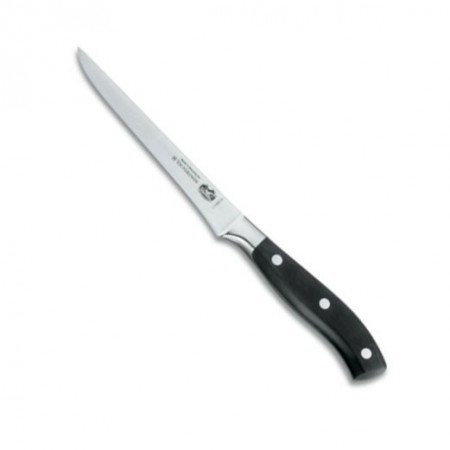
The blade is, without a doubt, the heart and soul of any knife, and in the case of the boning knife, its design is particularly distinctive. It is characterized by being thin, extremely sharp, and generally narrow, with a length commonly ranging between 12 and 18 centimeters. This specific shape is no coincidence; it allows for surprisingly agile maneuvering in confined spaces, such as cavities around joints or between bones, and effortless bordering of bone contours, minimizing meat waste.
Blade Types and Their Ideal Applications
Within the category of boning knives, there are different types of blades, each with specific characteristics and advantages that make them more suitable for certain tasks or types of meat:
- Flexible blades: These blades are the epitome of precision. Their inherent flexibility makes them ideal for tasks demanding high delicacy and adaptability, such as boning fish (allowing precise following of the backbone) or small poultry (where curves and corners are numerous and complex). Their ability to bend slightly allows the blade to conform to irregular shapes, minimizing meat waste and ensuring a clean, efficient cut.
- Semi-flexible blades: They represent a perfect balance between the flexibility of softer blades and the rigidity of more robust ones. This versatility makes them an excellent option for working a wide range of meat pieces, especially those of medium to large size. They offer the necessary agility to maneuver around bones, while providing sufficient comfort and control for more forceful cuts. They are a very popular choice for general use in both domestic and professional kitchens.
- Rigid blades: These are the most robust and least prone to bending. Their solidity makes them excellent for tasks requiring considerable force and absolute control, such as boning large, dense cuts of beef or pork (e.g., shoulders or whole legs). They provide greater stability and superior control in forceful cuts, allowing pressure to be applied without the blade deviating.
- Curved blades: The curved design of these blades facilitates bone removal with a single rocking motion. This curvature allows the blade to glide smoothly along the bone, making long, clean cuts with remarkable efficiency. They are especially useful for following the natural curves of ribs or joints.
- Straight blades: Unlike curved blades, straight blades are excellent for removing large pieces of meat from flat surfaces or for making very thin, precise cuts at high speed. Their linear design allows for exceptional control when filleting or separating large sections of meat with surgical precision.
- Narrow blades: These are perfect for cutting small edges and angles, allowing the blade to glide easily through skin or membranes without damaging them. Their thinness and precision are ideal for detailed work and for minimizing waste in delicate areas.
- Wide blades: While less common in pure boning knives, some variants may feature slightly wider blades. These produce more resistant and robust knives, useful for working with particularly thick sections of meat where a bit more “body” in the blade is needed to guide the cut.
Blade Materials: Durability and Performance
The material from which the blade is made is a crucial factor determining the knife’s durability, edge retention, and ease of maintenance. High-quality stainless steel is the gold standard in boning knife manufacturing, offering excellent corrosion resistance and proven durability over time. However, there are other options with distinctive characteristics:
- High-carbon steel: This type of steel is known for its lightness and, above all, for its exceptional edge retention capability. A high-carbon knife can maintain its sharpness for extended periods of intensive use. However, it requires more meticulous care, as it is more prone to oxidation if not properly dried and maintained.
- Japanese steel: Japanese steels, such as VG-10 or AUS-8, are renowned for their great hardness and their ability to achieve an extraordinarily durable and razor-sharp edge. These knives are usually thinner and lighter, making them ideal for precision work.
- Special alloys (e.g., molybdenum-vanadium steel): Many brands use specific alloys that combine the best properties of various metals. Molybdenum-vanadium steel, for example, offers an excellent combination of hardness, corrosion resistance, and ease of sharpening.
- Damascus steel: Beyond its undeniable aesthetic beauty, characterized by its unique wavy patterns, Damascus steel is the result of forging multiple layers of different steels. This not only gives it superior hardness but also exceptional flexibility and edge retention capabilities. These are high-end knives, valued for both their performance and their artistry.
The Handle: Comfort and Safety in Your Hands
A well-designed handle is as fundamental as the blade itself to ensure optimal performance and, more importantly, user safety. A comfortable and secure grip is crucial, especially when working in wet or greasy conditions, which are common in meat preparation. Handle materials vary widely, each offering different advantages:
- Wood: Wood handles offer a warm grip and a classic aesthetic. Woods like pakkawood or ebony are popular for their durability and beauty. However, they may require a little more maintenance to prevent cracking or deterioration from moisture.
- Synthetic materials: Materials such as G-10 (a fiberglass and epoxy resin laminate), micarta (a linen or paper and resin laminate), or various reinforced polymers are highly valued for their water resistance, extreme durability, and non-slip texture. These materials are ideal for demanding kitchen environments where hygiene and resistance are priorities.
- Tang: The tang is the extension of the blade that extends into the handle. A full tang, where the blade extends along the entire length of the handle, is an indicator of superior quality. It ensures exceptional structural strength and perfect balance of the knife, which translates into greater control and less fatigue during prolonged use.
- Guard or Bolster: Many quality knives, especially boning knives, include a guard or bolster at the junction between the blade and the handle. This small but crucial safety element is designed to protect your fingers from accidental slips towards the sharp blade, providing a physical barrier and an additional resting point for your thumb or index finger.
The boning knife is one of the most used in the kitchen, and its popularity lies in its ability to fillet meat and fish with astonishing precision, allowing the cook to choose the desired thickness for each cut. This versatility makes it an indispensable tool for those seeking perfection in food preparation.

Beyond the Bone: Its Versatility in the Kitchen
Although its name, “boning knife,” clearly indicates its main function of separating meat from the bone, the reality is that the boning knife is surprisingly versatile and can be an invaluable asset for a wide range of culinary tasks. Its narrow blade, exceptional sharpness, and excellent handling make it useful for much more than just boning. Its design allows for precision and control that make it a multifunctional tool in the hands of a skilled cook.
- Removing tendons and fat: The thinness and sharpness of the boning knife’s blade are perfect for complex maneuvers in hard-to-reach areas. This makes it ideal for precisely trimming tendons, silver skin, and excess fat from meat, improving the final texture and flavor of the dish.
- Preparing poultry: It allows for surgical precision when working on delicate areas of poultry like chickens, ducks, or turkeys. It is excellent for separating breast meat, cutting around wings or thighs, easily removing skin, or separating joints effortlessly, leaving the meat ready for cooking or portioning.
- Filleting fish: Although there is a specific filleting knife, the narrow, sharp blade of the boning knife is very effective for separating meat from fish bones. Its flexibility (especially in flexible or semi-flexible blades) allows it to follow the contour of the backbone with great accuracy, minimizing waste and obtaining clean, presentable fillets.
- Cuts for refined presentations: Many professional chefs use the boning knife to create stylized and clean cuts that elevate the visual presentation of dishes. Its precision allows for sculpting meat or vegetables in ways that a larger, less agile knife could not achieve.
- Working with fruits and vegetables: Its utility extends beyond meat. It is surprisingly useful for removing pits from large fruits like mangoes or avocados, where its narrow blade can maneuver around the pit with ease. It is also effective for peeling irregular-shaped fruit skins like papayas or pineapples, or even for carving decorative shapes into vegetables for garnishes.
- Creative baking: Although it may seem unusual, the thin, precise blade of the boning knife is perfect for delicate baking tasks. It can be used to even out cake layers, ensuring uniform height, or to cut cookie dough with intricate designs or millimeter precision.
How to Hold It Correctly?
The grip technique is fundamental to maximizing control, precision, and safety when using a boning knife. Here’s how to do it correctly:
- Handle grip: Hold the knife with your dominant hand. Wrap your thumb, middle finger, and ring finger firmly around the handle to ensure a solid and comfortable grip.
- Index finger position: Bring your index finger to the top of the blade, resting it gently on the spine. This position provides additional stability and precise control over blade movements, allowing you to guide the cut with greater accuracy.
- Non-dominant hand: With your other hand, stabilize the piece of meat you are working on. It is crucial to keep your fingers curled inward, forming a kind of “claw,” to protect them from any accidental slipping of the blade. Never lay your fingers flat on the meat while cutting.
- Movement: Use smooth, controlled movements, letting the knife’s edge do the work. Do not apply excessive force; the sharpness of the blade is what should cut.
Keeping It Impeccable: Care and Sharpening
For your boning knife to faithfully serve you for many years, maintaining its optimal performance and impeccable edge, proper maintenance is absolutely crucial. Good care not only prolongs the life of the tool but also ensures safety and efficiency with every use.
Correct Cleaning and Storage
- Hand wash, always: Never, under any circumstances, place your boning knife in the dishwasher. The extreme heat of washing cycles, abrasive detergents, and constant banging against other utensils can cause irreparable damage to the blade (dulling, corrosion, stains) and the handle (discoloration, cracking, material deterioration). Hand wash it with warm water and mild soap immediately after each use, using a soft sponge or cloth. If you find stubborn stains or stuck-on residue, you can use a soft paste of baking soda and water to gently scrub.
- Complete drying: This step is as important as washing. It is essential to completely dry the knife with a clean, dry cloth before storing it. Residual moisture is the number one enemy of steel, as it can cause corrosion and rust spots, even on high-quality stainless steels.
- Safe storage: Proper storage protects the edge and prevents accidents. The best options include:
- Knife blocks: Keep knives organized and with the edge protected.
- Magnetic strips: Allow easy access and keep blades visible, but make sure to place them carefully to avoid damaging the edge.
- Knife rolls or cases: Ideal for transport or for those with few knives.
- Individual blade guards: If you store them in a drawer, wrap them individually in plastic or fabric guards to prevent constant rubbing against other utensils from damaging the edge and causing accidents. Never stack them or leave them loose in a drawer.
- Cutting surfaces: Always use cutting boards made of soft, edge-friendly materials, such as wood (bamboo, maple, beech) or high-density plastic. Avoid hard surfaces like marble, glass, ceramic, or steel at all costs, as these can dull, chip, or even permanently damage your knife’s edge with a single cut.
The Art of Sharpening
Sharpening is a fundamental practice to ensure your boning knife maintains its ability to make precise and efficient cuts. A boning knife, like any other cutting tool, gradually dulls with intensive use, so it needs regular sharpening to regain its original keenness and ensure optimal performance.
Options for Maintaining its Edge
There are diverse tools and techniques for maintaining the edge of your boning knife. The choice will depend on your experience level, the state of the edge, and the desired result:
- Sharpening stones (water stones or oil stones): These are the preferred tool for many professionals and enthusiasts. They come in different grits:
- Coarse grit (e.g., #400 – #1000): Used for very dull knives or to repair chips in the edge.
- Medium grit (e.g., #1000 – #3000): Ideal for regular sharpening and for keeping the edge in good condition.
- Fine grit (e.g., #4000 – #8000 or higher): Used for the final touch, polishing the edge, and achieving extreme sharpness and a more precise cut.
To use them, wet the stone with water (or oil, depending on the type) to lubricate the surface and prevent excessive heat during sharpening. Slide the knife’s edge over the stone at a constant angle of approximately 20 degrees (this angle may vary slightly depending on the type of knife and its use). It is crucial to maintain a constant angle and pressure with each pass to achieve a uniform and effective edge.
- Honing steels or leather strops: A honing steel (or sharpening steel) does not sharpen the knife in the strict sense, but rather realigns the edge that has microscopically bent with use. It is a daily maintenance tool to keep the edge keen between full sharpenings. Leather strops, often with abrasive compounds, are useful for polishing and refining the edge, removing any microscopic burrs that may remain after sharpening.
- Electric sharpeners: These offer a faster and more efficient option, especially for those who lack experience with manual sharpening stones. These systems usually feature grinding wheels or abrasive belts that sharpen automatically, guiding the knife to maintain the correct angle. They are convenient, but it is important to use them in moderation and follow the instructions to avoid excessive wear on the knife.
- Guided stone sharpeners and roller sharpeners: These tools are designed to facilitate maintaining the correct angle during sharpening, making them ideal for beginners or for those seeking consistency without the learning curve of freehand sharpening stones. They provide guides or rollers that ensure the knife slides over the stone at the precise angle at all times.
Is the Boning Knife For You?
The decision to acquire a boning knife, like any other investment in kitchen tools, should be based on your specific culinary needs and the frequency with which you perform certain tasks. While it’s not a knife everyone needs in their kitchen, for certain user profiles, it’s a worthwhile long-term investment, as it optimizes work, improves results, and extends the lifespan of other utensils.
You should consider one if…
- You plan to fillet fish or bone meat and poultry frequently: If you are a kitchen enthusiast who buys whole pieces of meat or fish and enjoys preparing them from scratch, a boning knife will save you time, effort, and frustration.
- You seek to maximize meat utilization: If your goal is to minimize waste and extract every last gram of meat, even the pieces closest to the bone or joints, this knife is your best ally.
- You want to achieve straighter and smoother cuts: To improve the presentation of your dishes, especially if you serve clean fillets or portions, the precision of a boning knife is unparalleled.
- Your common knives get damaged or dull when trying to remove bones: If you’ve noticed that your chef’s knives or utility knives suffer when you try to bone, it’s a clear sign that you need a specialized tool for that task.
- You are a cook looking to develop advanced skills: Mastering boning is a skill that elevates your culinary level and gives you greater control over your ingredients.
- You value safety in the kitchen: A knife designed for the task is inherently safer than forcing an inadequate knife for boning.
You might not need it if…
- You don’t cut meat regularly: If your meat consumption is sporadic or if you prefer to buy pre-boned and filleted cuts from the butcher or supermarket, investing in a boning knife might not be justified.
- You need to cut cartilage or very hard bones from animal carcasses: This is a more industrial task, requiring more robust butchering tools such as bone saws or large, thick butcher knives. A boning knife is not designed for this type of brute force.
- You already have other knives that perfectly meet your current needs: If your current knives allow you to perform meat preparation tasks efficiently and without problems, you might not need to add a boning knife to your collection immediately.
The boning knife is a fundamental tool that, with its specialized design and the versatility of its blades, allows you to take your culinary skills to the next level. From the most passionate home kitchen to the most demanding professional one, its ability to ensure precision and efficiency in every cut not only greatly facilitates the most complex tasks but also significantly improves safety when handling food. Investing in a good boning knife not only extends the lifespan of your other cutting tools by preventing improper use but also transforms your culinary experience into a much more efficient, rewarding, and professional activity. With proper care and sharpening, your boning knife will undoubtedly become a reliable and indispensable ally in your kitchen, ensuring exceptional results in every preparation and allowing you to explore new gastronomic possibilities.