
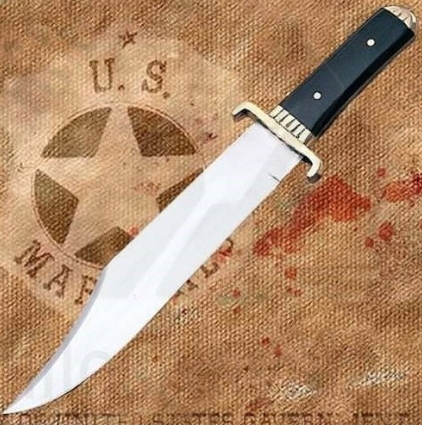
To delve into the world of the Bowie knife is to enter a powerful symbol of American culture, a tool that transcended its initial use to become a true icon. Since its origins in the 19th century, this knife has captivated collectors and practical users alike. Its robust design, imposing blade, and history linked to the figure of Jim Bowie have granted it an almost mythical status. This article will take you through the fascinating trajectory of the Bowie knife, its unique design, its multiple current uses, and its profound cultural significance. The Bowie knife has a large size and thickness, and its blade features a distinctive cut at its tip or a lance-shaped point, characteristics that give it an unmistakable presence.
The Forging of a Legend: History of the Bowie Knife
Contents
- The Forging of a Legend: History of the Bowie Knife
- Design and Features: Beyond a Combat Knife
- Versatility in Action: Uses of the Bowie Knife
- An Icon with a Soul: Cultural and Aesthetic Significance
- Bowie Knife Comparison: Advantages and Disadvantages
- Purchase and Usage Recommendations According to User Profile
- An Enduring Legacy
The Bowie knife owes its name to James Bowie, a legendary 19th-century figure, famous for his combat prowess and his heroic participation in the Battle of the Alamo. However, the event that truly cemented its legacy was a duel in 1827, known as the “Sandbar Fight”. Jim Bowie survived this confrontation thanks to the knife he carried, which generated an enormous impact on the popular culture of the time. This incident not only saved his life but also catapulted the fame of the knife he carried, turning it into an object of desire and admiration for its effectiveness and robustness.
Although the identity of the creator of the first Bowie knife is not entirely clear, it is believed to have been designed by his brother, Rezin Bowie, and forged by a local blacksmith. This version suggests that the need for a personal and effective weapon in the duels of the time led to the creation of this innovative design. Another equally popular version, with its own proponents, suggests that it was James Black, an Arkansas blacksmith renowned for his skill and mastery in forging, who created it at Jim Bowie’s request. It is said that Black combined elements of Spanish knives, known for their elegance and lethality, butcher knives, valued for their cutting capacity and resistance, and swords, from which he took the idea of a long and powerful blade. That original knife was characterized by having a long and wide blade, with a distinctive “clip point” edge that facilitated an effective cut and great penetration in combat. News of this duel and Jim Bowie’s survival made the large knives of the time popularly known as “Bowie-like knives”, a phrase that would quickly simplify to “Bowie knives̶饰演“, solidifying its name in history.
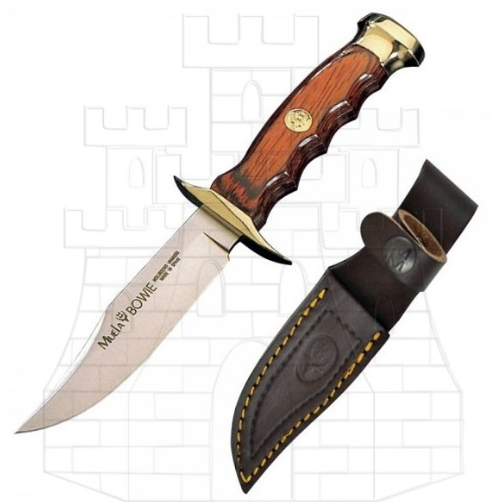
During the westward expansion of the United States, the Bowie knife became the indispensable companion of explorers, hunters, and soldiers. Its versatility made it useful both for combat, where its size and design made it a formidable weapon in hand-to-hand combat, and for everyday tasks in the harsh frontier life. It was a multi-purpose tool capable of cutting firewood, skinning game animals for food and pelts, or preparing food in rudimentary conditions. Over time, the design evolved, incorporating new materials for blades and handles, more ergonomic designs for a more comfortable and secure grip, and ornamental details that elevated it to the category of collector’s item, especially in artisanal and luxury versions. Even renowned British companies like Rodgers and Son of Sheffield, known for their quality cutlery, sought to exploit the growing market for “Bowie-like knives” in the New World, demonstrating its global popularity. Today, the Bowie knife is not only valued for its utility but also for the rich history it encompasses. Each piece is a small tribute to an era of adventure, resilience, and character, a tangible reminder of the forging of a nation.
Design and Features: Beyond a Combat Knife
One of the most fascinating aspects of the Bowie knife is its timeless and distinctive design, which has kept it relevant and recognizable throughout the centuries. Although there are multiple versions and styles, adapted to different needs and preferences, they all share common characteristics that define this class of knife and make it easily identifiable in any collection or usage scenario.
Clip Point Blade: The Bowie’s Signature
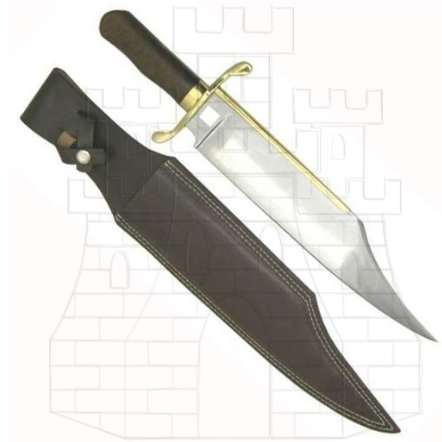
Undoubtedly, the most iconic and defining feature of the Bowie knife is its “clip point” blade shape. This features a downward curve on the upper part of the edge, near the tip, creating a sharp and very functional point. This design is not merely aesthetic; it allows for better penetration when stabbing and great maneuverability in cutting, which makes it exceptionally versatile. In addition, the “clip point” can be used with precision for more delicate tasks, such as skinning animals or intricate wood carving, demonstrating that its utility goes beyond brute force. The main edge of the blade is usually straight and sharp, ideal for clean and efficient cuts in a variety of materials.
Size and Robustness: An Imposing Companion
A traditional Bowie knife is distinguished by its considerable size and robust construction. The blade can vary significantly in length, from 15 to 30 centimeters (or 6 to 24 inches, depending on the source and design interpretation). It is, by definition, a large knife, conceived from its origin for demanding tasks and to be a formidable weapon in combat. Its thickness and balanced weight are crucial, as they allow the user to cut, carve, and defend themselves with superior effectiveness to that of smaller knives. Typical blades exceed 7 inches (18 cm) and have a generous spine thickness, which gives them exceptional durability and resistance, capable of withstanding intensive use in adverse conditions.
Ergonomic Handle: Firm and Comfortable Grip
The handles of Bowie knives have evolved considerably over time, from the simple wooden grips of early models to modern designs that incorporate advanced materials and sophisticated manufacturing techniques. Today, it is common to find handles made from materials such as micarta, horn, G10, noble woods like olive or cocobolo, or even traditional materials like bone and stacked leather. The essential thing, regardless of the material, is that the grip is firm, comfortable, and secure, minimizing fatigue during prolonged use and ensuring optimal control of the knife at all times, whether in precision tasks or combat situations.
Crossguard: Essential Protection
A distinctive and functional element of the Bowie knife is the crossguard. This piece, usually metallic, extends perpendicularly to the blade and protects the user’s hand from potential slips towards the blade during use, especially in impact situations or combat. In addition to its protective function, the crossguard contributes to the knife’s balance and its imposing aesthetic.
Blade Materials: Durability and Performance
Modern Bowie knives are made with high-performance steels that guarantee exceptional hardness, a durable edge, and excellent resistance to wear and corrosion. Examples of commonly used steels include MoVa (Molybdenum-Vanadium), Böhler N695, VG-10 stainless steel, and CPM-S30V, each with specific properties that make them ideal for different applications and levels of demand. Bowie knives with Damascus finishes can also be found, a type of steel with distinctive patterns that is not only visually impressive but also offers superior cutting and resistance properties thanks to its multiple forged layers. It is important to remember that there is no exact pattern to define the characteristics of a “true” Bowie, and the quality varied greatly between fine surgical instruments and rough pieces improvised by frontier blacksmiths, which reflects the diversity and evolution of this iconic knife.
Versatility in Action: Uses of the Bowie Knife
Although its origin is strongly linked to combat and self-defense, where it was historically used as a formidable and decisive weapon in life-or-death situations, the modern Bowie knife is primarily used in outdoor activities. Its robust design and considerable size make it an exceptionally versatile tool, capable of adapting to a wide range of tasks in natural and survival environments.
Survival and Bushcraft: The Indispensable Ally
The Bowie knife is a favorite choice among nature enthusiasts, bushcraft practitioners, and survival experts. Its ability to perform demanding tasks makes it an indispensable ally in the wilderness. It is capable of cutting firewood to light a fire or build a makeshift shelter, skinning game animals for food and hides, and even serving as a digging tool in survival situations, allowing for shelter preparation or searching for buried resources. Its robustness allows it to withstand the impact of blows and leverage, making it superior to smaller knives in these applications.
Hunting and Camping: Reliability in the Field
The robustness and reliability of the Bowie knife make it an excellent companion for hunters and campers. Its large, sharp blade is ideal for processing game, such as gutting and deboning medium to large game animals. In camp, it can be used to prepare food, cut ropes, open cans (with caution), or perform any other task requiring a powerful and durable cutting tool. Its versatility reduces the need to carry multiple tools, optimizing equipment for outdoor expeditions.
Everyday Tasks and Beyond: An Adaptable Design
The adaptable design of the Bowie knife makes it suitable for various practical activities, from more technical jobs requiring precision to food preparation in the field, where its size facilitates cutting large ingredients. It can, in certain circumstances, even replace a machete or an axe for tasks involving cutting light vegetation or preparing firewood, especially in situations where space or weight are limiting factors. While Bowie knives were traditionally fixed and large, more and more people are opting for folding versions due to their safety, as they incorporate robust locking mechanisms that prevent accidental blade closure, and their versatility in materials and styles, which makes them easier to transport and store without sacrificing much of their functionality.
An Icon with a Soul: Cultural and Aesthetic Significance
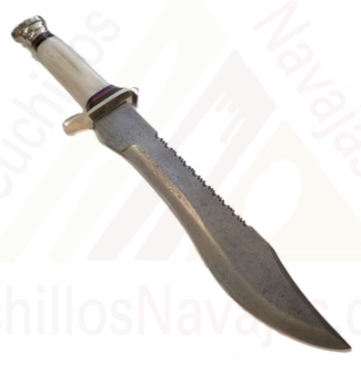
In the world of artisanal cutlery, the Bowie knife holds a privileged place. Many high-end manufacturers create unique versions, decorated with intricate engravings, Damascus finishes that reveal mesmerizing patterns, or personalized handles with exotic materials, which are not only functional but true works of art. The craftsmanship required to create a Bowie knife is a testament to enduring traditional manufacturing techniques, passed down from generation to generation, combining skill, patience, and a deep knowledge of materials.
Today, the manufacturing of Bowie knives is a combination of art and technology. Artisans and specialized companies, such as Cuchillería Joker in Spain, use traditional techniques like hand forging, which allows shaping steel with precision and control, and tempering, a crucial process to give the blade the appropriate hardness and flexibility, along with modern materials that improve performance and durability. Cuchillería Joker, for example, stands out for its use of premium steels, selected for their wear resistance and edge retention capability, and a production process that combines traditional craftsmanship with cutting-edge technology, offering models faithful to the original design with noble wood handles or state-of-the-art technical materials, accompanied by handmade leather sheaths that ensure the knife’s protection and safe transport.
Bowie Knife Comparison: Advantages and Disadvantages
Like any specialized tool, the Bowie knife presents a set of advantages and disadvantages that make it ideal for certain uses and less suitable for others. Understanding these aspects is crucial for choosing the right knife according to the user’s needs.
Advantages of the Bowie Knife:
- Exceptional Versatility: Its robust design and large blade make it suitable for a wide range of tasks, from cutting wood and preparing food to skinning animals and self-defense. It is a multi-purpose tool that can reduce the need to carry several tools.
- Cutting Power and Penetration: The “clip point” blade and its considerable size allow for great cutting power and excellent penetration capability, which is invaluable in survival or hunting situations.
- Durability and Resistance: Generally made with high-performance steels and robust construction, Bowie knives are extremely durable and can withstand intensive use in adverse conditions.
- Balance and Control: Despite its size, a good Bowie knife is well-balanced, allowing for precise control and reducing fatigue during prolonged use.
- Historical and Aesthetic Significance: For many, owning a Bowie knife is more than just having a tool; it is owning a piece of history and a work of art, especially in the case of handmade pieces.
Disadvantages of the Bowie Knife:
- Size and Weight: Its large size and weight can be a disadvantage for daily carry or for tasks requiring a more compact and lighter tool. It is not the ideal knife for discreet pocket carry.
- Maneuverability in Confined Spaces: For tasks requiring great precision in confined spaces, a Bowie knife may be less maneuverable than a smaller knife or a folding knife.
- Legality and Regulations: In some places, laws regarding knife carry may be more restrictive with large knives like the Bowie, which limits its use in urban environments.
- Learning Curve: Although it is a versatile tool, mastering all the capabilities of a Bowie knife, especially in bushcraft or defense tasks, may require practice and skill.
Purchase and Usage Recommendations According to User Profile
Choosing the right Bowie knife largely depends on the user’s profile and its primary intended use. Here are some recommendations to help you make the best decision:
For the Beginner or Occasional Adventurer:
If you are new to the world of Bowie knives or will only use it occasionally for camping or light outdoor activities, look for intermediate-sized models (15 to 20 cm blades) with comfortable and resistant handles, such as micarta or G10, which offer a good grip even in wet conditions. Prioritize durability and ease of maintenance over exotic materials or highly ornate designs. A good medium-to-high quality stainless steel will be sufficient to maintain the edge and resist corrosion. Make sure it comes with a secure and robust sheath for easy and safe transport.
For the Bushcraft and Survival Enthusiast:
For those delving into bushcraft or survival, the Bowie knife is a fundamental tool. Look for models with longer blades (20-30 cm) and considerable thickness, which can withstand batoning tasks (striking the spine of the blade to cut wood) and chopping. High-carbon steels or premium stainless steels (such as VG-10 or CPM-S30V) are ideal for their ability to hold an edge and their abrasion resistance. Handles made of natural materials like wood or horn, or synthetics like G10, should be ergonomic and offer an exceptional grip. A robust crossguard is essential for safety. Consider models from manufacturers with a proven reputation in outdoor knives.
For the Collector or Craftsmanship Enthusiast:
If your main interest is collecting or appreciating craftsmanship, the options are virtually limitless. Look for Bowie knives handmade by renowned artisans, with Damascus steel blades, handles made of exotic woods, bone, or horn, and ornamental details such as intricate engravings or inlays. The quality of materials and attention to detail are paramount. These knives are not only functional but true works of art that will increase in value over time. Research the history of the model and the manufacturer to add additional value to your piece.
Regardless of your profile, remember that proper maintenance is key to the longevity of any Bowie knife. Clean and dry the blade after each use, sharpen the edge regularly, and apply protective oil if necessary, especially on carbon steel blades which are more prone to oxidation. A quality sheath will protect both the knife and the user.
An Enduring Legacy
The Bowie knife stands out not only for its formidable design and practical utility but also for its profound cultural significance. It represents a perfect combination of art, history, and functionality, solidifying its position as one of the most remarkable knives ever made. Whether in the hands of a nature lover, treasured by a collector, or studied by historians, the Bowie knife continues to be an emblem of human resilience and inventiveness.
In an increasingly digital and disposable world, the Bowie knife reminds us of the importance of preserving traditional crafts and valuing objects that, like it, have withstood the test of time. Its combination of functionality, aesthetics, and history makes it a timeless object, capable of transcending generations. If you are looking for a knife that combines tradition, robustness, and versatility for your adventures or your collection, we invite you to explore our wide selection.
You can VIEW MORE BOWIE KNIVES, or if your interest is focused on hunting, you can also VIEW MORE HUNTING KNIVES. For a broader overview of all our options, feel free to VIEW ALL TYPES OF KNIVES and find the perfect piece that suits your needs and passions.