Bread, with its countless varieties and its central role in our diet, is more than just food; it is a tradition deeply rooted in cultures around the world. From a rustic sourdough loaf with its crunchy crust to a delicate French baguette or a soft sandwich bread, enjoying it at its best starts with a good slice. And for that, there is no tool more suitable than the bread knife. If you have ever struggled with an inadequate knife, trying to slice freshly baked bread with a chef’s knife or a fine-toothed blade, you know the vast difference between a perfect slice, with its crumb intact and crust undamaged, and a squashed, crumbled, or unevenly cut loaf. A good bread knife not only makes the task easier, but also enhances the experience of enjoying this staple food.
Bread knives have a long and fascinating history as a kitchen tool. They have been used for centuries to cut bread and baked goods, adapting and improving over time to meet the needs of bakers and bread lovers alike. Today, bread knives are an essential tool for anyone who enjoys cooking, from the home baker to the professional chef. Their design has evolved significantly, making them more useful and practical for cooks of all skill levels, ensuring a clean and efficient cut every time.
What Exactly Is a Bread Knife?
Contents
- What Exactly Is a Bread Knife?
- A Journey Through Time: The History of the Bread Knife
- Anatomy of a Culinary Ally: The Morphology of the Bread Knife
- Types of Bread Knives and Blade Materials
- How to Use Bread Knives and Their Versatile Applications
- Why Use a Bread Knife Instead of a General-Purpose Knife
- Advantages and Disadvantages: The Balance of the Bread Knife
- Choosing Your Perfect Companion: Guide to Selecting a Bread Knife
- Maintenance and Care: Prolonging the Life of Your Bread Knife
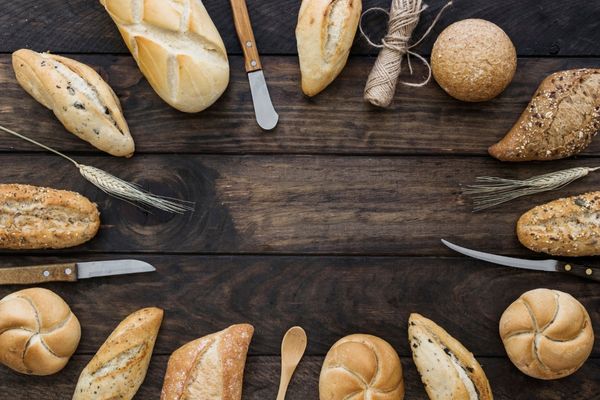
A bread knife is a kitchen utensil specifically designed for slicing bread, characterized by its long, sturdy blade with a serrated edge. Unlike straight-edged knives, such as chef’s knives or santoku, which use a pushing or pulling cutting motion, the bread knife uses a sawing action. This unique design allows it to glide through hard, crunchy crusts without crushing or tearing the soft, spongy interior of the bread. The small blades of its teeth tear the crust evenly and efficiently, and its wavy shape prevents slipping, offering greater safety and control during cutting. This feature is essential for maintaining the integrity of the bread, preventing it from crumbling or losing its shape.
The blade length of a bread knife usually ranges between 20 and 30 cm, with 20-25 cm (8-10 inches) being a very common and versatile size for most breads. In fact, 23 cm is the most popular size among many prestigious brands, offering an ideal balance between maneuverability and the ability to cut large loaves. Although the bread knife is not usually present at the dining table in many cultures, such as in Spain where bread is served already sliced, its presence in the kitchen is undeniable and fundamental.


A Journey Through Time: The History of the Bread Knife
The need to cut bread efficiently is as old as bread itself. Since humans began baking, they have faced the challenge of dividing loaves without destroying them. The first rudimentary tools for cutting bread were probably simple straight-edged knives or even sharp stones. However, the real breakthrough came with the understanding that a serrated blade could offer a significant advantage when interacting with the crust. While serrated blades (with a sawing action) have long been used for clean cuts in various materials, the invention of the modern, patented bread knife as we know it today is attributed to Mr. Joseph E. Burns. He created it in 1893, after a world exposition in Columbia, marking a milestone in the evolution of kitchen utensils. This innovation allowed for cleaner, more precise, and effortless cuts, revolutionizing the way bread was prepared and served. Since then, the design has been perfected, and convenience has even reached electric or battery-powered versions, offering even greater ease of use for those who cut large volumes of bread.
Anatomy of a Culinary Ally: The Morphology of the Bread Knife
To understand how a bread knife works so well and why it is so effective at its main task, it is essential to know its main parts and how each contributes to its optimal performance. The design of this utensil is the result of centuries of evolution and adaptation to the specific needs of bread cutting.
The Blade: The Heart of the Knife
- Tip: The end of the blade, which can be slightly rounded or slanted, not only makes it easier to start cuts but also allows for precise control in specific areas, such as piercing the crust to begin a cut or working with irregularly shaped breads. Its design minimizes the risk of damaging the inner crumb.
- Edge: This is undoubtedly its most distinctive and crucial element. The serrated or saw-like edge (also called toothed) is what allows the bread knife to cut effectively. The teeth or waves pass through the crust without crushing the soft, spongy interior. It is important to note that the tips of the teeth are sharp, unlike cake knives which usually have more rounded, blunt teeth designed to slide without tearing. The shape and spacing of the teeth can vary, influencing the aggressiveness of the cut and the cleanliness of the slice.
- Spine: The part opposite the edge, thicker and unsharpened, which provides stability and strength to the knife. A sturdy spine ensures that the blade does not flex excessively during cutting, allowing for greater force and control, especially when cutting dense breads or very hard crusts.
- Tang: The extension of the blade that enters the handle. A full tang (which extends the length of the handle) is the gold standard, as it provides better balance, greater durability, and superior resistance to breakage. Ideally, a knife should be a single piece of metal from tip to handle end, or have a very robust and well-integrated joint between blade and handle to ensure maximum stability and longevity.
The Handle: Ergonomics and Control
- Bolster: A metal piece, often stainless steel, that reinforces the joint between blade and handle. Besides its structural function, it protects the handle from moisture and significantly contributes to the overall balance of the knife, distributing weight evenly. It also adds an aesthetic touch to the design.
- Guard: A metal protrusion near the blade, often integrated into the bolster, that protects the user’s hand. Its main function is to prevent fingers from slipping onto the edge during cutting, greatly improving safety, especially when hands are wet or greasy.
- Scales: These are the parts of the handle in direct contact with the hand. They can be made of various materials such as wood (ebony, pakkawood, olive), bone, micarta (a resin and fabric composite), or high-resistance plastics (POM, polypropylene). The choice of material directly influences grip, weight, hand feel, and overall knife durability. Non-slip materials are especially valued for safe use.
- Rivets: Elements that attach the scales to the knife body, ensuring a robust and durable construction. In traditional full-tang designs, they are usually visible and are an indicator of solid construction. It is recommended to have no more than three rivets for optimal grip and a clean look.
The balance between blade and handle is essential for prolonged use without fatigue, especially in professional settings where the knife is used intensively. A well-balanced knife feels like a natural extension of the hand. Handles should be ergonomic, meaning they fit comfortably in the hand, providing a secure grip and reducing strain. Materials such as treated wood or reinforced plastics are ideal for their durability and moisture resistance, and many high-quality models include non-slip handles for greater safety, even with wet hands.
Types of Bread Knives and Blade Materials
Bread knives, although they share the fundamental feature of a serrated blade, can vary in their materials and the specific design of their teeth, which influences their performance, durability, and ease of maintenance. The choice of blade material is a determining factor in the quality and behavior of the knife.
Common Blade Materials:
- Stainless Steel: By far the most common material for bread knife blades due to its excellent corrosion resistance and durability. High-quality stainless steel alloys, such as German or Japanese stainless steel, offer a good balance between edge retention, ease of sharpening, and stain resistance. They are a robust, low-maintenance option, ideal for most home users.
- Carbon Steel: Offers an extremely sharp and durable edge, able to maintain its sharpness longer than stainless steel. However, it is more susceptible to rust and requires greater care and maintenance to prevent corrosion and patina formation. Preferred by some chefs and professional bakers for their superior cutting performance, but not the best choice for beginners due to their care requirements.
- Ceramic: Ceramic knives are ultra-light and do not rust, making them ideal for those concerned about weight or corrosion. They maintain a very sharp edge for a long time. However, they are significantly more fragile than steel and can chip or break if dropped or used to cut very hard foods. Their sharpening also requires specialized tools.
Regardless of the material, a thin blade with a narrow angle is preferable, as it reduces friction during cutting and minimizes crumb production, allowing for cleaner, finer cuts. Bread knives are made from different materials, as mentioned, and depending on the type you choose, they will have a variety of unique features. Bread knives made of stainless steel are generally more expensive but also more rust-resistant and durable. Carbon steel knives are cheaper but also more susceptible to rust. Ceramic knives are lighter and scratch-resistant, but not as sturdy as steel knives.
How to Use Bread Knives and Their Versatile Applications
Before using a bread knife, it is important to ensure it is sharp. A sharp knife will make the cut cleaner and more precise, reducing effort and improving safety. Once the knife is sharp, prepare the bread for cutting. To do this, press the knife against the bread with a firm but gentle motion, using the characteristic sawing action of this type of blade. The knife should enter the bread easily, allowing the teeth to do their job without the need to apply excessive pressure that could crush the crumb.
Beyond Bread: Versatile Applications of the Serrated Knife
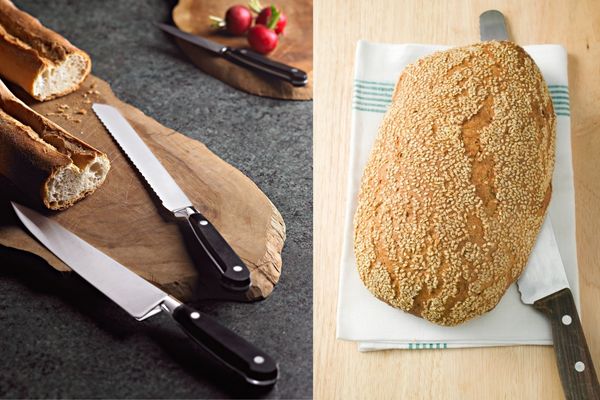
Although its name indicates its main function, the bread knife is surprisingly versatile and can be an indispensable tool for a wide range of culinary tasks. Its serrated design makes it essential for:
- Slicing all types of bread: From crunchy baguettes and artisanal loaves with hard crusts to soft sandwich bread or day-old hard bread. Its serrated edge handles all textures effortlessly.
- Scoring dough: In baking, this technique is crucial. Known as “lame” or “grignette” (although these are specific tools, the bread knife can be used improvisationally), it allows for decorative and functional cuts on the surface of the dough before baking. This not only controls the expansion of the bread during baking, creating a characteristic “ear,” but also improves the appearance and texture of the crust and facilitates even baking by allowing steam to escape in a controlled manner. It is crucial for delicate breads like baguettes or laminated doughs, and especially useful for gluten-free doughs that tend to be denser.
- Slicing cakes and sponges: Its serrated edge allows for clean, precise cuts without crumbling delicate, airy textures. It is excellent for leveling cake layers, creating a uniform surface for icing, or cutting perfect portions of sponges and cakes without squashing them.
- Cutting fruits and vegetables with tough skins or rinds: Works wonders with foods that have a tough outer layer and a softer interior, such as tomatoes (where a straight knife often slips or crushes), pineapples, melons, pumpkins, or zucchinis. The sawing action allows you to penetrate the outer layer effortlessly. It is also useful for soft foods like peppers or zucchinis, as it does not crush them and maintains their shape.
- Preparing sandwiches and snacks: Allows you to cut slices of toast, puff pastry, or empanadas for making toasts, French toast, sandwiches, snacks, etc., evenly and without tearing.
- Portioning large loaves: Its length is ideal for efficiently cutting large breads, ensuring each slice is of uniform size.
- Slicing hard-boiled eggs: Offers clean, uniform slices without crushing the yolk or white, ideal for salads or garnishes.
Why Use a Bread Knife Instead of a General-Purpose Knife
The distinction between a bread knife and a general-purpose knife, such as a chef’s knife or utility knife, is crucial for understanding cutting efficiency and quality. A bread knife is a specific type of knife designed especially for cutting bread, and its design is optimized for this task. These knives have a longer, curved blade than general-purpose knives, making them useful for reaching the center of a large loaf without having to reposition the knife or bread. This extra length allows for a continuous, smooth cut along the entire loaf.
Moreover, the most distinctive and advantageous feature of the bread knife is its serrated edge. While a general-purpose knife with a straight edge relies on extreme sharpness for a clean cut, the bread knife uses its teeth to “grab” and “tear” the hard surface of the crust, while the sharpest part of the teeth penetrates the soft crumb without crushing it. A general-purpose knife, no matter how sharp, will tend to crush the crumb or slip on the crust, resulting in uneven slices and excessive crumbs. The serrated edge of the bread knife also generally has a thinner blade, making the cut cleaner and more precise, minimizing friction and damage to the bread’s structure.

Advantages and Disadvantages: The Balance of the Bread Knife
Like any specialized tool, the bread knife has its strengths and weaknesses. Knowing them will help you understand when it is the ideal tool and when it is better to opt for another type of knife.
Pros:
- Precise cut without crushing: This is its main advantage. Its serrated edge is designed to cut breads with crunchy crusts and soft crumbs without deforming them, ensuring clean, even cuts. The teeth act like small saws that penetrate the crust without applying the pressure that would crush the crumb.
- Surprising versatility: Despite its name, it is useful for a wide range of foods with similar textures, from delicate cakes and spongy pastries to thick-skinned fruits and vegetables like tomatoes, pineapples, or pumpkins. Its ability to cut without crushing makes it invaluable in many culinary situations.
- Greater edge durability: The serrated edge distributes the cutting force over multiple points, meaning it does not need to be sharpened as often as a straight-edged knife. The individual teeth can withstand wear better than a continuous edge, maintaining their effectiveness longer between sharpenings.
- Efficiency and ease of use: Its sawing motion reduces the effort needed to cut hard or slippery surfaces, making it more comfortable and effective for the user. This is especially noticeable when cutting large amounts of bread or difficult foods.
- Improved safety: The sawing action, combined with a good grip and proper guard, reduces the risk of the knife slipping on the bread’s surface, which can happen with straight-edged knives on very hard crusts.
Cons:
- Difficulty sharpening: Its serrated edge is more complicated to sharpen than a straight edge, often requiring specialized tools (such as tapered sharpening rods or sharpeners specific for serrated blades) or professional service. Incorrect sharpening can damage the teeth and reduce the knife’s effectiveness.
- Limitations in precision cuts: It is not ideal for delicate work requiring a straight edge and extreme precision, such as filleting meat, chopping fine herbs, peeling vegetables, or making very detailed decorative cuts. It can leave uneven edges on very soft foods or in tasks that require a clean push cut.
- Less suitable for certain foods: Using it on foods it was not designed for, such as bones, frozen foods, or very soft and sticky cheeses, can damage the teeth or tear instead of cut, compromising both the food and the knife.
- Bulk and storage: Its length, while advantageous for cutting bread, can make it bulkier and harder to store in some kitchen drawers or standard knife blocks.
Choosing Your Perfect Companion: Guide to Selecting a Bread Knife
Selecting the ideal bread knife depends on your specific needs, frequency of use, and personal preferences. Consider these key points to make an informed decision:
- Blade Type and Material: Look for high-quality stainless steel blades (such as carbon steel alloys or German/Japanese stainless steel) for their resistance to wear, corrosion, and ability to maintain a good edge. The edge should be wavy or pointed serrated, with deep, sharp teeth that allow efficient cutting without crushing. A thin blade with a narrow angle will generate less friction and thus fewer crumbs, resulting in cleaner slices.
- Blade Length: A common and versatile size is 20 to 25 cm (8 to 10 inches). A longer blade (25-30 cm) is ideal if you often cut very large loaves or artisanal breads of large diameter, as it allows for a continuous cut without lifting the knife. A shorter blade (15-20 cm) may be more practical for rolls, shorter baguettes, or smaller jobs where maneuverability is key. For most households, a medium size (20-25 cm) is an excellent, versatile option.
- Handle Design and Material: The handle should be ergonomic, meaning it fits comfortably in your hand, providing a good grip and reducing fatigue during prolonged use. Materials such as treated wood (which offers a classic look and good feel), reinforced plastic (POM, which is durable and hygienic), or synthetics (which are often non-slip and water-resistant) are ideal. The balance between handle and blade is crucial: a well-balanced knife feels light and controllable in the hand. Consider non-slip handles for greater safety, especially in humid kitchens.
- Weight and Balance: Weight is a matter of personal preference. Lighter knives offer greater maneuverability and are less fatiguing for prolonged cutting sessions. Heavier knives can provide a sense of greater stability and “inertia cutting.” The most important thing is that the knife feels balanced in your hand; you can test this by holding it by the bolster or balance point to see if the blade and handle are proportionally weighted.
- Construction: Full-tang construction (where the blade extends the length of the handle) is generally the most robust and durable, offering superior stability. One-piece metal knives are also an excellent choice for their strength. Make sure the joint between blade and handle is very robust and tight to avoid hygiene and long-term durability issues.
- Quality and Price: Investing in recognized brands in the world of cutlery usually ensures greater durability, precision, and better edge performance. The initial quality of the knife pays off in the long run, as a good-quality knife will last you many years if properly cared for. Consider frequency of use: is it for occasional home use or for intensive professional use in a bakery or restaurant? This will influence your budget and the level of quality you need.
Maintenance and Care: Prolonging the Life of Your Bread Knife
Proper care not only ensures your knife maintains optimal performance, but also significantly extends its lifespan, protecting your investment. A well-maintained knife is a pleasure to use.
Cleaning and Storage:
- Hand washing: Wash it by hand immediately after use with warm water and mild detergent. Avoid the dishwasher at all costs, as harsh detergents, high temperatures, and movement from other utensils can seriously damage the serrated edge, corrode the steel, and deteriorate the handle, especially if it is wooden.
- Immediate drying: Dry it completely with a soft, clean cloth right after washing to prevent corrosion, water stains, and handle deterioration. If the handle is wooden, never soak it in water or let it air dry, as moisture can cause the wood to swell, crack, or rot.
- Proper storage: Store it in a wooden knife block, a protective blade sheath, a magnetic wall bar, or an individual blade guard. This protects the edge from contact with other utensils in the drawer, which could dull or damage it, and also prevents accidents when handling it.
Sharpening the Bread Knife:
Although they need sharpening less frequently than straight-edged knives due to their design, keeping the teeth sharp is key to their effectiveness. A dull bread knife can crush instead of cut.
- With a ceramic rod or specific sharpener: If your knife is single-beveled (meaning only one side of each tooth is sharpened, the side facing the bread), identify each tooth and gently slide a ceramic rod of the appropriate size into each one, maintaining a consistent angle (generally between 13 and 17 degrees, though this can vary by manufacturer). Work from the base of the tooth to the tip without pressing too hard. If it is double-beveled, you will need to sharpen both sides. There are electric sharpeners designed specifically for serrated blades that can simplify this process.
- Professional service: If the wear is significant, if you are not comfortable sharpening it yourself, or if you prefer a uniform and precise result, consider a professional sharpening service at least once a year. Professional sharpeners have the equipment and experience necessary to restore the edge safely and effectively.
Preventing Wear:
- Cutting surfaces: Always use high-quality wooden or plastic cutting boards. Avoid cutting on hard surfaces such as marble, glass, ceramic, or metal, as these can quickly damage the edge, chipping the teeth or dulling them irreversibly.
- Proper use: Do not use the knife to cut extremely hard foods for which it was not designed, such as bones, frozen foods, or products containing very hard elements. This can damage the teeth, causing them to bend, break, or dull prematurely.
The bread knife is much more than a basic tool; it is a fundamental element for any bread lover and a key ally in any kitchen. Its unique design, with that long, serrated blade, allows for clean and perfect cuts that preserve the integrity of breads, cakes, and other delicate foods, elevating the culinary experience. While its name suggests a single purpose, its surprising versatility for a wide variety of culinary tasks makes it one of the most important and efficient knives you can have in your utensil collection. Investing in a good bread knife will ensure you enjoy perfect, effortless slices, making every meal a pleasure.
Discover the wide range of options and find the perfect knife for your needs at BREAD KNIVES or explore more options at SEE MORE KITCHEN KNIVES.