A whisper in the undergrowth, humidity in the air, and the scent of fertile earth. Mushroom season is a call to adventure. But between you and that coveted mycological bounty, there’s a crucial gesture: the cut. A well-executed movement with your knife guarantees future harvests; a wrong one can sterilize the ground forever. In this article, we reveal the mistakes that separate the amateur from the true master gatherer, so that your passion for mycology is as sustainable as it is exciting.
Collector’s Tools: The Essential Equipment
Contents
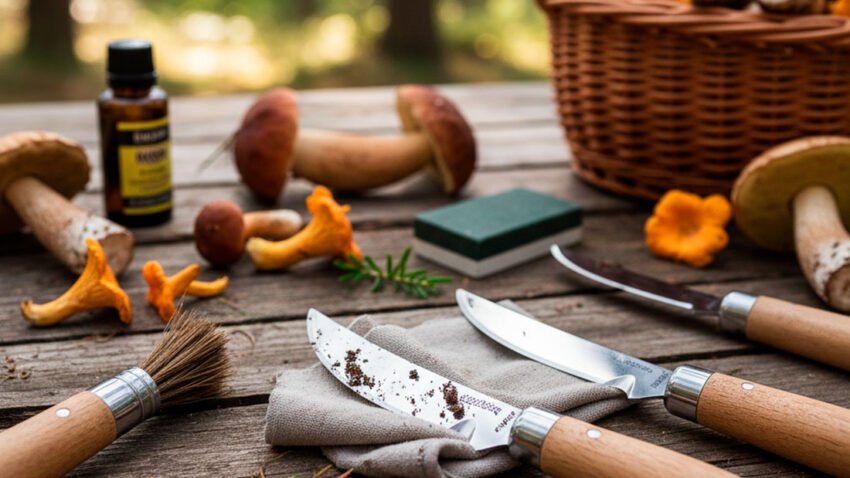
Before venturing into the forest, success begins with choosing the right equipment. It’s not just about having a knife, but about carrying the appropriate tools that show respect for the environment. A specialized mushroom knife, with its curved blade for precise cutting and a brush on the end for initial cleaning, is essential. It is combined with a wicker basket, which not only protects the mushrooms from being crushed but also allows spores to disperse as you walk, sowing life in your path. Forget plastic bags; they are the enemy of the mushroom and the forest.
Technical Errors that Damage the Mycelium
The mycelium is the invisible heart of the forest, an underground network from which mushrooms sprout. The gravest error is damaging it, compromising future seasons. Technique is everything, and a bad cut has lasting consequences.
| Common Error | Correct and Respectful Practice |
|---|---|
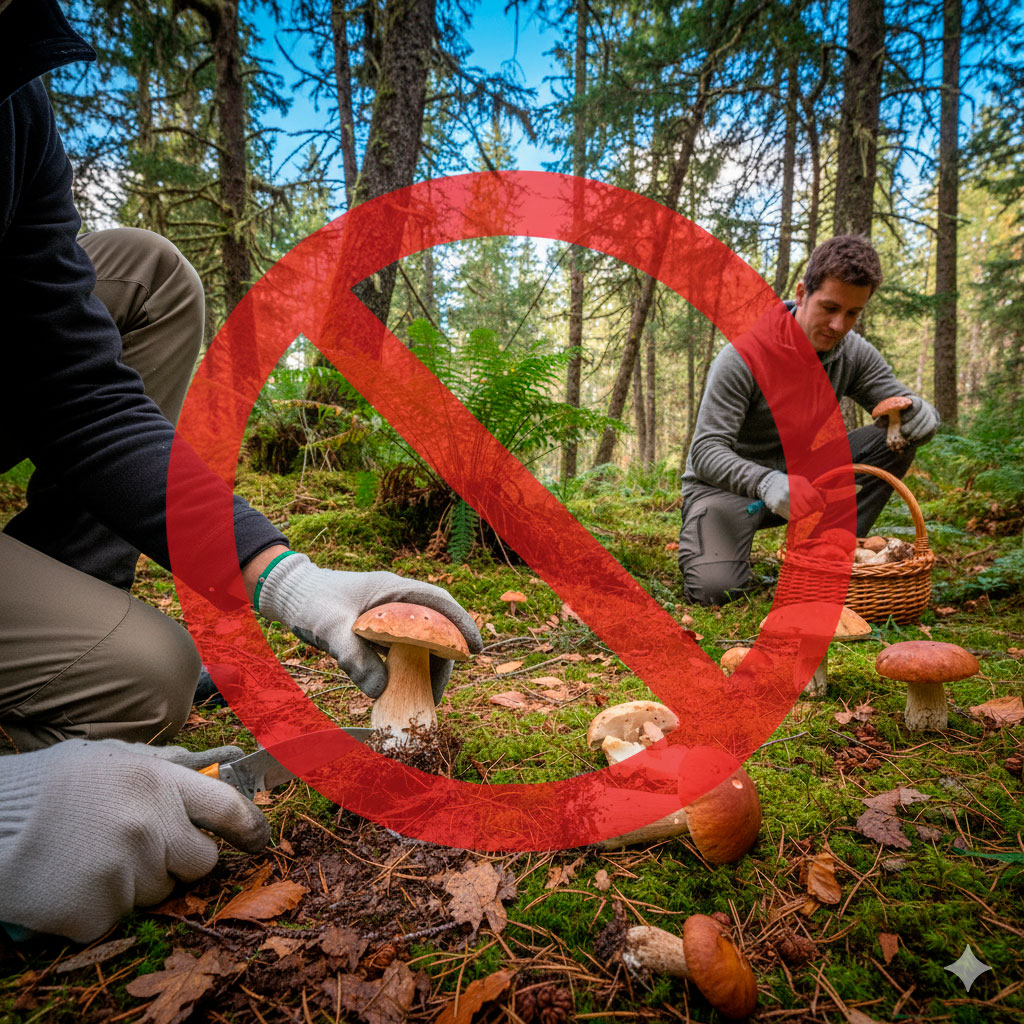
| Pulling the mushroom out by the root | Use the knife to make a clean, horizontal cut at the base of the stem. This leaves the mycelium intact and ready to produce again. |
| Sticking the knife into the ground | The cut should be superficial, only at the base of the mushroom. Avoid penetrating the substrate, as you could sever vital parts of the mycelium. |
| Using rakes or removing mulch | These tools are destructive and often illegal. Do not disturb the leaf litter layer; mushrooms should be seen, not forcibly unearthed. |
| Destroying toxic or unknown mushrooms | Every mushroom, edible or not, fulfills a vital ecological function. Respect them all. Stepping on or destroying a poisonous mushroom is an act of vandalism against the forest. |
- Pulling the mushroom out by the root
-
- Correct and Respectful Practice: Use the knife to make a clean, horizontal cut at the base of the stem. This leaves the mycelium intact and ready to produce again.
- Sticking the knife into the ground
-
- Correct and Respectful Practice: The cut should be superficial, only at the base of the mushroom. Avoid penetrating the substrate, as you could sever vital parts of the mycelium.
- Using rakes or removing mulch
-
- Correct and Respectful Practice: These tools are destructive and often illegal. Do not disturb the leaf litter layer; mushrooms should be seen, not forcibly unearthed.
- Destroying toxic or unknown mushrooms
-
- Correct and Respectful Practice: Every mushroom, edible or not, fulfills a vital ecological function. Respect them all. Stepping on or destroying a poisonous mushroom is an act of vandalism against the forest.
Errors in Judgment: Safety Above All
The knife is a precise tool, but the most important tool is your own judgment. Errors in identification and selection can have much more serious consequences than a bad cut.
The Danger of Myths and Ignorance
Mushroom poisoning is almost always the result of misidentification. Forget popular myths: if a mushroom is bitten by an animal, it’s safe; if garlic or a silver spoon doesn’t blacken when cooked, it’s edible… all are false and dangerous. The deadly Amanita phalloides does not respond to any of these tricks. The only golden rule is: if you have the slightest doubt, do not consume it. Learn with an expert and always carry a field guide.
The Right Size: Respect for the Life Cycle
Collecting specimens that are too young or immature is a triple error: they are harder to identify correctly, their flavor and texture are not optimal, and most importantly, they haven’t had the chance to disperse their spores. Similarly, old, past-their-prime, or worm-eaten mushrooms are indigestible and should be left in the forest. Their final function is to decompose and release a massive amount of spores to “sow” the next generation.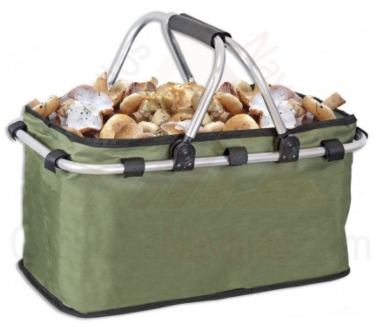
Clean Harvest: The Danger of Contaminated Areas
Mushrooms are bioaccumulators: they absorb and concentrate substances from the soil. Collecting near roadsides, industrial areas, landfills, or fields treated with pesticides is a serious risk. These mushrooms can contain heavy metals and other toxic chemicals, turning a delicacy into a poison.
From Earth to Basket: Final Errors
Work doesn’t end with the cut. How you handle freshly collected mushrooms is crucial for their preservation and safety.
- On-site cleaning: Use your knife’s brush to remove dirt and leaf debris in situ. This keeps your basket clean, makes work easier at home, and helps spread spores in the same spot where you found the mushroom.
- Separation for safety: Never mix mushrooms you know perfectly well with specimens you’ve collected to identify later in the same basket. A fragment of a toxic mushroom can contaminate your entire harvest.
Clarifying doubts about mushroom foraging
What are the most common mistakes when collecting mushrooms?
When collecting mushrooms, the most common mistakes include:
- Collecting unknown or poisonous mushrooms: Not all fungi are edible, and some species are extremely toxic.
- Failing to correctly identify mushrooms: Many poisonous mushrooms resemble edible ones, so accurate identification is crucial.
- Collecting in contaminated areas: Mushrooms can absorb harmful substances from the soil, such as heavy metals.
- Not pulling them out whole: Although it is advisable to pull them out to examine the base, some experts suggest cutting at the base to avoid damaging the mycelium.
- Collecting after rain or frost: This can alter the appearance and taste of the mushrooms.
- Not transporting them properly: Using plastic bags can damage mushrooms; it’s better to use breathable baskets.
- Collecting only what is needed: Taking too many mushrooms can be unnecessary and harm the environment.
- Collecting deteriorated or parasitized mushrooms: They can be indigestible or difficult to identify.
- Not preserving the mycelium: Disturbing too much soil can damage the mycelium, affecting future harvests.
How can I correctly identify edible mushrooms?
 To correctly identify a mushroom as edible, there is no general characteristic that guarantees safety: you can only consume a mushroom if you have identified the species with absolute certainty. Identification requires analyzing multiple details: the habitat where it grows, the color, the smell, the shape and size of the cap and stem, the structure of the hymenium (gills, tubes, folds, or spines), and the color of the spore print (using a spore print). Some useful techniques include observing color changes when cutting or bruising the mushroom, and in some cases, checking if it exudes latex and what color it is.
Never rely on myths or home remedies; some poisonous mushrooms share traits with edible ones. Even safe and well-known species, such as button mushrooms, porcini, or chanterelles, have toxic look-alikes. Signals such as very vivid colors, rings on the stem, a volva, or color changes in the flesh after cutting can indicate danger, although these are not universal rules.
The fundamental recommendation is to learn with an expert or mycological guide, and never consume a mushroom that you cannot identify without doubt. If you have the slightest uncertainty, abstain. Safe collection of edible mushrooms requires knowledge, experience, and much caution.
What tools are essential for safe mushroom foraging?
To collect mushrooms safely and efficiently, the following essential tools are needed:
- Wicker baskets: These are ideal for collecting mushrooms, as they allow for good ventilation and facilitate the release of spores, which helps preserve the environment and allows mushrooms to grow back.
- Specialized knives or blades: These are designed to cut mushrooms at the stem without damaging the mycelium, which allows mushrooms to regenerate in the same area. They usually have curved blades and often include a brush for cleaning the mushrooms.
- Field guides: These are fundamental for identifying edible mushrooms and avoiding toxic species, which is crucial for safety during collection.
- Appropriate clothing and footwear: It is important to wear comfortable and practical clothing, along with water-resistant footwear, to facilitate movement and protect oneself in the forest.
- Small brushes: These are useful for cleaning mushrooms and removing traces of soil or leaves, which also helps release spores.
Why is it important not to collect mushrooms in contaminated areas?
It is important not to collect mushrooms in contaminated areas because mushrooms absorb harmful substances from the soil, including heavy metals and toxic chemicals that can be detrimental to human health. Therefore, collecting them in areas such as roadsides with heavy traffic, industrial zones, landfills, or fields treated with chemicals carries a high risk of intoxication when consumed. Furthermore, these substances can accumulate in mushrooms, making their consumption dangerous or even deadly in extreme cases.
How does the size of mushrooms affect their flavor and aroma?
The size of mushrooms mainly influences their flavor and aroma because young specimens, generally smaller, tend to have a firmer texture, a more intense flavor, and a more perceptible aroma, as the full development of the fruiting body concentrates these organoleptic characteristics. In contrast, larger and more mature mushrooms can become spongy, lose some of their original flavor, and their aroma diminishes, especially if they have already begun to degrade.
The mushroom knife is not just a cutting tool; it’s a forest management instrument. Every time you bend down to collect a fungus, you hold the responsibility of preserving the cycle of life. Apply these techniques, respect the ecosystem, and the forest will reward you season after season. Your next harvest depends on the wisdom of your current cut.