A cook’s skill depends on the quality of their working instruments, in addition to their experience, inventiveness, and the food products they use for cooking. That’s why every self-respecting chef must have the best knives for cooks. Everything has to be first-rate.
In the exciting world of gastronomy, beyond creativity and ingredients, there is a fundamental utensil that makes a difference in every preparation: the knife. It is not just a tool; it is an extension of the cook’s hand, essential for achieving precise and efficient cuts that directly influence the presentation, flavor, and final texture of your dishes.
If you are passionate about cooking, whether professionally or as a hobbyist, knowing how to choose and use the right knife for each task is crucial. Join us on this journey to discover the essential types of knives and how to get the most out of them.
The Chef’s Knife: The Versatile Companion of Western Cuisine
Contents
- The Chef’s Knife: The Versatile Companion of Western Cuisine
- The Santoku: Japanese Precision in Your Kitchen
- Chef’s Knife vs. Santoku: A Duel of Styles
- Other Indispensable Knives for Cooks
- Getting to Know Your Knife in Depth: Its Key Parts
- Mastering the Technique: Essential Tips for Cooks
- Maintaining Your Knives in Optimal Condition
- Types of Steel in Kitchen Knives
- Countries Manufacturing Kitchen Knives
Known in Spain as a “cuchillo de cocinero,” the chef’s knife is undoubtedly the most versatile and widely used tool in any kitchen. It is a true all-rounder, capable of performing a huge variety of culinary techniques.
Generally, its blade measures around 20 centimeters, although it can vary between 16 and 24 cm. Its main characteristic is its curved shape, which creates a “belly” or rounded edge, ideal for the rocking motion when cutting. This knife is used for chopping, slicing, or dicing all kinds of ingredients, from vegetables and fruits to meats, poultry, and fish.
There are two classic blade types:
- German Type: This is the most widespread and is distinguished by its more rounded blade.
- French Type: Also popular, but with a straighter, almost triangular blade.
The choice between one or the other depends purely on your personal preferences.
The Santoku: Japanese Precision in Your Kitchen
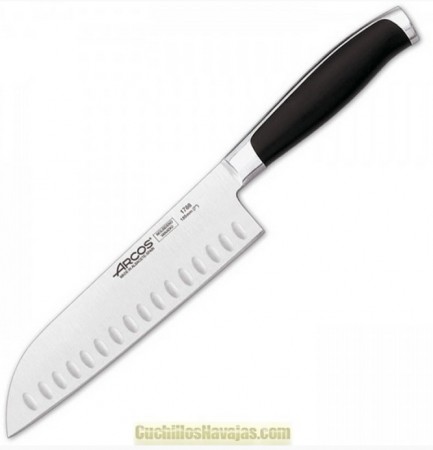
In recent years, the Japanese version of the chef’s knife, the Santoku, has gained immense popularity. Its name means “three virtues” or “three uses,” reflecting its versatility for working with meat, vegetables, and fish.
Unlike the Western chef’s knife, the Santoku is characterized by its straight edge and a blade that maintains a fairly uniform height along almost its entire length, descending only slightly at the tip. Its blade length is usually shorter than that of the chef’s knife, generally between 16 and 20 cm.
Chef’s Knife vs. Santoku: A Duel of Styles
The main difference between these two kitchen staples lies in the shape of their blades and, consequently, the cutting techniques that best suit each one.
| Characteristic | Chef’s Knife (Western) | Santoku (Japanese) |
|---|---|---|
| Blade Shape | Curved, with a pointed tip and a rounded edge. | Straight, with the same height along almost its entire length and a slight drop at the tip. |
| Edge (Bevel) | Generally with a double bevel, conical on both sides of the blade. | Traditionally with a single bevel for precision cuts. Currently found with double bevel. |
| Length | Longer, between 16 and 24 cm (commonly 20 cm). | Shorter, between 16 and 20 cm. |
| Cutting Style | Ideal for the rocking motion technique. | Ideal for the push cutting technique. |
Both are extremely versatile and useful. The choice between a chef’s knife and a Santoku really depends on your personal preferences and the cutting style you feel most comfortable with. The chef’s knife is excellent for long strokes and rocking, while the Santoku excels in precise cuts and for cutting vegetables with great detail.
Other Indispensable Knives for Cooks
While the chef’s knife and Santoku are protagonists, a well-equipped kitchen has other specialized tools that greatly facilitate specific tasks. Here are some of the most important:
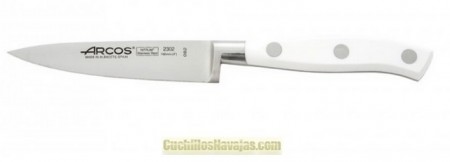
- Paring Knife or Utility Knife: Small, thin, and very sharp, it is perfect for peeling fruits and vegetables, as well as for making small and meticulous cuts, or decorations.
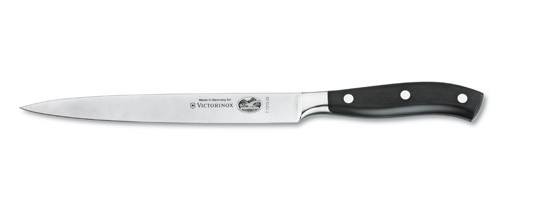
- Fillet Knife: With a long and thin blade, it is designed for filleting and cutting thin and uniform slices of any type of meat: fish, beef, chicken, or pork.
- Boning Knife: Its curved and thin blade facilitates the separation of meat from bones and cartilage, especially useful with poultry.
- Ham Knife: With a very long, thin, and flexible blade, specifically created for cutting ham and large pieces of meat into thin and uniform slices.
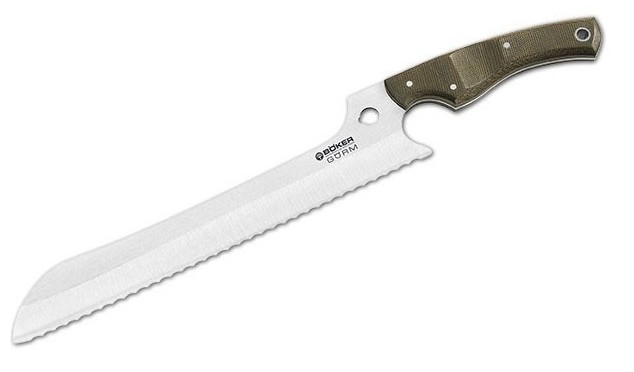
- Serrated Knife or Bread Knife: Recognizable by its serrated edge, it is indispensable for cutting hard-crusted breads without crushing their crumb, and also useful for cakes or large fruits.
- Kitchen Cleaver (Machete): With a rectangular and thick blade. Ideal for cutting large pieces of meat or bones.
- Cheese Knife: Specialized in the delicate cutting of cheeses of various textures, often with grooves to prevent the cheese from sticking.
- Butcher Knife: With a wide and strong blade, it allows for straight and transverse cuts in large pieces of meat with precision.

Getting to Know Your Knife in Depth: Its Key Parts
A knife is a multi-functional tool with specific parts that determine its performance and ease of use. Knowing them will help you better appreciate its design and functionality.
- Tip: The pointed end of the blade, used for fine cuts and penetration.
- Blade: The main metal sheet that performs the cut. It is usually made of stainless steel and is the most versatile part.
- Edge: The sharpest part of the blade, key for clean cuts.
- Spine (or Ricasso): The part opposite the edge, it is the thickest and widest area of the blade, providing balance and reinforcement.
- Guard (or Bolster/Gavilán): The area that joins the blade to the handle, designed to offer safety to the user.
- Ferrule: A forged band that joins the handle to the blade, protecting the handle from cracks and improving balance.
- Scales: The two pieces that form the handle, ensuring a secure and ergonomic grip.
- Rivets: Elements that fix the scales to the tang.
- Tang: The metal part of the blade that extends into the handle, essential for the knife’s structure and weight distribution.
- Handle: The lower part of the knife, provides grip and control.
- Heel: The part of the blade closest to the handle, useful for cuts that require more force.
Mastering the Technique: Essential Tips for Cooks
Having a good knife is the first step, but knowing how to use it correctly is what truly elevates your culinary skill and safety.
- The Correct Grip: Avoid placing your index finger on the blade. The most common grips are the “hammer grip” or the “blade grip.”
- Use Both Hands: The free hand is crucial for guiding and determining the thickness of the cuts. Use the “claw” technique to protect your fingers.
- Maintain Contact with the Board: With the chef’s knife, the rocking motion allows the tip of the knife to remain in contact with the cutting board, which gives you more control and safety.
- Be Patient: Speed will come with practice. Take your time.
- A Sharp Knife is a Safe Knife: A dull knife is more dangerous because it requires more force to cut. Make sure to sharpen your knives regularly.

Maintaining Your Knives in Optimal Condition
Proper care of your knives will prolong their lifespan and maintain their optimal performance.
- Immediate Cleaning: Wash them right after use and avoid leaving them soaking.
- Neutral Detergent: Use a mild detergent. Avoid products with chlorides and metallic scrubbers.
- Immediate Drying: Never leave knives wet. Dry them with a soft cloth.
- Appropriate Cutting Board: Use wood or plastic cutting boards. Hard surfaces like glass or stone can quickly dull the blade.
Types of Steel in Kitchen Knives
The blade material is a determining factor in the performance and maintenance of knives. Understanding the differences will help you make a better purchasing decision.
- Stainless Steel: Very resistant to corrosion, but tends to lose its sharpness more easily.
- Carbon Steel: Stays sharp longer, but is more susceptible to oxidation and requires meticulous care.
- High-Carbon Stainless Steel: An excellent combination that holds sharpness well and resists corrosion. They are more expensive and require special care.
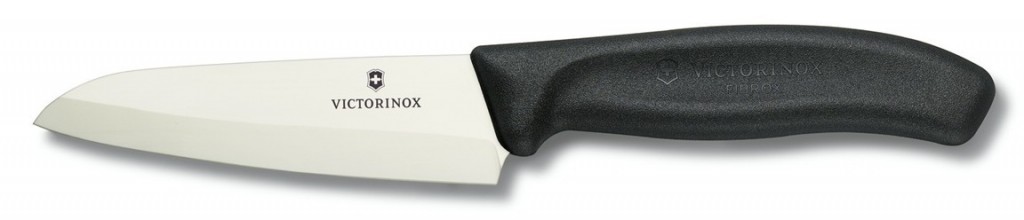
- Ceramic: Extremely hard and sharp, and never rust. However, they are very fragile and can break easily if dropped.
Countries Manufacturing Kitchen Knives
There are excellent brands of professional kitchen knives worldwide. Japanese, German, and Spanish manufacturers, among others, are recognized for their tradition and the high quality of their products. At cuchillosnavajas.com, we work with prestigious brands that guarantee maximum quality and durability.
The world of kitchen knives is vast and fascinating. Understanding the different types, their characteristics, and how to use them correctly will transform your culinary experience. Remember that there is no “better” knife than another, but rather the one that best suits your needs, your cutting style, and your personal preferences. Practice, take care of your tools, and enjoy creating incredible dishes!
If you are looking for inspiration, we invite you to explore our wide selection of knives for cooks and find the perfect tool for you.