
Imagine the satisfaction of slicing ingredients with a knife that glides effortlessly, or the efficiency of a blade that fulfills its purpose with precision. The key to that experience lies not only in the quality of the tool, but in a perfectly maintained edge. And to achieve this, there’s nothing like a good sharpening stone. Although often overlooked, mastering the use of these tools is both an art and a science that will completely transform your experience with any cutting tool.
In this article, we’ll dive into the fascinating world of sharpening stones, exploring their history, the science behind them, and the secrets to using them effectively. You’ll discover how to select the right stone, the precise technique for each type of edge, and how to keep your tools in optimal condition, ensuring every cut is an experience of precision and control. Get ready to unveil the mysteries of sharpening and take your skills to the next level.
A Journey Through the Edge: History and Passion
Contents
Since time immemorial, humanity has depended on sharp tools for survival and progress. From hunting and gathering to construction and craftsmanship, an efficient edge has been synonymous with progress and effectiveness. And since the beginning, natural stones have been the fundamental base for maintaining those cutting tools. This millennia-old tradition, deeply rooted in the culture of peoples and passed down from generation to generation, is gradually being lost in the modern era, dominated by the “throwaway” concept. However, there are still guardians of this ancestral knowledge, people who resist letting this valuable skill fade into oblivion.
The word “stone” is used in everyday language and also in stonemasonry, architecture, and engineering to refer to any natural material characterized by high consistency. As a raw material, stone is generally extracted from quarries and open-pit mines. Stonemasonry is one of the oldest trades, where stone is skillfully carved by master stonemasons, transforming raw material into useful and aesthetic forms. Stone is the best-preserved and most well-known material among those used to produce the first tools during the Paleolithic, such as knives, hammers, clubs, among others.
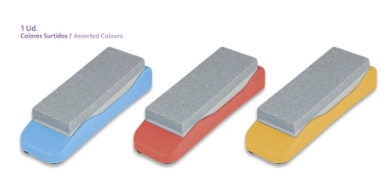
One of the masters who honors and evolves this tradition is Eduardo Beltrá Méndez, a stone craftsman whose passion for edges was born in childhood. As a child, his pocketknife was not just a tool; it was the key to a world of adventures, a symbol of exploration and self-sufficiency. Over the years, that initial hobby grew and turned into a true obsession with achieving the sharpest edge possible, the perfection of the cut. This relentless personal quest, combined with his profession in stone craftsmanship, which he has cultivated with dedication and mastery for 40 years, led him to a revolutionary innovation: natural stone honing rods with a steel inner core. This invention, patented worldwide, gives the stone exceptional strength and durability, allowing for the creation of long and thin formats. This makes them not only reliable and resistant, but also incredibly durable and, most importantly, extraordinarily effective at sharpening.

The work and innovation of Eduardo Beltrá Méndez have been recognized by top professionals in the field, notably the renowned chef Martín Berasategui, who uses and recommends his honing rods, a testament to the quality and effectiveness of his products. This dedication to combining personal passion with profession is a clear example of how traditional knowledge, combined with innovative vision and a deep understanding of materials, can solve common problems and significantly improve the lives of those who rely on well-sharpened knives and tools. Stones also serve as excellent instruments for sharpening knives, pocketknives, etc., and the evolution of these tools reflects humanity’s constant pursuit of cutting perfection.
The Science Behind Steel and Its Treatment
Before diving into sharpening techniques and tools, it’s essential to understand what we’re sharpening: steel. Steel is much more than a simple metal; it’s a complex alloy, mainly of iron and carbon. The presence of carbon is absolutely crucial, as without it, what we have is not steel, but pure iron, with very different properties. The percentage of carbon in the alloy directly influences the final hardness of the material and, therefore, its ability to maintain a sharp edge.
Steel manufacturers don’t limit themselves to the basic combination of iron and carbon. To enhance or modify its properties and adapt it to specific uses, they add other elements in carefully controlled proportions, resulting in a vast diversity of steels, each with unique characteristics:
- Chromium (Cr): This element is essential for increasing the hardness of steel, which in turn helps preserve the edge for longer. Additionally, chromium significantly improves corrosion resistance. In stainless steels, free chromium forms a layer of chromium oxide on the surface, acting as a protective barrier that offers exceptional resistance to oxidation and rust.
- Carbon (C): As mentioned, carbon is the main hardening agent in steel. A higher percentage of carbon allows the blade to reach greater hardness, resulting in a higher ability to maintain the edge and resist wear.
- Copper (Cu): Adding copper helps increase both corrosion resistance and wear resistance of steel, prolonging the tool’s lifespan.
- Molybdenum (Mo): This element improves the elasticity of steel, its hardness, and its resistance to bending. It’s also an important ally in improving corrosion resistance, especially in aggressive environments.
- Nickel (Ni): Nickel gives steel a characteristic shine, as well as increasing its hardness and corrosion resistance, making it valuable in applications where aesthetics and durability are key.
- Silicon (Si): Silicon is an effective deoxidizer, removing excess oxygen during steel manufacturing. It also improves resistance to bending and stretching, contributing to the material’s toughness.
- Tungsten (W): Tungsten is known for drastically increasing the strength and hardness of steel, especially at high temperatures. It also acts as a catalyst, enhancing the effects of other alloying elements.
- Vanadium (V): Vanadium increases the impact resistance and hardness of steel, which is crucial for tools subjected to impacts. It also prevents the formation of large molecular groups in steel, contributing to a finer and more uniform grain structure.
The combination of these elements is not arbitrary; it’s subject to rigorous physical and chemical rules. An excess of an element, such as chromium, could make steel more corrosion resistant, but at the same time, much more brittle, compromising its toughness and impact resistance. Balance is key to achieving the desired properties.
The Importance of Heat Treatment
But the composition of steel is only half the equation. Heat treatment is equally, if not more, important in determining the final properties of a blade. As is often said in metallurgy, “There are no super-steels, only super heat treatments.” These processes involve heating and cooling the metal in a controlled and precise way to modify its microstructure and, consequently, its physical properties. The goal may be to reduce internal stresses, refine grain size, increase toughness, or create an extremely hard surface with a ductile and tough core.
The main heat treatments are:
- Quenching: This is a crucial process that involves heating steel to a high critical temperature and then cooling it rapidly (in water, oil, air, or salts). The main goal of quenching is to dramatically increase the hardness and strength of steel, transforming its microstructure into martensite, a very hard phase.
- Tempering: This treatment is applied to steels that have already been quenched. It consists of heating the metal to a lower temperature than quenching and cooling it slowly. The purpose of tempering is to reduce the excessive brittleness induced by quenching and increase the flexibility and toughness of steel, while maintaining much of its hardness. It’s a delicate balance between hardness and impact resistance.
- Annealing: Annealing is a process of heating steel to a high temperature, followed by very slow cooling, often inside the furnace. Its purpose is to increase the material’s elasticity, decrease its hardness, and make it easier to machine, that is, to cut, drill, or shape.
- Normalizing: This heat treatment aims to leave the material in a “normal” state, that is, without internal stresses and with a uniform distribution of carbon in its structure. It’s often used as a pre-treatment before quenching and tempering, preparing the steel for subsequent processes and ensuring a more predictable response.
In addition to these, there are thermochemical treatments that modify the chemical composition of the steel’s surface to improve its surface properties. These include carburizing (increasing surface carbon for greater hardness), nitriding (adding nitrogen for wear and fatigue resistance), cyaniding and carbonitriding (combining carbon and nitrogen), and sulfinizing (adding sulfur to improve lubricity and galling resistance).
The Heart of the Matter: Sharpening Stones
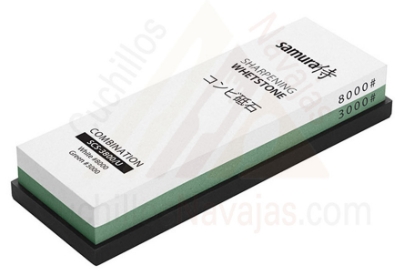
Sharpening stones are the essential bridge between metal and a perfectly sharp edge. They are the fundamental tool that allows you to restore and perfect the geometry of the cutting edge. They are mainly classified by their origin and, crucially, by their grit size, a factor that determines the fineness of the finish they can achieve.
Natural Stones
Natural stones are those extracted directly from quarries around the world. They have been used for centuries, even millennia, for their intrinsic sharpening ability. They possess unique and distinctive properties due to their specific mineral composition, the size and shape of their abrasive particles, their density, and their porosity. Each type of natural stone offers a particular sharpening experience.
- Composition: Generally, these stones are composed of a matrix of quartz, iron, and oxides. The proportion and structure of these minerals give them their abrasive characteristics.
- Grit Size: This term refers to the size of the abrasive crystals present in the stone. It is the key indicator of the fineness of the sharpening that can be achieved. Grit size can vary greatly, from very low grits (corresponding to very coarse stones, like traditional grindstones, ideal for rapid material removal) to extremely high grits (such as 6000, 8000, or even higher, especially in fine slurries, used for polishing and mirror finishing).
- Porosity: The porosity of a natural stone is a vital characteristic. It allows the absorption of water, which is fundamental to the sharpening process. Water not only cools the knife edge, preventing the steel from overheating, but also facilitates the formation of a “slurry” or “mud.” This slurry is an abrasive paste composed of particles detached from the stone itself and fine steel filings generated during sharpening. This paste is extraordinarily effective, especially for achieving extremely fine edges, such as those required for straight razors.
- Hardness: Although it may seem counterintuitive, it’s important for the stone to “wear down” slightly during use. If a stone is too hard and doesn’t wear, its abrasive particles will become polished and lose their ability to remove metal, becoming ineffective. Slight wear ensures that new abrasive particles are always exposed.
- Purity: The absence of harder or larger impurities than the main abrasive crystals is crucial. Any unwanted inclusion could scratch or damage the edge instead of sharpening it. Expert craftsmen in extracting these stones carefully select the purest and most select areas of the veins to ensure maximum quality.
Notable examples of natural stones that have been valued for centuries for their exceptional performance include Novaculites, commonly known as Arkansas stones. These are a type of microcrystalline quartz found in the United States and are famous for their ability to produce extremely fine edges. Another iconic example is the Belgian Coticule, distinguished by its silicon dioxide base and the presence of spessartine garnets. These garnets are released during sharpening, forming a unique abrasive paste highly prized for achieving razor-sharp edges.
Synthetic Stones
Synthetic stones are the result of modern engineering, made by combining specific abrasive particles with various binding agents. They offer consistency and predictability in sharpening that often surpass natural stones, with very precise and controlled grits.
- Ceramic Stones: These stones are mainly composed of aluminum oxide or silicon carbide powder, which are highly hard abrasive materials. These powders are mixed with binders and fired at extremely high temperatures to create a solid and uniform structure. They are very precise regarding their grit size, allowing exact control over the sharpening process. They can be softer (resulting in faster sharpening but greater stone wear) or harder (slower sharpening but longer stone life). Some variants incorporate extra abrasive particles, such as synthetic sapphire, to further enhance their performance.
- Diamond-Coated Stones: These stones consist of a base (usually metal or plastic) to which a sheet of iron covered with tiny synthetic diamond particles is attached. The diamonds adhere to the base through an electroplating process. Since diamond is the hardest material on Earth, these stones allow extremely fast material removal without significant wear to the stone itself. They are ideal for sharpening very hard steels or ceramics. They generally do not require water or oil, although these can be used to lubricate and smooth the process, as well as to carry away swarf.
- Cubic Boron Nitride (CBN): Cubic Boron Nitride is the second hardest known material after diamond. CBN stones are exceptional for working with a wide range of steels, including the most modern and hardest ones. Their manufacture is similar to that of diamond-coated stones, offering outstanding durability and effectiveness.
The Choice of Binder
The material that binds the abrasive particles in a synthetic stone is a key factor that directly influences performance, durability, and the sharpening feel:
- Resin: Stones with a resin binder are generally softer and are excellent for fine sharpening operations and achieving polished finishes. They usually require a support or base for use due to their lower rigidity.
- Metal: Stones with a metal binder are much harder and offer greater thermal stability. They are ideal for more demanding working conditions and for rapid material removal. Metal-bonded stones are usually solid blocks and very durable.
- Combined (Metal-Resin): Some stones use a combination of metal and resin binders to try to offer the best of both worlds: the delicacy and finish of resin with the strength and productivity of metal.
- Electroplated: In this type of bond, a single layer of abrasive powder (such as diamond or CBN) is fixed to a base by a nickel alloy. They are cheaper to produce and offer great initial aggressiveness, although the abrasive layer can wear down over time.
Grit Size: The Key to the Finish
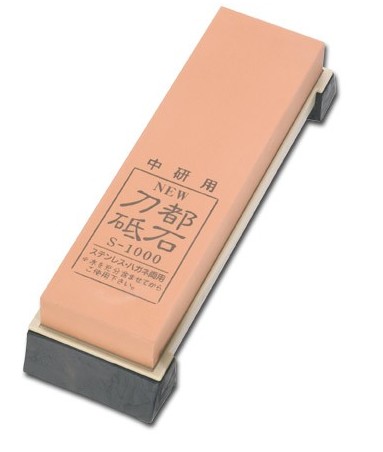
The grit number of a sharpening stone is a standardized measure indicating the roughness of its surface, and therefore, the fineness of the sharpening it can provide. The lower the grit number, the coarser the stone and the more material it will remove. The higher the number, the finer the stone and the more polished the edge finish will be.
- Low Grits (coarser): These grits, typically ranging from 700 to 1000, are ideal for initial sharpening, repairing deep nicks, restoring a badly damaged edge, or rebuilding the edge geometry. They remove material quickly and efficiently, laying the foundation for subsequent sharpening.
- Medium Grits: Usually ranging from 1200 to 3000, these stones are used for main sharpening once the edge geometry has been restored. They are perfect for removing scratches and marks left by coarser stones and for refining the edge to a level suitable for most daily uses.
- High Grits (finer): These grits, ranging from 4000, 6000, and up to 8000 or more, are used for polishing and final finishing of the edge. With these stones, you achieve an exceptionally smooth, shiny, and very sharp edge, ideal for delicate and precise cuts. A polished edge is not only more aesthetic, but also reduces friction when cutting, significantly increasing penetration and cutting efficiency.
Mastering the Art of Sharpening
Sharpening is not simply creating a generic cutting edge; it’s an art that involves restoring the precise geometry the original craftsman intended for the tool. Every knife, pocketknife, or cutting tool has a specific purpose, and its edge must be perfectly suited to that use to maximize its performance and durability.
The Perfect Angle: A Matter of Purpose
Contrary to popular belief, there is no universally ideal sharpening angle. The optimal angle depends entirely on the intended use of the tool:
- Acute Angles (small): An acute sharpening angle, such as 10 degrees per side (resulting in a total edge of 20 degrees), is ideal for fillet knives, sashimi knives, or any tool that needs great penetration and an extremely fine, delicate cut. They offer an incredibly sharp edge, able to glide through food or materials with minimal resistance. However, due to their thinness, they are less robust and more susceptible to chipping or bending if used for tasks requiring more force or impacting hard surfaces. Japanese knives, often made of very hard steels (60 HRC or more), are usually sharpened at 15° per side (30° total edge) to make the most of their cutting ability.
- Wider Angles (broad): A wider sharpening angle, such as 20 degrees per side (giving a total edge of 40 degrees), is suitable for tools that require more strength and durability, such as axes for splitting wood, outdoor knives, boning knives, or heavy-duty tools. These angles provide a more reinforced and durable edge, able to withstand impacts and considerable effort, although with slightly less initial cutting ability compared to more acute angles. German knives, which usually have a steel hardness between 55 and 58 HRC, are commonly sharpened between 18° and 20° per side (36°-40° total edge), seeking a balance between durability and cutting performance.
To find the correct angle, especially for beginners, you can determine the spine height of the knife above the stone using the blade width and reference tables or angle guides. Consistent practice and “feeling” the angle are key to mastering this skill.
The Step-by-Step Process: Sharpening with Water Stones
Sharpening with water stones is a traditional and highly effective method that, unlike electric grinders, avoids excessive overheating of the steel, which is crucial to preserving the integrity of the edge and preventing it from losing its temper.
Preparation:
- Soak the stone: Natural water stones, and many synthetics, should be soaked in water for a few minutes (generally 5-10 minutes, or until they stop bubbling) before use. It’s essential to keep them wet throughout the sharpening process. Water not only acts as a lubricant that allows the steel to glide smoothly over the surface, but also helps form the abrasive “slurry,” a paste that enhances the stone’s cutting action.
- Stability: Place the stone on a stable, non-slip surface. A damp cloth under the stone or a specific rubber base are excellent options to prevent the stone from moving during sharpening, which could result in uneven sharpening or even accidents.
Grinding or Reshaping (with coarse stone):
If your knife’s edge has major nicks, significant wear, or if you need to completely rebuild the edge geometry, you should start with a coarse grit stone (for example, 700 or 1000 grit). This step is the most aggressive and removes material quickly.
- Rest the knife blade on the stone, making sure to maintain the correct angle you’ve determined. Consistency in angle is vital.
- Apply steady, even pressure as you slide the blade forward, as if you wanted to cut the stone. It’s crucial to ensure that the entire length of the edge, from heel to tip, touches the stone evenly on each pass.
- Do an equal number of strokes on each side of the blade to ensure symmetrical sharpening and prevent the edge from becoming uneven. Continue until you feel a “burr” or “micro-serration” (a small raised metal edge) along the entire edge on the opposite side you’re sharpening. This indicates you’ve reached the edge.
Refining (with medium-fine stone):
Once the edge geometry has been restored and the burr has formed, it’s time to move to a medium-fine grit stone (for example, 1200 or 3000 grit). This step refines the edge and removes the deeper marks left by the coarse stone.
- Repeat the back-and-forth motion, keeping the stone constantly wet. Pressure should be slightly less than in the previous step.
- This stone perfects the edge and leaves a texture suitable for most daily uses, such as cutting food or general tasks.
- Continue until the burr is smaller and more uniform.
Polishing (with very fine stone):
To achieve an extremely smooth, shiny edge with exceptional cutting ability, use a very fine grit stone (for example, 4000 or 6000 grit, or even higher). This is the final step of sharpening.
- Use much less pressure than in previous steps and make smoother, more controlled movements. The goal is to polish the edge, not to remove large amounts of material.
- This stage removes the microscopic “micro-serration” left by coarser stones, allowing the knife to cut effortlessly and glide through materials with minimal resistance. A polished edge is not only sharper, but also retains its sharpness longer.
Stropping the Edge:
“Stropping” is not a sharpening process with a stone, but the final polishing and burr removal action performed after the last sharpening stone. It consists of passing the edge in the opposite direction to sharpening (i.e., with the spine of the knife leading the movement) over a slightly abrasive but very fine surface, such as leather (with or without polishing compound) or an extremely high-grit stone.
- The goal is to break and remove the microscopic “steel hairs” or “burr” that forms on the edge during sharpening. This burr, although invisible to the naked eye, can make the edge feel less sharp and wear out faster.
- If you use leather, always strop backwards, with the edge dragging over the surface, never pushing. This final step leaves a clean edge, free of burrs and impressively sharp.
Water vs. Oil: Which to Choose?
The choice of lubricant for your sharpening stones depends on the type of stone you’re using and your personal preferences. Both have advantages and considerations:
Water:
- Advantages: Water is an excellent lubricant, especially for natural stones and many synthetics. It effectively dissipates the heat generated during sharpening, which is crucial to avoid temper loss in steel, a common problem with dry sharpening methods. It’s economical, readily available, and very easy to clean, as residues are removed with a simple rinse. It’s the preferred lubricant for kitchen knives and razors, where cleanliness and lack of residue are important.
- Considerations: Water can make the stone’s surface slippery if not handled carefully. It also requires constant cleaning of water and slurry to maintain sharpening effectiveness.
Oil:
- Advantages: Sharpening oil offers greater protection against corrosion for the stone and, in some cases, can contribute to edge durability by reducing sharpening frequency. It’s preferred in some industrial applications or with certain types of stones designed for oil.
- Considerations: Oil can stain clothes, surfaces, or materials if not handled carefully. It requires proper storage in airtight containers to prevent spills and contamination. Also, once a stone has been used with oil, it’s difficult or impossible to switch it to water, as oil can clog the stone’s pores.
Beyond the Stone: Honing Rods and Maintenance
The process of maintaining an edge doesn’t end with sharpening on the stone. Other tools and maintenance practices are essential to prolong the lifespan and performance of your knives.
Honing Rods: Aligning the Edge
Honing rods, also known as sharpening steels, have a primary function that is often misunderstood. Their main purpose is not so much to remove material from the edge, but rather to align and compact the microscopic cutting edge. When a knife strikes a hard surface (like a cutting board or bone), the edge can bend, deform, or chip microscopically, losing its perfect alignment. The metal honing rod, being harder than the edge, gently straightens it, restoring its original cutting ability without removing large amounts of steel.
However, there are notable innovations in this field. Natural stone honing rods, like those developed by A Pedra das Meigas, combine the traditional ability to align the edge with the added advantage of removing a minimal amount of material and cold polishing. This means they not only straighten the edge but also slightly refine it, prolonging sharpness without a full resharpening.
Avoiding Common Sharpening Mistakes
One of the most frustrating and common problems users experience is that, after sharpening a knife, it quickly loses its edge, sometimes within minutes of use. This often happens especially with stainless steels with low carbon content that have been subjected to excessive heat during the sharpening process. Methods such as using electric grinders without adequate cooling can generate temperatures so high that they “draw the temper” from the edge. When steel loses its temper, it loses its hardness and ability to retain an edge, becoming soft and prone to folding or bending instead of cutting, even with light pressure.
The solution to this problem lies in two key aspects: first, avoid at all costs sharpening methods that generate excessive heat. Water stones, manual sharpening, and sharpening systems with cooling are the best options. Second, if the edge has already lost its temper, it’s imperative to remove the burnt steel. This is achieved by grinding the edge with cold methods (such as a coarse grit stone and water) until the layer of metal affected by heat is completely removed. Once this damaged layer is eliminated, proceed to properly sharpen the knife with water stones, following the steps of grinding, refining, and polishing to restore a durable and efficient edge.
Maintaining Your Sharpening Stones
Just as you maintain your knives, it’s crucial to care for your sharpening stones to ensure optimal performance and prolong their lifespan. A well-maintained stone not only sharpens better, but also saves you time and effort in the long run.
- Daily Rinse: After each sharpening session, rinse the stone under warm or cold water. This helps remove metal shavings, accumulated slurry, and other residues that can clog the stone’s pores and reduce its abrasive effectiveness.
- Deep Cleaning: For more persistent buildup or if the stone appears “glazed” (polished and slippery surface), a deeper cleaning can be performed. For water stones, you can use a soft brush and a bit of detergent. For oil stones or very dirty stones, it’s sometimes recommended to use a bit of fresh sharpening oil and a brush, or even WD-40 and fine steel wool to dislodge embedded dirt and metal particles.
- Regular Flattening: With constant use, especially in the center, sharpening stones can become deformed, acquiring a concave or “hollowed” shape. An irregular surface makes it extremely difficult to sharpen the edge evenly and precisely. It’s vital to flatten them regularly to maintain a perfectly flat surface. This can be done using a specific flattening plate (usually diamond), a piece of coarse wet-dry sandpaper (for example, 200-400 grit) on a flat, rigid surface (like glass or tile), or even another harder, flat sharpening stone. The frequency of flattening will depend on use, but a good rule of thumb is to do it every ten sharpening sessions or when you notice significant uneven wear.
- Proper Storage: Once the stone is completely clean and dry, make sure to store it in a cool, dry place, away from moisture and sudden temperature changes. Preferably, use a protective case or its original box to prevent bumps, breakage, or contamination. Some water stones can be stored submerged if used very frequently, but it’s important that the water is clean and changed regularly.
By integrating these maintenance practices into your sharpening routine, you’ll not only prolong the lifespan of your stones, but also ensure they’re always ready to deliver the best performance, allowing you to achieve exceptional edges at all times.
An Edge, a Passion: Your Path to Mastery
Sharpening is much more than a simple maintenance task; it’s a fundamental skill that elevates the usefulness, safety, and lifespan of your cutting tools. From the ancient traditions of natural stones, which have served humanity for millennia, to modern innovations in materials and techniques, the primary goal remains the same: to achieve an edge that cuts effortlessly, with precision, and maintains its sharpness for a long time.
By dedicating yourself to understanding the complexity of steel, the critical importance of heat treatment in its properties, and the unique characteristics of each type of sharpening stone, you equip yourself with the knowledge necessary for success. This deep understanding will allow you to choose the right tools for each task, apply the precise technique with confidence, and ultimately transform a dull knife into an efficient and safe extension of your hands. Choose the right tools, learn the technique with patience, and devote the necessary time to master this art. You’ll see how your knives not only cut better, but become trusted companions in every task. Stay sharp, stay prepared!