The Kukri knife, with its unmistakable curved blade, is much more than a simple tool or weapon; it is a cultural symbol rooted in the history and spirit of Nepal. Known as the national weapon of Nepal and a distinctive mark of the brave Gurkha soldiers, the Kukri encapsulates centuries of craftsmanship and bravery. If you have ever wondered about this fascinating knife, join us to explore its mysteries, uses, and the profound legacy it carries. 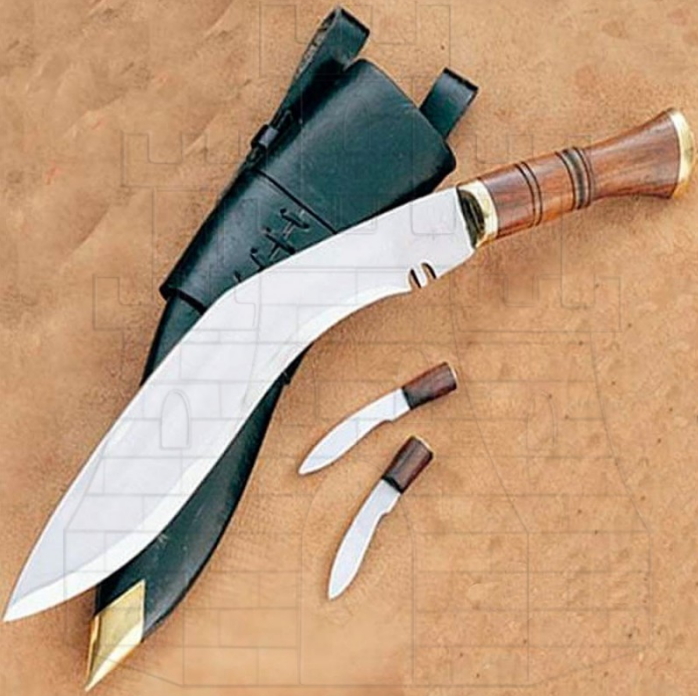
What is the Kukri? The Unmistakable Silhouette
Contents
At first glance, the Kukri is distinguished by its long, strongly inwardly curved blade, which narrows near the handle and widens notably before ending in a sharp point. Its design is so unique that when you first wield it, it can feel like holding an axe, as its weight is concentrated forward, allowing powerful impact cuts. This characteristic turns cutting into a forceful blow. Although often called a “knife,” the Kukri is a cutting tool with characteristics of other weapons. Its design allows it, in expert hands, to become an extension of the combatant’s arm, offering a lethal combination of power and control in hand-to-hand combat. 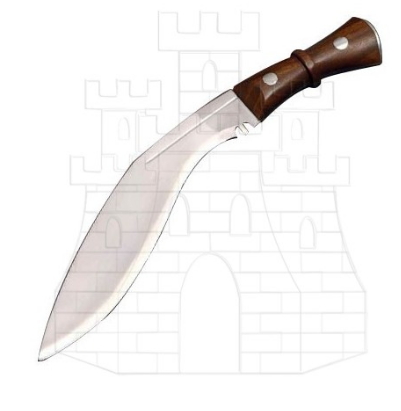
A Legacy Forged in History and Battle
The origins of the Kukri are lost in time, with some theories linking it to the Indian Nistrimsa or the Greek Kopis, introduced to South Asia by Alexander the Great. Its history is estimated to date back approximately 1,400 years, although the oldest known specimen dates from 1627. The Kukri’s international fame was consolidated through its use by the Gurkha soldiers of Nepal. When the British East India Company faced the Kingdom of Gorkha in 1814, the Gurkhas’ fierce skill with their Kukris so impressed the British that they decided to recruit them. This was the beginning of a bond that has lasted more than two centuries. The Gurkhas have carried their Kukris to all major conflicts where the British army has been deployed, including both World Wars. In Argentina, the Kukri also became sadly famous during the Falklands War in 1982. 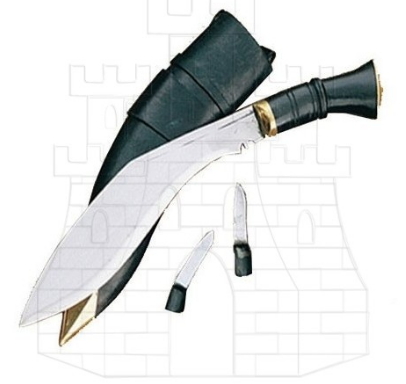 Currently, Gurkha soldiers are still equipped with two Kukris: one ceremonial for parades and exhibitions, and another for training and general use. A legend says that, once drawn in anger, the Kukri must taste blood before being sheathed again.
Anatomy of a Kukri: Distinctive Features
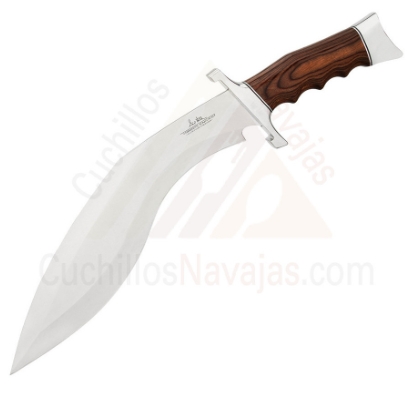 The Kukri has several features that make it unique:
- Blade and Thickness: The blade curves inward and its spine or backbone is notably thick, reaching between 5 and 10 mm thick near the handle. This thickness adds weight and durability, crucial for cutting force.
- The “Cho” or “Kauri”: Near the handle, on the lower part of the blade, there is a small crescent-shaped notch called “cho” or “kauri.” The kauri serves to prevent blood flow from the blade from wetting the handle during combat, although other theories are also considered, such as its symbolic function.
- Handle and Tang Materials: Traditionally, handles were made of walnut or hardwood, but rosewood is now more common. Military Kukris often use water buffalo horn for its strength. The rat-tail tang (RTT) has been the preferred handle type for its reliability. Kukris can have a half tang or a full tang.
- Complementary Tools: Most Kukri sheaths usually include two small additional knives: the “Karda” and the “Chakmak.” The Karda is a small, sharp knife for everyday tasks or skinning small prey. The Chakmak is a sharpener for the Kukri, and can also be used to generate sparks by striking it against limestone to start a fire.
Beyond Combat: The Multiple Uses of the Kukri
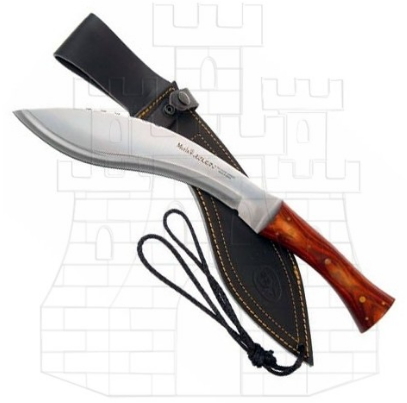
Although recognized as a lethal combat weapon, the Kukri is fundamentally a multi-purpose tool.
Utility Tool
In rural areas of Nepal, villagers and farmers use the Kukri for countless daily tasks such as cutting firewood, digging, chopping meat and vegetables, or even as a hammer. Its wide part can function as an axe or a shovel, while the section near the handle is used for more precise cuts. This makes it an ideal camping knife. Nepalese people learn to handle them from the age of five.
Hunting and Survival
The Kukri is a versatile tool for hunting and survival. It is excellent for skinning deer or butchering medium-sized animals thanks to its curved blade and sharp point. Its sturdy edge is perfect for cutting bones, and the straight edge near the handle facilitates food chopping. Many Nepalese keep it at home for protection and carry it with them when venturing into nature.
Cultural and Ceremonial Significance
The Kukri has deep religious and cultural importance in Nepal. It is a symbol of honor, justice, dignity, and freedom. It is used in various ceremonies, including weddings, traditional dances like the “Khukri Dance,” and religious events. There are usually versions for ceremonies where buffaloes are sacrificed with a single, clean cut.
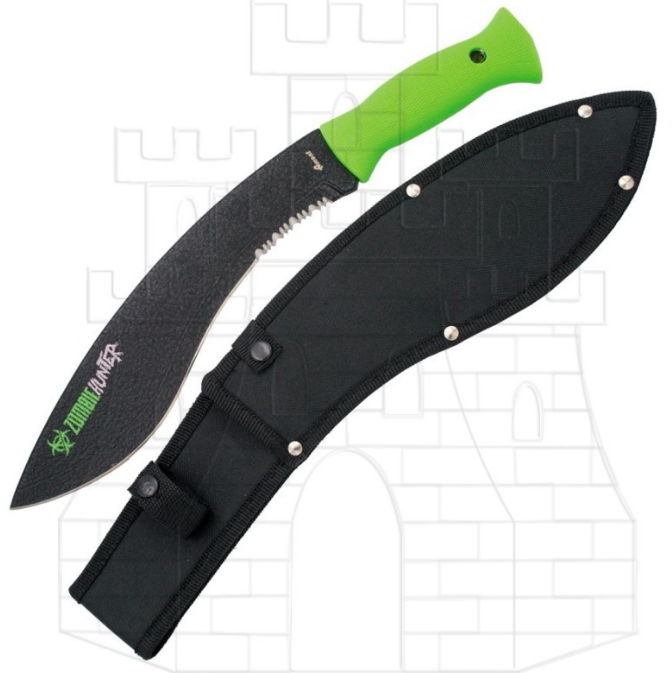
Types of Kukri: A Functional and Stylistic Variety
There are numerous types of Kukri, each with specific purposes and designs. They can be categorized primarily into three types according to their design and function: traditional, modern, and decorative. The blade shape is a key factor in their differentiation, with seven main types based on blade design, such as the Sirupate (light and functional for travel or ceremonies), the Bhojpure (popular, for heavy work), the Angkhola (historic, “Braveheart”), the Dragon Kukri (ceremonial, with engravings), the Tamang Kukri (cultural, with decorations), the Hanshee Kukri (curved, light, used in the unification of Nepal), the Villager Kukri (for farmers’ daily use), and the Spartan Knife (modern design for outdoors). Gurkhas primarily use the traditional Kukri, although some modern models are also manufactured for the Indian army. Given its rich history, myths, and association with a specific region, the Kukri is a highly coveted piece by collectors. The Kukris massively produced by the British army in the 19th century are especially valuable. There are also versions like the Kothimora Kukri, with elaborate and decorative sheaths, used by royalty and high-ranking officials, which combine art and function.
Legal Considerations
The legality of owning or carrying a Kukri knife varies considerably depending on the country and region. In Nepal, due to its great cultural significance, Kukris are legal and commonly used. However, in other places like the United States, its legality depends on state and local laws, which may regulate its public carrying, size restrictions, or even require permits, given that it is considered a lethal weapon in addition to its cultural value. It is always advisable to consult local and national laws. The Kukri is a living testament to skill, strength, and bravery. Its distinctive design and multifunctionality have made it an indispensable tool for the Nepalese people and an iconic piece in global military history. Whether as a formidable combat knife, a reliable utility tool, or a ceremonial object full of meaning, the Kukri continues to captivate with its legacy and versatility. It is, without a doubt, a blade with its own soul, deeply rooted in the culture and identity of Nepal. If you are thinking of acquiring one, we invite you to explore our selection of high-quality Kukri knives.