
When we think of a good knife, it’s natural for our attention to first turn to the blade: its edge, the type of steel, its shape. But what if I told you there’s another equally crucial part that often goes unnoticed? We’re talking about the knife handle, also known as the grip. Far from being a mere adornment, the handle is fundamental for the ergonomics, safety, durability, and style of your cutting tool.
A well-designed handle not only allows for a firm and comfortable grip, but also reduces fatigue during prolonged use, improves precision, and helps prevent accidents in the kitchen or any other activity. The choice of material and handle design can make a huge difference in your user experience.

In this article, we will thoroughly explore the different types of knife handles. We will analyze the most popular materials, both natural and synthetic, their advantages and disadvantages, and how their design influences their performance. If you’ve ever wondered why some knives feel like an extension of your hand while others are uncomfortable, here you’ll find the answers. Because the secret to an excellent knife, without a doubt, begins with the handle.
Handle Materials: Tradition and Technology at Your Knife’s Service
Contents
- Handle Materials: Tradition and Technology at Your Knife’s Service
- Wood Handles: Timeless Beauty and Natural Feel
- Synthetic Handles: Functionality and Resistance for Modern Use
- Stamina Handles: The Resistance of a Unique Compound
- Metal Handles: Resistance and Contemporary Style
- Horn, Bone, and Antler Handles: Tradition with Character
- Composite or Hybrid Handles: The Best of Both Worlds
- Ergonomics and Design: The Form that Makes the Function
- Care and Maintenance: How to Prolong the Life of Your Handle
- The Balance between Comfort, Aesthetics, and Functionality
The diversity of materials for knife handles is enormous, and each one brings unique characteristics that directly influence functionality and durability. We can divide these materials into large groups: natural, synthetic, and composite.

Wood Handles: Timeless Beauty and Natural Feel
Wood handles are a classic choice that has endured through the centuries, appreciated for their natural beauty and warmth to the touch. Each piece is unique, with grains, colors, and textures that give each knife its own character. In addition, wood offers a natural and ergonomic grip that reduces fatigue during prolonged use and provides good feedback during cutting.
Advantages of Wood:
- Unmatched aesthetics: They provide timeless elegance and a touch of sophistication.
- Comfortable and secure grip: Their natural texture and warmth feel great in the hand.
- Natural insulation: They maintain a pleasant temperature to the touch, both in cold and hot conditions.
- Good feedback: They allow for a better feel of the cut, improving precision.
Disadvantages of Wood:
- Require maintenance: They need regular oiling or waxing to prevent them from drying out, cracking, or warping.
- Sensitive to moisture: They are porous and can absorb moisture and odors, which affects their durability and can lead to hygiene problems if not properly cared for. It is not recommended to wash them in a dishwasher.
- Susceptibility to damage: They can suffer scratches or dents more easily than other materials.
Featured woods for knife handles:
Manufacturers use a wide variety of hardwoods for their beauty and durability. Some of the most valued include:
- Ebony: Renowned for its exclusivity, it is a dense, intensely black wood with pale streaks. It offers a very smooth polish and is highly valued as an ornamental wood. It is very hard, heavy, and dense, with high wear resistance.
- Cocobolo: An exceptionally beautiful and high-quality wood, with colors ranging from yellow to red and varied tones. It is very dense, hard, and heavy, and darkens over time.
- Bubinga: Similar to rosewood, it is red or reddish-brown with purplish streaks, and offers a very decorative appearance, especially with wavy grain. It is strong but not excessively resistant.
- Walnut: A high-end wood, resistant, compact, elastic, and fine-grained. Its grayish-brown color can brighten its grain when cooked.
- Oak: Very hard, fine-grained, and very resistant to rot even underwater.
- Sandalwood: Fine and regular texture, very durable, easy to work with, and dries without cracking.
- Granadilla: Ideal for cutlery handles due to its great hardness and durability, with a very dark coloration.
- Guayacán: Characterized by being very hard and heavy, with yellowish sapwood and brownish-green to almost black heartwood. It contains a lot of resin and gives off a rose scent.
- Rosewood: A very beautiful wood, burgundy red, dark, chocolate, or purple, with brown or black streaks. It is very suitable for cabinetmaking and resistant to decomposition and insects.
- Holm oak: Its wood is very hard, rot-proof, and heavy, used in pieces that withstand great friction or in cabinetmaking.
- Beech: White when cut, it acquires a dark reddish color over time. It is hard and heavy, although sensitive to changes in humidity.
- Olive: Very beautiful, beige or brown with darker streaks, robust, abrasion-resistant, and takes dyes well.
Synthetic Handles: Functionality and Resistance for Modern Use
Synthetic materials have gained ground due to their strength, versatility, and ease of maintenance. They are waterproof, resistant to impacts, chemicals, and extreme temperatures, and require low maintenance.
Common types of synthetic handles:
- POM (Polyoxymethylene) and Polypropylene: These are high-strength thermoplastics, widely used in everyday knives.
- Advantages: Very wear-resistant, do not deform or crack at high temperatures. They are lightweight, easy to handle and clean, and dishwasher safe.
- Disadvantages: They tend to be less visually appealing than other materials. They can feel more “dry” and offer less connection with the hand when cutting compared to wood.
- Micarta: A combination of fabric or paper and resin, known for its strength and attractive texture.
- Advantages: Very resistant, with a rough texture that improves grip. Offers a more natural grip feel and is water-resistant.
- Disadvantages: May lose some of its finish over time.
- G-10: A laminate of fiberglass and epoxy resin.
- Advantages: Extremely strong, resistant to water, impacts, and wear. Easy to clean and unaffected by moisture or heat. Provides a solid grip even in wet conditions thanks to its rough pattern.
- Disadvantages: Can be somewhat rough to the touch and its aesthetics are more functional than decorative.
- Carbon Fiber: A lightweight and extremely strong material, popular in high-end knives.
- Advantages: Very light, rigid, modern, and with exceptional strength. Easy to maintain and resistant to moisture and heat.
- Disadvantages: Can be expensive and, although strong, does not always offer the warmth of wood or the comfort of other plastics. It can be slippery if it does not have a textured design.
- Kraton or Thermoplastic Polymers: Ideal for tactical and survival knives due to their resistance.
Stamina Handles: The Resistance of a Unique Compound
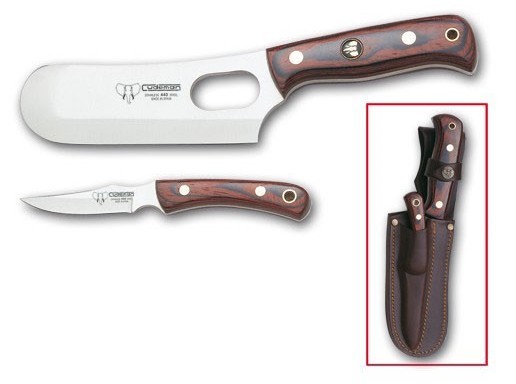
Knives with stamina handles are by definition very resistant, as the word stamina means endurance, toughness, strength. Stamina is a dyed laminated wood, which is then impregnated with resins (Phenolic) and then compressed at very high pressure and heat.

Knives with stamina handles have a beautiful wood appearance, but with the advantage that these handles are much more resistant and retain their shine longer. There are stamina handles for hunting knives, for the kitchen, for cutting all kinds of meats, fruits, and vegetables.
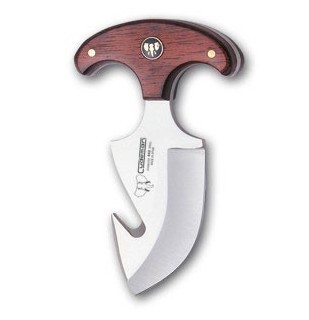
There are also daggers, axes, and machetes made with this material, which offers an excellent combination of aesthetics and durability.

Metal Handles: Resistance and Contemporary Style
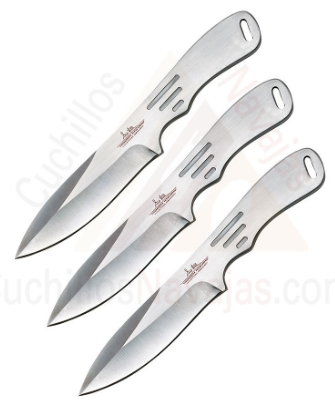
Metal handles, such as stainless steel or titanium, offer a unique combination of strength and elegant aesthetics. They are very durable and resist the wear and tear of intensive use.
Advantages of Metal:
- Extreme durability: Capable of withstanding intensive use without deteriorating.
- Hygiene and ease of cleaning: They are non-porous, which makes them very hygienic and easy to clean, reducing the risk of bacterial growth.
- Modern aesthetics: They provide a contemporary and professional look.
Disadvantages of Metal:
- Weight: They tend to be heavier than other materials, which can affect the balance of the knife and comfort during prolonged use.
- Potentially slippery: Some metal handles can be slippery when wet or greasy.
- Temperature sensitivity: They can become very cold or hot in extreme conditions.
Horn, Bone, and Antler Handles: Tradition with Character
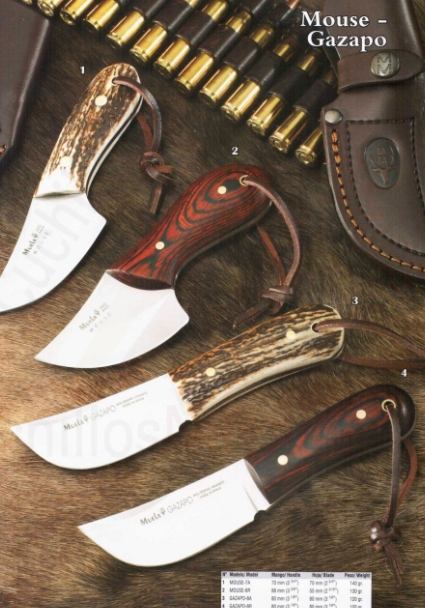
These materials, used since ancient times, are highly valued in artisanal and traditional cutlery.
- Advantages: High mechanical resistance and a unique and noble aesthetic.
- Disadvantages: Sensitive to humidity and temperature changes, they require specific care. Their current use is more linked to collection knives or exclusive designs.
Composite or Hybrid Handles: The Best of Both Worlds
Composite or hybrid handles combine different materials to maximize properties such as durability, lightness, and comfort. They are a preferred option in high-end knives.
- Stabilized Wood: Combines the beauty of natural wood with a special resin at high pressure, improving its durability and water resistance.
- Burl Woods: They are valued for their unique patterns, creating natural works of art.
- Hybrid Handles: Combine wood with materials such as resin, metal, or carbon fiber, offering an exceptional balance.
Ergonomics and Design: The Form that Makes the Function
Beyond the material, the shape and design of the handle are crucial to ensure comfortable, safe, and effective use of the knife. A good ergonomic design adapts to the user’s hand, allowing a comfortable and secure grip that reduces fatigue during long working hours.
Handle Shape and Profile
- Straight or cylindrical: Common in Japanese knives, they allow precise movements but require technique.
- Contoured: They adapt to the hand, ideal for prolonged use, reducing fatigue and improving control.
- With guard (protection): Frequent in hunting or tactical knives, they prevent the hand from slipping towards the blade, increasing safety.
Balance and Weight
A well-balanced handle properly distributes the weight of the knife, facilitating control and reducing muscle tension. A very light handle can unbalance the knife, while a heavy one can make it uncomfortable. Lightness influences agility of use.
Texture and Finish
The surface of the handle is also decisive for grip:
- Polished: More aesthetic, but less adherent if there is moisture or grease.
- Textured or rough: Improves grip, even with gloves or in wet conditions.
- Rubberized or non-slip: Ideal in wet or greasy environments, such as professional kitchens or outdoor activities.
Care and Maintenance: How to Prolong the Life of Your Handle
Maintaining a knife handle is essential to preserve its functionality and aesthetics over time.
- Cleaning: Use a soft cloth and avoid aggressive chemicals, especially on wooden handles. Synthetic and metal handles are usually easier to clean and are often dishwasher safe. Seamless handles facilitate hygiene.
- Oiling (for wood): It is essential to periodically oil wooden handles with a suitable conditioner to prevent them from drying out and cracking. Mineral oil, linseed oil, tung oil, Ballistol, or Danish oil are recommended. Olive oil should be avoided, as it can go rancid over time.
- Protection against Extreme Temperatures and Humidity: Avoid dishwashers for wooden handles and do not leave them soaking. Store them away from heat sources or prolonged humidity to prevent warping or cracking.
The Balance between Comfort, Aesthetics, and Functionality
Choosing the right knife handle is a decision that combines your personal needs with your aesthetic preferences. The best knife handles, regardless of the material, share essential characteristics: durability, wear resistance, and good workability. Hardwoods with natural oils offer a barrier against moisture and decomposition, while synthetic materials provide superior resistance for demanding environments. For those seeking the durability of a synthetic with the appearance of wood, stamina handles offer a robust and aesthetically attractive solution, being an excellent option for any type of knife, from everyday use to hunting tools.
If you want to explore a variety of options to find the perfect knife, you can see all types of knives or focus on our wide range of kitchen knives in our online store.