Pocket knives are much more than simple tools; they are versatile companions that assist us in countless situations. From the most everyday tasks at home to the most demanding outdoor adventures, having the right knife can make a big difference in our efficiency and safety. If you are thinking of acquiring one or simply want to better understand its uses and characteristics, this complete guide will help you unravel the fascinating world of pocket knives, offering you all the necessary information to make the best decision.

Why is a Pocket Knife Indispensable?
Contents
The utility of a pocket knife is surprisingly broad and goes far beyond a simple cutting instrument. Currently, these compact engineering pieces fulfill crucial functions in both sports and recreational activities and professional environments, standing out for their exceptional design and functionality characteristics. Their ability to fold and occupy minimal space makes them an indispensable element in any personal kit.
In daily life, whether in the comfort of your home, during a business trip, or on a weekend getaway, a pocket knife can be your salvation in unexpected situations. It will allow you to repair small domestic problems, such as adjusting a loose screw or cutting a stubborn seal, to easily handle various unforeseen situations that require a cutting or manipulation tool. It is, without a doubt, an essential piece of equipment for anyone looking for a practical, reliable, and useful instrument for all occasions, always at hand.
Versatile Uses of Your Knife:
- At home and daily life: The pocket knife becomes an extension of your hand for countless tasks. It is perfect for opening packages or boxes sealed with adhesive tape, cutting thin ropes or wires, making small adjustments with an integrated screwdriver, or even opening a soda bottle or a can of preserves when you don’t have another tool at hand. Many people integrate them into their keychains, allowing them constant access to this small but powerful tool, using it almost unconsciously throughout the day.
- Outdoor activities: For camping, hiking, fishing, or hunting enthusiasts, pocket knives are inseparable companions. They are ideal for cutting small branches for fire, preparing fine kindling, cutting ropes to set up a tent, preparing food in the field, opening food cans, or peeling fruits with ease. Their versatility makes them a key piece for any adventurer who values self-sufficiency and preparation in nature.
- Personal defense: Some knives, especially those known as tactical knives, are designed with a focus on self-defense. These tools are characterized by having a firm and robust blade, often with a fast and fluid opening mechanism that allows instant deployment in emergency situations. It is crucial that these knives guarantee user safety through a secure grip and reliable blade lock in difficult situations, providing an additional layer of protection.
Pocket Knife vs. Traditional Knife: Understanding the Differences
Although both pocket knives and traditional knives are very popular cutting instruments and fulfill similar functions in essence, they possess distinctive characteristics that make them suitable for different purposes and use scenarios. Understanding these differences is key to choosing the right tool for each task.
The most evident difference between a pocket knife and a traditional knife lies in their size and portability. Pocket knives are designed to be compact and, above all, foldable. This feature makes them extremely easy to carry in a pocket, a small backpack, or even as part of a keychain, making them ideal for daily use and for simple tasks that arise unexpectedly, such as opening cardboard boxes, cutting labels, or sectioning thin ropes.
In contrast, knives are usually larger and more robust, with a fixed blade that does not fold. They are designed specifically for tasks that demand greater strength, precision, and resistance, such as cutting wood, skinning animals, or performing intensive field work. The blades of pocket knives are generally shorter, ranging from 5 to 10 cm, and are intended for general use, presenting varied shapes such as the clip-point, drop-point, or tanto, each optimized for different types of cutting. Knives, for their part, have considerably longer blades, which can range from 10 to 30 cm, and their shapes (such as the bowie, survival, or combat) are designed for very specific tasks that require greater leverage and cutting capacity.
Blade Opening Mechanisms
The way a pocket knife blade opens and deploys has evolved significantly over time, offering a diversity of options that adapt to user preferences and the speed with which the tool needs to be accessed. The choice of opening mechanism is an important factor to consider depending on the intended use.
- Manual Opening: This is the most traditional and common model in the pocket knife market. To open it, the user must pull the blade with their finger, using a notch or a thumb stud. This type of opening is ideal for domestic use, manual work that does not require extreme speed, or situations where safety and total control over the opening are priorities. Its simplicity also contributes to its durability and lower risk of mechanical failures.
- Automatic Opening: This type of knife is characterized by incorporating a spring or coil that allows the blade to release and deploy with a rotating movement by pressing a button or lever. They are extremely simple and quick to use, which makes them popular in certain contexts where deployment speed is crucial. However, their legality can vary considerably depending on the legislation of each country or region, so it is essential to inform yourself before acquiring one.
- Assisted Opening: A hybrid between manual and automatic. The blade opens partially manually, and a spring mechanism takes over to complete the opening quickly and smoothly. They offer a superior deployment speed to manual ones without falling into the legal restrictions that sometimes affect automatics.
- Simple Opening (Butterfly Type): Especially in the model known as “butterfly knife” or “balisong,” its handling is complex and requires considerable skill and practice to master. The two pieces of the handle unlock and open with an artistic and fluid rotation, exposing the blade. It is crucial to securely lock the handle parts before using the blade to avoid risk of injury. They are more popular for their recreational and exhibition value than for their immediate practical utility.
Types of Pocket Knives
The diversity in the world of pocket knives is astonishing, with innumerable types, each with specific characteristics designed for different applications and user preferences. It is not easy to categorize the thousands of knives that are manufactured, but we can do so by their main characteristics and uses.
The categorization of Pocket Knives generally encompasses, as their name indicates, those that could comfortably fit in a pocket. What sizes are we referring to? Based on a blade size of a maximum of 9 cm for this type of pocket knife, we find a varied list of knife types ranging from Vendetta type, with plastic handles, aluminum handles, decorated handles, Laguiole type, Spanish type, classic, cabriteras, taponeras, multi-tools, and many more. Each of them possesses a particular charm and functionality that makes them unique.
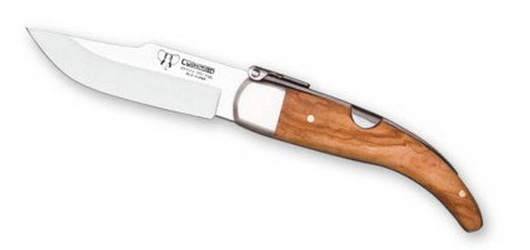
Within this broad classification, we can highlight the following main types of pocket knives:
- Single Blade Knife: This is the simplest, lightest, and most fundamental design. It consists of a single blade that folds into the handle, generally with a length between 5 and 15 cm. They are extremely easy to handle, maintain, and transport, making them useful for a wide variety of tasks, from small outdoor adventures to practical daily uses such as opening letters or cutting threads. Their simplicity is their greatest strength.
- Double Blade Knife: These knives are equipped with two blades of different shapes and sizes, which gives them superior versatility for different applications. The main blade is usually more robust (between 5 and 10 cm), while the second blade is often thinner, sometimes with a serrated edge or a specialized shape for specific tasks. They are popular among outdoor enthusiasts who need different types of cutting without carrying multiple tools.
- Swiss Army Knife (Multi-tool): Probably the most emblematic and multifunctional type of pocket knife. The iconic Swiss Army Knife not only includes several blades (for cutting, sawing, etc.) but also an impressive variety of additional tools such as nail clippers, corkscrews, can openers, screwdrivers of different sizes, scissors, awls, and much more. It is an indispensable tool for any hiking backpack, emergency kit, or simply for daily use in the city, offering a compact solution for almost any problem.
- Survival Knife: They are usually larger and more robust than standard multi-purpose knives. They are designed for extreme environments and combine different blades with crucial additional features for survival, such as wood saws, bottle openers, compasses, emergency whistles, or even fire starters. They are ideal for camping, bushcraft activities, or any outdoor situation where self-sufficiency is paramount due to their great versatility and resistance.
- Tactical Knife: Designed specifically for military, police, and security use, as well as for professionals operating in demanding environments. They are characterized by high-strength lockable blades, often with anti-reflective coatings, multiple specialized blades, and ergonomic handles made with highly durable materials for superior grip and control in stressful situations. They are suitable for intense activities in challenging environments where reliability and speed are critical.
- Classic Knife: Represents the essence of the original folding knife, used since ancient times. It generally consists of one or two simple blades and often features a handle made of traditional materials such as wood, bone, or horn. Its charm lies in its simplicity, elegance, and connection to traditional craftsmanship. They are perfect for light daily use and for collectors.
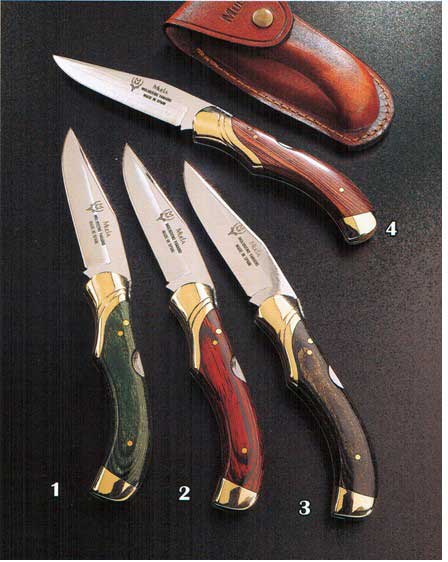
In addition to these types, there are many regional and design variants. For example, traditional Spanish knives, such as those from Albacete or Taramundi, are famous for their craftsmanship and the quality of their materials. Laguiole-type knives, originating from France, are recognizable by their elegance and the “fly” on the back of the spring. Cabriteras, for their part, are more rustic knives, historically used by shepherds, while taponeras are ideal for uncorking bottles, integrating a very practical function into a compact design.
How to Choose the Ideal Pocket Knife
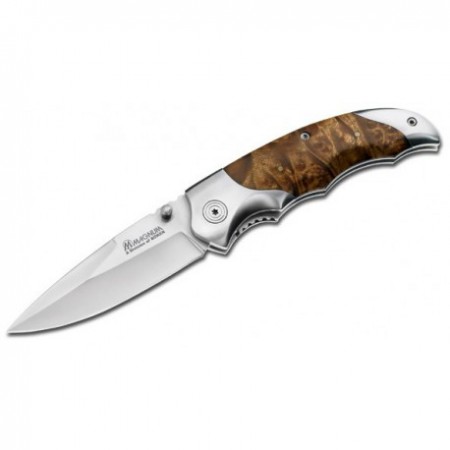
Selecting the perfect pocket knife is not a trivial task and requires careful consideration of several factors. The key lies in clearly defining its main use, as a knife designed for daily city life will differ significantly from one intended for mountain survival. A wise choice will ensure not only a satisfactory experience but also maximum safety and efficiency. Below, we explore the key factors that will influence your choice:
Blade Material: The Heart of the Knife
The blade material is, without a doubt, one of the most critical components of any pocket knife, as it determines its durability, cutting ability, corrosion resistance, and ease of maintenance.
- Stainless Steel: It is the most popular and versatile option for most pocket knives. It is an alloy of iron, chromium, and other elements that give it excellent resistance to damage, corrosion, and oxidation. This makes it ideal for daily use and for adverse conditions where humidity or exposure to corrosive elements are common. Stainless steel blades are generally more affordable and, for the average user, easier to sharpen at home, maintaining a decent edge with regular maintenance.
- Carbon Steel: Although less resistant to oxidation than stainless steel and more prone to developing a patina or even rust if not properly cared for, carbon steel is highly valued by enthusiasts and professionals. Its main advantage is that it stays sharp much longer and, for an expert, it is easier to sharpen at home to an extremely sharp edge. It requires more care and maintenance, such as immediate drying after each use and regular lubrication, but its cutting performance is exceptional.
- Damascus Steel: More than just a single type of steel, Damascus steel is an ancient forging technique that fuses different types of steel, creating distinctive patterns on the blade. Damascus knives are known for their impressive aesthetics, but also for their excellent corrosion resistance and their ability to hold an edge for a long time. However, they tend to be more expensive, require more constant care, and more laborious sharpening techniques, often requiring the intervention of a professional.
Blade Edge: Precision or Power
The type of blade edge must be in direct accordance with the intended use of your pocket knife, as each offers distinct advantages for different tasks.
- Plain Edge (Straight): This type of edge offers the greatest control and precision for straight and clean cuts. It is the most common and versatile, ideal for tasks that require delicacy, such as preparing food, cutting paper, opening packages, or performing precision work. Plain edge blades are also the easiest to sharpen and maintain at home with basic tools.
- Fully Serrated Edge: Fully serrated blades are ideal for cutting tough and fibrous materials, such as thick ropes, straps, seat belts, or small branches, thanks to their teeth that facilitate breaking the surface with a sawing motion. However, they can damage fine or delicate materials and require specialized sharpening tools or the help of a professional to maintain their effectiveness.
- Partially Serrated Edge (Combined): This is a hybrid design that combines a plain and a serrated part on the same blade, offering excellent versatility for different tasks. The plain section is useful for precise cuts, while the serrated section allows tackling harder materials. It is a popular option for those looking for a multifunctional pocket knife that can adapt to various situations without having to change tools.
Handle Material: Ergonomics and Durability
The material of your pocket knife handle not only influences its aesthetics but also its durability, weight, grip, and comfort of use. The choice largely depends on your personal preferences and the environment in which you plan to use the knife.
- Wood: Wood handles offer a classic, warm, and pleasant aesthetic to the touch. Each piece is unique due to the natural grain of the wood. However, they may require regular maintenance (such as oiling) to preserve their beauty and strength, and over time, they may show signs of wear or be susceptible to moisture and temperature changes.
- Plastic or Composites (G10, Micarta, Carbon Fiber): These materials are extremely durable, lightweight, and generally more economical than wood or metal. They offer excellent resistance to moisture, impacts, and chemicals. Although they may not look as “elegant” as wood or polished metal, their functionality and low maintenance make them very popular, especially in tactical knives and heavy-duty use.
- Metal (Aluminum, Titanium, Stainless Steel): Metal handles are very durable and give the knife a robust and timeless look. Aluminum is lightweight and corrosion-resistant, titanium is even lighter and stronger, and stainless steel is extremely resistant. However, they can make the knife heavier and, in some cases, become slippery, especially if wet or if the user is wearing gloves. They often incorporate textures or patterns to improve grip.
Blade Length: Legality and Functionality
The blade length is a crucial factor that affects both the functionality of the pocket knife and its legality for carrying in public places. It is vital to know local regulations before acquiring a larger knife.
- Short Blades (up to 5 cm): These blades are common in multi-purpose knives or compact tools designed to be carried on a keychain. Although their size limits their ability to cut bulky raw materials or perform heavy work, they are extremely effective in other areas, such as opening packages, cutting threads, peeling small fruits, or performing precision tasks. They are discreet and generally do not present legal problems for portability.
- Medium Blades (5 to 10 cm): This length range is the most versatile and popular for general-purpose pocket knives. They combine a wide range of uses with good control and safety. They are large enough for most daily and light field tasks, but compact enough to be carried comfortably. Their legality is usually less restrictive than that of longer blades, although it is always advisable to check local regulations.
- Long Blades (more than 10 cm): Knives with blades of this size are ideal for forest survival tasks, hunting, or activities that require greater cutting capacity and leverage. However, their legality for carrying in public places varies significantly by country and region. In many places, carrying a knife with a blade longer than 10 cm in public can be illegal or subject to strict restrictions, unless a “justified reason” (such as hunting or fishing) is demonstrated.
The Importance of Proper Maintenance
To ensure that your pocket knife remains in excellent condition, functions optimally, and most importantly, is safe to use for many years, regular maintenance is absolutely fundamental. A well-maintained knife not only prolongs its lifespan but also guarantees its performance when you need it most.
Cleaning: The Basis of Care
Cleaning is the first and most basic step in maintaining your knife. After each use, especially if the blade has been in contact with food, dirt, plant sap, or any substance that could corrode it, it is crucial to clean it. If you are outdoors, a simple handkerchief or a piece of cloth can serve for a quick clean, but at home, it is ideal to use warm running water, a soft sponge, and a mild detergent to remove any residue. It is imperative to dry it very well after cleaning to prevent oxidation, paying special attention to the joint areas and the folding mechanism. The frequency of cleaning will depend on the use: from once a month for daily use to every two or three months for occasional use. A clean blade not only prevents the accumulation of dirt and bacteria but also ensures smooth operation of the mechanism.
Lubrication: Smoothness and Protection
Lubricating the moving parts of your pocket knife is essential to ensure smooth operation and prolong the lifespan of the opening and closing mechanism. Periodically, apply just a few drops of special knife oil or a low-viscosity silicone lubricant to the blade’s pivot and any other moving parts. Once the lubricant is applied, open and close the blade several times to distribute the product evenly, allowing it to penetrate all corners of the mechanism. Finally, wipe off any excess lubricant with a soft cloth to prevent dirt accumulation. Always perform this step with the knife clean and dry, preferably after a thorough cleaning.
Sharpening: The Key to Efficiency and Safety
A sharp blade is not just a matter of efficiency, but also of safety. A well-sharpened knife ensures precise and clean cuts, reducing the effort required and minimizing the risk of accidents caused by slips or imprecise cuts. Check the edge of your knife after each use; if it seems less sharp, it’s time to sharpen it. Pocket knives are usually sharpened at a 20-25 degree angle to achieve an optimal balance between a sharp edge and good durability. If the blade is damaged (with nicks or chips) or if you don’t feel comfortable sharpening it at home, seek the help of a professional. The frequency of sharpening largely depends on the use: from every 1-2 weeks for intensive use to once a month or every few months for normal or sporadic use.
Storage: Long-Term Protection
When you are not using your pocket knife, it is crucial to store it properly to protect it from moisture, dust, and impacts. Use protective sheaths, cases, or boxes designed for knives. Always make sure the knife is completely clean and dry before storing it, especially if it will be stored for an extended period. Proper storage prevents corrosion and physical damage, keeping your knife ready for action.
Pocket knives have come a long way since their origins in the 17th century, evolving with modern materials and technology to offer an incredible diversity of blades, handle materials, and mechanisms. By carefully considering its purpose, blade type, manufacturing material, and the importance of regular maintenance, you will be able to choose the perfect knife that will not only accompany you on all your adventures and daily tasks but will also become a reliable extension of your hand. Whether for DIY at home, adventure in nature, or as a constant utility tool, there is an ideal pocket knife waiting for you.
If you are ready to find your perfect companion, we invite you to explore a wide selection of models, from classics to the most modern and tactical. Discover the quality and variety in our pocket knife collection or, if you are looking for broader options, explore all types of knives available in our online store, where functionality meets craftsmanship to offer you the best in cutting tools.