
Are you one of those who fully enjoy a good steak, a juicy fillet, or delicious grilled ribs? If the answer is yes, you’ll know that for every bite to be an unforgettable experience, quality meat and good cooking are not enough. There’s a key element on the table that often goes unnoticed but makes all the difference: the steak knife. Get ready to discover why investing in a good steak knife will elevate your meals to the next level.
To understand the importance of this utensil, we must first understand exactly what we are cutting. A chop is the rib with meat from beef, ox, pork, cow, or lamb, from the upper rib cage, intended for human consumption; it is usually grilled or pan-fried. It is obtained from a cut of meat located just above the animal’s rib.
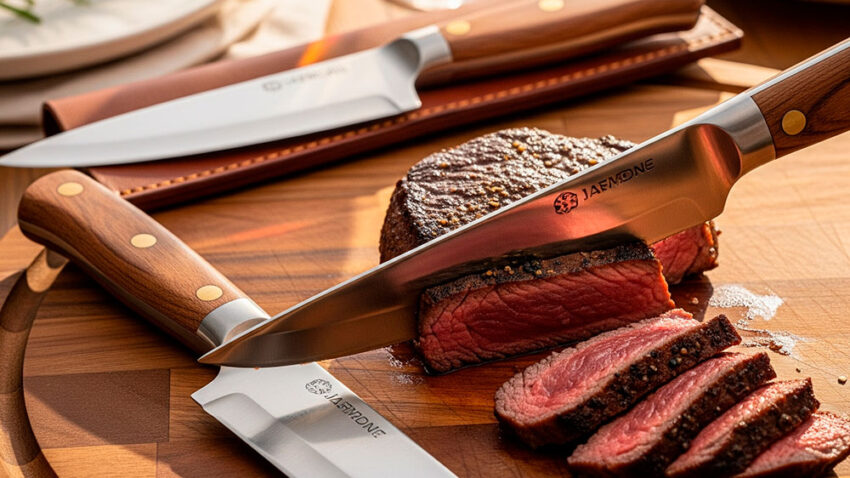
In general, each chop is cut with the accompanying rib section. Large beef chops are also known as “chuletón,” whether the meat remains attached to its rib or has been deboned. In the latter case, once deboned, it is called “entrecôte.”
In Spain, “entrecôte” is distinguished from “chuletón” because the former is usually a thinner slice than the animal’s original chop, while “chuletón” is characterized by being a beef chop that retains its original thickness, whether or not the meat is deboned.
Why do you need a steak knife?
Contents
Perhaps you’re wondering, why do I need a special knife for meat if I already have table knives? The reason is simple and fundamental for the true meat lover. A steak knife is specifically designed to cut meat without tearing its fibers. When meat fibers are cleanly cut with a sharp blade, the juice is retained inside, ensuring that each piece retains its flavor and juiciness. Conventional table knives, designed for versatility that includes spreading pâtés or butter, rarely offer the cutting quality necessary for this, which can result in a poor cutting experience and the loss of the main dish’s properties. A professional quality steak knife ensures stable and precise cuts, making every bite a pleasure.
Kitchen steak knives are those used to cut these pieces, either by professional butchers or by meat and cooking enthusiasts. There are also specific steak knives for the dining table, because these make it easier for diners to properly cut these delicious pieces of meat, and they are different from regular table knives for cutting meat.
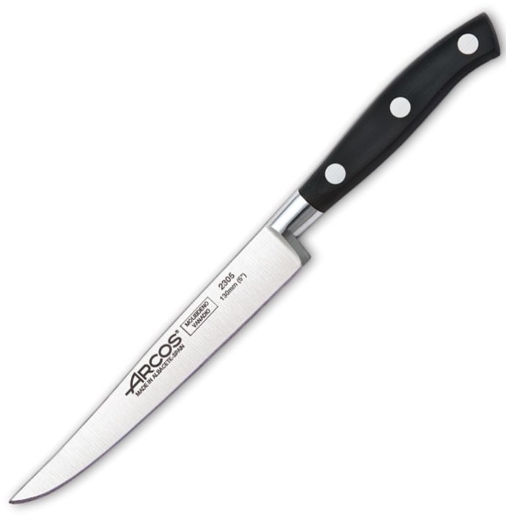
Key features of a quality steak knife
To choose the perfect companion for your carnivorous moments, it’s crucial to know the characteristics that define a high-end steak knife:
Adaptation to the hand and safety
A good steak knife should feel like an extension of your hand. Its ergonomic design is essential to allow you to cut safely and without fatigue, even during long sessions or for more demanding cuts of meat. Comfort in the grip is as important as cutting ability.
Blade material: The essence of the cut
The quality of the blade steel is vital. Stainless steel is the most popular choice for its durability and corrosion resistance. High-carbon varieties in stainless steel offer a combination of strength, sharpness, and stain resistance.
- Carbon steel is known for holding a very sharp edge longer, being a favorite of professional chefs, although it requires more meticulous care to prevent oxidation.
- Ceramic blades, though less common, are lightweight and hold their edge for a long time, resisting rust and stains, but are more fragile against impacts.
It is recommended to look for blades with a high percentage of chromium for greater corrosion resistance and other minerals like molybdenum or vanadium to increase hardness and resistance to abrasion and edge durability.
Edge design: Smooth or serrated?
This is where the big question often arises. Steak knives come mainly in two variants:
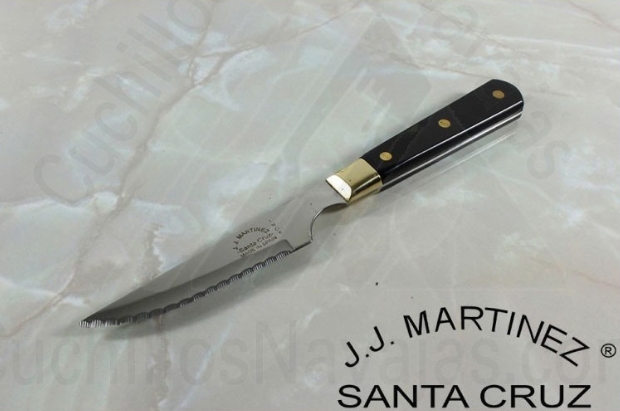
- Smooth edge: These knives provide a clean and precise cut, without tearing the meat fibers, which helps preserve all its natural juices. They are preferred by meat lovers, as they allow for an even distribution of pressure. Butchers use smooth edges for greater precision and to avoid breaking fibers. They require more frequent sharpening to maintain their excellence.
- Serrated edge (or saw): These are excellent for cutting the tougher outer layer of meat, such as the crust of a roast, without needing to apply much force. They offer an easier cut and usually require less maintenance in terms of sharpening. However, they can be more difficult to sharpen with conventional tools and, if the serration is very pronounced, they might slightly tear the fibers.
Robust structure and quality finish
The durability of a steak knife is based on solid construction. Full-tang blades, where the blade extends to the end of the handle, ensure optimal stability and longevity. A top-quality finish not only contributes to aesthetics but also to the overall strength of the knife.
Blade length
Generally, steak knife blades range from four to six inches (approximately 10 to 15 cm). A longer blade can offer greater leverage for large cuts, while a shorter one provides finer control for intricate cuts. The choice will depend on your personal preferences and the type of meat you usually enjoy.
Handle design and material
The handle is not just an aesthetic matter; it directly affects comfort and control.
- Wood handles offer a classic look and a warm feel, but require more care to avoid moisture damage.
- Plastic ones are versatile, easy to clean, and often more economical, available in various colors and ergonomic designs.
- Stainless steel ones provide a modern aesthetic and are very durable and easy to clean, although they can be slippery if they don’t have a textured surface.
The connection between the blade and the handle, ideally in one piece or with steel rivets, is crucial for the knife’s robustness.
Balance and weight
A well-balanced knife feels comfortable in the hand, allowing for better control during cutting. Heavier knives can provide more cutting power, while lighter ones are easier to maneuver. The ideal balance is a matter of personal preference that significantly improves the user experience.
Caring for your steak knives
For your steak knives to maintain their beauty and performance for years, proper care is essential:
Regular and manual cleaning
Always hand wash them with warm water and mild soap immediately after use. Avoid the dishwasher, especially if they have wooden handles, as harsh detergents and prolonged moisture can irreparably damage the steel and handle surfaces. Dry the knives thoroughly with an absorbent towel to prevent stains and corrosion.
Wooden handle maintenance
If your knives have wooden handles, it’s crucial to periodically treat them with linseed oil or beeswax to prevent them from drying out and cracking, maintaining their appearance and durability.
Proper storage
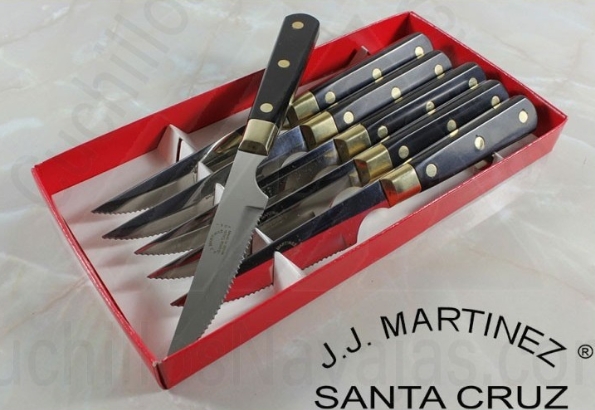
Store your steak knives separately to protect the blade’s edge and prevent accidents. A magnetic knife block, a knife block, or protective sheaths are excellent options to keep them safe and in perfect condition.
Sharpening and edge maintenance
The sharpening frequency will depend on the type of edge. Smooth-edged knives require more frequent sharpening, while serrated ones need it less often. It is advisable to use a sharpening stone or, failing that, a good quality ceramic or steel honing steel to realign the edge after every two or three uses. For deep sharpening, sharpening stones are the most recommended to avoid irreversibly damaging the edge. When sharpening, maintain an angle of 15 to 20 degrees and apply balanced pressure. Avoid excessive sharpening, as it can prematurely wear out the blade.


Choosing the ideal steak knife and caring for it properly is an investment in the quality of your culinary experiences. By understanding the materials, design, and maintenance, you will not only be choosing a tool but a companion that will transform every meal into a celebration of flavor and precision. Enjoy every cut and every bite to the fullest. Ready to renew your collection? Take a look at our selection of the highest quality steak knives.