Did you know that vegetable knives are one of the most versatile utensils in the kitchen? These knives can be used to cut a variety of foods, from fruits and vegetables to meats, fish, and even bread. They are, without a doubt, an indispensable tool in any modern and traditional kitchen. Their specific design allows for precision and efficiency that transform the task of food preparation into a more pleasant and safe experience.
In this comprehensive guide, we will explore everything you need to know about vegetable knives. From their fascinating history to the different types available, how to choose the best one for your needs, and how to use them safely and efficiently. At the end of this guide, we will also provide you with a frequently asked questions section to answer any additional queries you may have. Get ready to sharpen your knowledge and take your culinary skills to the next level.

A Journey Through Time: The History Behind the Edge
Contents
- A Journey Through Time: The History Behind the Edge
- Types of Vegetable Knives: Which One is Best for Your Needs?
- The Heart of the Knife: Materials and Construction
- How to Select the Best Vegetable Knife: User Profile
- Mastering the Cut: Techniques and Practical Tips
- Care and Maintenance: The Key to Longevity
The history of kitchen knives is as old as civilization itself, with the first rudimentary tools made of stone used to prepare food. However, if we focus on sophisticated Japanese kitchen knives, their origin dates back more than 300 years, with legends pointing to small restaurants like Jujihara Shin as the cradle of their development.
Interestingly, the manufacture of steel knives in Sakai, Japan, a region that today is synonymous with quality in cutlery, began in the 16th century. It was during this period that the Portuguese introduced tobacco to the country, and the artisans of Sakai, with their inherent skill, began to produce specialized knives for cutting it. The reputation for quality of the Sakai knife industry received a significant boost and official recognition from the Tokugawa shogunate (1603-1868), which solidified its status.
With the Meiji Restoration in 1868, a moment of profound modernization for Japan, a ban was imposed on samurai carrying swords. This radical change led many sword smiths, masters of an ancient art, to redirect their skills towards the production of cutlery. Thus, traditional Japanese blacksmithing techniques, perfected over centuries to forge legendary samurai swords, were masterfully applied to the manufacture of kitchen knives. During this same period, between 1860 and 1890, Japan also adopted and adapted ideas from French and German cutlery, integrating them into their own techniques and cutting culture, creating a unique fusion of tradition and modernity.
Today, Seki, in Gifu Prefecture, is widely considered the birthplace of modern Japanese kitchen knives. Here, cutting-edge manufacturing technology has updated and perfected ancient forging skills, resulting in pieces of unparalleled quality and precision. Miki is another famous center for its traditional blacksmiths, with numerous small family businesses that prioritize meticulous craftsmanship over volume production, keeping alive the essence of Japanese knife-making art. This rich heritage is what makes every Japanese knife not just a tool, but a functional work of art.
Types of Vegetable Knives: Which One is Best for Your Needs?
When it comes to cutting vegetables, the type of knife you use can make a big difference in the precision, ease, and safety of your cuts. Vegetable knives vary in styles, all very practical and ergonomic, with a wide selection of blade shapes and sizes, with or without a serrated edge, and with a better cut that suits each vegetable. Here are some of the most common ones and their ideal uses:
- Chef’s Knife (or Onion Knife / Cook’s Knife / Gyuto): It is the “king of the kitchen,” an essential and extremely versatile tool. With a blade that generally measures between 20 and 25 cm long, it is ideal for chopping, dicing, and cutting all kinds of vegetables in their multiple cutting varieties. Its curved edge allows for a rocking motion while cutting, facilitating quick and efficient chopping. It is the multi-purpose knife par excellence for most vegetable preparation tasks.
- Santoku Knife: Its Japanese name means “three virtues,” referring to its versatility for cutting vegetables, meat, and fish. It is the oriental variant of the chef’s knife, generally shorter (between 16.5 and 18 cm) and with a flatter edge. This makes it ideal for cutting, chopping, and slicing vegetables with a push motion. Being flatter, they allow for a more natural wrist position and the shoulder does not need to be raised as much when cutting, which reduces fatigue. They are the most popular knives in most Japanese homes.
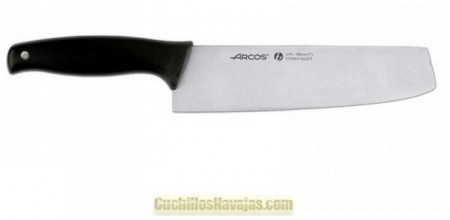
- Nakiri Knife: This knife, whose name means “vegetable knife,” is a popular alternative to the Santoku and is designed exclusively for push cuts. Its square tip makes it feel more robust and secure than the pointed tips of the Santoku or Gyuto, and allows cutting dense products at the tip without the blade slipping. Its flat edge ensures maximum contact with the board, making it perfect for chopping herbs, peppers, and carrots with great efficiency. Its general size ranges from 165mm to 180mm.
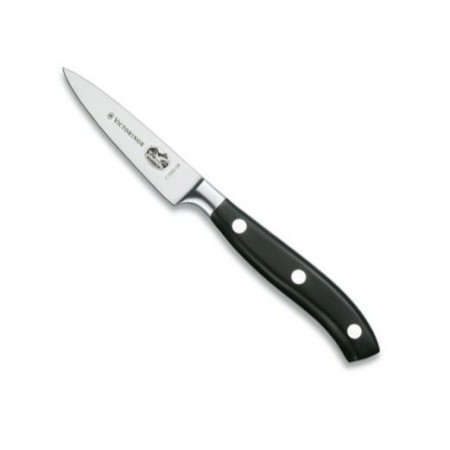
- Paring Knife (or Peeling Knife): It is a short, multi-purpose knife with a small blade (between 6 and 10 cm), ideal for precision tasks that require control and delicacy. It is perfect for peeling, trimming, coring small vegetables or fruits, and for detailed work such as decorating. It is one of the essential knives in the kitchen, along with the chef’s knife.
- Utility Knife: Similar to the paring knife but a bit larger (between 4 and 6 inches), it is a versatile knife that sits between the paring knife and the chef’s knife. It is good for a variety of intermediate tasks, including peeling, slicing, and cutting medium-sized vegetables that do not require the length of a chef’s knife but are too large for a paring knife.
- Vegetable Cleaver (Chukabocho): A heavy knife with a thick rectangular blade (between 6 and 8 inches) designed for cutting and shredding hard vegetables such as cabbage, squash, and carrots. It is often confused with the butcher’s knife, but its edge is thinner and optimized for vegetables, allowing for clean and efficient cuts.
- Serrated Knife: Its irregular edge, with teeth like a saw, is perfect for cutting soft vegetables like tomatoes or mushrooms without crushing them, maintaining their shape and juiciness. It is also excellent for cutting fruits with hard skins, such as pineapples and melons, or even bread.
The Heart of the Knife: Materials and Construction
The choice of material is vital in determining a knife’s performance, durability, and maintenance. Kitchen knives are primarily made from stainless steel, carbon steel, or, in the case of specific vegetable knives, ceramic.
Blade Materials
- Stainless Steel: This is the most common material due to its robustness, durability, and excellent resistance to rust and stains, making it ideal for daily use and for cooks seeking low maintenance. Although traditionally considered to hold an edge for less time than carbon steel, current high-end variants can retain an edge longer and have carbides of similar size to carbon steel, offering exceptional performance without the worry of corrosion.
- Carbon Steel: Offers superior sharpness and unparalleled edge retention, making it the preferred choice of many professional chefs. It is generally harder and, therefore, more brittle and less resistant to impact than stainless steel. However, it is remarkably easier to sharpen and achieve a razor-sharp edge. The main disadvantage is that it requires more maintenance to prevent oxidation and corrosion. Carbon steel knives should be coated with a thin layer of oil after each use and cleaning to prevent corrosion, as the metal is porous and the blade can darken with use, developing a protective patina.
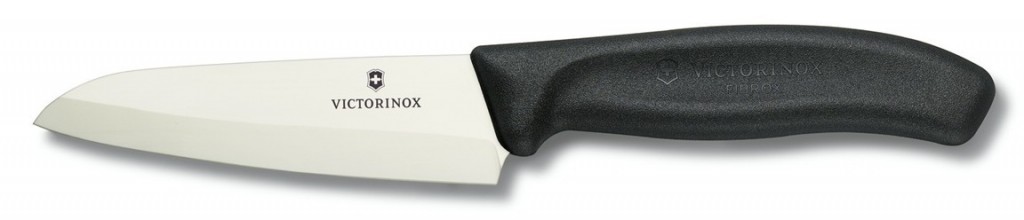
- Ceramic: Presents itself as an exceptional option, especially for working with vegetables, greens, and fruits. Ceramic knives cut with extreme precision and almost no effort, slicing fibers perfectly without applying pressure. This minimizes sudden oxidation of foods and loss of flavor, which is crucial for maintaining product freshness. They are very lightweight and comfortable to use, with a durable edge that requires less attention than steel ones. Furthermore, ceramic is an aseptic material and does not retain odors or flavors. The only significant disadvantage is its fragility: they can easily break or chip if dropped or if used to cut bones or frozen foods.
- Damascus Steel: More than a material, it is a forging technique that combines different steels to create a blade with distinctive patterns and a combination of desirable properties. Known for its beautiful wavy patterns and excellent performance, Damascus knives are appreciated for both their aesthetics and functionality, offering great edge retention and durability.


Blade Construction
In terms of construction, knives can be single-piece (monosteel) or laminated:
- Monosteel Blades: These are blades forged from a single piece of steel. They are usually harder to sharpen and, in some cases, can be thinner than laminated ones, making them more prone to flexing in certain uses.
- Laminated Blades: These are formed with two or more pieces of steel. The most common configuration is with two pieces: the jigane (the soft cladding or “skin”) and the hagane (the hard cutting steel that forms the edge). This combination of metals offers the best of both worlds: the jigane, often stainless steel, facilitates sharpening and absorbs shocks, protecting the hagane, which can be carbon steel or a high-hardness stainless steel. This allows the hagane to be extremely hard without the entire blade being brittle. There are variations of this style that form artistic patterns in the jigane, such as Suminagashi or Damascus, which are not only visually impressive but also add layers of protection and strength.
The Bevel or Blade Sharpening
Another crucial technical aspect is the bevel or sharpening of the blade, which defines how the steel tapers towards the edge:
- Double Bevel (Western): Traditional Western knives usually have a double bevel, meaning the blade tapers symmetrically towards the edge on both sides. This makes them robust and versatile for a wide range of tasks.
- Single Bevel (Japanese): Japanese knives, on the other hand, are often single-bevel, meaning they are only sharpened on one side (usually the right for right-handers). This allows for incredibly clean cuts and a better surface finish, as the knife “guides” the cut through the food with less resistance. However, they require more care and experience to use correctly, as the cut tends to deviate if the proper technique is not applied. The back of a single-bevel Japanese knife blade is usually concave (urasuki) to reduce friction and sticking, allowing food to separate more cleanly from the blade.
How to Select the Best Vegetable Knife: User Profile
Now that we’ve explored the different types and materials, it’s time to consider which knife is best for you. The choice of vegetable knife depends not only on the task you want to perform, but also on your experience level and personal preferences.
For the Beginner Cook or Occasional Home Cook:
If you’re just starting in the kitchen or cook sporadically, versatility and low maintenance are key.
- Chef’s Knife (Stainless Steel): This is the best initial investment. Its versatility will allow you to tackle most vegetable, meat, and fish cutting tasks. Stainless steel is easy to care for and resistant to corrosion.
- Paring Knife (Stainless Steel): An indispensable complement for precision tasks, peeling, and small cuts.
- Santoku Knife (Stainless Steel): An excellent alternative to the chef’s knife if you prefer a slightly shorter knife with a flatter blade profile, ideal for a push-cutting motion.
For the Enthusiastic or Intermediate Cook:
If you enjoy cooking regularly and are looking to improve your skills and the quality of your cuts.
- Chef’s Knife or Gyuto (Carbon Steel or High-End Stainless Steel): Experimenting with carbon steel will offer you a superior edge and a more rewarding cutting experience, although it will require more maintenance. A good high-end stainless steel Gyuto will also be a significant improvement.
- Nakiri Knife: If you work a lot with vegetables and are looking for precise and clean cuts, the Nakiri is a fantastic addition to your arsenal. Its flat edge is unsurpassed for chopping and slicing.
- Utility Knife: A good utility knife will fill the gap between the paring knife and the chef’s knife, being useful for a variety of medium-sized tasks.
For the Expert Cook or Culinary Adventurer:
If cooking is your passion and you are looking for specialized, high-performance tools for every task.
- Specialized Knives (Carbon Steel or Damascus): Consider a set of carbon steel or Damascus knives, including a high-quality Gyuto or Santoku, a Nakiri, and perhaps a Vegetable Cleaver. The extra maintenance will be worth it for the superior performance.
- Ceramic Knife: For ultra-precise cuts on fruits and vegetables, especially those that oxidize easily. It is a tool that perfectly complements steel knives, but requires careful handling.
- Single Bevel Knives: If you are willing to invest time in learning new sharpening and cutting techniques, a single-bevel Japanese knife like a Yanagiba (for slicing fish) or an Usuba (for vegetables) can take your skills to the next level, offering unparalleled precision.
The preparation of vegetables and legumes is very important as they are essential in the Mediterranean diet, which is highly recommended for our good health.
Vegetable knives come with the right blade for every occasion, such as peeling, dicing, chopping, cleaning, and shaping fruits and vegetables.
Mastering the Cut: Techniques and Practical Tips
Cutting vegetables efficiently and safely not only saves you time in the kitchen but also significantly reduces the risk of injuries. A good sharp knife is your best ally, but the correct technique is fundamental. Here are some essential tips to master the art of cutting:
- Prepare Your Vegetables: Always clean and dry vegetables thoroughly before cutting them. Moisture can make them slippery, increasing the risk of accidents.
- Grip the Knife Correctly: Hold the handle firmly with your fingers, and use your thumb and index finger to guide the blade, resting them on the base of the blade (the “heel”). Avoid gripping the knife uncomfortably or too loosely; a correct grip will allow you to handle it with control and prevent it from bending or slipping.
- Sliding Motion, not Straight: Never make straight up-and-down cuts, as if you were chopping with an axe. There should always be a sliding motion forward or backward, depending on what you feel most comfortable with. This rocking motion will help you make precise cuts, chop faster, and reduce effort.
- Fingers Back (The Claw): This is one of the most important safety rules. Keep your fingers tucked in, forming a “claw” with your non-dominant hand, and rest the knife against the knuckle of your middle finger. This protects your fingertips from the blade and allows you to guide the knife safely.
- Cut Away from Your Body: Always direct the cut away from your body to reduce the risk of injury in case of a slip.
- Create a Base for Difficult Vegetables: For hard or round vegetables like carrots, potatoes, squash, or onions, make a first cut to create a flat base. This will prevent them from moving and rolling on the board, drastically reducing the risk of cutting yourself.
- Uniform Cut: Try to cut vegetables consistently in size and shape. This not only improves the presentation of your dishes but also ensures that they cook evenly, preventing some pieces from being raw and others soft.
- Use the Entire Blade: Take advantage of the entire length of the knife blade when cutting. This maximizes the efficiency of each movement and minimizes the need for constant sharpening, as edge wear is distributed more evenly.
- Stabilize the Cutting Board: Place a damp towel, a non-slip kitchen cloth, or a silicone mat under your cutting board. This will keep it stable and prevent it from slipping while you work, which is crucial for your safety.
Specific Tips for Some Vegetables:
Each vegetable has its peculiarities, and knowing them will help you optimize your cuts:
- Pepper: Always cut with the pepper skin side down, as it is the harder part and the knife will slide more easily through the softer flesh.
- Onion: If you are looking for strips (julienne), cut them in the direction of the fibers. For small pieces (brunoise), start by cutting against the fibers without reaching the end of the root, then turn the onion and cut in the other direction. An informal trick to avoid crying: wear swimming goggles or cut under running water.
- Leek: Being fibrous, it is best to open it lengthwise and cut in layers, cutting in the direction of the fibers for small, uniform pieces.
- Potato: It is hard and has a lot of water, which can make it slippery. Make sure to create a flat base before cutting. When cutting, do not lower the knife completely on the last piece of each section, as this can cause the potato to move unexpectedly. Maintain firm and constant control.
Care and Maintenance: The Key to Longevity
A good knife, like any quality tool, requires proper care to maintain its optimal performance and prolong its lifespan. Regular maintenance not only ensures a durable edge but also guarantees safety in the kitchen.
- Immediate Hand Washing: Always hand wash your knives with mild soap and dry them thoroughly immediately after each use. Avoid the dishwasher at all costs, as harsh detergents, high temperatures, and contact with other utensils can damage the blade, edge, and handle. Do not use metallic scrubbers or strong abrasives that could scratch the blade.
- Correct Storage: Store your knives in a dry place where the blade does not come into contact with other objects. A knife block, a magnetic strip on the wall, or individual protective sheaths are excellent options to protect the blades from damage and prevent accidents. Avoid storing them loosely in a drawer, as contact with other utensils can dull or damage the edge.
- Regular Sharpening: A sharp knife is not only more effective but also much safer, as it requires less force to cut and is less prone to slipping. Regularly sharpening your knives is essential.
- Whetstone: For precise sharpening and to restore a very dull edge. It requires practice to master the technique but offers the best results.
- Honing Steel: Does not sharpen the knife but realigns the edge that has bent with use. It is ideal for use between full sharpenings and to keep the edge in optimal condition. It is recommended to run the knife over the honing steel before or after each use.
It is recommended to sharpen knives every few months, depending on the frequency of use. For carbon steel knives, some professional chefs let them “rest” for a day after sharpening to restore their patina and eliminate any residual metallic odor or taste that could be transferred to food.
- Handle Care: Keep the handle clean, dry, and in good condition. Wooden handles may require occasional treatment with mineral oil to prevent them from drying out and cracking, ensuring a good grip and control of the knife.
- Proper Use: Do not use your knife for purposes other than cutting food, such as opening cans, scraping surfaces, or cutting hard materials, as you could irreversibly damage the blade or edge. Always use a wooden, bamboo, or plastic cutting board; this will protect your countertops and significantly prolong the life of your knife by preventing the edge from being damaged by hard surfaces.